Strategies for Managing the Special Patient in the Catheterization Laboratory
September 2003
I. Allergic disease in the cath lab
There has been a dramatic increase in the incidence of allergic diseases over the past few years. Several experts have postulated a relationship between this increase and environmental influences, the so-called Western lifestyle or the hygiene hypothesis. This theory assumes that in the West we live in such a clean, healthy environment that we are not exposed to as many pathogens as we have been in the past. Our lack of exposure is not only due to excessive cleanliness, but also to the vaccines we receive and the use of antibiotics for minor illnesses in early life. The thinking is that this protection in early life may ultimately make us more vulnerable to allergic reactions as we get older. Whether this line of reasoning is true or not is unknown. For instance, a major concern in the United States is an increased incidence of allergic asthma, especially among poor African-Americans. This increase can not be explained by the hygiene hypothesis alone and in reality, it is probably a combination of factors that is responsible for this current epidemic.
Types of allergies commonly seen in the cath lab. Allergy to latex is certainly a familiar problem to anyone who spends time in the cath lab. Most researchers believe this increase in latex allergies can be traced back to the sharp increase in glove use after universal precautions were instituted in 1985.
Those of you who started practicing after 1985 probably cannot imagine a time in the cath lab where you went near anything or anybody without gloves, or didn’t handle every vial of blood as if it was the Ebola virus. As a practitioner from long before 1985, I can tell you that before that date, we only wore gloves if it was a sterile procedure. Even though we handled all kinds of things, it was not common practice to wear gloves. Of course, universal precautions changed everything.
Many experts believe that with the institution of universal precautions, the quality of latex gloves went down because the demand for gloves went through the roof. Our glove budget for that year was incredible, and manufacturers had trouble keeping up with demand.
Since that time, there has been a reported increase in the general incidence of latex allergies; however, the general incidence is actually unknown. It’s estimated that it is less than 1% in the general population. However, for those of us in the healthcare industry, the reported incidence is from 7-10%. If you have, or you know a fellow worker who has a dermatitis problem, this may predispose you to a latex allergy. It doesn’t have to be direct contact with latex. Areas with airborne allergens, such as the OR, the ICU or a closed cath lab, may actually sensitize workers to latex. The latex can filter off of the gloves and become an airborne pathogen in your environment.
Between 1988 and 1992, the FDA received reports of over a thousand incidences of systemic allergic reactions to latex. In those reported incidents, 15 were fatal. If unrecognized, an allergic reaction to latex can be fatal. Systemic reactions are a result of exposure to the residual rubber tree proteins in latex medical devices, specifically in the gloves.
Anaphylaxis and Anaphylactoid Reactions
There are two types of allergic reactions.
Anaphylaxis is a hypersensitivity reaction, mediated by antibodies, although some may be mediated by complement. It requires previous exposure to the offending agent. For example, you’ve been exposed before, say to penicillin, and had an allergic reaction. If you get exposed to penicillin again, you will have an anaphylactic reaction. These reactions develop within minutes of reexposure to a sensitizing antigen.
Another type of reaction, an anaphylactoid reaction, is not mediated by an antigen/antibody complex, but is clinically indistinguishable from an anaphylactic reaction. One example is contrast agents. If your patient has what we typically describe as an anaphylactic reaction to the contrast agent, it really is an anaphylactoid reaction. However, the treatment is the same.
The annual incidence of anaphylaxis is unknown. In the U.S., the FDA estimates the incidence at 30 per 100,000. The international incidence is approximately 154 per one million hospitalized patients per year.
Signs and symptoms. Both types of reactions are related to the release of chemical mediators from mast cells that result in systemic vasodilatation, increased capillary permeability, and airway constriction, causing the clinical signs of hypotension, bronchospasm, and angioedema all the things you’ve seen and don’t want to see happen in your cath lab. The location of the mast cells determines which organs are affected. The National Institutes of Health has a Strategic Plan 2000 that lists recommendations on how to take care of patients with allergens and anaphylaxis in general:
(https://www.niaid.nih.gov/strategicplan2000/immune)
Etiology of anaphylaxis in your environment. Contrast media is, of course, number one. Today, with conventional contrast agents, total adverse reactions are estimated at 5“8%. Systemic reaction to contrast media is estimated to occur in about 1 of every 500 patients.
In addition to latex, patients can also have anaphylactic reactions to ordinary medications, such as aspirin or non-steroidal anti-inflammatory agents. If your patient is on a beta-blocker, you could have more trouble treating them should they have an (admittedly rare) anaphylactic reaction. Beta-blockers may increase the incidence and severity of anaphylaxis and can actually produce a paradoxical response to epinephrine.
Who’s at risk for a reaction? Anaphylactoid reactions are neither dose-related nor immediate. A few months ago, there was an 18-year-old with familial cardiomyopathy who was undergoing a diagnostic cath and had an anaphylactoid reaction. The patient had hardly received any contrast agent at all, so the reaction was not dose-related and was not immediate. He violated all the rules, reacting about 30 minutes into the procedure. The patient ended up having an emergency tracheotomy in the lab as a result of the intense bronchospasm and laryngeal edema.
At potential risk are patients with prior anaphylactoid reactions, so this question is very important in your screening. Watch out for patients with a history of reactions and look out for the so-called allergic patient patients who have a history of atopy, which is a genetically determined state of hypersensitivity to environmental antigens. These are patients with asthma or patients who tell you bee stings make them swell. Watch out for these patients they could spell trouble in your lab.
Latex allergies. The American Academy of Allergy and Immunology published their recommendations in 1993 (J Allergy Clin Immunol 92 (Part 1): 16). They recommend that we identify patients in high-risk groups.
1. If you work with a pediatric population, children with spina bifida or urogenital abnormalities have a higher incidence of latex allergies than the general pediatric population.
2. Persons with industrial exposure, even if they report no allergies, are at higher risk for latex reaction.
3. Of course, healthcare workers are also at risk, because we work in a latex environment. Whether you wear the latex gloves or not, if somebody’s wearing latex or using latex equipment, latex is in the air, and you’re being exposed.
It’s also recommended that we question everyone for a history of latex allergy:
Have you ever blown up a balloon and had hives or swelling?
Is there any local swelling or itching after any exposure to rubber?
All high-risk patients should be offered testing for latex allergy. This should be done by an immunologist or allergist who’s very familiar with this process and who has resuscitation equipment nearby, because there have been very bad reactions reported to latex testing. Routine testing at this stage is not recommended for low-risk patients.
All procedures for this population should then be performed in a latex-free environment. This means no latex gloves or latex accessories should come into direct contact with the patient. Any patient with spina bifida needs to be in a latex-free environment or any patient with a positive history, which includes an immediate hypersensitivity reaction associated with latex. Patients with eczema associated with latex glove use should be put into the high-risk category.
Ideally, patients with latex allergies should wear a medical alert bracelet and they should even carry self-injectable epinephrine.
What about pretreatment? Pretreatment with high-risk patients even before you get them into the latex-free environment may or may not be useful. The usual benadryl, maybe steroids, are recommended, although it’s not mandatory. Remember, even though you now have a latex-free environment, there is still latex in the air.
The choice of steroid is not critical. Antihistamines include the 1st generation H-1 blocker diphenhydramine (benadryl). Cimetidine is a H-2 blocker, and a questionable one for this indication. This is because a contrast agent reaction is not an IgE-mediated response. It shouldn’t make a difference whether or not you give cimetidine, but most facilities do, and our lab does also. When we identify a patient who has a contrast allergy, they’re given benadryl and cimetidine, and then, of course, they’re targeted for the low-osmolar non-ionic contrast.
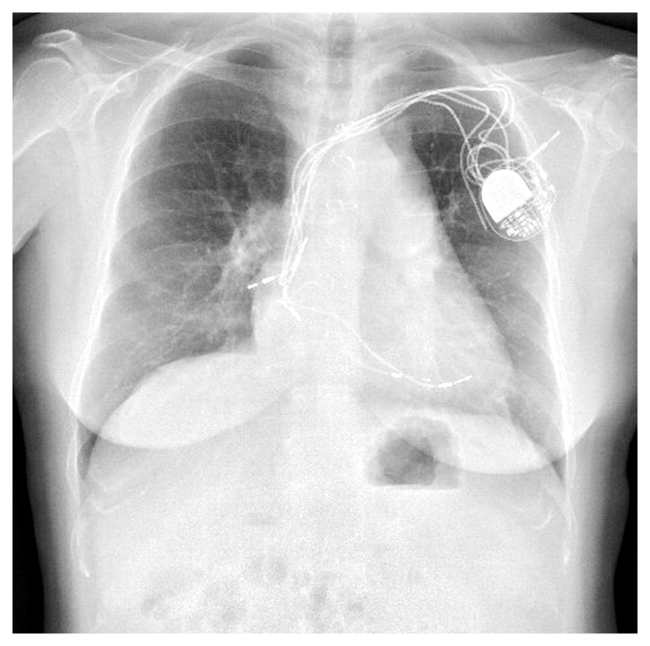
What happens in a contrast reaction? Hopefully, you have never seen a contrast reaction, but if you’ve been around long enough, you will. Exposure generally occurs within 20 minutes. The clinical signs and symptoms include: a drop in blood pressure, tachycardia all the usual things that tell you you’re in trouble. Watch out for patients who have pacemakers (more and more of our population), and patients who are on beta-blockers. With the beta-blockers, you might miss the onset of the reaction because they can’t mount compensatory tachycardia. Symptoms can progress rapidly.
Treatment includes:
1. Epinephrine, immediately. Hopefully you all know where it is in your lab and have lots of it.
2. Antihistamines.
3. Large-fluid boluses (more than you think is possible). Within 10 minutes, about 40“50% of blood volume is diverted because of massive vasodilatation.
4. Crystalloids may help.
5. Inhaled salbutamol or epinephrine may help.
6. High-dose steroids.
You have to work fast to try to reverse the reaction. Death has been reported. The usual cause of death is asystole due to hypovolemia and hypoxia.
The take-home message is, watch out for these people; be prepared. Have, as the military say, SOP. Have your standard operating procedures for emergencies. Review them frequently. Check your code cart and make sure your drugs are there. Screen your patients for latex or contrast allergies or to find out if they are an allergic-type patient. Know, when you’re in the lab for the day, where your emergency drugs are located. Don’t panic, but act fast.
II. Pregnant Patients
et’s move to a different patient, who is probably more rare than the allergic patient the pregnant or potentially pregnant patient. Again, you need to have routine screening before the procedure. The following is from the ACC/SCAI expert consensus document on cath lab standards, published in JACC in 2001. (Bashore et al. ACC/SCA&I Expert Consensus Document on Cath Lab Standards J Am Coll Cardiol 2001;37:2170).
The ACC/SCAI expert consensus documents on cath lab standards recommend testing either serum or urine unless you know the patient has an implanted chronic chemical contraceptive or the patient has a history of bilateral tubal ligation or hysterectomy. Otherwise, they need to be tested. Informed consent is also a major issue here, because of course the pregnant patient is at increased risk from radiation exposure.
How do we minimize the risks?
1. Shielding of the abdominal and groin areas.
2. If it’s possible, use a different vascular entry site. Try the arms instead of the groin, but that’s not always an option.
3. Minimal use of radiation. Limit total exposure time and reduce the framing rates.
4. Minimum number of contrast injections.
5. Avoid angulated views where possible.
This is the patient we want to get into the cath lab, provide maximum protection while she is there, and then get her out as soon as possible.
The hemodynamic effects of pregnancy. Usually at about the 30th week, blood volume peaks at a level around 40% higher than the non-pregnant state. If a pregnant woman has tight mitral stenosis, this is the time when she presents with acute heart failure. Mitral stenosis accounts for about 95% of the cases of rheumatic heart disease associated with pregnancy. Atrial fibrillation is also a common problem in this population.
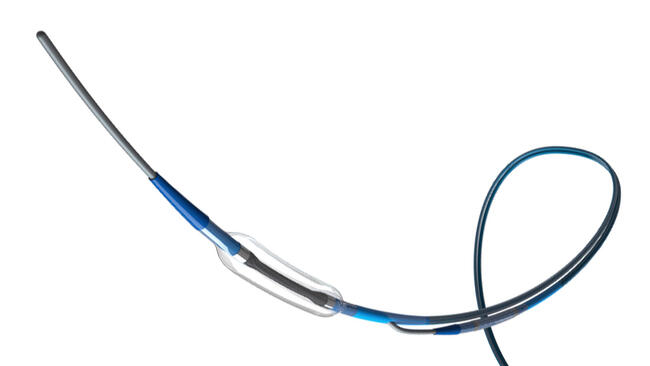
The current treatment is percutaneous transluminal mitral valvuloplasty (PTMV). There are several case reports of patients with severe mitral stenosis in class III-IV heart failure treated with PTMV guided by transesophageal echocardiogram (TEE), with no reported maternal or fetal mortality. If the patient has to be treated, at present, this is the recommended therapy.
During PTMV, the balloon inflation can cause transient hypotension in the mother, so you have to be more cognizant of that fact. Also, the fact that the patient is in a recumbent position results in compression of the pelvic vessels by the uterus. It can obstruct passage of the catheters, and you can’t fluoro the area because of the fetus.
Radiation risks to the fetus in the second and third trimester are related to childhood leukemias and other malignancies. If this child in utero has to undergo this procedure, he or she is at high risk and needs to be followed up for many years afterwards.
Case history. A 35-year-old female who was 29 weeks pregnant presented to our institution with shortness of breath and a new murmur. She gave no prior history of cardiac disease or any other health problems. She said her pregnancy had been going well up until this point; however, upon further questioning, she said that she may have had rheumatic fever in the past. She was not born in the United States, but had been living here for many years. This lady had the classic findings of a pregnant patient with severe mitral stenosis.
Since her clinical status continued to worsen, the plan was to evaluate the patient for potential PTMV. She first underwent a right heart cath which showed incredible PA pressures of 82 over 32, with a wedge of 27. The PVR was estimated at 520, and the calculated mitral valve area was 0.7. It was about as bad as we’ve ever seen.
The images above are from the transesophageal echocardiogram performed in the catheterization lab. The enlarged left atrium had severe echo contrast (sludge) secondary to poor blood flow. More incredible was this echo density on the mitral valve. The physician believed this to be a large thrombus that appeared to be attached to both leaflets. Surprisingly, there was no evidence of thrombus in the left atrial appendage.
After reviewing these images from the TEE, the physician decided not to proceed with the PTMV. The patient went back to the floor, and there followed a great deal of discussion and debate about how best to treat this unfortunate woman. It was a team effort, involving the cardiologists, the obstetricians, the neonatologists, and of course the patient and her husband.
Five days after the catheterization, the patient had an elective C-section, followed by a mitral valve replacement. The mother and baby did fine. The mother had no evidence of systemic embolization, which was incredible.
Pregnant patients don’t come to our labs very often, but let’s help these moms have a happy day. When in doubt, screen before the procedure. Your lab should have a standard procedure for handling the pregnant patient. Reassure these patients that when they are in the cath lab, you’re taking extra precautions to protect them and the baby.
III. Informed Consent
There is one more area I’d like to discuss, and that’s regarding another kind of special patient the one who shows up in emergencies, with no family and an unknown name, or the patient who is demented or even a minor (showing up more and more in our institution). That is, the patient who is unable to give informed consent.
What is informed consent? Informed consent is an autonomous authorization by an individual for a medical intervention or an involvement in research. Informed consent, remember, can involve two things:
1. Consent for an approved procedure (the usual); i.e., for the cath, the mitral valve angioplasty, the PTCA, etc.
2. It also can be consent for clinical research. In an institution like WHC that is participating in multiple clinical trials, it’s very rare for a patient not to be asked for consent for the procedure as well as consent for research.
The research coordinators in the cath lab are usually the persons who take the informed consent to the patient. Language will vary from institution to institution. At our institution, the consent invites the patient to take part in a research study. The consent emphasizes that taking part is entirely voluntary. It also explains that the patient may or may not gain any personal benefit from their participation in the trial. That’s hard, because often if patients consent to a trial, they think they’re going to be better off if they participate than if they don’t. The consent also allows them to withdraw from the study at any time. There is usually standard language in the facility’s informed consent. Many informed consent templates are available online.
What are the pieces that have to be present for an informed consent? To really have informed consent, you must have a patient who’s competent to make a decision. The patient has to be competent and you have to be comfortable that they know what you’re talking about. You don’t want to overwhelm the patient, but they have to have enough information to make a decision, and they have to understand the information you give them. The consent must also be voluntary. Finally the patient must provide formal authorization to be treated or to be included in the research. This is accomplished by signing the consent document.
The figure at right is from Beauchamp and Childress, the standard reference for medical ethics (Beauchamp TL, Childress JF: Principles of Medical Ethics. Fourth Edition. New York, Oxford University Press, 1994). Luce (below) did a nice review of informed consent in the ICU and wrote about how difficult it is to get consent in the ICU (Luce JM Critical Care Medicine 2003;31:S153).
Many of these same problems relate to the cath lab. Informed consent is based on the ethical principle of autonomy, meaning respect for self-determination and exercise of personal choice. Whether we agree with the patient or not, they have the right to make their decision. The results of their choices can be difficult, but patients have the right to make them.
Informed consent also derives from three main principles:
1. The principle of beneficence, which means, to promote the benefit.
2. The principle of non-maleficence, which is minimize the harm.
3. The principle of justice fair and equitable access. Everyone deserves access to the best care that’s available right now.
Sometimes we might lose sight of these principles in our day-to-day operations.
What are the issues with informed consent? Many of you are aware of issues with informed consent for clinical investigations. As healthcare workers, you must promote respect for patients and their right to self-determination. If the patient is competent to make a decision and the decision they make is not what you or their doctor would do, it’s still their right.
What if the patient is not able to give informed consent? Try to seek out a legally authorized representative. If it’s an emergency and there is no time, then follow your institution’s guidelines. This usually requires documentation in the chart as to the nature of the emergency and may also require a second signature from a chair or other senior member of the department.
Beware of conflicts, within your institution and otherwise. These days, the media is all over the topic of consent for scientific research. Undeniably, there is academic and scientific prestige from research. Everyone wants to publish their trial first, and every one of the data points represents a patient. You have to watch that you’re not pressuring patients to consent to the research or procedure.
More and more, there may also be financial conflicts of interest. If the physician who’s offering the procedure owns stock in the company behind it, the patient needs to know before consenting. Our institution has added language to our informed consent, requiring clear documentation of who is the principal investigator, who is sponsoring the research, and if the sponsor is paying the investigator and/or the facility to conduct this study.
Consent form readability. I would like to bring up one other rather surprising issue regarding informed consent. This is readability. In a 2003 New England Journal of Medicine article (Paasche-Orlow et al. N Engl J Med 2003;348:721), the authors examined readability standards for informed consents. The accepted readability standard for consent documents is the eighth grade. The authors reviewed the the current reading levels of the general population, based upon information from the federal government. What they found is that almost half of American adults today read at or below the 8th grade level. One quarter have reading levels lower than eighth grade. This means that every day, you’re going to have patients in the cath lab that read at grade school level or less.
The authors then reviewed the websites of 114 U.S. medical schools for their IRB readability standards and informed consent templates. The documents’ mean readability score was 10.6, which is almost 11th grade level. The authors recommend that facilities take their informed consents down to 4th grade level readability. Go back to your institution and look at the informed consent for a diagnostic cardiac catheterization. Your readability levels might need to be altered to truly enable your patients to give informed consent.
Conclusion
It’s important to identify special patients before the procedure begins, in order to provide a safe environment for everyone in the catheterization laboratory.
About the author. Sue Apple is currently the Adjunct Instructor for the Department of Professional Nursing, Georgetown University School of Nursing & Health Studies, Washington, D.C.
For over 15 years, Sue was the cardiology clinical nurse specialist for the medical nursing division at Washington Hospital Center in Washington, D.C. During that time, she also completed her doctorate in nursing, investigating quality of life as an outcome measure after percutaneous coronary interventions. In 2001, she moved into a research position as the Director of Research Support Services for the Cardiovascular Research Institute, located in the Washington Hospital Center.
Sue has lectured and published on a variety of cardiac topics, including her own book on interventional cardiology. She has been the principal investigator in two studies on quality of life in interventional cardiology patients and a co-investigator in several clinical trials in the Washington Hospital Center.
Sue can be contacted at suapple@attglobal.net
NULL
Subscriber
Cath Lab Digest Newsletter