Sameer Mehta, MD, FACC, MBA, is studying ST-elevation myocardial infarction interventions in his work with short door-to-balloon time primary PCI and the Single INdividual Community Experience REgistry for Primary PCI (SINCERE) database at 5 community hospitals in Miami, Florida, now over 343 patients. A past chief of interventional cardiology and director of the cardiovascular laboratory at Cedars Medical Center in Miami, as well as former President of the American Heart Association (Miami Dade Division), Dr. Mehta is a Voluntary Associate Clinical Professor of Medicine at the University of Miami-School of Medicine. Dr. Mehta is also president of the Indo-American Society of Interventional Cardiologists (ISIC) and a course director for LUMEN 2009: The Symposium on Optimal Treatments for Acute MI. He has recently published the Textbook of STEMI Interventions (available through HMP Communications at https:// www.stemiinterventions.com).
Dr. Mehta will be commenting on the important work going on around the world as societies and their hospitals struggle to educate patients about the importance of timely intervention in ST-elevation myocardial infarction, and work collaboratively to decrease the time from patient arrival to intervention.
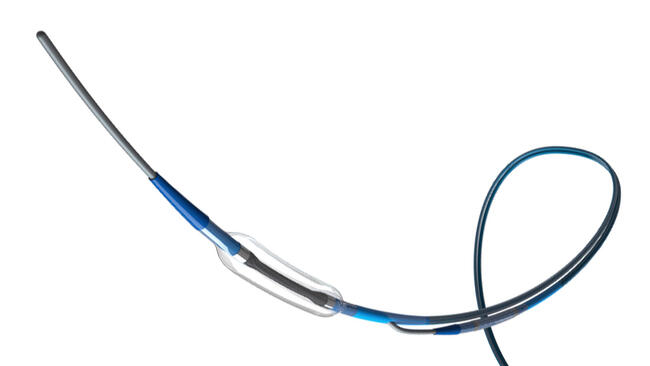
In this issue of Cath Lab Digest, we review an article of great practical importance, entitled, “Changing the Standard of Care in STEMI PCI: Combining mechanical reperfusion and pharmacologic therapy to improve myocardial perfusion,” submitted by Dr. Rajesh M. Dave from Pinnacle Heart and Vascular Institute at Harrisburg Hospital. Thrombus remains an integral component of a ST-elevation myocardial infarction (STEMI) lesion and its compulsive management is imperative in obtaining superior short and long-term results. Although there are various parameters of measuring successful reperfusion (relief of chest pain, ST-segment resolution, TIMI flow and myocardial perfusion grade or MPG), it is MPG that demonstrates clear correlation with mortality from STEMI presentation. With MPG being the critical determinant of STEMI outcomes, Dr. Dave’s emphasis on this parameter is most appropriate and his Table 1 with its classification of MPG and description of the best method of obtaining appropriate angiographic views to determine MPG grade should serve as a template for STEMI interventions. As experience grows in improving the critical MPG grade for STEMI interventions, the most appropriate agent/s that can enhance MPG will be determined, as will be the best modality to deliver the agent to the thrombus site. From preliminary data, and based upon Dr. Dave’s outstanding experience with more than 130 STEMI procedures performed with a combination of mechanical thrombectomy and pharmacological intervention, the technique of delivering intra-coronary abciximab via a specialty delivery catheter (Clearway, Atrium Medical, Hudson, NH) deserves considerable attention.
As it pertains to the agent, the landmark research with the use of abciximab for STEMI interventions can be traced to the work of Sharma et al,1 who demonstrated that compared to a bolus plus infusion strategy, bolus-alone administration of a glycoprotein IIb/IIIa inhibitor (GPI) before percutaneous coronary intervention (PCI) lowers bleeding complications and hospital costs while achieving equally low rates of ischemic events. Thiele et al2 recently published a randomized trial that suggests that the use of intra-coronary (IC) abciximab is emerging as an important adjunct to the current treatment algorithm for STEMI PCI. The Leipzig study performed by Thiele and colleagues showed that IC bolus administration of abciximab in primary PCI is superior to standard intravenous treatment with respect to infarct size, extent of microvascular obstruction and perfusion.
With the appropriate agent and the mode of delivery appropriately defined, the relevance of Dr. Dave’s paper can be better appreciated. His work has taken us further to locally delivering intracoronary abciximab through the novel Clearway catheter. The techniques for using the catheter are simple and the highlighted case example demonstrates the great ease of use for this catheter. Benefits of performing thrombectomy of the STEMI lesion have adequately been demonstrated through numerous trials.3-5 Numerous previous commentaries in Cath Lab Digest have emphasized the critical importance of compulsive thrombus management and local drug delivery to augment distal myocardial flow.6-8 Future editions of Cath Lab Digest will focus on these specific techniques and we urge the readers to follow this important topic.
Dr. Mehta can be contacted at mehtas@bellsouth.net
1. Sharma S, et al. Bolus-alone therapy of abciximab is superior to bolus plus infusion therapy. American Heart Journal. In press.
2. Thiele H, Schindler K, Friedenberger J, et al. Intracoronary compared with intravenous bolus abciximab application in patients with ST-elevation myocardial infarction undergoing primary percutaneous coronary intervention: the randomized Leipzig immediate percutaneous coronary intervention abciximab IV versus IC in ST-elevation myocardial infarction trial. Circulation 2008 Jul 1;118(1):49-57.
3. Svilaas T, Vlaar PJ, van der Horst IC, et al. Thrombus aspiration during primary percutaneous coronary intervention. N Engl J Med 2008 Feb 7;358(6):557-567.
4. Sardella G, Mancone M, Di Roma A, et al. Impact of Thrombectomy with EXPORT catheter in Infarct Related Artery on procedural and clinical outcome in patients with AMI (EXPIRA Trial). Reported at Transcatheter Cardiovascular Therapeutics, October 2007.
5. Colombo P, Silva P, Bigi R, et al. Thrombus aspiration improves coronary flow and myocardial reperfusion in acute myocardial infarction: final results of the DEAR-MI (Dethrombosis to Enhance Acute Reperfusion in Myocardial Infarction) study. Am J Cardiol 2005; 96 (Suppl):74H.
6. Mehta S, Briceno R, Alfonso C, Bhatt M. Lessons from the Single INdividual Community Experience Registry for Primary PCI (SINCERE) Database. In: Mehta S, ed. Textbook of STEMI Interventions. Malvern, PA: HMP Communications; 2008: 95–113.
7. Mehta S. Focus: STEMI interventions. Heralding a new era in the management of STEMI interventions: optimizing the process and the procedure. J Invasive Cardiol 2008 May;20(5):A5-6
8. Mehta S. Commentary: “Thrombus Aspiration as Definitive Mechanical Intervention for ST-Elevation Myocardial Infarction: A Report of Five Cases.” Cath Lab Digest 2008 June; 16(06):1-18.