Cath Lab Spotlight
St. Francis Health Center
November 2005
We have a total of five procedure suites. The fifth and newest suite became operational in April 2005. Two labs are dedicated to cardiac procedures, a third is dedicated to electrophysiology, and the fourth is a peripheral vascular/invasive radiology special procedures lab. The newest (fifth) suite is utilized as a combination cardiac/invasive radiology special procedures lab.
Our lab employs 18 staff members who staff all five suites. Our cath lab employs are seven registered nurses (RN), nine radiology technologists (RT), one part-time RT, and one p.r.n. RN. The time that our staff members have been in residence ranges from 6 months to almost 25 years. The average time that our members have been on staff is approximately 10 years. A dedicated supervisor and a data coordinator and educator are also on staff.
Our cath lab staff works with:
8 interventional cardiologists
6 invasive diagnostic cardiologists
5 noninvasive diagnostic cardiologists.
What types of procedures are performed at your facility?
We perform left and right heart catheterizations, left ventriculograms, blood oximetry measurements, valve calculations, and several types of percutaneous transluminal coronary angioplasty (PTCA), including: balloon angioplasty, Cutting Balloon (Boston Scientific, Maple Grove, Minnesota) angioplasty, bare-metal stenting, drug-eluting stenting, rotational and directional atherectomy, coronary thrombectomy, and chronic total occlusion (CTO) catheter angioplasty. Our lab also performs drug infusion studies, intra-aortic balloon pump (IABP) insertions, intravascular ultrasound (IVUS) studies, and coronary flow wire measurements.
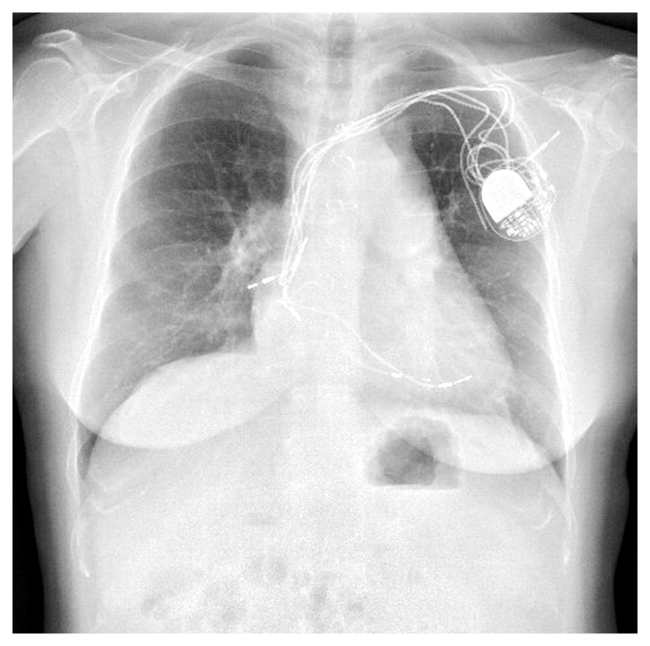
Our electrophysiology lab performs electrophysiology studies, radiofrequency ablations, cardioversions, pacemaker implants, defibrillator implants, biventricular pacemaker/defibrillator implants, and pacemaker/defibrillator battery changes.
The invasive radiology lab performs a full spectrum of procedures, including biopsies, shunt angiography and declotting, vertebroplasty, uterine fibroid embolizations, etc.
Patients are admitted to our cath lab on an outpatient, inpatient or emergent basis.
We perform approximately 45 to 50 catheterization procedures per week in addition to an average of 10 to 20 peripheral procedures per week. These include cerebral arteriograms, subclavian arteriograms, aortograms with runoffs, and renal arteriograms. We perform peripheral interventions that include balloon angioplasty, Cutting Balloon angioplasty, stenting, and cryo-angioplasty. Our lab plans to start carotid stenting procedures soon.
For your lab’s peripheral interventions, what disciplines (physician and non-physician) are involved?
Peripheral interventions are performed by both invasive radiologists and cardiologists.
How did you begin performing peripheral cases?
Historically, interventional radiologists have performed all peripheral cases since the inception of the program. A few years ago, an interventional cardiologist expressed an interest in performing peripheral cases. A process was established by the Health Center’s credentialing committee to determine what the credentialing requirements were for nonradiologists requesting privileges to perform peripheral procedures. Physicians who meet the requirements can request those privileges. Once the committee approves their request, they are granted the privileges and follow the normal process established by the Health Center’s medical staff.
What specific equipment did your center install and/or dedicate to peripheral cases above and beyond what is used for coronary cases?
Since our lab has always performed peripheral procedures in a dedicated suite, and the staff was cross-trained to work with the invasive radiologists, very little change was needed in the existing equipment or training. Eventually, a new array of supplies and equipment was added to accommodate the growing needs of both the radiologists and cardiologists in the expanding field of peripheral interventions. There was no need for any additional training except when a new device or product was introduced. In those cases, we followed the same path of undergoing vendor training, followed by competency evaluation when needed.
Ultimately, our cath lab added a fifth suite, which is equipped with a combined cardiac/peripheral vascular imaging system with flat panel detectors to provide the highest quality images for both types of procedures and to accommodate the increased volume.
How is inventory management handled for the peripheral equipment?
The inventory of the peripheral equipment is handled with the same principles utilized in the overall operation of the lab: standardization and just-in-time (JIT) inventory management. In general, the inventory has expanded considerably to make the new generation of technology available to our physicians in the sizes and lengths they need to treat their patients.
Do interventional radiologists and cardiologists perform procedures in the same area?
Yes, interventional radiologists and cardiologists share the two suites where peripheral procedures are performed on a first-come, first-served basis. Management of the schedule is the responsibility of the cath lab supervisor, just as with the other suites.
Does your cath lab perform primary angioplasty with surgical backup?
While we have an active open heart surgery program at our facility, our physicians routinely perform primary angioplasty without surgical backup. Occasionally, we will have a high-risk patient for whom the cardiologist may want surgical backup available. These procedures are scheduled simply through alerting the surgeon’s office and the operating room staff to verify the availability of the surgeon, perfusionist, OR staff and OR suite.
What procedures do you perform on an outpatient basis?
Most diagnostic procedures are performed on an outpatient basis unless the patient is hospitalized for other clinical reasons. Interventional procedures (angioplasty, stent placement, etc.) are performed on both an outpatient and inpatient basis, depending upon on the patient’s acuity guidelines. Some outpatients are kept for prolonged observation for 24 hours or longer if needed. Peripheral angiography and angioplasty patients go home the same day, as do pacemaker battery change and electrophysiology patients. Patients receiving a new pacemaker or defibrillator, as well as ablation patients stay overnight.
What percentage of your patients are female?
Approximately 41 percent of our patients are female.
What percentage of your diagnostic catheterization patients go on to have an interventional procedure?
Due to the stringent clinical screening most of our patients undergo, we have a very low percentage of diagnostic catheterizations showing normal coronary arteries. Approximately 75-80 percent of our diagnostic patients proceed on to a coronary intervention.
Who manages your catheterization laboratory?
Lisa Arvidson, RT, is our catheterization laboratory supervisor. She has been a radiology technologist for 16 years and has worked in the catheterization laboratory for a total of 8 1/2 years 4 years at the beside, and 4 1/2 years as supervisor. Lisa has an Associates Degree in Radiology and is presently working towards a Bachelor’s Degree in Healthcare Administration. The cath lab supervisor reports to Moussa Elbayoumy, Director of Cardiovascular Services.
Ryan Jackson, RN, CCRN, is our cardiology data coordinator and educator. Ryan has been a registered nurse for 16 years and worked in the catheterization lab for 10 years before taking his present position in October 2004. Ryan has an Associates Degree of Nursing and a Bachelor’s of Science in Nursing. He also has been a critical care registered nurse since 1992.
Does your lab cross-train staff? Who scrubs, who circulates, and who monitors?
Our CV lab staff members are cross-trained to perform all functions with very few exceptions. Both RTs and RNs can scrub in the cardiac rooms, EP lab and the peripheral vascular/special procedures room. Both specialties can perform hemodynamic monitoring and recording in cardiac cases. Only RNs can circulate or administer medications (in accordance with Health Center policy), and only RTs can perform the imaging techniques in special procedures.
Does an RT have to be present in the room for all fluoroscopic procedures in your cath lab?
Currently, there is no legal requirement mandating the presence of an RT in the room for fluoroscopic procedures. However, our department generally arranges for at least one team member of each specialty to be on the on-call team, because an RT is required for performing the imaging techniques in the special procedures lab.
Which personnel can operate the X-ray equipment (position the image intensifier, pan the table, change angles, step on the fluoro pedal) in your cath lab?
Both RTs and RNs can scrub in the cath lab, which includes positioning the image intensifier (II), panning the table, changing angles, and stepping on the fluoro pedal. However, not all RNs are currently cross-trained for this function. Our lab’s cross-training breakdown is as follows:
Position the II: MD, RT or RN
Change angles: MD, RT or RN
Step on the fluoro pedal: MD, RT or RN
Pan the table: MD, RT or RN
In the special procedures lab, the radiologist positions the II, steps on the fluoro pedal, changes angles and pans the table. The RT is responsible for imaging techniques and postprocedure processing.
Has your lab instituted a clinical ladder?
We do not have a clinical ladder in place at this time.
What are some of the new equipment, devices and products introduced at your lab lately?
In February 2005, our cath lab installed VERICIS® PhysioLog, a new hemodynamic system from Camtronics Medical Systems (Hartland, Wisconsin). An integrated digital imaging archival system (cardiac mini-PACS) will replace our current digital image archive which has been in place since 1995. The VERICIS system by Camtronics was chosen as our new image archival system.
We have had the opportunity to use many new and innovative products from a number of different vendors. These include Taxus drug-eluting stents from Boston Scientific (Natick, Massachusetts) and the Cypher Stent from Cordis Corporation (Miami, Florida). We use Medtronic’s PercuSurge (Santa Rosa, California) and Boston Scientific’s FilterWire EX Embolic Protection System as distal protection devices.
St. Francis utilizes Perclose (Abbott Vascular Devices, Redwood City, California) for hemostasis. Our lab participated as a trial site for the Perclose A-T.
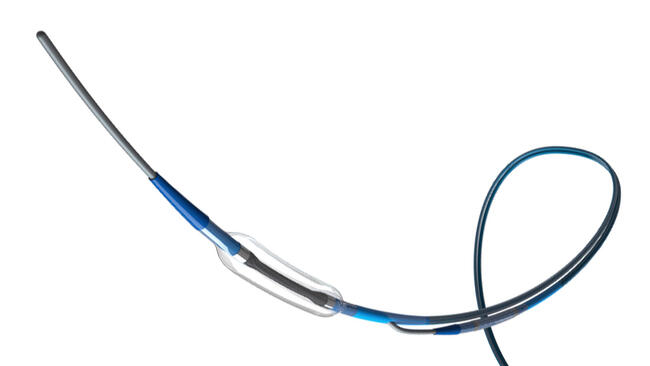
In the special procedures lab, we have begun utilizing the Cutting Balloon and cryo balloons for peripheral angioplasty procedures. We also have started using the FoxHollow SilverHawk Plaque Excision System (FoxHollow Technologies, Inc., Menlo, California) for peripheral atherectomy procedures.
Can you describe the system(s) you utilize and how they work in cath lab daily life?
In late 1995, St. Francis Health Center was the first cath lab in Kansas to go filmless as part of a fully networked imaging solution, and we have maintained it since. Our lab has always been at the forefront of medical technology in the cardiovascular field. We were one of the first 10 hospitals nationwide to go filmless with an integrated digital network for cath lab imaging. We continue to maintain our technological advantage with a planned upgrade of all our labs starting in the spring of 2005, with completion planned in fall 2005.
How are coding and coding education handled in your lab? How is coding communication handled with the billing department?
Cardiology has a dedicated billing coordinator who is responsible for initial coding and entering the charges for cath lab, special procedures and noninvasive cardiology. Coding is also coordinated with the physician performing the procedure and reviewed by the Health Center’s coding department. The billing coordinator communicates frequently with the coding department, accounting and internal auditing to ensure the accuracy of her procedures and compliance with all applicable laws.
How does your lab handle hemostasis?
Over 75 percent of our patients receive the Perclose system for vascular closure. If we are unable to place a Perclose and the patient’s ACT is less than 180 seconds, our staff will remove the sheath and manually hold pressure until hemostasis is achieved. If the ACT is greater than 180 seconds, the sheath is sutured in place, and the patient is sent to his or her postprocedure monitored area, where he or she remains under monitoring until the ACT is less than 180. At that point, the sheath can be removed and hemostasis achieved.
Does your lab have a hematoma management policy?
St. Francis Health Center has a hematoma management policy outlined in the St. Francis Nursing Service Standards Manual.
How is inventory managed at your cath lab? Who handles the purchasing of equipment and supplies?
We have two staff members who manage the inventory of our lab as part of their normal duties. One person orders for the cath lab and the other orders for special procedures, although each can order for both departments if necessary.
Our supervisor oversees the purchasing of equipment and supplies. The inventory managers perform the daily ordering for the lab under the supervisor’s guidance before or after the daily procedures are completed. We have used computerized inventory systems with barcode scanners in the past, but they were not very successful. In April 2005, we installed the Camtronics VERICIS PhysioLog computerized inventory system.
Has your cath lab recently expanded in size and patient volume?
We recently completed construction of a fifth procedure room. The vascular suite handles both cath lab and special procedures patients. The new room was added mainly to accommodate the rapid increase in peripheral procedures. Coronary interventions are also on the rise, and we needed an additional room to accommodate the increased patient volume. The new suite is also equipped as an operating room to allow for abdominal aortic aneurysm (AAA) stent graft procedures and carotid stenting.
Is your lab involved in clinical research?
St. Francis Health Center has participated in the AMIGO study (Atherectomy before Multilink Improves lumen Gain Outcome) and the POSTIT trial (Postdilatation Clinical Comparative Study). We currently participate in the CRUSADE (Can Rapid Risk Stratification of Unstable Angina Patients Suppress Adverse Outcomes with Early Implementation of the ACC/AHA Guidelines) data collection study, and the National Registry for Myocardial Infarction (NRMI). Our cath lab also collects data for the American College of Cardiology - National Cardiovascular Data Registry (ACC-NCDR) and the Society of Thoracic Surgeons National Database (STS).
What other modalities do you use to verify stenosis? Are you using physiology for lesion assessment?
We use intravascular ultrasound, computer-assisted analysis and visual assessment for stenosis evaluation. Our lab uses the WaveWire system (JoMed, Inc., Rancho Cordova, California) for physiological assessment of coronary lesions.
What measures has your cath lab implemented to cut or contain costs?
Our department has been very aggressive in cost containment for years, and we maintain our status as the lowest-cost provider in our region. We achieved that through tight inventory control, implementation of just-in-time inventory (JIT), consignment inventory, and managed utilization rates of supplies per procedures. We work with our physicians to standardize the supplies normally stocked in our inventory and continue to update them as needed. We constantly share our utilization rates with the physicians, which helps with their awareness of cost and the effort to reduce it. Through standardization and aggressive contracting, coupled with our ability to commit market share to vendors for better pricing, St. Francis Health Center enjoys one of the lowest-cost structures in our region.
What type of quality control/quality assurance measures are practiced by your cath lab?
Our staff members, as a group, have participated in formulating the quality plan for our lab. Quality control procedures are in place and implemented at all times to guarantee the performance of our equipment according to the manufacturer’s specifications. All X-ray equipment is maintained by in-house manufacturer-trained radiology engineers. Logs of all testing are maintained and reviewed frequently.
Quality assurance procedures are also in place to assure that our policies and procedures are implemented and the right things are done consistently.
Performance improvement activities are continuously evaluated as well. We utilize the Plan-Do-Study-Act (PDSA) model and benchmarking data to evaluate our performance and to guide our performance improvement activities. We participate in the CRUSADE quality improvement initiative, which increases the practice of evidence-based medicine for non-ST segment elevation acute coronary syndromes, in addition to a number of demonstration projects with CMS for heart failure, myocardial infarction, and coronary artery bypass grafting.
How does your cath lab compete for patients? Has your institution formed an alliance with others in the area?
As a tertiary healthcare facility serving part of rural Kansas, our Critical Access network includes a group of rural hospitals. These hospitals are supported by our services and send their patients to our facility for any advanced healthcare needs. We also assisted secondary care facilities in starting their own cath labs to perform diagnostic procedures, but they refer their patients to St. Francis for interventional and surgical procedures. St. Francis has formed the St. Francis Physician Hospital Organization (PHO), with a membership of over 250 physicians. Outreach activities by both the Health Center and its cardiology strategic allies have been a big factor in securing referrals. Such activities include rural outreach clinics, mobile nuclear testing, mobile echocardiography and mobile PET scanning.
How are new employees oriented and trained at your facility?
Each new employee is assigned a preceptor who is responsible for guiding the new employee’s educational process. Our lab only hires individuals with extensive clinical experience in their area of specialty, especially critical care. Preceptors are chosen from our experienced staff members. After attending a two-day general hospital orientation, new employees start their department training, which lasts for approximately three months and includes participation on the call team. The progress of the new team member is evaluated jointly each week by the team member, his or her preceptor and the department supervisor.
All St. Francis RNs are licensed through the Kansas State Board of Nursing, and all RTs are registered through the American Registry of Radiology Technologists (ARRT).
What type of continuing education opportunities are provided to staff members?
Staff members take personal responsibility for their continuing education by taking advantage of opportunities offered by the department, the Health Center or outside organizations.
How do you handle visits to your lab?
In compliance with confidentiality and privacy guidelines, regular visitors are not allowed in the cath lab. Observation by students or similar observers can only be allowed as part of a program and with a written agreement with our Health Center to ensure that guidelines are followed. All vendor representatives are required to check in at the materials management department and obtain a vendor badge that must be worn at all times. Each vendor representative is limited to one visit every two weeks unless special arrangements have been made when introducing a new product.
How is staff competency evaluated?
Staff competency is evaluated on a yearly basis and is performed through observation, written exams and demonstration techniques.
How does your lab handle call time for staff members?
Each member takes six to seven days of call per month. Call times are from 4 pm until 7 am the next day. Each call team has three members and consists of an RT and an RN. The third member can be either an RN or RT. Our lab is open from 7 am until 5 pm, five days a week, with a call team available after hours and on weekends and holidays.
We have staff members who work eight-hour shifts, nine-hour shifts, part-time and p.r.n.
What trends do you see emerging in the practice of invasive cardiology?
The trends we see emerging in the practice of invasive cardiology are no different from the national trends: declining volumes of cardiac surgery in favor of less traumatic interventional procedures, the escalating cost of new devices and drugs, and longer life expectancy of patients with heart disease, which will translate into an older patient population with more complex disease in the future. The staff at St. Francis looks with excitement to the development of new technology to aid in fighting heart disease.
Has your lab undergone a JCAHO inspection in the past three years?
Our organization underwent a successful JCAHO inspection in the fall of 2003.
Where is your cath lab located in relation to the OR, ER and radiology departments?
Our cath lab is located on the ground floor of the Health Center, next to the radiology department and in close proximity (direct line down the hall) to the emergency department. The surgery department (OR) is one floor above. Access to both departments is easy and unencumbered.
Please tell readers what you consider unique or innovative about your cath lab and its staff.
For a medium-sized, nonacademic hospital, St. Francis cath lab offers a full range of comprehensive cardiac services, with heart transplants the only exception. Our staff is a very close-knit group that works closely together as a team. The relationship between our staff members and physicians is unique, both inside and outside of the Health Center. They visit each other and participate in sports and outdoor activities together. This family and team spirit has enabled our staff to handle and overcome whatever difficulties they encounter and to come up with unique and creative solutions.
Is there a problem or challenge your lab has faced?
While most of our cath lab staff are long-term employees, we went through a period of staff shortages caused by both turnover and increased patient volume. Several candidates applied for the open positions; however, it was important to us to maintain the unique quality of our team by choosing the right people with the right combination of attitude and team spirit, together with clinical and technical expertise, to ensure a good fit. Staff, management and physicians were patient and endured a long and difficult period of longer-than-usual days and additional on-call assignments until the right applicants were found.
What’s special about your city or general regional area in comparison to the rest of the U.S.? How does it affect your cath lab culture?
Topeka is the state capital of Kansas, with two major universities within an hour’s drive the University of Kansas in Lawrence and Kansas State University in Manhattan. Washburn University is also located within the city limits. While it is a typical Midwestern city, Topeka also enjoys a diverse population from all over the world, giving it a special flavor with a number of cultural centers and events reflecting that diversity. The friendly, family-oriented lifestyle is still the dominant factor in our city and region, which is directly reflected in our cath lab culture.
Questions from the SICP
Do you require your clinical staff members to take the Registered Cardiovascular Invasive Specialist (RCIS) exam? Do staff receive an incentive bonus or raise upon passing the exam?
RCIS status is not required of our staff members, but it is strongly encouraged. The department offers reimbursement of the exam fees for any staff member who passes the registry.
Are your clinical and/or managerial team members involved with any professional organizations that support the invasive cardiology service line, such as the SICP, ACVP or regional organizations?
The department director, Moussa Elbayoumy, was a board member of the American College of Cardiovascular Administrators (ACCA) and is currently the Kansas state director for its parent organization, the American Academy of Medical Administrators (AAMA). Our cath lab supervisor is a member of the ACCA.
Ryan Jackson, RN, CCRN can be contacted at ryan.jackson@stfrancistopeka.org
NULL
Subscriber
Cath Lab Digest Newsletter