Cath Lab Spotlight
Saratoga Care, Saratoga Hospital
March 2005
What is the size of your cath lab facility and number of staff members?
Saratoga Hospital is a 174-bed community hospital with a cardiac catheterization laboratory (CCL) that includes one procedure room and 10 holding/recovery bays.
The angiography system is a single plane GE Advantx LCV system (Waukesha, WI). We have a cath lab manager (RCIS), an RN coordinator, 3.5 RNs, and 3 cardiovascular technologists (one RCIS and two licensed radiological technologists). The remainder of the team includes 1 cardiac cath lab technician, a medical secretary and 1 office coordinator. Hours for the office are 6:30 am to 6:00 pm, for the holding area, 7:00 am to 7:00 pm, and 7:30 am to 5:30 pm for the procedure room.
There is one cardiology group in Saratoga, comprised of nine cardiologists. Four of the physicians perform diagnostic cardiac catheterizations and of these, three are coronary interventionalists. These three have also passed the interventional board exam and possess a certificate of added qualifications in coronary interventions. One of these interventionalists also performs peripheral vascular diagnostic and interventional procedures in our cath lab. Our hospital has an interventional radiologist and a vascular surgeon who also utilize the cardiac catheterization laboratory to perform peripheral vascular procedures. Three cardiologists and one thoracic surgeon also perform pacemaker implantations, explantations and lead revisions. Our vascular surgeon and several cardiologists have privileges to place dialysis catheters and other central venous access devices.
What types of procedures are performed at your facility?
The lab has been open for a little over three years, and our annual numbers break down as follows:
1. 665 cardiac procedures - Diagnostic left heart catheterizations, right and left heart catheterizations, pericardiocentesis and IABP insertion.
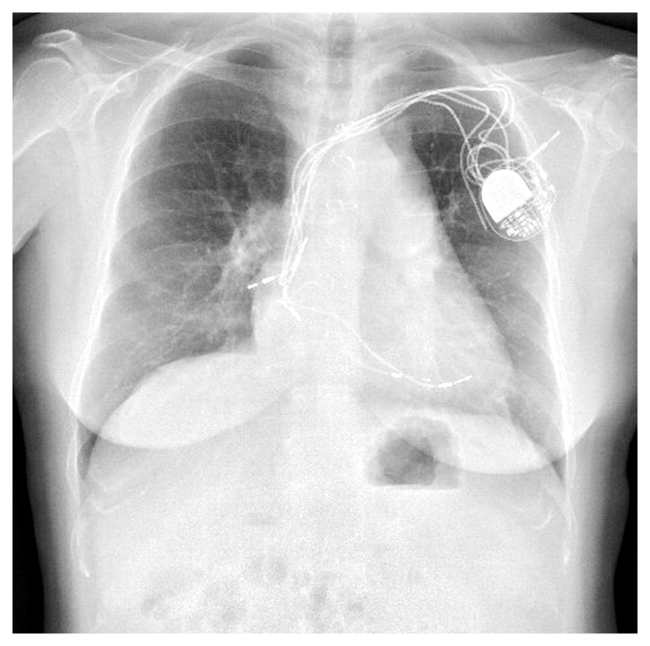
2. 110 pacemaker procedures - single and dual chamber pacemaker insertions and generator changes, temporary pacemaker insertion and loop recorder insertion or removal.
3. 360 peripheral vascular procedures - diagnostic angiograms, arterial and venous PTA, stents, thrombectomy and thrombolysis, PICC line insertion, dialysis catheter insertions or removal, fistulagrams and interventions or IVC filter insertion or removal.
To facilitate flow in the outpatient surgical area, in July of 2003, we began to perform outpatient blood transfusions, medication infusions and therapeutic phlebotomies in our holding area. In 2004, we met the needs of 410 patients that required outpatient drug infusions, blood transfusions or phlebotomies. Our cath lab serves 30-35 patients weekly.
Does your lab perform peripheral interventions? What is the approximate volume?
In 2004, our program performed 93 peripheral interventional procedures. The breakdown of these procedures is as follows:
1. 57 stent insertions or cryoplasty
2. 19 PTAs
3. 11 thrombectomy or thrombolysis with AngioJet or TPA infusion with indwelling infusion catheters or infusion wires
4. 6 IVC filters
Does your cath lab perform primary angioplasty in acute MI without surgical backup?
No. New York State is just beginning to allow hospitals without surgical backup on site to perform primary angioplasty for acute MI if they meet certain criteria. Our lab meets these criteria and we are in the process of pursuing a waiver through the New York State Department of Health and the C-PORT Registry. To ensure our department is prepared to initiate a primary angioplasty program, three of our cardiologists continue to participate in the primary angioplasty program at another local facility. Two of our Registered Cardiovascular Invasive Specialists (RCISs) work at another center to maintain their PCI skills, and we have a training agreement with Saint Peter’s Hospital. All of our staff is undergoing extensive hands-on training in anticipation of the waiver approval and subsequent start of the primary angioplasty program. We have maintained a 24 hours/seven day a week call since we opened in October 2001.
How is your cath lab managed?
We have the unique situation of reporting to Professional Services, and the Chief Medical Officer, Dr. Joyce Peabody. Our lab is a division of the department of Cardiovascular Services. Our Medical Director is Dr. Harold Card, MD, FACC, FSCAI, who is board-certified in cardiology and interventions, and has 19 years of coronary diagnostic and interventional experience.
Debbie Artrip, RCIS, is the manager of our cath lab. She has 20 years of experience performing invasive cardiac procedures. Debbie received her training and development in invasive cardiology at the Albany Medical Center Hospital under the expert tutelage of Dr. Julio A. Sosa, MD. Prior to taking on the challenge of opening a new lab here at Saratoga Hospital, she managed the cardiac catheterization laboratory at Ellis Hospital for 10 years. While there, she was instrumental in the development of PCI, primary angioplasty and electrophysiology programs.
David Goff RN, EMT-P is the RN Coordinator. He acts as liaison between the hospital’s division of nursing and the cardiac catheterization laboratory. His role is to assist the cath lab manager in ensuring that cath lab policies meet the standards defined by the Division of Nursing, State of New York and JCAHO. The integrity and development of each staff member are key to this program’s success.
Do you have cross-training in the cath lab?
To the extent that state law allows, all staff members in the department are expected to be cross-trained. For example, by law, only RNs may administer medications. Cross-training of staff allows for enhanced flexibility and efficiency as well as a greater understanding of how each team member’s expertise and credentials bring quality to the delivery of peripheral or cardiovascular patient care. Department policy requires that a staff member must possess a RCIS certification or equivalent in order to scrub in on invasive procedures.
All staff members in our department are expected to perform patient care, clerical, inventory management and housekeeping duties. All cardiovascular technologists and peripheral technologists are trained to scrub in, to monitor from the control booth and to assist in the pre/post patient care area. All nurses are trained to circulate, to perform control booth duties, and to prepare and recover patients.
Does an RT (radiologic technologist) have to be present in the room for all fluoroscopic procedures in your cath lab?
No. There currently is not a policy requiring an RT to be present to operate the x-ray equipment for all procedures.
Which personnel can operate the x-ray equipment (position the II, pan the table, change angles, step on the fluoro pedal) in your cath lab?
Staff that have demonstrated competence and are credentialed to scrub perform all of the above functions under the direct supervision of the physician. Currently we do not have any RNs that have the added RCIS or LRT credentials that would allow them the opportunity to scrub, and require them to be competent. The physician operates the pedals, and for peripheral vascular angiography, it is the physician with the staff member performing the monitoring role that both utilize hand-held triggers to obtain the images.
How is coding and coding education handled in your lab? How is coding communication handled with the billing dept.?
A member of the clinical staff enters procedural codes into the patient’s electronic account at the conclusion of the procedure. The procedures are bundled into pre-formed sets by the billing department, and new codes are researched by the clinical staff in conjunction with the billing staff. This multi-dimensional approach has been very successful for Saratoga Hospital.
What other modalities do you use to verify stenosis? Are you using physiology for lesion assessment? (If yes, how has this affected your operating cash flow?)
We do not currently employ any physiologic lesion assessment. New York State will not allow a diagnostic cardiac cath lab to pass any device down a coronary artery. However, for peripheral vascular procedures, we frequently will utilize pressure gradients as a secondary means of verifying stenosis. We generally do this with 4 Fr glide catheters (Boston Scientific, Maple Grove, MN), which add only a marginal expense to the overall cost of performing the procedure.
How do you handle vendor visits to your lab?
Product and pharmaceutical representatives are welcome to visit by appointment. We follow strict Corporate Compliance policies that require the reps to sign in with the Purchasing department, and mandate the reps to provide staff education. They are not permitted to simply bring a meal and sell their product. They are given visitor’s badges, required to take a tour of the department, and identify fire safety exits, read and sign a Vendor Rep Agreement that outlines the boundaries for selling products.
What are some of the new equipment, devices and products introduced at your lab lately?
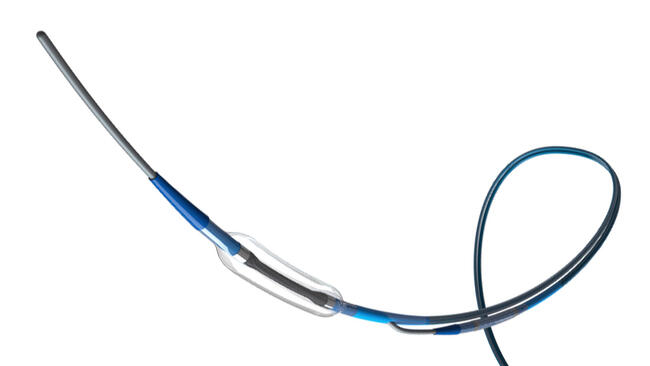
Our department utilizes the AngioJet® System (Possis Medical, Inc., Minneapolis, MN) for peripheral vascular procedures. Not only have we utilized this device for thrombectomy with the 6 Fr Xpeedior peripheral AngioJet catheters, but we have also had great success with this device using the Power-Pulse Spray technique, developed by Dr. David Allie et al.1 The AngioJet is utilized to infuse thrombolytics into peripheral arteries where thrombus has formed. The lysed clot is then removed, utilizing the device in normal fashion. In late 2004, we also started using Boston Scientific’s CryoPlasty system (Maple Grove, MN). We successfully treated 4 cases of in-stent restenosis in November and December 2004.
Can you describe your cath lab imaging and archiving systems?
Our lab is outfitted with a GE Advantx LCV system equipped with a 12-inch image intensifier, and has full cardiac and peripheral capabilities. The images are then automatically electronically transferred to our Heartlab digital imaging archiving system. Heartlab’s Encompass (Westerly, RI) review station software (version 2.1) is utilized to view the archived images. The system stores images to a DVD jukebox and makes backup DVDs that can be stored off-site. This system is able to send images to stations at two other regional hospitals that often receive our patients for PCI or surgery. This system is maintained on its own network to provide optimal security for the images.
What processes does your lab use for pulling sheaths post-diagnostic and interventional procedures?
Our CV technologists and nurses in the lab remove sheaths. For our diagnostic cardiac procedures, 85% of patients receive VasoSeal® (Datascope Corporation, Mahwah, NJ), 5% receive Perclose® (Abbott Vascular Devices, Redwood City, CA), and the remaining 10% have the sheath removed with manual compression held for 20 minutes. For our peripheral vascular procedures, 30% of patients receive VasoSeal, 1% receive Perclose and the remaining 69% have the sheath removed with manual compression held for 20 minutes.
We have our own ten-bed recovery area and our inpatients are usually monitored for 30 minutes to one hour before returning to their hospital room. Outpatients are discharged to home in 2 to 6 hours depending upon closure device, physician preference, and upon assessment of the access site prior to discharge.
How is inventory managed at your cath lab?
Saratoga Care utilizes the Meditech computer system (Westwood, MA) for its in-house communication, patient registration, billing and inventory control. Our department has a full-time staff member, who, among other duties, is responsible for maintaining the inventory. Employing a collaborative team approach, inventory and supply contracts are negotiated by the manager and the director of purchasing. Prior to buying a product, we simultaneously ask the practicing physicians for their input while obtaining detailed product cost and commitment levels from vendors. This allows both parties (administrative and physicians) to balance quality and financial considerations for a win-win approach.
Supplies utilized during the procedure are entered into the Meditech system by our professional staff so they will appear on the itemized patient bill and will also be deducted from our inventory. Items have a par level and the system prompts for reorder when supply reaches this level. The hospital purchasing department will then set up the purchase order and order the supply. In 2005, we will employ a bar coding system on a trial basis to aid in efficiency and inventory management.
Has your cath lab recently expanded in size and patient volume or will it be in the near future?
Our department has been in operation for almost 3.5 years. When the physical layout for our department was developed, two labs were planned. Currently, the N.Y.S. Dept of Health has only approved one cath lab. There is a required CON (certificate of need) approval process for each additional lab dedicated to cardiac catheterization. The potential second lab space is currently being used as a conference room and a computer training center. When the need for expansion can be documented, a temporary wall will be removed. The room for expansion is structurally ready for all of the equipment and has been lined with lead. We are currently over targets for peripheral vascular procedures and await an administrative decision on expanding the lab. This will be dependent on case volumes and room utilization for both cardiac and peripheral vascular procedures for calendar year 2005. We also look forward to performing primary angioplasty, and possibly initiating an electrophysiology program.
Is your lab involved in clinical research?
We have supplied digital ventriculograms (with all patient identifying factors removed) to the University of Washington in Seattle, for the development of a digital ventricular assessment program. Dr. Florence Sheehan, a research cardiologist at the University of Washington who is respected worldwide for her work in the quantitative evaluation of data gathering during cardiac catheterization, has invented what is probably one of the most widely used methods for evaluation of left ventricular function in existence today. Presently, Dr Sheehan and her team are working to develop an algorithm to allow automated computer quantification of left ventricular function based on images obtained in the cath lab. They have achieved a high level of clinical accuracy from studies performed in Japan, but need to analyze images from U.S. labs.
Our hospital is also participating in the CRUSADE patient database 2003 (Can Rapid Risk Stratification of Unstable Angina Patients Suppress Adverse Outcomes with Early Implementation of ACC/AHA Guidelines).
What measures has your cath lab implemented in order to cut or contain costs?
The cath lab manager is keenly focused on cost control. She has negotiated with our product vendors extensively to ensure the best price. In addition, precautions have been put into place to assure that sterile products are used or exchanged prior to expiration dates. Protocols have also been put in place so that equipment is not opened until it will be utilized. Negotiations with insurance payers have ensured paid carve-outs for therapeutic interventional devices. A recent cost analysis showed a significant reduction in staffing cost with the use of closure devices, reducing the length of stay for our outpatient population.
How does your cath lab compete for patients? Has your institution formed an alliance with others in the area?
Despite the fact that our cardiac catheterization laboratory is the only one in the county, we still face a competitive situation. Prior to the start of operations in October 2001, all patients traveled outside of the county to have catheterizations performed. To be competitive, we focus on the unique benefit of having cardiac catheterization performed in the patient’s home community, with the possibility of having one’s own cardiologist perform the cardiac and/or peripheral vascular procedure in our facility. The need was demonstrated and the N.Y.S. Department of Heath approved our CON for this diagnostic center. Our hospital earned national recognition in the attainment of above-average door-to-drug time in thrombolytic therapy, and received a three-star rating from the Alliance for Quality Health care for the best delivery of clinical treatment of heart attack and congestive heart failure. This past year Saratoga Hospital was recognized by the ANA, and designated a Magnet hospital. We also maintain a clinical affiliation with St. Peter’s Hospital in Albany which has achieved Top 100 Cardiac Hospital status for five years running, one of only three hospitals nationwide with such distinction.
Our department also sponsors cardiac risk assessments and participates in the Legs for Life Program biannually. The Saratoga cardiologists and our staff members visit our referring physicians’ offices to explain the services that we can offer and to ensure that we are meeting their needs. Our staff strives to maintain a high level of patient satisfaction. Saratoga Care utilizes Press Ganey to monitor customer satisfaction; our department has been scoring in the 95th (and above) percentile in several of the areas.
Does your lab have an outpatient program?
Approximately half of our procedures are performed on outpatients. All cardiac catheterization laboratory patients undergo a complete assessment by our holding area staff before and after procedures. Patients who are scheduled as a same-day admission will be admitted by our outpatient staff and transported to their assigned room following completion of the procedure. Typical outpatient procedures include:
1. Diagnostic cardiac procedures
2. Peripheral angiograms
3. PTA of dialysis fistula
4. Dialysis catheter insertion and removal
5. Venous access devices
6. Pacemaker pulse generator replacement
7. Loop recorders
8. Blood product transfusion
9. Medication infusions
10. Therapeutic phlebotomy
How are new employees oriented and trained at your facility?
All new employees undergo a 3-day general hospital orientation program aimed at informing staff members about general policy and procedures, and the Meditech system. Staff members then spend 2 to 3 days with our manager in department orientation. Our department utilizes a competency-based orientation tool, which is comprised of an extensive 200-page document detailing aspects of our staff members’ responsibilities. This is utilized as a working document, with frequent updates demonstrating progress towards reaching competency in all areas. Progress in this tool is documented by the new staff member and all staff members that impact upon his/her professional development. The manager and RN coordinator meet regularly during this process to assess ongoing needs. Length of orientation is individualized and based upon the new staff member’s prior experience, education and available patient population during the orientation process.
In order to meet specific learning needs of new staff members, homework assignments have been developed. An example of a homework assignment is a sheath removal scenario. In this scenario, there are 6 patients that require sheath removal and hemostasis. The staff member must prioritize as to the clinical scenario, method of removal determined (VasoSeal, Perclose, manual, sutured in place) and what additional information is required (i.e., ACT). This type of assignment encourages thought and discussion among our staff. Other homework assignments are developed when the orientee and preceptor identify a learning need, such as drug calculations.
Credentialing is highly recommended for all health care professionals in this department. We adhere to the guidelines set by the Society of Invasive Cardiovascular Professionals for establishing and maintaining high quality patient care, technical studies, and interventional therapies.
What types of continuing education opportunities are provided to staff?
Our organization has in-house continuing education programs offered by our education department as well as outside consortium classes sponsored by other regional hospitals and private companies. Pharmaceutical and clinical representatives are also utilized to provide information about their areas of specialty and expertise. Physicians performing procedures within the department are also very active in our staff education. Monthly cath conferences are held to review clinical outcomes or educational topics. Attendees include cardiothoracic surgeons, interventional or diagnostic cardiologists, and our staff members. Arrangements are also made so that local and national conferences are also made available to our staff. The hospital values continuing education, and reimburses employees for added credentials, pays them to attend mandatory courses like ACLS, and provides tuition assistance/reimbursement for college classes.
How is staff competency evaluated?
Competency is evaluated at 90 days and then on the anniversary of the hire date. For those tasks that are less common, a tool has been created for competency documentation. This tool includes checklists for hands-on evaluation (i.e. setting up the IABP with a simulator, including problem-solving) and a written test that covers right heart calculations, waveform identification and policy. We have also identified high-risk, low-volume procedures performed in the lab and have separate competency mandates to ensure all staff maintain these skill sets.
Does your lab utilize any alternative therapies (such as guided imagery?
Conversation and humor are utilized to help patients relax. Music is also utilized in the lab to relieve patients of their anxiety. Our facility provides a licensed massage therapist free of charge to all inpatients, who may choose to participate.
How does your lab handle call time for staff members?
Our cardiac and peripheral catheterization laboratory department is available 24 hours a day, 365 days a year. The call team is comprised of three members. Each team has at least one RCIS/RT and RN, with the third staff member being an RN or CVT competent to fulfill the role of monitor. This provides the laboratory a strategic opportunity to manage emergent and potentially life-threatening vascular traumas. The interventionalist, an interventional cardiologist possessing peripheral vascular skills and/or an interventional radiologist, provide services during these off-hours with the same qualified staff. Since these emergent patients are often unstable, and rapid diagnosis and therapeutic intervention is crucial, the importance of a team effort cannot be overstated.
What types of quality control/quality assurance measures are practiced in your cath lab?
New York State mandates a yearly report format that includes patient demographics and distribution of diagnosis and complications. This data is also reported in our monthly Quality Improvement report. Quality improvement data is collected on all the equipment utilized in the cardiac catheterization laboratory (e.g. X-ray, hemoximeter and ACT). A documentation tool has been developed to ensure that all quality indicators outlined by JCAHO are in the medical record; this 60-point tool is utilized on 100% of the patient charts. All patients are contacted following their procedure to assess for side effects (i.e. pain) or complications, as well as to reinforce teaching. This information is reviewed, as is the success rate for contacting the patients, as part of our quality improvement initiative.
In addition, through monitoring of our processes, we utilize the Plan-Do-Study-Act methodology for Performance Improvement. In 2002, we started utilizing Press Ganey Scores (South Bend, IN) and patient comments as indicators of customer satisfaction. Processes were then initiated to ensure improved patient flow, anticipation of patient needs and individualized care, resulting in our department recently being ranked in the 99th percentile for the Press Ganey report.
What measures has your cath lab employed to improve efficiencies in-patient throughput, etc.?
Past experience has shown us that many of the factors that slow procedures in the cardiac catheterization laboratory are out of the department’s control. Our lab was organized to be in control of these factors. Our patients are contacted the evening prior to the procedure by a registered nurse, and patient education is done, medications and lab work are reviewed, and the chart prepared. The patient is given directions to report directly to our department for registration by our staff, bypassing the admitting department.
The patient is prepared for the procedure in our 10-bed recovery area by our staff. Any additional lab work is obtained as IV access is placed. In order to minimize turnaround time, our professional staff cleans the room following each procedure, and transports inpatients to and from the department. Our staff is also responsible for inventory control, ensuring required equipment and supplies are always available.
What trends do you see emerging in the practice of invasive cardiology?
We see a trend of cardiologists expanding into peripheral vascular care. In our institution, a cardiologist performs a large percentage of peripheral vascular procedures. All five of our cardiologists perform at least limited peripheral procedures and one has completed an invasive peripheral vascular fellowship.
Has your lab undergone a JCAHO inspection in the past three years?
We were inspected by JCAHO in September of 2004. Our department has initiated a policy of maintaining readiness for inspection. Surveyors visited the lab and were pleased to see how we had responded to the mandates, incorporating the seven National Patient Safety Goals into practice on a daily basis. We were instrumental in developing documentation to meet the rigorous standards for Moderate Sedation, now in use throughout the hospital. Quality improvement documents have been designed to ensure that all documentation is updated monthly. This system has resulted in the department receiving high scores in a New York State Waived Testing documentation audit. We also attempt to integrate new guidelines as soon as they are released and to perform chart audits to ensure compliance with the guidelines.
Please tell the readers what you consider unique or innovative about your cath lab and its staff.
Our operational plan was designed for maximum efficiency with minimal effect on other departments within the hospital. We handle the patient from the physician’s office to the scheduling and registration, to the CPT coding, to post discharge instructions from the facility. To achieve this goal, our secretary registers all our outpatients and our professional staff performs housekeeping, transportation, report generation, billing, and inventory management duties. The cath lab team makes the complete circle with very limited resources. We have found that this has made our staff a cohesive group, self-sufficient and resourceful. Since our staff is responsible for meeting all of our patients’ needs as well as the needs of their families or significant others, a strong bond has formed among our staff.
As a result of developing a brand-new program, we are very unique in that we were able to hire staff with similar values and work ethics. Like most labs, our staff has very strong personalities and we are all leaders, not followers. Yet our staff has developed a very unified manner of meeting our challenges. During times of high volume or stress, our staff has the tendency to pull together and offer each other support. We attribute a great deal of our success to this trait. We are willing to trial new methods of health care, new products, or new computer programs by keeping an open mind to change. We view this as integral to survival in a shrinking health care system. Our community and referring physicians believe in the care we deliver, and our patients especially appreciate the special touches we provide, like their thank-you notes.
Is there a problem or challenge your lab has faced?
Cardiac catheterization is the first new service for Saratoga Hospital in twenty years. All other expansions have been additions to existing services. Although we attempted to minimize our effect on other departments, our opening placed many stresses on the existing systems. In the three weeks prior to our department’s first case, processing the arriving supplies was a full-time job for the Receiving Department. Workflow has changed significantly on several of the nursing units, where the patient population that would previously have been transferred to a tertiary care facility is now part of the daily census. To say that the hospital experienced future shock with the advent of cath lab operations is an understatement, yet these challenges were minimized by education and the development of strong interpersonal relationships with other departments.
The development of a cardiac catheterization laboratory was a major step for the hospital. The majority of our staff members were hired from outside Saratoga Care. This allowed the department to start with an experienced and highly skilled staff, but raised concerns about the ability of these new employees to maintain the high standards of care that were valued throughout the institution. Such concerns were soon alleviated. Our staff sits on the Magnet Councils, Radiation Safety, Cardiology Collaborative Committee, Ethics as well as other hospital-wide committees. This has allowed our staff to develop relationships outside our department and to demonstrate our competency, value and respect of the hospital’s history.
What’s special about your city or general regional area in comparison to the rest of the U.S.? How does it affect your cath lab culture?
Saratoga Springs New York is the home of the oldest running thoroughbred track in the U.S. The track runs for 7 weeks, from mid-July to the first week of September. During that time, the city population swells from approximately 50,000 to upwards of 200,000. The city comes alive, and the hospital sees clientele from all walks of life that follow the horse around the state. We are expected to function like a more metropolitan facility. In the cath lab, this translates into a lot of reassuring. Patients from more urban environments question the quality and safety of smaller hospitals, particularly when treating their heart! Even during this period of high volume, our Press Ganey surveys have resulted in customer satisfactions scores in the high nineties.
The authors can be contacted at: dgoff@saratogacare.org
1. Allie D, Hebert C, Walker C. The CIS Power-Pulse Spray Technique. Vascular Disease Management 2004;1(2):12-16.
Subscriber
Cath Lab Digest Newsletter