Cath Lab Spotlight
Saint Vincent Heart Center
August 2002
Saint Vincent is a 450-bed referral center. We have 3 cath labs on site (one Philips [Bothell, WA] and two GE Medical labs [Waukesha, WI]). One of the GE labs is also used for special procedures. Saint Vincent has an 8-bay holding area, and the patients are admitted and returned to a short-stay cardiology unit. We also manage a fourth Toshiba (Tustin, CA) lab off-site, about four miles away.
Our cardiology practice consists of 21 physicians:
6 perform non-invasive as well as diagnostic studies;
5 perform interventions;
4 are dedicated solely to non-invasive procedures (echos, stress);
3 are dedicated to electrophysiology (our lab was recently featured in EP Lab Digest);
We have 3 CT surgeons with a 4th surgeon starting in July.
We employ a mix of:
10.5 registered nurses;
6.5 radiology technologists;
we recently hired 2 paramedics to train in the scrub role;
a full-time secretary;
a full-time and 2 part time hemostasis techs/transporters.
We also have a cardiovascular data coordinator responsible for our Witt (Melbourne, FL) and Apollo systems (Lumedx, Oakland, CA), and she also submits our data to the American College of Cardiology (ACC) Registry database.
Pamela Goepfarth, RN, RCIS, our cardiovascular data coordinator, presented at a breakfast meeting during the Cath Lab Digest Annual Symposium on Cardiovascular Care (ASOCC) in Las Vegas, Nevada, on June 7, 2002. The topic of her presentation was The Power of Data Integration. Pamela targeted processes to improve quality, enhance revenue, and decrease costs using integrated data systems.
Data integration in our cath lab is achieved through an interface between Lumedx’s Apollo32 Cardiovascular database (Oakland, CA) and the Witt Hemodynamic Monitoring system. We determined that we must know and measure the data before we can affect any outcomes. Our data integration has helped us improve quality, decrease costs in the cath lab and enhance revenue. We track real-time data which enables us to make immediate changes to improve our systems. For example, by using the data and working with our ER, we have decreased door-to-balloon time for patients suffering acute ST-MIs from 130 minutes a year ago to the current 70 minutes, well within the ACC-recommended 90-minute target.
In addition, we have implemented an automatic billing interface for more accurate billing. We decreased the former $65,000/month billing discrepancy to our current rate of zero. The staff enters all data into the Witt system. These data are then transferred to the Apollo32 system, which is linked to the hospital’s SMS billing system for automatic billing.
Our data system also helps us reduce costs. We negotiate with vendors using real data. We can guarantee them a certain market share of a product, like stents, in return for reduced prices. This has led to a reduced direct cost per case from $1200-1300 to $950, including interventions.
Benchmarking with national registries is very important. We have done 10 exports to the ACC National Cardiovascular Data Registry (ACC-NCDR). This data is extremely valuable in comparing our practice patterns and outcomes to national and regional group benchmarks.
What type of procedures are performed at your facility?
We perform cardiac diagnostics, myocardial biopsies, coronary PCI (including stent placement), vascular brachytherapy, laser PTCA, PTCA, rotational atherectomy, directional atherectomy and coronary thrombectomy. We perform 90 cardiac diagnostics and 30 percutaneous coronary interventions (PCIs) per week. We also perform about 5 peripheral interventions per week.
Does your cath lab perform primary angioplasty in acute myocardial infarction (MI) with surgical back up?
We do have surgical back up at our main facility. The lab we manage off-site does not perform cardiac interventions, only diagnostics. We do, however, perform peripheral interventions at the off-site lab.
Is your cath lab nursing or radiology managed?
We have a unique operating structure that involves the joint leadership of a nursing director and manager in conjunction with a medical director. This promotes a unified direction to not only staff, but physicians as well.
Our style is very participatory, involving all levels of staff in addressing issues and opportunities. In terms of the radiology aspects, we have a radiation safety officer (Sally Dinger, RT) who is very involved in the department.
Do you have cross-training in the cath lab?
We do utilize cross-training. Our goal is for all associates to be cross-trained to two positions. For example, nurses can either nurse or scrub the case. Radiology technologists can either scrub or run the equipment. Our rooms are set up so that the Witt system is located in the control room, and the RT enters data in the system, obtains supplies, and also keeps an eye on the monitor. All our RTs have basic dysrhythmia training and many of them are ACLS-certified. Our paramedics are training in the scrub role.
In addition, all staff must be cross-trained to the lab that is off-site.
What are some of the new equipment, devices and products introduced to your lab lately?
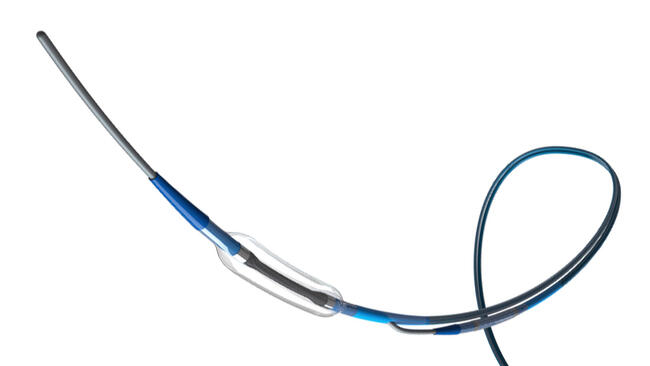
We started performing vascular brachytherapy (VBT) with the Novoste Beta-Cath System (Norcross, GA) in June of 2001. As the first health center in the region to perform these procedures, we see patients from as far away as Buffalo, New York. In December of 2001, we began using the Cutting Balloon (Boston Scientific, Maple Grove, MN) with the VBT procedure.
Is your cath lab filmless?
Yes, we installed GE’s GEMnet digital archiving system in November of 1999. The digital images are much sharper and clearer than the old cine film images. We also have our fourth lab, at a hospital 4 miles away, networked with our cineless system. All images from the cases done at the remote lab are transferred to the GEMnet system via a wide area network. Our database coordinator, Pam Goepfarth, co-authored an article as part of a Witt Biomedical advertisement in Cath Lab Digest regarding our database implementation (June 2001, Vol. 9, No. 6, Witt Biomedical and Apollo32 Provide Key Elements to the Integrated Cardiology Information Network at Saint Vincent Health Center).
How does your lab handle hemostasis?
Hemostasis is performed by all the staff in the lab (RN, RT, paramedics, hemostasis techs). Diagnostic sheaths are generally pulled in the holding area prior to the patient returning to the nursing units. For intervention patients who return to the nursing units with the sheath in, staff from the cath lab go to the units and pull the sheath when the ACT/platelets are acceptable. We specifically chose this approach to maintain minimal variability in how our sheaths are pulled and groins are managed. We do utilize Angio-Seal (St. Jude Medical, Minnetonka, MN) and FemoStop® (RADI Medical Systems, Reading, MA).
Does your lab have a hematoma management policy?
We have standards of care for groin management not only in our cath lab, but in our CCU and telemetry departments as well. These standards include how to manage an unstable groin.
How is inventory managed?
We have a dedicated associate, Lee Anthony, RT, who functions as our inventory manager. During each case, the staff documents inventory used in our on-line Witt Biomedical cath lab system. At the end of each case, the data transfers to our main cardiology database, Lumedx’s Apollo32. Utilizing Apollo, a file is electronically sent to our purchasing department, which manually debits the inventory used the prior day. A summary report of the inventory used automatically prints out for the inventory manager. He uses this report, his own experience, and the current shelf inventory to determine what inventory needs to be ordered. We have the capability to do automatic reordering, but do not use it at this time. Our inventory manager prefers to manage and adjust inventory manually, as we keep our inventory levels at a low just-in-time level.
Has your cath lab recently expanded in size and patient volume?
Our cath lab volumes continue to grow at about 5% overall per year. We expect this to continue or even increase in the near future.
The Saint Vincent Health Center has formed the Regional Heart Network, a collaborative business venture linking technology, training and cardiac expertise for communities in northwestern Pennsylvania and western New York. There are currently 15 member health care facilities in the Regional Heart Network, as well as 4 or 5 more in preliminary negotiations. This provides a sound referral base for our heart center and ensures continued volume growth.
Is your lab involved in clinical research?
Yes, our team is very active in research. The cardiology practice employs a full-time certified research nurse in addition to a part-time research nurse. We are currently involved in the VICC study, a contrast study. We are soon to take part in the SYNERGY study and the REPLACE study. In the past, we have been involved in the GUSTO trials and EPIC trials, to name just a few.
Does your lab perform elective cardiac interventions?
Yes.
Have you had any cath lab related complications in the past year requiring emergent cardiac surgery?
We had one. During a PCI, the guiding catheter caused trauma to the right coronary artery creating a spiral dissection requiring emergent surgery.
What measures has your cath lab implemented in order to cut or contain costs?
We have implemented a few different approaches:
We negotiate contracts with vendors for additional discounts and rebates. Utilizing our Apollo32 database, we can show vendors exactly what our historical usage has been and guarantee them a certain volume of product.
We do bulk buys and other special buys to decrease costs.
We have done some creative staffing with 8, 9 and 10 hour shifts, which has resulted in decreased overtime and increased staff satisfaction. We also have implemented part-time positions. Up until three years ago, we only had full-time positions. This has really helped to increase our flexibility. An efficient lab with a great deal of teamwork allows us to do 30 cases in three rooms between 7:30am and 5:00pm with minimal overtime. We also employ a part-time nursing student in the evenings (4“8pm) who pulls sheaths, thereby reducing OT for the regular status associates.
How does your lab compete for patients?
In the Saint Vincent Heart Center, we focus on quality and service. We routinely report key indicators of our performance within our organization and outside to the physicians in the community. One example is door-to-balloon time, where the national standard is 90 minutes. Our goal is 60 minutes. Our cardiology group also provides on-site, 24/7 coverage, so patients are evaluated quickly and the cath lab call team can be summoned promptly for a re-vascularization. Through the Regional Heart Network, our cath lab is affiliated with the lab at Millcreek Community Hospital (also in Erie, PA). Our associates staff the lab, and the imaging system is digitally integrated with our system. Physicians here can view images with the physician at Millcreek while the patient is still on the table, facilitating diagnosis and treatment decisions.
Does your lab have an outpatient program?
Currently all of our patients are either inpatients or patients who registered and are placed in the short stay unit.
How are new employees oriented and trained at your facility?
The orientation plan is specific to each role. People orienting to the nurse role are given a minimum of 8 weeks orientation in the rooms and an additional two weeks in the holding area.
Associates orienting to the scrub role are given a minimum of 12 weeks in the room with an additional two weeks in the holding area.
All new associates are given Dr. Morton Kern’s Cardiac Cath Lab Handbook (Mosby-Year Book Inc., Saint Louis, MO) when they accept a position. In addition, we have associates who are dedicated to updating our orientation plans. Cara Milani, RN, and Jeanette Brocious, RN, recently rewrote the entire plan for both the nurse and scrub position. They designed an orientation binder that covers all the procedures and also wrote what-if scenarios. Jenn Betcher, RT, is currently revising the RT orientation plan.
New associates have a weekly meeting with the manager to discuss progress and address any concerns or issues. In addition, we are fortunate to have some vendor support, such as the new hire training that is provided by Guidant Corporation (Santa Clara, CA).
What type of continuing education opportunities are provided to
staff members?
We are very focused on continuing education. We have a team that meets twice a month to review educational requests and determine available funds. We are asking our qualified associates to sit for the Registered Cardiovas- cular Invasive Specialist (RCIS) credential (associates are considered qualified according to Cardiovascular Credentialing International guidelines. We do not expect anyone to take the exam unless they have 2+ years experience. Guidelines state that a Baccalaureate-prepared associate can sit for the exam with 6 months of experience). We have also scheduled a speaker for 3 full-day sessions at our facility to help the associates prepare. We also provide monthly educational meetings where physicians/vendors do 30-minute presentations on new products or staff-requested topics. The Heart Center also sponsors an annual cardiovascular symposium that is held on a weekend to offer more associates the opportunity to attend. The 2002 Cardiovascular Symposium is September 21“22 at Peak n’ Peek Resort and Conference Center in Clymer, New York.
How is staff competency evaluated?
Staff competency is evaluated on an annual basis and is based on standards of care and meeting patient satisfaction outcomes, in addition to the organizational strategic initiatives. In addition to direct observation and input from the physicians and peers, we also do annual credentialing on high-risk low volume procedures, such as laser, AngioJet® (Possis Medical, Inc., Minneapolis, MN) and Rotablator® (Boston Scientific, Maple Grove, MN), to name a few, since we don’t do those every day.
Does your lab utilize any alternative therapies?
We do have a CD player in each room. Our experience has been that most patients do not have a preference. We did receive a grant from the hospital auxiliary that we will use to place small televisions in the holding area bays for patients while they are waiting either pre or post procedure.
How does your staff handle call time for staff members?
We require 3 associates to be on call one RN, one scrub and one RT. We cover call from 5pm “ 7:30am Monday through Friday and 24 hours Saturday and Sunday. We have a scheduling committee who creates our schedules, but the call team is done as a group effort. Everyone takes an even number of days during the month. Currently we are averaging about 7 days a month and roughly every fifth weekend.
What type of quality control/quality assurance measures are practiced in your lab?
As members of the American College of Cardiology National Data Registry (ACC-NCDR), we continually benchmark with national statistics. This includes outcomes, complications, mortality, length of stay, etc. Among the data we track are door-to-balloon inflation time for MIs, ER door to first EKG time, vascular complications, etc.
What measures has your lab employed to improve efficiencies in patient throughput?
We measure room turnover time, physician response time, and first case start time. After sharing this information with the physicians and associates, we noticed an improvement.
We have an online scheduling system which is located in the holding area and in all the control rooms. This enables the team to see what case is coming to their room next and they are able to start pulling the supplies for the case while they are waiting for the physician to respond to the current case. This scheduling system also enables the holding area to see when the case has started so that they can call the nursing unit to prepare the next patient for that cath room. We also have daily room assignments for all staff. Certain staff are assigned to the holding area and certain staff to each room. This rotates on a daily basis. The holding area staff prepares the patient for the procedure, the room staff picks the patient up and takes them to the procedure room. After the case is completed, the room staff calls the nursing unit with report and the holding area staff takes over the patient care, including sheath pull or pressure bag and transport to the nursing unit. The room staff turns the room over and takes the next patient in to the procedure room. All our charting is done on the Witt system, so all care is documented via drop-down lists with the ability to type freehand if needed.
What trends do you see emerging in the practice of invasive cardiology?
We believe the next big trend will be the introduction of drug-eluting stents. We also see gene therapy as a future treatment. Also, cardiac computed tomography (CT) could become a valuable asset in non-invasive diagnosis of coronary artery disease.
Has your lab undergone a JCAHO inspection in the past three years?
Yes, we were surveyed in November of 2001. The survey went very well for us. The surveyors were very interested in talking with the staff and gaining a sense that the staff knew the correct answers and were able to elaborate on how we practice.
What is unique or innovative about your cath lab and its staff?
Our teams are incredibly efficient. Average room turnover time is 25 minutes. They can do 30 cases in the three cath rooms between 7:30 and 5:00pm. The staff is also very flexible. We switched from analog to digital in November 1999 and installed a new cath lab at the same time (meaning they had to learn a new system in the two current rooms, and practice in a mobile lab for the third). We also installed the Pyxis medication stations (San Diego, CA) in all three rooms during that same time. In February of 2000, we installed WITT, and Apollo in May of 2000. Between November 1999 and May 2000, there were five major changes in staff practices, but they never missed a beat!
The staff also constantly strives to improve patient quality of care while reducing costs and actively participating in all aspects of cath lab operations. The health system recently underwent a survey by The enVision Group, a consulting firm based in Naples, Florida, that specializes in clinical reviews, and we found that our cardiac cath lab areas capture 90-95% of all applicable procedure charges!
What is special about our city? How does it affect your cath lab culture?
Erie, Pennsylvania is located along the shores of beautiful Lake Erie. Along the beaches of Presque Isle, we have some of the most beautiful sunsets in the country. While the population of Erie County is 210,000, the population of the areas we provide service to is 900,000. According to national statistics, our patient population is older, having more acute MIs and more unstable angina with weaker ejection fraction, than the national average. The call team responds quickly, within 20 minutes, when called for an acute MI. They understand that time is myocardium and our patients are very ill. Special comfort measures are provided, ranging from a blanket warmer to special pillows for those arthritic knees and backs.
Saint Vincent was founded by the Sisters of Saint Joseph and is over 125 years old. In April of 2001, we received the top award for care of patients with anterior MI from Premier (Charlotte, NC).
We were recently voted the Peoples’ Choice for Health Care in the city of Erie. Two of our cardiologists, Dr. Joseph Cacchione and Dr. Gordon Anderson were voted #1 and #2 respectively for the Peoples’ Choice for Cardiologists.
NULL
Subscriber
Cath Lab Digest Newsletter