Cath Lab Spotlight
New York Methodist Hospital
September 2008
What is the size of your cath lab facility and number of staff members?
New York Methodist Hospital (NYM) currently has three cath labs. Our third and newest lab opened in July 2007. NYM has two prep/recovery areas, giving us a total bed capacity of 20 beds. Twenty-five cardiologists perform procedures in our labs; seventeen of them are interventional cardiologists. We also have cardiac fellows. Our staffing complement consists of one interventional coordinator, six physicians’ assistants (PAs), one nurse manager, 14 registered nurses (RNs), one invasive cardiac radiological specialist (radiologic technologist, or RT), three cardiovascular technologists (CVTs), three medical assistants and one unit secretary.
Staff members have been employed in our cath lab anywhere from three months to 6 years.
What type of procedures are performed at your facility?
We perform cardiac catheterizations, primary angioplasty and stenting, and peripheral artery angiography and interventions. We perform approximately 50 cardiac catheterizations per week and 25 angioplasties per week. In 2007, 2,455 cardiac catheterizations and 1,188 angioplasties were performed.
Does your cath lab perform primary angioplasty with surgical backup onsite?
NYM performs primary angioplasty with surgical backup. The cardiac surgery team is available during working hours and an on-call cardiac surgery team is available during off hours.
What procedures do you perform on an outpatient basis?
All procedures performed in our cath lab can be scheduled on an outpatient basis. Cardiac interventional patients are admitted for an overnight stay.
What percentage of your patients is female?
Approximately 47.7 percent of our patients are female.
What percentage of your diagnostic cath patients go on to have an interventional procedure?
Approximately 32 percent of our cath patients go on to have an interventional procedure.
Who manages your cath lab?
Our chief of cardiology is Terrence Sacchi, MD. Our Director of the Cath Lab is Dr. Sorin Brener. Louise Tangredi-Ruiz, RN, manages our cath lab. She is supervised by Kathleen P. Treacy, RN, Director of Nursing.
Do you have cross-training? Who scrubs, who circulates and who monitors?
All registered nurses are trained to work in the cath lab, the prep/recovery areas, and the non-invasive cardiac testing area where the transesophageal echocardiograms, cardioversions and tilt table testing is done.
The physicians’ assistants and cardiology fellows can scrub. The registered nurse, RT and the CVT can monitor cases.
Does an RT (radiologic technologist) have to be present in the room for all fluoroscopic procedures in your cath lab?
No, but our RT is available within our department.
Which personnel can operate the x-ray equipment (position the II, pan the table, change angles, step on the fluoro pedal) in your cath lab?
Only the physician or the RT can step on the fluoro pedal, but the PA, RN, interventional coordinator and the RT can position the II, pan the table and change angles.
How does your cath lab handle radiation protection for the physicians and staff that are in the lab day after day?
Some of the radiation safety measures we utilize include:
• Lead aprons are worn by all lab staff and are checked biannually for any cracks or tears.
• Radiation safety badges are worn by all lab personnel and are changed and checked monthly.
• Scheduled preventive maintenance on all x-ray equipment is done quarterly.
• Proper collimation, proper positioning of C-arm, and the use of proper exposure factors during procedures is observed at all times.
• Appropriate use of lead shields and protective eyewear.
Your lab perform peripheral interventions. What disciplines (physician and non-physician) are involved?
The physician, a physician’s assistant, the interventional coordinator and the registered nurse are present during a peripheral intervention case.
What are some of the new equipment, devices and products introduced at your lab lately?
We have the GE 3100 series with peripheral capabilities in one of our labs (GE Medical Systems, Waukesha, WI). The other two labs have the GE 2100 series. Each lab is equipped with intravascular ultrasound (IVUS) (Volcano Corp., Rancho Cordova, CA).
Can you describe the system(s) you utilize?
We have the Prucka CardioLab (GE Healthcare). For clinical documentation, we use the Centricity Database Management System (GE Healthcare).
How is coding and coding education handled in your lab?
Cardiology administration facilitates coding education of the staff through departmental inservices conducted by personnel in the finance and revenue cycle department. The cardiac cath lab charge master is reflective of the latest changes concerning cardiac and peripheral coding.
How does your lab handle hemostasis?
We use vascular closure devices such as Perclose (Abbott Vascular, Redwood City, CA), Angio-Seal (St. Jude Medical, Minnetonka, MN) or manual pressure. The physician’s assistant or cardiology fellow are responsible for obtaining hemostasis prior to the patient being discharged home or transferred to the appropriate unit.
Does your lab have a hematoma management policy?
We closely follow all hematomas that may occur and have a corresponding protocol to monitor these patients. A hematoma monitoring performance improvement project was begun in January 2008. We track the incidence, link any contributing factors and educate staff as needed.
How is inventory managed at your cath lab? Who handles the purchasing of equipment and supplies?
We utilize the Centricity Inventory Management system for all products used in our cath labs. Our interventional coordinator and CVTs are keenly aware of cost containment efforts and carefully set par levels for our inventory items.
Has your cath lab recently expanded in size and patient volume, or will it be in the near future?
NYM recently added an additional 11-bed recovery unit in January 2007. Our third and newest cath lab was opened in July 2007.
Is your lab involved in clinical research?
Yes, our lab is actively involved in clinical research. Studies being conducted now include:
• REVEAL: A Phase II, multi-center, randomized, placebo controlled trial comparing the effects of erythropoietin versus placebo on infarct size and left ventricular modeling in STEMI patients after successful PCI.
• PLATO: A randomized, double-blind, parallel group Phase III, efficacy and safety study of AZD6140 compared with clopidogrel for prevention of vascular events in patients with Non-ST or ST Elevation Acute Coronary Syndromes.
• XIENCE V: XIENCE V Everolimus Eluting Coronary Stent System (EECSS) USA Post Approval Study. Primary Investigator: Dr. Sorin Brener
• CORDIS ELITE: A prospective, single blind, randomized, multi-center, study comparing the CYPHER ELITE to the CYPHER Bx VELOCITY Sirolimus-Eluting Stent Systems. Primary Investigator: Dr. Sorin Brener.
• TRACER: A multi-center, randomized, double-blind, placebo-controlled study to evaluate the safety and efficacy of SCH 530348 in addition to standard of care in subjects with Acute Coronary Syndrome: Thrombin receptor antagonist for clinical event reduction in Acute Coronary Syndrome (TRACER). Primary Investigator: Dr. Sorin Brener.
Have you had any cath lab-related complications in the past year requiring emergent cardiac surgery?
There have been no cath-related emergencies in the past year which required emergent cardiac surgery.
What other modalities do you use to verify stenosis?
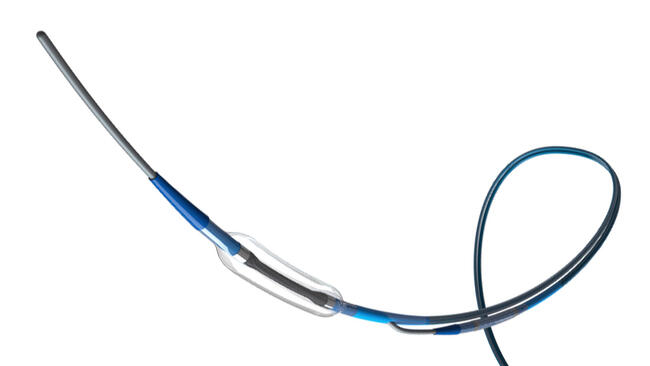
We currently use IVUS and the FloWire (Volcano Corp) as methods to verify stenosis and lesion management. As of May 2008, our Virtual Histology IVUS (Volcano Corp) was upgraded and is now mounted to each cath lab table.
What measures has your cath lab implemented in order to cut or contain costs?
From a nursing scheduling perspective, one of the biggest cost savings to the cath lab occurred when the RNs’ schedule was changed from a 7.5-hour day to flex scheduling (10-hour and 11.5-hour shifts). This has greatly reduced our premium overtime costs. In addition, scheduling is adjusted on low-volume days. (The CVTs work 7.5-hour shifts, each entering at staggered hours.)
What type of quality control/quality assurance measures are practiced in your cath lab?
The cardiology division holds a monthly, multidisciplinary, quality assurance meeting where all statistics, events and state-reportable events are reviewed. Other quality measures such as Oryx indicators, moderate sedation, reporting of critical values, universal protocol and chart documentation are also reported and reviewed at this time.
The cardiology division participates in the New York State Department of Health Percutaneous Coronary Intervention (PCI) Reporting system and Diagnostic Catheterization Database System.
How does your cath lab compete for patients? Has your institution formed an alliance with others in the area?
We believe the best way to compete for patients is to increase the awareness of the services we offer at New York Methodist. Our community health outreach department works vigorously at addressing the needs of Brooklyn’s underserved populations. Their focus has been to target communities who have been identified as having high rates of cardiovascular disease (CVD). The department works with community-based organizations to bridge gaps in health services and cardiovascular health education by offering screenings, lectures and an eight-session CVD workshop. The purpose of these sessions is to provide education on topics such as symptoms of heart attack, risk factors for heart disease, the relationship between diabetes and heart disease, hypertension and cholesterol. Workshop participants also gain an understanding of various factors that will help them to live healthier lives through appropriate diet, exercise and other lifestyle changes.
How are new employees oriented and trained at your facility?
What licensure is required for all professionals who work in your lab?
All new employees are precepted by the most experienced members of their perspective discipline. Most of our registered nurses have had previous cath lab or critical care experience. Licensure is required for all registered nurses and the RT. Licensure is not required for our CVTs.
What type of continuing education opportunities are provided to staff members?
Educational inservices are offered at monthly staff meetings or on the unit by company representatives, where hands-on training of equipment can be provided.
All registered nurses can attend up to three outside conferences relevant to their work area.
The hospital offers on-site certification for basic cardiac life support (BCLS), advanced cardiac life support (ACLS) and pediatric advanced life support (PALS).
How do you handle vendor visits to your lab?
In order to comply with The Joint Commission’s recommendations regarding vendors, all vendors must supply the cardiology division with proof of a yearly physical including PPD (tuberculosis skin test), HIPAA compliance verification, and proof of competencies in their area of expertise. Upon verification of these documents, the vendor is issued a hospital ID badge that is to be worn at all times when they are in the institution.
How is staff competency evaluated?
All new staff members receive a performance evaluation after the completion of their probationary period and annually thereafter.
Does your lab have a clinical ladder?
NYM does not have a clinical ladder.
Does your lab utilize any alternative therapies (such as guided imagery, etc.)?
Our cath lab does not utilize any alternative therapies at this time; however, our patients can listen to music or watch television while in the pre/post recovery area.
How does your lab handle call time for staff members?
For off-hour emergencies, the cardiac interventionalist, the cardiac fellow, the interventional coordinator, one physician assistant and two registered nurses are called. Our cardiologists, in collaboration with our emergency department physicians, evaluate every ST-elevation myocardial infarction (STEMI) to determine the need for the intervention and begin the process.
Within what time period are call team members expected to arrive to the lab after being called?
Personnel are expected to arrive to the cath lab within 30 minutes of being called.
Can you share your lab’s average door-to-balloon (DTB) times and some of the ways employees at your facility have worked to keep DTB times under the mandated 90 minutes?
At NYM, the responsibility for timely delivery of care to patients with STEMI is shared among emergency medical services (EMS), the emergency department (ED), interventional cardiology and the coronary care unit team. In order to ensure timely performance of primary PCI, the teams are alerted in a graded fashion, according to the clinical impression garnered by the first responders. ECG is performed at the patient’s home and the ED is alerted that STEMI is present. The ED physician is empowered to activate the cath lab team, which includes an interventional cardiologist, an interventional fellow and two nurses. During off-hours, the team converges in the cath lab within 40 minutes of activation. During regular work hours, this delay is frequently shorter. This typically results in a delay from patient’s arrival to hospital of less than 30 minutes, because of the early activation from the field. In the cath lab, rapid preparation of the patient occurs following standards established in advance. Routinely used equipment, such as intravenous abciximab infusion and aspiration thrombectomy catheters are prepared while waiting for the patient in order to minimize delays during the procedure. Additional delays are avoided by direct engagement of the infarct-related artery with a guide catheter to facilitate immediate wiring and reperfusion.
In parallel, the coronary intensive care unit is alerted to prepare for the arriving patient, including the possibility of managing that patient with an intra-aortic balloon pump and Swan Ganz catheter.
Does your cath lab do elective cases on weekends or holidays?
No, our staff does not do electives on weekends and holidays.
Has your lab has undergone a Joint Commission inspection in the past three years?
Yes, our institution underwent a full Joint Commission inspection in August 2006. Our staff receives ongoing inservices on Joint Commission topics. Of particular interest was the staff’s knowledge of National Patient Safety Goals, the proper storage and monitoring of contrast media, and strict adherence to the Universal Protocol/Time Out policy.
Can you share a little of your labs’ physical layout?
Our smallest lab measures 25 feet by 24 feet, while our largest and newest lab measures 26 feet by 30 feet. Our largest lab also has the largest control room, measuring 12 feet by 22 feet. This large control room has been found to be beneficial, especially when several physicians collaborate on a case.
Where is your cath lab located in relation to the OR department and ER?
Our cath lab is one floor above our emergency department and one floor below cardiac surgery.
What trends do you see emerging in the practice of invasive cardiology?
In light of current research, interventional cardiologists are further refining the utility of drug-eluting stents. Recent trial results may see the emergence of a newer generation of stents such as bioabsorbable and titanium nitric oxide-coated stents. Technological advances in intravascular imaging modalities has led to earlier recognition of vulnerable plaques, which will assist the cardiologists in treating patients before a clinical event occurs. Furthermore, interventional cardiologists are amongst the leaders in the percutaneous treatment of structural heart disease, e.g. valvular stenosis, atrial septal defect (ASD), etc.
What do you consider unique or innovative about New York Methodist Hospital?
The cath lab staff at NYM prides itself on how well we manage patient flow within the lab. Our physicians consistently praise our ability to accommodate their busy schedules by making sure that their cases start on time and that the rooms are turned around quickly and efficiently.
Is there a problem or challenge your lab has faced?
One challenge that we have experienced at NYM has been in recruiting registered nurses with previous cath lab experience. We have faced this challenge by hiring critical care nurses and training them to the area. While this process requires a commitment of both time and resources, it has proved successful.
What’s special about your city or general regional area in comparison to the rest of the U.S.? How does it affect your “cath lab culture”?
New York Methodist Hospital is located in the heart of Park Slope, Brooklyn. Brooklyn is the largest borough in New York City, with a population of approximately 2.5 million people. Much of Brooklyn’s population is composed of minority populations who have traditionally experienced low rates of access to quality medical care and cardiac surgery services. While mortality rates have declined over the past decade due to medical advances, heart disease continues to be the leading cause of death in Brooklyn. New York Methodist is committed to providing quality cardiac care for the medically underserved in our surrounding communities.
The Society of Invasive Cardiovascular Professionals (SICP) has added two questions to our spotlight:
1. Do you require your clinical staff members to take the registry exam for Registered Cardiovascular Invasive Specialist (RCIS)? Do staff receive an incentive bonus or raise upon passing the exam?
No, this is not a requirement at this time; however, one of our CVTs is currently enrolled in an online RCIS course.
2. Are your clinical and/or managerial team members involved with any professional organizations that support the invasive cardiology service line, such as the SICP, ACVP, or regional organizations?
All registered nurses at NYM belong to the New York State Nurses Association.
The authors can be contacted at kpt9001@nyp.org
NULL
Subscriber
Cath Lab Digest Newsletter