Cath Lab Spotlight
Munson Medical Center
January 2002
What is the size of your cath lab facility and number of staff members?
Munson Medical Center is located in beautiful Traverse City, Michigan. The cardiac cath lab consists of two cardiac cath labs, one mobile cath lab and one dedicated electrophysiology (EP) lab.
Both the cardiac cath lab and cardiac surgical teams have had the distinction of having been selected as one of the Top 100 Hospitals (Cardiovascular Benchmarks for Success Solucient/HCIA). We are one of only thirteen hospitals that have accomplished this task in the categories of angioplasty and bypass surgery two years in a row.
We have thirty-five part-time and full-time employees comprised of the following backgrounds:
12 Registered Nurses (one is also an RCIS and two are also CCRN) Cath/Mobile/EP Lab
8 Cardiovascular Technologists (three of which are also RT(R)) Cath/Mobile/EP Lab
4 Registered Nurses “ Recovery Room
7 Cath Lab Aides (1 of which is on the mobile cath lab)
One Scheduling Clerk
3 Medical Transcriptionists, who work full time in Radiology
One Inventory Control Coordinator
One Cath Lab Manager, who is RCIS/RT(R)(CV)
What type of procedures are performed at your facility?
We do approximately 3,650 procedures between the two cath labs and EP Lab, while the mobile cath lab completes 630+ diagnostic cases per year.
The cardiac cath lab procedures include diagnostic, interventional coronary angioplasty and stenting, Rotoblator® (Boston Scientific Scimed, Maple Grove, Minn.), DCA, IVUS, pacemakers, etc.
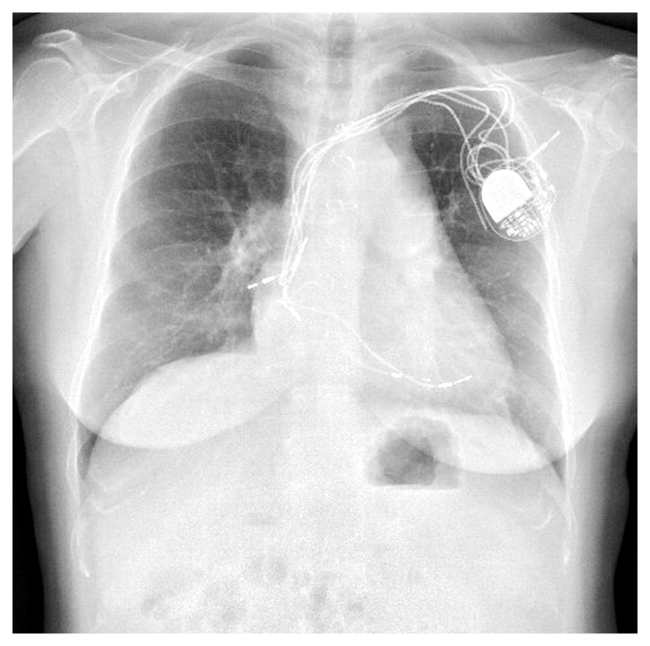
The EP Lab has a dedicated staff and procedures include pacemakers, bi-ventricular pacemakers, ICD implants, diagnostic EP studies, ablations of various types including but not limited to: atrial flutter, atrial fib, supraventricular tachycardia (SVT), atrioventricular node recovery time (AVNRT), and Wolff-Parkinson-White Syndrome (WPW).
Mobile cath lab cases are diagnostic in nature and are done at outlying affiliated hospitals in northern Michigan. These hospitals are Cadillac Mercy, Alpena General, and War Memorial Hospital in Sault St. Marie, Michigan.
Does your lab perform peripheral interventions?
At this time we do not, although the Radiology Department Special Studies suite does perform peripheral interventions.
Special Studies completes 3,120 cases per year, including peripheral angioplasty, stents (peripheral, renal, carotid, and so on), and carotid, renal, and cerebral angiograms.
Does your lab utilize brachytherapy?
Not at this time; however, once more conclusive data and clinical studies for long-term benefit are completed, it is a possibility. Our lab is more confident that drug-covered stents will have a greater impact on cardiovascular disease, and we are budgeting accordingly.
Does your cath lab perform primary angioplasty in acute MI without
surgical backup?
We perform primary angioplasty in an acute MI setting with surgical backup always available. Our surgical team is always on call for the hospital, similar to the cath labs. We do primary angioplasty without the open heart surgical team being physically present in the hospital during callback hours.
How is your cath lab managed and by who?
Our cath lab manager, David Stalcup, RCIS, RT(R)(CV)) is responsible for overall management of the cath lab, EP lab and mobile cath lab, but allows a member of the staff to act as a charge person to run the schedule on a dual rotating basis. This allows the flow of cases to run smoothly, since the charge person coordinates with the manager, physicians, nursing supervisors, outpatient, surgery, floor nurses, and clerks.
Is your lab cross-trained? What are the regulations in your state?
Our cath lab is thoroughly cross-trained. RNs and CVTs can fill any role at any time, thus increasing efficiency and decreasing staffing difficulties. Staff rotate through all three positions of scrub, circulate and monitor. All personnel are required to become ACLS certified and pass a written medication exam prior to circulating any cases, and as always, are under the direction of a physician.
There are no restrictions regarding cross-training in our lab at this time.
What are some of the new equipment, devices and products introduced at your lab lately?
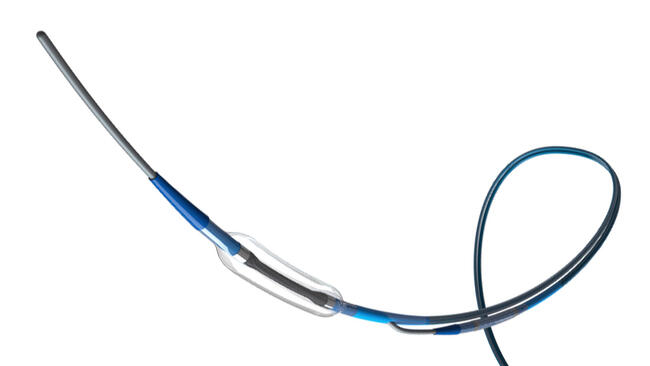
Newer stents, balloons and the Cutting Balloon (Boston Scientific Scimed, Inc.) have been introduced recently, as well as the newer hemostasis achievement and closure devices.
In the EP lab there are even bigger changes. We have the new bi-ventricular pacemaker for congestive heart failure (CHF), and smaller, newer, more reliable pacemakers and ICDs. The EP lab is preparing for a new cardiac mapping catheter-based system which allows us to map a-flutter and a-fib with just one beat being recorded. We are very excited about this system.
Is your lab filmless?
Our lab is filmless. One of the primary responsibilities of the cath lab aide is to burn the selected scenes onto the CD and to make sure the proper scenes are transferred from the HICOR to CD (Siemens Medical Systems, Inc., South Iselin, NJ). A CD is burned for every patient. We do not currently have a cardiac Picture Archiving and Communication System (PACS), but have future plans to acquire one.
Who handles your procedure scheduling? Do you use a particular software?
We have one full time employee, Linda Anderson, and one cath lab aide, Judy Stachnik, who schedule the cases for EP and the cath lab. We use ORBIT (McKesson/HBOC, San Francisco, Calif.), which allows us to easily examine any time, day, month or year while communicating with various physicians throughout northwestern (the lower peninsula) Michigan.
What process does your lab use for pulling sheaths post diagnostic and
interventional procedures?
There are a number of alternatives that we use:
1. Cath lab staff pull the sheaths and hold pressure in our recovery room while the procedure rooms are being prepared for the next procedure;
2. The cardiac cath lab aides pull the sheaths on the outpatients in our recovery room (after having been trained to do so and after competency has been assured after completing a specific number of cases). They are under the direction of the recovery room RNs;
3. RNs in the Cardiac Care Unit (CCU) & Coronary Progressive Care Unit (CPCU) pull the sheaths following interventions on inpatients, and after the Activated Clotting Time (ACT) falls below a level allowing for hemostasis achievement;
4. Vascular closure devices.
How does your lab handle hemostasis?
Our lab handles hemostasis achievement predominately with manual pressure, but a few physicians advocate use (on a certain subset of patients) of the following vascular devices:
The Compressar (Instromedix, Semler)
Perclose (Abbot Vascular, Redwood City, Ca.)
Vasoseal (Datascope, Mahwah, NJ)
AngioSeal (St. Jude Medical, Minnetonka, Mn.)
FemoStop (RADI Medical, Reading, Mass.)
Post procedure, our patients will go to one of the following:
Recovery area (outpatient)
Coronary Care Unit (CCU)
Cardiac Progressive Care Unit (CPCU)
Surgery (outpatients who have had or require an intervention and are admitted)
Returned to their original room (inpatients)
How is inventory managed at your cath lab?
Munson Medical Center utilizes the Northern Michigan Supply Alliance (NMSA) for maintaining our various inventory needs. NMSA supplies various hospitals in northern Michigan. This organization allows us, as well as others, to buy multiple supplies at a volume-based price.
Joy Fuller, Inventory Controller, works full time in our department to see that supplies are rotated and ordered on a daily basis. She does this for all aspects of our cath lab, mobile lab and EP lab needs, as well as ordering supplies for the radiology department of Special Studies. It is vital for us to have someone here full time to recognize and understand the inventory needs of the cath lab, and she does a great job!
Has your cath lab recently expanded in size and patient volume?
We have not expanded in size physically, and while it appears the cardiac cath lab procedures are on a slow but steady incline, the EP lab has expanded in the number and type of procedures that we perform.
The current state of EP is similar to where CCL procedures were a couple of years ago. We are seeing more procedures developing in the future, especially with the advent of bi-ventricular pacing, future technologies for CHF and cardiomyopathy, and mapping systems for atrial flutter and atrial fib ablations.
How has managed care affected your cath lab?
Managed care has affected us in many ways, both good and bad, depending on your viewpoint. It has caused us to evaluate and use hemostasis achievement devices (despite their cost) in order to decrease the hospital length of stay. It has bullied us into doing routine elective procedures on weekends and holidays for the same reason. It has driven us to be as frugal as we safely can, while being concerned with labor and the ever-spiraling supply costs and overall cost per case. We must do all of this while keeping our eye on our main objective  patient care.
What measures has your cath lab implemented in order to cut or contain costs?
Our cath lab has implemented and encouraged a hospital-wide program that rewards staff for finding cost-cutting measures. They share in the savings to the hospital. We also have incentivized use of preferred vendors in most supply categories.
How does your lab compete for patients? Has your institution formed an alliance with others in the area?
Our cath lab competes for patients utilizing outreach services, such as our mobile cath lab, in order to increase our referral base and dissuade competition. Our institution manages other hospitals for Trinity Health System and has formed an alliance with these hospitals to command volume-based price concessions and supplies from vendors.
Does your lab have an outpatient program?
Our outpatient program, like many others throughout the world, has allowed us to decrease the hospital length of stay while maintaining superb quality of care for our patients.
The primary concern of our staff is patient assessment before and after any procedures, which include, but are not limited to, pre-procedure, patient education and compliance, recovery, and discharge.
The cath lab recovery room RNs prepare the patients for all procedures, including pre-op education and labs.
The patients are then picked up by cath lab staff and transferred to their prospective rooms, where the procedures are completed. If the patients have angioplasty or stenting completed, they are sent to rooms on the floor. All diagnostic heart caths (after completion) are sent to one of our 8 recovery room beds, where 4 RNs and cath lab aide(s) work side by side to complete post procedure education, sheath removal, etc. Patients are discharged from the recovery unit to home within 2 to 4 hours, or they are admitted to the Cardiac Progressive Care Unit (CPCU) if they had a PTCA/stent procedure. These patients usually go home the next morning.
A video program in our recovery rooms, started by Judith Huntley, RN, and assisted by Darwin Curtis, Cath Lab Aide, is geared for our outpatient population. This program has various VCR tapes that patients are allowed to pick from. A list, much like a video store, allows them to watch movies and educational video tapes in comfort, and helps them pass the time in a more relaxed atmosphere.
How are new employees oriented and trained at your facility?
New employees are oriented by a preceptor method. Each new employee has a preceptor assigned to them. The preceptor is responsible for working with the new employee for up to six months. The new employee has a skills sheet that they work from, showing them the various jobs and skills needed in the cath lab.
New employees must obtain ACLS certification, take a medication course, or pass a written medication exam within six months and prior to giving any medications. All new employees who have not taken an EKG course or hemodynamic course must also pass these exams.
The hospital, through its educational (Staff Development) department, offers these critical care and EKG courses twice a year.
All CVTs must take the RCIS exam and pass it within one year of completion of the above courses.
What types of continuing education opportunities are provided for staff members?
Our Staff Development Department offers a Critical Care Course, EKG course, IABP course, BCLS, and ACLS at least twice a year.
The cath lab has an Education Committee as part of a Shared Governance Committee in the hospital. The CCL Education Committee develops a skills sheet each year. The skills sheet dictates the educational responsibilities of each staff member. The committee is responsible for developing Skills Week so that all staff members can fulfill these responsibilities.
Some of the responsibilities requirements include BCLS, ACLS, and hospital-wide requirements such as fire, safety and universal precautions. Unit-specific requirements include IVUS, IABP, Rotablator, and radiation safety.
One of the most unique ways our CCL staff can obtain CEUs is by attending our weekly cardiac cath conference. This conference is held every Thursday from 11:30am to 1:00pm in the REMEC (Rural Emergency Medical Educational Consortium) room. REMEC is able to broadcast this event to affiliated outlying hospitals such as Paul Oliver Memorial, Kalkaska, Mercy Cadillac, Michigan State University, University of Michigan, and DeVoss Children™s Hospital in Grand Rapids, Michigan, as well as several others.
At the cath lab conference, various case studies are reviewed by our cardiologists, as well as CCL staff, who share their insights to the pre and post care of CCL patients while also obtaining CEUs for attending.
How is staff competency evaluated?
A universal skills lab is done using didactic instruction and return demonstrations (short quizzes). Cardiac cath lab skills are done using didactic instruction and return demonstrations (either to a peer or by using short quizzes). Radiation safety training is generally a lecture given by a physicist or RT(R), a videotape and then a short quiz.
Does your lab utilize any alternative therapies?
Not really, though we try to keep the patients as relaxed as possible, maintain a sense of humor and not complain in front of patients. We also have stereos with CD players in each room and ask patients if they have any preferences in music so that we might be able to set them at ease.
How does your lab handle call time?
Whether we work in the cath lab, EP lab or mobile lab, we all take call. One of our RNs, Shirley Cone-Blaszak, is responsible for our departmental scheduling, which includes requested days off, days off, vacation days and our call schedule.
The cath lab, EP lab and mobile lab staff take call for the cath lab approximately every fifth weekend. The cath lab staff take call during the week (approximately. one or two days per person), while the EP lab and mobile lab take no call during the weekdays. Everyone takes call on weekends and we rotate holidays.
The frequency that we get called in varies from day to day, as it does with any cath lab. During the weekdays, the call team stays until the work is done (with the last scheduled case started no later than 7:00pm) and rarely get called in, but there are times when they get called in for anywhere from 2 to 6 hours per night. When this does occur, the on call team is allowed to go home as early as the schedule will allow. However, there are times when they must stay the entire day and maintain a full schedule. During the weekends we sometimes do not get called in, while at other times we can put in up to 20 hours of overtime during our call cycle.
We have a 3-person call team, and there are no particular mix of credentials that are needed. We are thoroughly cross-trained, and all of us are ACLS-certified. We are allowed to administer medications, including starting IV drips (upon passing our departmental medication exam), and then only under the direct supervision of a physician.
What type of quality control measures are practiced in your cath lab?
As part of our participation with Shared Governance in our hospital and CCL, we have a QA committee. This committee is currently collecting data on Conscious Sedation. This data includes drugs used, patient response and O2 usage.
Our QA committee has also worked closely with our Coronary Progressive Care Unit on a hematoma study relative to hemostasis achievement, as well as with our outpatient surgical department on patient readiness times.
What trends do you see emerging in the practice of invasive cardiology?
New types of stents (drug-coated), brachytherapy, gene therapy, balloons (Cutting, etc.), and wires are being developed every day.
Until recently, there was little help for CHF patients, but today we are doing bi-ventricular pacing. Although it is not a cure, it is of some practical help, and shows promise over medication alone.
If you were around at the beginning (late 1970s“early 1980s) of invasive cardiology, you have to stand back in amazement at the progress that has been made in the last twenty years. Can you imagine where we will be at the end of the next twenty?
Has your lab undergone a JCAHO inspection in the last 3 years?
We just completed a JCAHO inspection in May of 2001, and were given no Type 1 citations in the cath or EP labs. We (Munson Medical Center) were given a total score of 94 (out of 100) in our triennial survey.
According to JCAHO team leader Rose L. Stanfield, RN, EdD, CNAA: This is the second highest score that I™ve given in the hospitals I have surveyed since January (2001). I™ve had one 95. It™s very obvious that you are in the upper echelon of hospitals that we are surveying this year.
What do you consider unique about your cath lab and its staff? Munson Medical Center cath lab staff are very qualified and specialized, even though we are thoroughly cross-trained. This helps alleviate staffing problems while maintaining high quality patient care. We have low employee turnover, and when someone does leave, we are able to hire new people relatively quickly.
We have two physician groups: Grand Traverse Heart Center and Great Lakes Heart Associates. Both are based in Traverse City, totaling 13 cardiologists. Six other cardiologists belonging to these groups work in Alpena and Cadillac, Michigan. Our cardiologists are great people to work with, and are not adverse to listening to the advice of the staff during procedures. They also seek staff advice at the REMEC Cardiac Cath Conference. Our staff, many of whom have over twenty years of experience, are very knowledgeable in our field.
We also happen to be located in one of Michigan™s prime vacation spots, which can cause our resident population to double, in both winter or summer. Munson Medical Center is only a couple of blocks away from Grand Traverse Bay and it is picturesque year-round. Traverse City allows us to have a big city feel with great country charm. It™s just a wonderful place to live and work. Our quality of life is second to none in the United States.
Is there a problem or challenge your lab has faced?
The challenges we face daily are the same challenges every cath lab faces. The main things are managed care, its effects on reimbursement, and being able to maintain the primary focus on patient care. We were able to address this challenge by allying with other hospitals and using preferred vendors. We identified certain supply items and clinical areas where we were able to save the cath lab and hospital money while not compromising quality patient care.
NULL
Subscriber
Cath Lab Digest Newsletter