Cath Lab Spotlight
Jewish Hospital
April 2007
What type of procedures are performed at your facility?
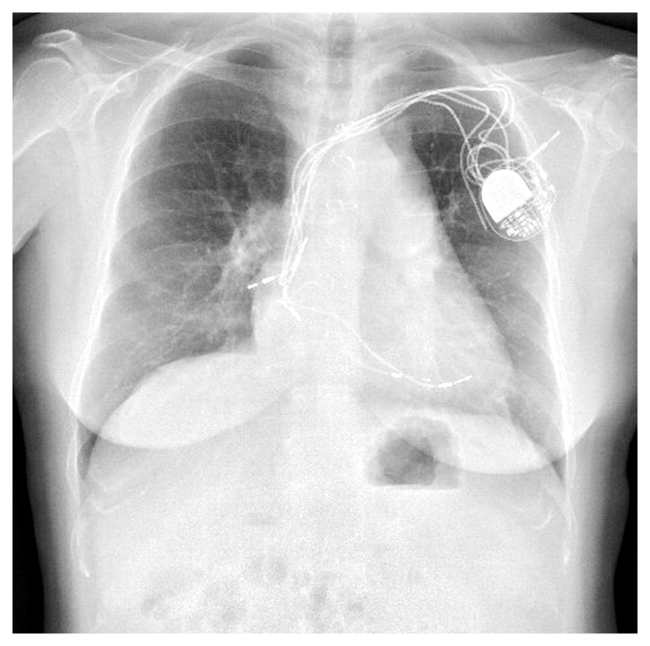
We perform pacemaker and implantable cardioverter-defibrillator (ICD) implants, diagnostic and therapeutic EP studies, diagnostic cardiac caths and interventions, heart biopsies, and peripheral diagnostic and interventional procedures, including carotid diagnostics and interventions. In our cath lab, we see 170-200 patients a week (10,000/year), and perform:
36-40 interventions per week (1,875-2,000/year);
540 total peripheral cases per year;
approximately 1,400 EP cases/year.
Does your cath lab perform primary angioplasty with surgical backup?
All primary angioplasty is performed with surgical backup. Emergency surgeries are performed right away and urgent cases are scheduled with surgeon of choice. Patients see their surgeon or the surgeon’s personnel in our recovery area after their diagnostic case is performed.
What procedures do you perform on an outpatient basis?
All procedures can be performed on an outpatient basis with the exception of a carotid stent placement.
What percentage of your patients is female?
Forty-two percent of our patients are female.
What percentage of your diagnostic cath patients goes on to have an interventional procedure?
Twenty-one percent of our patients go on to have an interventional procedure.
Who manages your cath lab?
The cath lab management currently consists of our director, Jennifer Sizemore RN, MSN; two managers, Denise Rosario RT(R) and Susan Howard MLT (ASCP); and three charge personnel, Glenn Thompson RT(R), BS, Karen Klapheke RN and Paula Martin RN.
Do you have cross-training? Who scrubs, who circulates and who monitors?
Yes, we have cross-training. All RNs are trained during orientation to circulate, scrub or monitor all diagnostic procedures. RTs and CVTs are trained on how to scrub, monitor and circulate cases (with the exception of giving medications). An RN must always circulate a case.
Does an RT (radiologic technologist) have to be present in the room for all fluoroscopic procedures in your cath lab?
No, but RTs are readily available within the department.
Which personnel can operate the x-ray equipment (position the II, pan the table, change angles, step on the fluoro pedal) in your cath lab?
All personnel can position the II, pan the table and change angles. Only the physician and RT can step on the fluoro pedal.
Do interventional radiologists and cardiologists perform procedures in the same area?
No, interventional radiologists perform their procedures in the vascular radiology department and interventional cardiologists perform their procedures in the cath lab only.
Did your facility need to make any changes to the imaging equipment to accommodate peripheral procedures?
Yes, our lab purchased different equipment to perform peripheral procedures (with a large inch II, bolus chase capability, and digital subtraction angiography [DSA]).
Does your lab have a clinical ladder?
Yes, there is a clinical ladder in the lab and pre and post procedural areas. It applies to RNs, RTs, and CVTs.
The clinical ladder is a three-leveled system (Levels I-III) and employees move up on the ladder mostly by participating in various activities ranked on a point scale. Following are a few of the many pathways through which staff obtain points to move up the ladder:
An employee could volunteer to become a supertrainer for new products, techniques, and equipment (events). This individual will be highly trained and will train other employees. Being a supertrainer offers 5 points per event, with a maximum of 15 events/year.
Obtaining the RCIS, CCRN or any second, relevant registry is required to contract to Level III and offers 25 points per passed registry.
To obtain a maximum of 20 points (2 per hour), an employee could visit a recruiting fair or a career day at a local school, representing Jewish Hospital and providing information about the educational and career opportunities for CVL personnel.
LEVEL I: Entry-level, all clinical and technical employees start on this level. The employee will meet all core job responsibilities outlined by Jewish Hospital and the state of Kentucky. There is no application, projects or monetary awards for this level.
LEVEL II: To achieve this level, the employee must meet all requirements for level I. The full-time employee must also apply and contract for 100 points from the clinical ladder menu in a one-year period. Employee must meet all requirements set for this level.
LEVEL III: To achieve this level, the employee must have previously met all requirements for Level II, and must currently be at Level II to apply and contract for this level. The full-time employee must contract and achieve 200 points in a one-year period. Employee must meet all requirements for this level. RNs and RTs must hold a second registry and CVTs must hold a registry.
What are some of the new equipment, devices and products introduced at your lab lately?
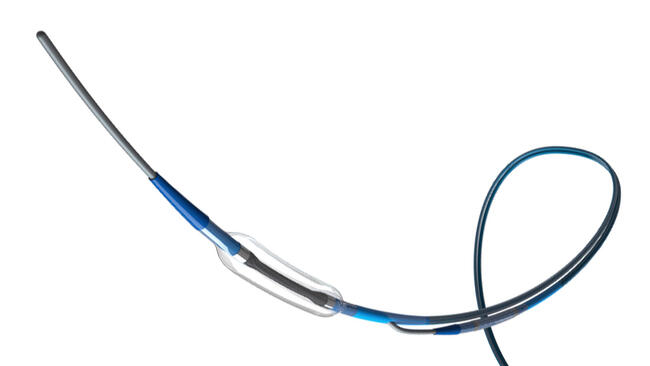
We have new 2000 series GE equipment in three labs (Waukesha, WI), and a new 3100 series GE equipment in two labs (with peripheral capabilities). We also have begun using the Biosense Webster ThermoCool Irrigated Tip Catheter and Integrated Ablation System (Diamond Bar, CA), the Pronto extraction catheter (Vascular Solutions, Inc., Minneapolis, MN) and the iCast covered stent (Atrium Medical Corp., Hudson, NH).
Can you describe the system(s) you utilize?
We have the Prucka CardioLab (GE Healthcare), the Carto XP Navigation and Ablation System (Biosense Webster), Stockert RF generator (Biosense Webster), and the Thermocool Ablating System in EP. For our EP/implant clinical documentation and all ACC-NCDR database information, we use the Apollo Advance (Lumedx, Oakland, CA). Our digital live archival system is by Heartlab (An Agfa Company, Westerly, RI). For coding, we use ProVation® MD and Fusion (ProVation Medical, Minneapolis, MN) for our cardiologist dictation system (Jewish Hospital is the beta site for ProVation MD). We use the Witt system (Philips Medical, Bothell, WA) for hemodynamics and clinical data.
How is coding and coding education handled in your lab? How is coding communication handled with the billing dept.?
Coding is handled by the tech/supply manager who takes care of the chargemaster and servicemaster. The facility has CodeCorrect (Yakima, WA) to help with coding questions through patient accounting.
The appropriate staff attends seminars and there are patient accounting team members who assist with all coding.
How does your lab handle hemostasis?
We use vascular closure devices, such as Perclose (Abbott Vascular, Redwood City, CA) and Angio-Seal (St. Jude Medical, Minnetonka, MN) in the lab. The SyvekPatch® Marine Polymer Technologies, Danvers, MA) or manual pressure is used in recovery.
Does your lab have a hematoma management policy?
Yes, we of course apply manual pressure to obtain hemostasis. Our lab also has a reporting mechanism called the Hematoma Tracking form, that records such information as the physician involved in case, devices used for hemostasis, etc.
How is inventory managed at your cath lab? Who handles the purchasing of equipment and supplies?
The Pyxis system (Cardinal Health, San Diego, CA) is utilized for storage and inventory of supplies. The Lawson system (St. Paul, MN) is utilized to order equipment for purchases. Our director takes care of capital equipment, which is submitted in the budget and taken to a committee. Working with the cardiology department, the cath lab management determines physician needs and decides which products are stocked based on utility and pricing.
Has your cath lab recently expanded in size and patient volume, or will it be in the near future?
We will be expanding with the arrival of Stereotaxis equipment and procedures (St. Louis, MO). We have also seen a 15% increase in interventional procedures from last year.
Is your lab involved in clinical research?
Yes, our lab is involved in several research studies, some of which include:
SPIRIT III: a large-scale pivotal clinical trial comparing Abbott Vascular’s Xience V everolimus-eluting stent to Boston Scientific’s Taxus® paclitaxel-eluting stent;
SPIRIT IV: evaluating the safety and efficacy of Abbott’s Xience V Stent System for the treatment of coronary artery disease in a more complex U.S. patient population;
TRITON TIMI-38: a multi-center randomized trial in patients with acute coronary syndromes undergoing percutaneous coronary intervention comparing the platelet inhibitor CS-747 with clopidogrel (sponsored by Eli Lilly).
Have you had any cath lab-related complications in the past year requiring emergent cardiac surgery?
Yes, our most recent ACC data shows a 0.625% rate of emergency CABG.
What other modalities do you use to verify stenosis?
We use angiography, the FloWire® (Volcano Therapeutics, Rancho Cordova, CA), PressureWire (Radi Medical Systems, Wilmington, MA), intravascular ultrasound (IVUS), and hemodynamic pressure gradients. On one hand, it has somewhat decreased our revenue, but on the other, many patients and physicians come to our facility versus other facilities due to our expertise with this equipment.
What measures has your cath lab implemented in order to cut or contain costs?
Employees have directed time off during slow periods. We have also involved physicians with purchasing decisions and made them aware of pricing. We have started price transparency in our department.
What types of quality control/assurance measures are practiced in your cath lab?
In addition to using AVOX and Accuchecks, we track door-to-balloon times, hematoma rates and submit data to the ACC-NCDR database.
How does your cath lab compete for patients?
Jewish Hospital has formed alliances with five area hospitals: Clark Memorial Hospital, Sts. Mary & Elizabeth Hospital, TJ Sampson Hospital and King’s Daughters Hospital. We are also developing more and stronger physician relationships.
How are new employees oriented and trained at your facility? What licensure is required for all professionals who work in your lab?
New employees are mentored with team members of specific disciplines or areas of expertise. Licensure is required for RN and RT(R). CVT and RT(R)(CV) are not required.
What types of continuing education opportunities are provided to staff members?
Continuing education opportunities are available through education for RNs, CEUs provided by various vendors and opportunities for team members to attend meetings, such as TCT (Transcatheter Cardiovascular Therapeutics) and the annual Heart Rhythm Society meeting.
How do you handle vendor visits to your lab?
Vendors are allowed on a daily basis or on a rotating schedule, depending on their product line. Pharmacy vendors are allowed one day of the month. They check in with central supply and obtain a badge. Vendors must wear their company nametag onsite. Vendors who plan to have patient contact must have current TB test results and company information on file. They are allowed in-room only if asked by the physicians.
How is staff competency evaluated?
Staff competency is evaluated yearly, with hands-on demonstrations and a written evaluation.
Does your lab utilize any alternative therapies (such as guided imagery, etc.)?
No, although we are investigating the use of music therapy to help relax our clients.
How does your lab handle call time for staff members?
Our call team has a response time of 45 minutes, but we prefer 30 minutes. The call team consists of two RNs, one RT, and one CVT. We have multiple shifts, such as 8-hour, 9-hour, 10-hour and 12-hour shifts.
What trends do you see emerging in the practice of invasive cardiology?
The trend we see are a decrease in the number of diagnostic catheterizations with the availability of 64-slice CT scans and MRA. The number of interventional cases continues to increase, as the comfort level of cardiologists in treating difficult cases also increases.
Has your lab undergone a JCAHO inspection in the past three years?
Yes, one recommendation was to keep the hallways free of clutter (equipment, stretchers, wheelchairs, etc.).
What do you like about your particular cath lab layout?
We have a central core area where our charge person and supplies are kept. There are six cath labs that are adjacent to the central core. Labs 7, 8 and 9 are on the outside perimeter of the central core. It would be nice if our central core area could be larger and EP labs (Labs 8 and 9) closer together. Our pre-op area has eight bays and is on the opposite end of the cath lab from the recovery area, which has 12 bays.
Where is your cath lab located in relation to the OR, ER, and radiology departments?
Our cath labs are located on the third floor of the building, directly above the OR, with an emergency elevator available. The ER department and radiology department are in a connecting building on different floors.
Please tell the readers what you consider unique or innovative about your cath lab and its staff.
Our staff is experienced and work on the cutting edge. Our department is first in innovation. We are constantly improving and evaluating how to make our patient visits the very best. Our staff, along with our physicians, are outstanding.
Is there a problem or challenge your lab has faced?
Culture is a challenge our department faces. It is being addressed through education and communication opportunities. Our cath lab has a large number of excellent and seasoned team members. Sometimes change is a difficult prospect when you have been successful in the past. The healthcare scene changes frequently and we must be adaptable. This is a challenge we face frequently and our team members are learning to become more flexible, embrace change and challenge the status quo.
What’s special about your city or general regional area in comparison to the rest of the U. S.?
Our city is the 16th-largest in the nation, affecting our cath lab culture with the number of hospitals and cath labs in the urban area. Louisville is a city with many attractions, including the greatest two minutes in sport the Kentucky Derby. But it isn't just horse racing that the city of Louisville, Kentucky is known for. There are more than 120 Louisville attractions to enjoy year-round.
Visitors to downtown Louisville can enjoy major family attractions within just blocks of one another. The Louisville Slugger Museum & Factory is home to the world’s largest bat and features exhibits and a factory tour. Glassworks, a space designed to house and showcase the work of 50 glass artists, along with Frazier International History Museum, round out the available entertainment opportunities. Warmer weather brings The Belle of Louisville and Spirit of Jefferson, the city’s two riverboats, to the waterfront for daily excursions. You can also visit Six Flags Kentucky Kingdom for a fun-filled day.
If baseball is your game, you simply cannot miss a visit to Louisville Slugger Field, home of The Bats. This stadium is one of the finest minor league ballparks in the country and The Bats have enjoyed an impressive record in their fledgling seasons. Afterwards, enjoy one of the new eateries at Fourth Street Live!, a $70 million entertainment district.
After a day of sightseeing, Louisville has more than 100 hotels to choose from. From small, quaint B&Bs to familiar hotel chains to two of the finest historic hotels in America, the area has something for every taste and budget. And speaking of tastes, with over 2,500 restaurants, there is a great deal of tasting to be done. Visitors from around the world are astounded by the variety and quality of fine dining in the area by chefs who have taken regional cuisine to a nationally-recognized level. There are also quiet cafes, coffee houses, ethnic restaurants and casual eateries from which to choose.
Society of Invasive Cardiovascular Professionals (SICP)
1. Do you require your clinical staff members to take the registry exam for Registered Cardiovascular Invasive Specialist (RCIS)? Do staff receive an incentive bonus or raise upon passing the exam?
No, this is not required, but we strongly encourage the RCIS registry exam. There is an incentive in gaining this registry, consisting of quarterly bonuses.
2. Are your clinical and/or managerial team members involved with any professional organizations that support the invasive cardiology service line, such as the SICP, ACVP, or regional organizations?
No.
Glenn Thompson can be contacted at glenn.thompson@jhsmh.org.
NULL
Subscriber
Cath Lab Digest Newsletter