Cath Lab Spotlight
Holmes Regional Medical Center
March 2004
What is the size of your cath lab facility and number of staff members?
Our lab, which is located in Health First's 514-bed Holmes Regional Medical Center in Melbourne, Florida, was recently expanded to include five high-tech labs, one special procedures room, and a three-bed holding and recovery area.
We have:
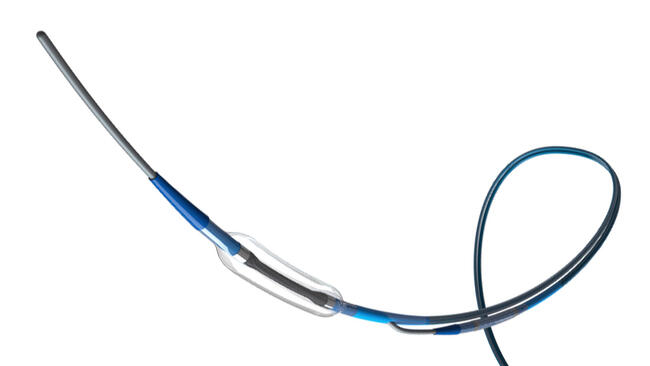
- 12 full-time RNs -- two are registered cardiovascular invasive specialists (RCIS) and one is a certified Critical Care Registered Nurse (CCRN) - 16 technologists -- five are RCIS-certified. This number also includes four paramedics and two registered respiratory therapists (RRT) who have been cross-trained as cath lab techs. - Four support technologists - One per diem RN who is RCIS-certified We have a balanced mixture of highly experienced techs and nurses and newer team members who are still in the learning phase. All nurses and techs are advanced cardiac life support (ACLS) certified.What types of procedures are performed at your facility? Annually, we perform 3,500 diagnostic procedures, 2,500 interventional procedures, and more than 700 pacemaker and implantable cardioverter-defibrillator (ICD) implants. Our interventional procedures include standard percutaneous transluminal coronary angioplasty (PTCA), stenting, bi-ventricular pacing, intra-aortic balloon pumps, percutaneous transluminal coronary rotoblator atherectomy (PTCRA), and directional coronary atherectomy (DCA). In addition, we perform coronary brachytherapy, electrophysiology (EP) studies, valvuloplasty, alcohol ablation, intravascular ultrasound (IVUS), flow wires and transseptal procedures. Since we're located in a Florida community that's home to a large seasonal senior population, our rates vary between the seasons. Between January and May, we perform about 150 procedures per week, while we perform about 100 per week the other seven months of the year. Does your lab perform peripheral interventions? Yes, approximately 10 percent of our cases each year are comprised of peripheral interventions on renals, iliacs, superficial femoral arteries (SFA), subclavians, brachiocephalic vessels, and AV fistula thrombectomies. In addition, we're developing a carotid artery interventional program. Does your cath lab perform primary angioplasty with surgical backup? On rare occasions, we schedule procedures with surgical backup. What percentage of your diagnostic cath patients go on to have an interventional procedure? Approximately 60 percent of our diagnostic cases receive interventional procedures. What procedures do you perform on an outpatient basis? We perform diagnostic cardiac catheterizations, EP studies, cardioversions, and pacemaker and ICD generator changes on an outpatient basis. What is the percentage of female patients you treat? About 44 percent of our patients are female. Who manages your cath lab? Cardiac Catheterization Laboratory Manager Mathew Litz, BS, RCIS. Do you have cross-training? No, but we are in the process of creating a cross-training program. Generally, our techs scrub and record, and our nurses circulate; however, we have a few nurses who also scrub and record. We're developing competencies for medication administration and will be seeking approval from hospital administration in the near future. Presently, physicians are responsible for pressing the pedal and they're present whenever radiation is given to the patient. Does an RT (radiologic technologist) have to be present in the room for all fluoroscopic procedures in your cath lab? No, a radiological tech does not need to be present. Which personnel can operate the x-ray equipment (position the II, pan the table, change angles, step on the fluoro pedal) in your cath lab? The scrub tech may position the II, pan the table, and change angles under the direct supervision of the cardiologist. The cardiologist steps on the fluoro pedal. Does your lab have a clinical ladder? Yes. Our clinical ladder is pretty simple. We have nurses, lead nurses, techs and lead techs. In terms of salary, Holmes Regional Medical Center is part of the three-hospital Health First healthcare family, which offers premium pay for up to two national certifications, including RCIS, CCRN, and ACLS. What are some of the new equipment, devices, and products introduced at your lab lately? Most recently, we started using the FilterWire distal protection device (Boston Scientific Corporation, Maple Grove, MN). Currently, we also use the AngioJet® rapid thrombectomy device (Possis Medical, Inc., Minneapolis, MN), which allows physicians to remove clots from coronary arteries and vein graphs. In addition, we work with intravascular ultrasound, the WaveWire (Jomed, Inc., Rancho Cordova, CA), and the latest drug-eluting stents. Finally, we’ve been working with beta brachytherapy (Beta-Cath System, Novoste, Norcross, GA) for about a year. Is your cath lab filmless? Yes, we have been filmless since 1996. We use a Camtronics System (Hartland, WI). We recently upgraded our system with the newest Heartlab Encompass system (Westerly, RI), which offers web-based access. How does your lab handle hemostasis? We use C-clamps and manual compression for approximately 75 percent of our cases and vascular closure devices for about 25 percent of cases. The vascular closure devices that we use include the Perclose AT, Perclose S (Abbott Vascular Devices, Redwood City, CA) and VasoSeal® (Datascope Corp., Mahwah, NJ). Does your lab have a hematoma management policy? No. How is inventory managed at your cath lab? We utilize a computer-generated and manually-ordered process, which includes an on-time ordering strategy. Equipment purchases are generally handled by the evaluating user group, which is typically comprised of several disciplines, including cath lab senior staff, physicians, biomedical staff and information technology. For supplies, several accountable senior staff members input requisitions through our purchasing agent in Contract Supply Chain Administration. Has your cath lab recently expanded in size and patient volume, or will it be in the near future? Recent cath lab renovations expanded the number of laboratories from three to five high-tech labs and one special procedures room. In terms of patients, last year, our volume grew about 10 percent, and with a growing senior population, we expect the patient volume to continue to rise. Is your lab involved in clinical research? Yes, Holmes Regional Medical Center is home to the Health First Heart Institute, which is affiliated with the University of Florida (UF) College of Medicine. Holmes participates in national, regional, and local clinical trials. Through the Health First Heart Institute's relationship with UF's College of Medicine, the National Institutes of Health, and major pharmaceutical and biotechnology companies, the hospital offers cardiac patients opportunities to participate in studies of new drug and technology therapies. In 2001, more than 100 patients participated in 12 clinical trials conducted through the Heart Institute. In 2002, more than 200 patients participated in ongoing studies. Much of the research focuses on new instruments and tools, in particular stents. For example, the hospital recently participated in the landmark SIRIUS study. The cath lab team also plays a part in the care and treatment of patients enrolled in drug-therapy trials. For instance, Holmes participated in a comparison of early invasive and conservative strategies in patients with unstable coronary syndromes treated with glycoprotein IIb/IIIa inhibitor tirofiban. Part of this study included catheterization and revascularization, as appropriate, of some participants. Does your lab perform elective cardiac interventions? Yes, while we don't technically list them as "elective," we do interventional procedures on patients who received a diagnostic catheterization at a diagnostic-only cath facility and then scheduled their interventional procedure at Holmes. Have you had any cath lab-related complications in the past year requiring emergent cardiac surgery? In 2002, we didn't have any, but we have had these types of emergency cases in the past. Typically, they only comprise about 0.1 percent of our total annual caseload. What measures has your cath lab implemented in order to cut or contain costs? We negotiate pricing agreements with vendors and participate in bulk buying opportunities, such as those offered to VHA Southeast members. Finally, we provide physicians with individual reports on equipment utilization by procedure. These reports allow physicians to compare their usage levels to their cardiology peers' levels. What types of quality control/quality assurance measures are practiced in your cath lab? Our quality control (QC) efforts are mixed because we have both new and older labs. All of our labs require daily QC of the ACT and Oxicom machines (Waters Instruments, Inc., Rochester, MN), and every morning the Witt physiological recording equipment (Melbourne, FL) is calibrated. The X-ray equipment in the older labs is checked daily, while the new labs only require monthly X-ray checks. How does your cath lab compete for patients? Has your institution formed an alliance with others in the area? Most of the competition takes place at the HMO and private insurance level. We have noted referral patterns from particular physicians. In addition, we have the largest group of cardiologists on our medical staff compared to any other Brevard County hospital, so for that reason alone, we see substantially more patients. How are new employees oriented and trained at your facility? Health First provides a one-week orientation for all new associates. After completing that general orientation, our new team members are assigned to a preceptor in the lab. New associates shadow the preceptor for an average of four weeks; however, some orientations last longer, as we provide associates with up to 90 days to establish the competencies that are necessary to work independently. While the RCIS is not required, it's highly encouraged for both nurses and techs. Nurses are required to be registered nurses, and everyone must be ACLS-certified. What types of continuing education opportunities are provided to staff members? One of Health First's most attractive benefits is tuition reimbursement, and when combined with Health First's premium pay for national certifications, the organization genuinely encourages continuing education. More specific to our cath lab, we have continual ongoing in-service training provided by vendors. With the help of our vendors, we offered a Cardiology Symposium last year, but our most exciting education opportunity was our first annual Cath Lab Skills Fair. At the skills fair, we had nine demo stations featuring cath lab tools and new technologies. All the participants were shown a different competency at each station, and they had to repeat the skill and demonstrate their abilities. Our entire staff participated and we achieved 100 percent compliance. These types of skills fairs are commonly found in nursing specialties, but not cath labs. We're planning to sponsor a fair each year with the help of vendors. How do you handle vendor visits? All vendors have to check into Contracts Supply Chain Administration (a.k.a. Purchasing) to sign confidentiality agreements, etc. Vendors who visit frequently are limited to biweekly cath lab visits scheduled with the manager. We try to be flexible with those vendors because they play an important role by addressing questions and staying on top of trends. Vendors who visit less frequently have much more limited access available by appointment only. How is staff competency evaluated? While staff competency is evaluated on an on-going basis, reviews are performed annually and lead techs and lead RNs must sign-off on them. Does your lab utilize any alternative therapies (such as guided imagery, etc.)? No. How does your lab handle call time for staff members? Call time is scheduled on a rotating basis. Currently, we have six call teams with two techs and one RN on each team. Each team takes call one day during the week and one weekend out of every six. Two techs and one RN are on each call team. What trends do you see emerging in the practice of invasive cardiology? We see several trends. First, we're seeing a general move toward outpatient interventions and believe they'll be the next big change in our field. We're also seeing more complex cases with multi-vessel interventions. In addition, we’ve noted an increased use of medicated stents to prevent restenosis. Finally, we've observed some emerging trends in related fields. For example, we're seeing less open heart and other surgical procedures. On the other end of the spectrum, technologies like magnetic resonance angiography (MRA) and positron emission tomography (PET) may start to reduce and even replace some diagnostic cardiac catheterizations. Has your lab has undergone a JCAHO inspection in the past three years? Yes, we had one in 2001 and are preparing for one in 2004. Where is your cath lab located in relation to the OR department, ER, and radiology departments? Our current cath lab is across the hall from the OR and adjacent to the PTCA recovery unit. The Radiology Department is adjacent to our unit except it's one floor below. Finally, the ED is downstairs from our department but it's on the opposite side of the hospital, placing the ED quite a distance from our area. In the new heart hospital, we'll still be across the hall from the OR and upstairs from Radiology, but we’ll also be directly above the ED, which will address the current distance issue. We're happy with our current "neighbors" and given the choice, would still choose to be adjacent to the OR and PTCA recovery unit. Please tell us what you consider unique or innovative about your cath lab and its staff. Several factors set our lab apart. First and foremost, our staff makes our lab especially unique because we have a mixture of experience levels. About half of our staff is highly experienced and skilled, while the other staff members have minimal experience but are extremely enthusiastic about learning. By teaching the new associates, our experienced staff members enjoy a sense of gratification and a higher form of achievement. Likewise, the other team members appreciate the opportunity to learn from the best. The situation benefits all parties. Our team has also demonstrated innovative thinking in our approaches to training current and new associates and educating lay persons and medical professionals about the registered cardiovascular invasive specialist (RCIS) profession. In fact, our creative RCIS storyboard, which is on display in the hallway outside our labs, explains the responsibilities and activities of the RCIS profession through both pictures and words and attracts a great deal of positive attention from people passing by. Everyone -- from patients to employees -- has learned more about our field from reading this board. Designed to educate laypersons, our RCIS storyboard poses the question, "What is a Cardiovascular Invasive Specialist?" The board then addresses this question with text and pictures of the Holmes team hard at work. The board:
- Defines the purpose of the cath lab and lists the procedures the cath lab team performs; - Discusses the scope of practice for a RCIS; - Explains the unique, multi-faceted environment of the cath lab, as well as the various specialties (hemodynamics, computer technology, imaging, radiation safety and blood born pathogens) which these specialists must study and firmly grasp; - Includes this centrally placed and visually emphasized motto: "In order to provide the safest and best care to patients needing cardiac catherization and/or intervention, a combination of professionals (nurses and CV techs) is necessary, working together and sharing their strengths in skills and knowledge to complete the varied and highly diversified tasks"; - Highlights the professional organizations that support the field, such as the SICP (Society of Invasive Cardiovascular Professionals).Despite our advanced technology, clinical research trials and general cath lab excitement, our team stays focused on the most important part of our jobs -- the patients. And it shows. According to the heart program report, entitled The Art of Heart Care: Health First Heart Institute 2002 Quality Report, our program's outcomes data demonstrates the positive results of skilled patient care. Complications and mortality rates for PTCA are the same or in most cases better than national and regional averages compared to data from the American College of Cardiology’s National Cardiovascular Data Registry. We're very proud of our outcomes. Is there a problem or challenge your lab has faced? Like most other hospitals, we experienced the negative affects of the nationwide healthcare worker shortage when we needed to add new techs to our team. When external recruiting became tight, we set our sights on internal possibilities and turned to our Emergency Department paramedics, developing a paramedic cross-training program. During the past two years, we have cross-trained five paramedics who are now working as full-time cath techs (four in our lab at Holmes). We focused on paramedics because they tend to have the mental and physical stamina for the fast pace of the cath lab. The training program was six months long and encompassed didactic classroom experience in conjunction with hands-on preceptor training. The program itself was really a multi-department effort. An ARNP-C, who works with our department, delivered the pharmacology and patient assessment classroom training. For anatomy, physiology and hemodynamics courses, we solicited help from an instructor from Edison Community College, a school that offers an accredited cardiovascular program. The hospital's radiation physicist handled radiation safety and theory training, our most experienced cath techs trained the paramedics on the cath lab technology and equipment, and the OR team next door provided surgical training on the sterile technique and field. Once the participants completed their competencies, they graduated to the cath lab. We’re really proud of the program, and while we currently don't have anyone in the training program (because we don't have need at this time), it's nice to know that we have that option to fall back on if we can't find talent externally. What’s special about your city or general regional area in comparison to the rest of the United States? Melbourne and the surrounding Brevard County vicinity, which is located on the Central East Coast of Florida, has a large, growing senior population and that, of course, translates into a large, growing cardiac patient population. In terms of lifestyle, our employees take full advantage of Brevard’s 72 miles of unspoiled Atlantic Ocean beaches and tropical climate. Our cath lab team boasts surfers, salt and fresh water fishermen, and other water sport enthusiasts. In addition, a variety of different ethnicities are represented on our team creating an enriching, multi-cultural ambience. Holmes Regional Medical Center Cardiac Cath Lab can be contacted via Mathew Litz, BS, RCIS, at: mathew.litz@health-first.org The Society of Invasive Cardiovascular Professionals (SICP) has contributed two questions to our spotlight: 1. Do you require your clinical staff members to take the registry exam for Registered Cardiovascular Invasive Specialist (RCIS)? No, RCIS is not required but it's highly encouraged for professional development. Health First offers premium pay for up to two national certifications. In addition, associates who pass the certification exam are reimbursed for the cost of the exam. 2. Are your clinical and/or managerial team members involved with any professional organizations that support the invasive cardiology service line, such as the SICP, ACVP, or regional organizations? Yes, several associates are members of the Society of Invasive Cardiovascular Professionals (SICP), and one of our team members is a Fellow of the SICP.
NULL
Subscriber
Cath Lab Digest Newsletter