Despite DES, Brachytherapy Still Has an Important Role to Play
October 2003
Do you think there is any hope for the continuation of radiation therapy with drug-eluting stents?
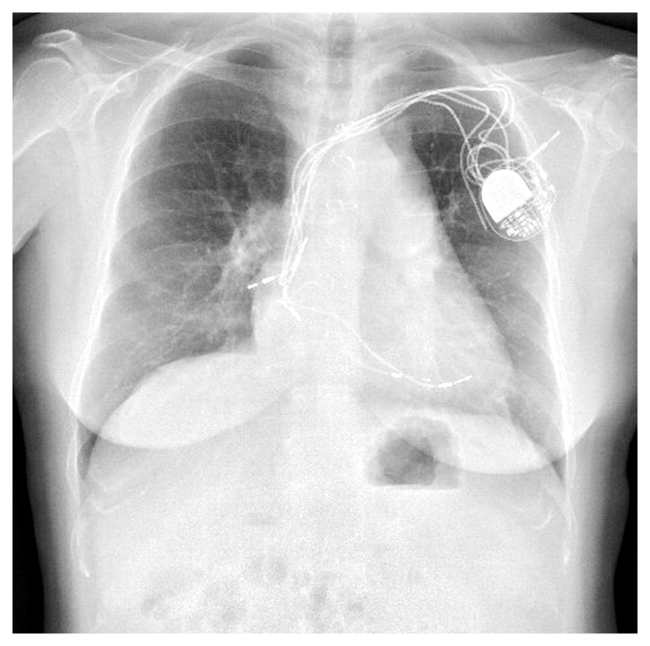
We know that drug-eluting stents reduce restenosis, but they do not eliminate it. It is our estimation that there will be around a 10% recurrence rate of restenosis even with the use of drug-eluting stents. Let’s assume that drug-eluting stents are primarily used in all interventional cases. If, for example, this amounts to one million stents placed per year in the U.S. alone, 10% of that number is still 100,000 patients who will develop in-stent restenosis. If we consider brachytherapy the best treatment for those cases, that number is still greater than the number of patients currently being treated. It is estimated that in 2003, only 50,000 of the 130,000 to 150,000 patients who developed in-stent restenosis will undergo brachytherapy. Thus, patients with in-stent restenosis will exist despite the use of drug-eluting stents.
There are four ways to treat those patients who do develop in-stent restenosis:
1) Surgery, which patients always like to avoid.
2) Implantation of another drug-eluting stent. This option doesn’t seem to make much sense, since if a stent failed the first time, why would one expect it to succeed the second time? Besides, implantation of a stent within a stent is not a very appealing approach because the old and new polymers induce more inflammation and prevent drug interaction with the tissue.
3) Conventional or cutting balloon therapy. Previous brachytherapy studies have shown that there are instances of failure that do not respond very well to conventional therapy. These instances are associated with a higher rate of recurrence approximately 20-40%.
4) The final alternative is to treat the failure of drug-eluting stents with brachytherapy. It appears to me that there is logic in doing this, and I think it will be the best option for patients who fail with DES treatment.
Questions regarding the safety of using brachytherapy for DES therapy still remain, however. My understanding is that the drug is gone by the time the patient presents with restenosis. The primary mechanism of restenosis would be the lack or insufficiency of the drug to a certain segment, leading to neointimal formation, which is the main target of brachytherapy. It is not an issue of reutilization of drug-eluting stents by the time restenosis occurs, so brachytherapy treatment should not pose a problem. Common sense tells me that it will still be safe, but we need to collect data on a large series of patients in order to confirm its safety. I have no doubt that it will be shown to be effective. Nevertheless, we will conduct an E-registry on crtonline.org to document the outcome of at least 100 patients with DES failure that will be treated with brachytherapy.
Have any patients in the United States undergone this procedure yet?
Not in the United States, because drug-eluting stents have only very recently been approved. We must allow some time to see which patients develop restenosis. In Europe, brachytherapy is used, though not very widely, therefore we only have anecdotal case reports on the safety and utility of this approach. Data from a larger series of patients are needed before one can declare with certainty that it is a safe and effective therapy. The safety and efficacy of brachytherapy for drug-eluting stents can be determined after data are gathered from the first 100 or so patients.
Do you think smaller hospitals should be making an investment in brachytherapy systems based on the likely fact that even with the widespread use of drug-eluting stents, some in-stent restenosis will result in patients who have more complex lesions?
I’m unsure as to whether now is the appropriate time for small hospitals to invest in brachytherapy technology, although the technology does not really require a large financial investment up front and is fully reimbursed. In my opinion, brachytherapy will continue to remain a tool to combat restenosis, regardless of drug-eluting stents, although brachytherapy will probably not be as widely used, since drug-eluting stents will reduce the incidence of restenosis. Hospitals can take the approach that they don’t need to invest in every technology and can refer the more resistant restenosis cases to tertiary care centers. But if a hospital wants to be able to provide all options and the best available therapy for the indication of in-stent restenosis, then they should be committed to a vascular brachytherapy program.
Some people have suggested that the cobalt-chromium stents, paired with brachytherapy, might yield target lesion revascularization (TLR) rates similar to those with drug-eluting stents. Do you think that is realistic?
Recent studies support the idea that cobalt-chromium stents do reduce overall target lesion revascularization, even without being paired with brachytherapy. I think that brachytherapy should be restricted to those patients who have already restenosed; not every patient. If applied to de novo lesions, it can be done, but only in cases with a high risk of restenosis. Brachytherapy can work nearly as well as drug-eluting stents if done correctly. A paper from Germany recently published in Circulation regarding the use of vascular brachytherapy in de novo lesions showed results comparable to those of drug-eluting stents. This does not suggest, however, that de novo lesions should be treated with brachytherapy, but if a patient does have a high risk of restenosis, brachytherapy does present another option.
What developments have occurred since the introduction of vascular brachytherapy systems to make them more user-friendly?
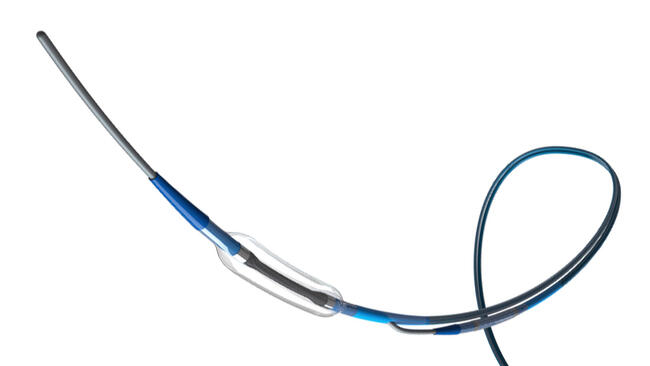
The systems have been improved and have become easier to use through certain iterations related to technological improvements. Both beta and gamma systems have been approved to reach anatomical lesions and dosimetry was optimized. We know how to eliminate late thrombosis and minimize edge effect stenosis. Ease-of-use has been much improved for radiation oncologists and cardiologists. More importantly, there are regulations that now permit practitioners to perform the procedure without the presence of radiation oncologists. This has not been implemented in all hospitals; however, technically, it can be done if another authorized user is designated to supervise the case. This arrangement allows for more scheduling flexibility in the catheterization laboratory.
You presented the results of the BRITE II and ARTISTIC II trials at the 2003 American College of Cardiology meeting. What do you think are the most important points we should take away from these two trials?
These two trials support the use of brachytherapy in general for the treatment of in-stent restenosis. We were impressed by the fact that ARTISTIC’s overall major adverse cardiac events (MACE) rate was a single-digit number very low, in fact, for this subset of patients. Once the lessons from the clinical trials were implemented, such as prolonged antiplatelet therapy and longer margins, we were able to optimize the results to achieve very low recurrence rates with the use of brachytherapy. This second phase of trials not only continues to support the observations from the initial trials, but also shows that there is room for improvement once brachytherapy is applied correctly using the appropriate dose and the appropriate anticoagulation therapy.
Some of the pre-approval trials showed an increased risk of subacute thrombosis when coupling new stent implantation and brachytherapy. This risk was apparently abated with prolonged clopidogrel therapy. Do you think that real-life drug-eluting stent implantation poses an increased incidence of subacute thrombosis (SAT) when used without the clinical guidelines outlined for the TAXUS and SIRIUS trials?
As long as the guidelines of the clinical trials are adhered to, we should not see troubling subacute thrombosis rates. However, once one goes beyond these guidelines by placing multiple stents, using inadequately sized stents for the size of the vessel, or by placing drug-eluting stents for indications that have not been tested, higher SAT rates would not be surprising. The degree of that higher rate could be only 1% greater than what is typically observed in the regular, day-to-day cases, but 1% of one million stents amounts to 10,000 patients with SAT. In Europe, the use of DES in clinical practice has been more representative of the ˜real world’ and suggests a slight increase of SAT compared to the pivotal trials conducted in the U.S. Thus, I think that the more aggressively these stents are used, the greater the SAT rates will be. In Milan, the aggressive use of drug-eluting stents was associated with a higher rate of death and myocardial infarction as compared to what was usually described in the past with bare metal stents.
Which interventional modality do you think may pose the greatest risk of SAT in real practice as opposed to clinical trials?
I think multiple stenting in the same vessel poses the greatest risk of SAT. This risk can be minimized with the prolonged use of clopidogrel if the patient is not resistant to it.
So you advocate the use of prolonged clopidogrel therapy in brachytherapy and drug-eluting stent patients?
Yes. For brachytherapy, we reported that twelve months of clopidogrel was better than six months and even retrospectively, we know of no late thrombosis cases beyond two years. Thus, to be on the safe side, two years of clopidogrel treatment is probably the safest time frame to eliminate the risk of late thrombosis. For drug-eluting stents, it seems to me that in certain indications such as failed brachytherapy or multiple stenting, prolongation of antiplatelet therapy should be considered beyond three months maybe six or even twelve months. I feel comfortable advocating this today because there are a lot of data available that support at least twelve months of clopidogrel, regardless of SAT and late occlusion.
Is there anything else you would like to share that we haven’t yet discussed?
We plan to initiate an electronic registry for the RESCUE (Radiation for Eluting Stents in Coronaries failUrE) trial in which patients who failed DES therapy will be treated with brachytherapy. Overall, I believe it would be safe to treat DES failure with brachytherapy since at the time of restenosis, the drug is gone and the neointima formation at the site of restenosis should be responsive to radiation therapy.
Also, I think that brachytherapy beyond the coronary tree will prove beneficial. There are indications that this technology can be expanded beyond the treatment of in-stent restenosis. For example, brachytherapy may potentially reduce the recurrence rate of in-stent restenosis, renal artery stenosis, superficial femoral artery (SFA) disease, and AV dialysis grafts. Furthermore, vascular brachytherapy could be used to target restenosis in other peripheral anatomy that tends to restenose.
Where are we today in terms of looking at the efficacy of vascular brachytherapy in the periphery? Are any trials currently under way?
A series of trials was launched using gamma radiation and a high dose rate afterloader, a device currently used for cancer therapy. The majority of those trials showed that it is an effective treatment compared with the control group. None of these studies revealed any safety issues with the use of vascular brachytherapy for SFA.
Two trials are currently underway with beta radiation: one for the treatment of in-stent restenosis of the SFA, and one for the treatment of an A-V dialysis shunt. The latter study focuses on the hypothesis that vascular brachytherapy would prolong the durability of A-V dialysis shunts, which tend to fail fairly quickly due to intimal hyperplasia. These two ongoing studies could, depending on their results, encourage the expansion of vascular brachytherapy application beyond in-stent restenosis. We will also initiate another study to compare the use of vascular brachytherapy to the use of the Cypher stent in insulin-dependent diabetic patients, since restenosis rates from that subset of patients reached 35% in the SIRIUS trial. We would like to examine whether brachytherapy can offer a better therapeutic option for this difficult subset of patients. Over time, we will determine where drug-eluting stents perform best and where they may need some help by adding vascular brachytherapy.
Theoretically, we can think about the possibility of combining these modalities, much like what is done in cancer therapy where patients are treated with radiation therapy and chemotherapy. In the vascular disease field, treatment would involve combining vascular brachytherapy and drug-eluting stents. This is another approach currently being explored at the pre-clinical level.
NULL
Subscriber
Cath Lab Digest Newsletter