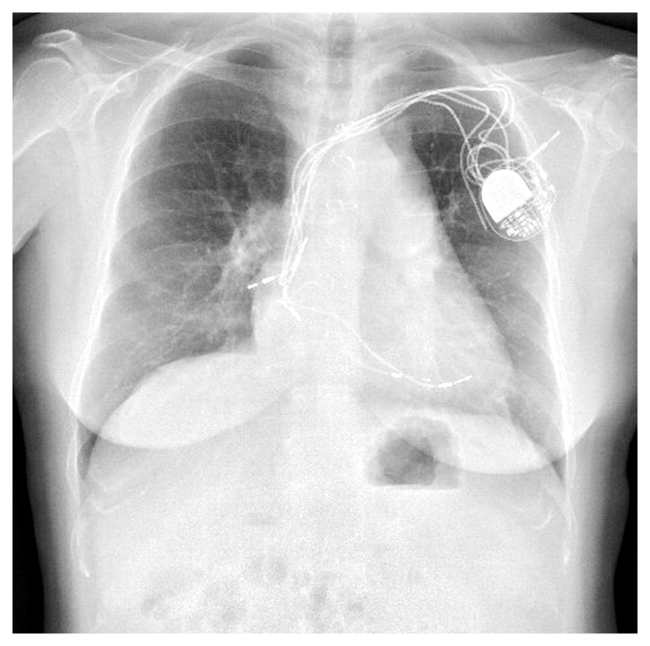
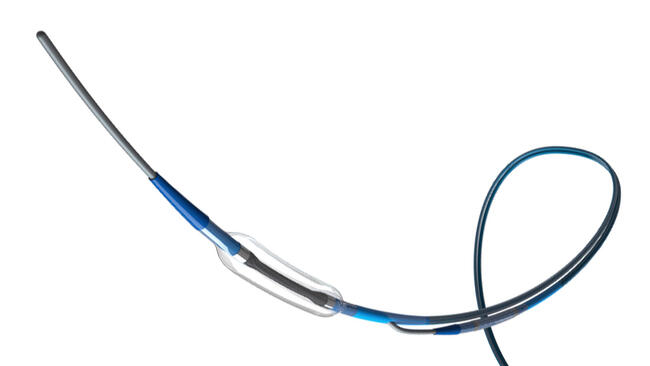
The results of this study suggest that the responses to a collagen sponge and manual compression appear similar suggesting that the tissue response appears to be primarily influenced by physical forces that are present at the cell-tissue interface.
Study Methods
The study evaluated the histopathology of the skin tract and arteriotomy site 30 days after use of a collagen sponge versus manual compression to close an arteriotomy site in a porcine femoral artery model. A femoral arteriotomy site on one side of each animal was closed using manual compression and on the contra lateral side the site was closed using a collagen sponge.
Three days prior to performing the procedure, 325 mg of acetyl salicylic acid was administered to male and female swine weighing a minimum of 45 kg. An additional 325 mg of acetyl salicylic acid was administered on the day before the procedure. Animals were prepared and underwent the procedure per the GLP (Good Laboratory Practices) study protocol. (Protocol on file at Datascope Corp). The protocol included blind femoral access and placement of a procedural sheath to simulate clinical procedures conducted prior to achieving hemostasis.
One site per animal was sealed using a collagen sponge. Prior to deployment of the collagen, the tissue tract was expanded using an 8.5 French dilator. A sheath was then advanced over the dilator until it was in position at the arteriotomy site.The dilator was removed and the cartridge containing the collagen was inserted into the delivery system sheath and delivered to the arterial puncture site. After deployment of the collagen sponge, non-occlusive pressure was applied to the femoral artery and slowly released until hemostasis was achieved.
Hemostasis on the control contralateral femoral artery puncture was achieved using manual pressure. The occlusive pressure was slowly released after an initial hold time of 10 minutes, and the arterial puncture site was visually assessed for hemostasis. The site was observed for bleeding. If at any time bleeding or an expanding hematoma was observed, firm occlusive pressure was placed on the site for an additional 5 minutes. This process was repeated until hemostasis was achieved.
In addition to standard post-operative care per the animal facility’s Standard Operating Procedures (SOPs), each animal received 325 mg of acetyl salicylic acid daily throughout the entire 30-day post- operative period.
The animals were recovered from the procedure and observed for 30 days post-implantation. After 30 days, the animals were euthanized by a lethal dose of anesthetic. Immediately after each animal had been sacrificed, the tract used to insert the catheter was dissected out from the skin incision to the femoral artery along with the surrounding tissue. The location of the skin where the catheter was inserted, as well as the location of the distal end of the artery was identified. The femoral artery was flushed with heparinized saline in order to limit thrombosis within the vessel lumen. The explanted tissue was placed in 10% neutral buffered formalin for at least 72 hours and then wrapped in gauze and placed in a plastic bag containing additional formalin solution for shipping.
Tissue samples were sectioned and processed using standard histological tissue preparation methods. Sections were stained using Elastic Tissue Stain (Van Giesen), Trichrome (Masson) and Hematoxylin & Eosin (H&E). Using the elastic tissue stain, elastic fibers are stained black, collagen is stained red and muscle is stained yellow. Cell nuclei also stain black using the elastic tissue stain. Using Masson’s Trichrome nuclei are black, muscle fibers are red and collagen fibers are blue. Staining with H&E results in dark nuclei, red muscle and pink collagen fibers.
Results
Histological slides for all specimens were read by Dr. Silver (non-blinded) to evaluate the pathobiological responses in both the skin tract and around the artery wall (see Figures 1 through 7). Gross observations of the tissue tract revealed no indications of residual collagen sponge; however, on microscopic inspection at magnifications of 40 x and above, remnants of the implant were observed at 30 days (see Figure 6). Histopathological observations made on both control and collagen treated animal sites suggest that the epidermis and dermis healed normally, with only a few animals showing any indications of residual inflammation remaining at 30 days. However, the arteriotomy site in both control and collagen sponge treated animals showed signs of fibrous tissue deposition surrounding the artery in the neighboring fat and muscle tissue with a mild to moderate inflammatory response characterized by a chronic mononuclear infiltrate (see Figures 1 to 7). This response appeared to be associated with the fat necrosis that occurred as a result of the procedure (see Figures 1, 3, 4 and 5). Occasionally a few giant cells could be observed in the fibrous tissue deposited at the arteriotomy site in both manual control and collagen sponge treated animals. However, giant cells were difficult to find in any of the sections.
Remnants of the implant were observed within the fat or muscle in some animals treated with the collagen sponge. Pieces of undegraded implant were associated with a very mild response that did not appear to contain any multinucleated giant cells. The histological observations suggest that the response to the collagen sponge itself is far less than the response that appears to be due to injury that occurs to fat tissue during creation of the arteriotomy site. In addition, most of the collagen sponge was degraded by 30 days post-implantation with no observable pathobiological changes to the skin tract and arteriotomy site beyond those associated with the surgical procedure.
Animals sites treated with manual compression showed normal epidermal and dermal tissue structure. In some cases there were some small areas with a mild inflammatory response characterized by an accumulation of a few mononuclear inflammatory cells in the upper dermis, presumably associated with the final stages of healing of the skin tract. However, this could only be hypothesized as the cause of the inflammation seen in the dermis since the skin tract was fully healed.
The primary pathobiological response that appeared to reflect the arteriotomy site in the subcutaneous tissues was the presence of a chronic mononuclear inflammatory infiltrate around the artery wall (see Figures 1, 2, 4 and 5), as well as fibrous tissue in the fat and muscle surrounding the artery (see Figures 1, 3, 4 and 5). The inflammatory response appeared to involve fatty tissue around the tissue tract and appeared consistent with fat tissue necrosis characterized by mononuclear inflammatory cells (see Figure 3) and a few occasional giant cells. This was evidenced by the presence of what appeared to be vacuoles filled with inflammatory cells and fibrous tissue. Micrographs of tissue sites (Figures 1 - 3) show the foreign body reaction that appears to involve fat necrosis at the arteriotomy site. Micrographs of another site (Figure 4) show the presence of focal areas with moderate to severe inflammation in the control animals. The fat necrosis appears to be the nidus for the foreign body giant cells that were seen to occasionally form.
Animals treated with a collagen sponge showed a similar response in the dermis and subcutaneous tissues. A few areas of the dermis showed a mild inflammatory response; however, this occurred in only a few of the sections. More commonly it was observed that the fibrous tissue was deposited in the fat and around the arteriotomy site with a mild to moderate inflammatory response as shown in Figure 5. Occasionally the fibrous tissue was deposited in the muscle and a few giant cells were observed, but not in areas containing remnants of the collagen sponge as shown in Figures 6 and 7. In areas containing undegraded pieces of collagen sponge, the implant was associated with only a mild inflammatory response, which in one case was associated with encapsulation of the remaining implant.
Discussion
The results of a histological study comparing the pathobiological responses observed at 30 days post-procedure in the presence of a collagen sponge versus manual compression, were similar. The pathobiological responses in the skin and subcutaneous tissue tract do not appear to be different in control manual compression and collagen sponge treated animals. The fat necrosis that was observed was associated with scar tissue formation from the procedure that extended into the muscle and perivascular tissue.
The only exception to this observation was that histological observations indicated that some collagen treated animals demonstrated the presence of residual implant that elicited a mild inflammatory response. The control manual compression site tissue also demonstrated a mild inflammatory response at 30 days. These results suggest that the tissue response to VasoSeal sponge collagen and manual compression is far less than the response that appears to be due to injury that occurs to fat tissue during creation of the arteriotomy site. In addition, most of the collagen sponge was degraded at 30 days post implantation with no observable pathobiological changes to the skin tract and arteriotomy site beyond those associated with the surgical procedure.
In order to explain the similarity of the histopathological findings of compression treated animals and collagen sponge treated animals it was necessary to examine the pathogenesis of fibrous tissue deposition and fat necrosis. During creation of the arteriotomy site a catheter is inserted through the skin into the femoral artery. The trauma associated with creation of the arteriotomy tract through the skin and artery wall would activate Hageman Factor and stimulate blood coagulation and fibrinolysis. In addition, activation of other pathways would occur as a result of the tissue trauma. However, no evidence of fibrin deposition was observed in the skin tract or around the artery suggesting that the trauma to the skin and vessel wall was minimal and that the fibrous tissue deposition and fat necrosis was not a direct effect of creation of the skin tract or arteriotomy site creation.
Therefore, some other factor was needed to explain fat necrosis and scar tissue formation seen after either both of these treatments. There are two possible explanations that need to be examined that might explain the fat tissue necrosis and scar tissue formation observed with both control manual pressure and collagen treatment. These include the effects of interruption of the lines of tension in skin and vessel wall due to creation of the arteriotomy site and the effect of compressive forces created by manual compression and implant pressure on fat cell necrosis.
Creation of an arteriotomy tract and insertion site in the vessel wall interrupts the normal lines of tension in the skin and vessel wall. This may lead to fibroblast synthesis of granulation tissue, scar tissue deposition and then to contraction of the newly synthesized collagen as has been shown to occur in fibroblast seeded collagen matrices (Grinnell, 2000). Fibroblast contraction of collagen in granulation tissue may cause injury to surrounding fat cells in subcutaneous tissues. Superimposed on this response may be the response to manual pressure at the wound site or pressure that results from placing a collagen implant in the arteriotomy tract. This may create pressure injury to fat tissue that has been described to lead to fat necrosis (Barrow, 1994).
Fat necrosis is usually associated with a history of trauma or compressive injury to fat (Barrow, 1994). The lesion initially consists of necrosis of adiposites due to mechanical trauma with subsequent inflammatory cell engulfment of lipid debris, vacuolization of fat cells, fibroblast proliferation, granuloma formation and fibrous scar tissue deposition (Barrow, 1994). Fat necrosis has also been observed in biopsies of capsular and breast tissue, which surrounds silicone gel-filled breast implants (Silver et al., 1995), suggesting that pressure resulting from placement of an implant into a tissue pocket may also lead to injury of fatty tissue. Fat tissue necrosis associated with manual pressure or placement of an implant may lead to an inflammatory response that results in lysis of fat cells.
Conclusions
It is anticipated that similar histopathological findings would be observed in the tissue and arteries of humans. The majority of collagen sponge plug resorption occurs in the first 30 days. The response in the swine model to a collagen sponge and manual compression appear similar, suggesting that the response is primarily influenced during formation of the tissue tract. It is believed that this same response would be observed in humans.
Austad ED, Pasyk KA, McClatchey KD, Cherry GW, Histomorphometric evaluation of guinea pig skin and soft tissue after controlled tissue expansion.
Plast Reconstr Surg 1982;70:704-710.
Brown RA, Prajapati R, McGrowther DA, Yannas IV, Eastwood M. Tensional homeostasis in dermal fibroblasts: mechanical responses to mechanical loading in three-dimensional substrates. J Cell Physiol 1998;175:323-332.
Barrow SA. The Breast. In: Ribin E, Fradber JL, (editors). Pathology, 2nd ed. Philadelphia: J.B. Lippincott, 1994;978–979.Chiquet M, Regulation of extracellular gene expression by mechanical stress. Matrix Biology 1999;18:417-426.
Eckes B, Mauch C, Huppe G, Krieg T. Downregulation of collagen synthesis in fibroblasts within three-dimensional collagen lattices involves transcriptional and posttranscriptional mechanisms. FEBS Letters 1993;318:129-133.
Goldstein JJ, Tria AJ, Zawadsky JP, Kato YP, Christiansen D, Silver FH. Development of a reconstituted collagen tendon prosthesis. A preliminary implantation study. Journal of Bone and Joint Surgery 1989;71-A:1183-1191.
Grinnell F. Fibroblast-collagen-matrix contraction: growth-factor signaling and mechanical loading. Trends in Cell Biology 2000;10:362-365.
Johnson TM, Lowe L, Brown MD, Sullivan MJ, Nelson BR. Histology and physiology of tissue expansion. J Dermatol Surg Oncol 1993;19:1074-1078.
Kessler D, Dethlefsen S, Haase I, Plomann M, Hirche F, Krieg T, Eckes B. Fibroblasts in mechanically stressed collagen lattices assume a "synthetic" phenotype. J Biol Chem 2001;237:159-172.
Kischer CW, Shetlar MR, Shetlar CL. Alteration of hypertrophic scars induced by mechanical pressure. Arch Dermatol 1995;111: 60-64.
Kolodney MS, Wysolmerski RB. Isometric contraction by fibroblasts and endothelial cells in tissue culture: a quantitative study. J Cell Biol 1995;117: 73-82.
Langer K. On the anatomy and physiology of the skin: I. Br J Plastic Surgery 1978a;31: 3-8.
Langer K. On the anatomy and physiology of the skin: II. Br J Plastic Surgery 1978b;31:93-106.
Langer K. On the anatomy and physiology of the skin: III. Br J Plastic Surgery 1978c;31: 185-199.
Pasyk KA, Austad ED, McClatchey KD, Cherry, GW. Electron microscopic evaluation of guinea pig and soft tissues "expanded" with a self-inflating silicone implant. Plast Reconstr Surg 1982;70:37-45.
Pasyk KA, Argenta LC, Hassett C. Quantitative analysis of the thickness of human skin and subcutaneous tissue following controlled expansion with a silicone implant. Plast Recontr Surg 1988;81:516-523.
Silver FH, Pins GD, Rizvi A, Olson RM, D’Aguillo A. Silicone gel-filled breast implants: is local inflammation associated with fat necrosis? The Breast Journal 1995;1:17-21.
Silver FH, Christiansen DL. Wound healing, In: Biomaterials Science and Biocompatibility, New York: Plenum, 1999;241-277.
Silver FH, Siperko LM, Seehra GP. Mechanobiology of Force Transduction in Skin. Skin Research and Technology, in press, 2002.
Wasserman AJ, Kato YP, Christiansen D, Dunn MG, Silver FH. Achilles tendon replacement by a collagen fiber prosthesis: morphological evaluation of neotendon formation. Scanning Microscopy 1989;3:1183-1200.