Clinical and Industry News
Clinical and Industry News
November 2008
Mouse Study Shows Fetal Heart Can Grow Cells to Repair Disease Damage
A recent study in mice shows the ability of the fetal heart to grow healthy cells to compensate for cardiac tissue lost to disease. The mice are normal at birth and their hearts function well during their youth. However, these gains can be short-lived. About 40 percent had signs of heart disease in early adulthood, and 10 percent died of heart failure. Results published in the Oct. 14 edition of Development Cell describe the capacity of a mouse heart to repair extensive damage while in the womb, even after all the heart's major cell types and structures have developed. The finding that so many of these mice grew up to have heart disease suggests that some human heart diseases in adults may have originated from damage in the womb. An international group of scientists from Australia, Germany, and the United States conducted the study. Most organs in developing embryos and fetuses have moderate leeway in changing their growth in response to external and internal influences. However, except for the liver, extensive regeneration of diseased or damaged tissue has not been observed before in mammals. This phenomenon was previously thought to occur only in fish and in amphibians, like frogs and newts. Timothy Cox, University of Washington research associate professor in pediatrics and the study's senior author, said, "What's noteworthy about this study is that it suggests that a diseased or damaged heart in a developing embryo can largely repair itself. The mice were born with normal cardiac function that persisted, according to our monitoring, during the first months of life." Nevertheless, he added, despite the fetal heart self-repairing and the newborn mice appearing healthy, their hearts started to give out as they entered adulthood. In addition to his work on congenital disorders at the UW, Cox is a member of the Center for Tissue & Cell Sciences at Seattle Children's Research Institute and a researcher at the UW Center for Human Development & Disability. He moved to Seattle recently from Australia, where he was a researcher in anatomy and developmental biology at Monash University and in biomedical and molecular science at the University of Adelaide. In their study, the researchers bred mice that had a sex-linked genetic defect that caused a disorder in the mitochondria inside their heart cells. Mitochondrial disorders are one of the leading causes of fatal heart disease early in life, and they may possibly contribute to failure of aging hearts as well. The researchers found that most of the male mice with this genetic defect on their single X chromosome, and the female mice with the defect on both their X chromosomes, died midway through gestation. The researchers assumed that the female mice with the defect on only one X chromosome would have the genetic deficiency in about 50 percent of their heart cells. Females generally have only one of their two X chromosomes activated in each cell. The de-activation of one or the other X chromosome is random. To the researchers' surprise, none of the females carrying both the normal and the defective X chromosome died before birth. Analysis of cardiac tissue from the newborn and two-month-old female mice showed few cellular changes and no major pathology. Measurements of specific protein marker and of cellular respiration were normal. At about the middle of gestation, female embryos with one defective X chromosome had an abundance of heart cells with enlarged and disorganized mitochondria, but also many cells containing normal mitochondria. By the time females of this genetic type were born, their hearts appeared to be remarkably normal. Additional analysis suggested that this normalcy was likely due to such a proliferation of healthy cells that the proportion of defective cells became smaller and smaller, yet remained resident amongst the predominantly healthy cells. The proportion and location of these residual defective cells, the authors surmised, might have contributed to heart problems later in life. The heart's conduction system, which helps control the heartbeat, might have become more severely affected than it appeared at birth. Future research in the area of fetal heart self-repair, Cox said, will probably be geared toward identifying the signals that turn on the regenerative response in healthy heart cells. If these signals could be identified, Cox said, switching them on again might help repair adult heart tissue. Scientists are also interested in when or if the heart loses the capacity to repair itself, and what governs the timing and the mechanisms of this loss. Researchers also are hoping, he added, to understand why some of the apparently healthy baby mice in this study ended up showing signs of heart disease in young adulthood or dying early from heart failure. This information might someday help pinpoint which children are at risk for heart disease as they enter adulthood. _____________________________Greater than 50% of Patients with Stable CAD Do Not Undergo Exercise Stress Test Prior to Angioplasty
More than half of Americans who undergo non-emergency angioplasty don't get the recommended cardiac stress tests beforehand, Medicare records show. Just 44 percent of patients in the study got the test. “We didn't expect to find 100 percent, but we expected a much higher percentage than 44,” said Dr. Rita F. Redberg, professor of medicine at the University of California, San Francisco. Dr. Redberg is one of the authors of this report in the Oct. 15 issue of the Journal of the American Medical Association. Redberg was a member of a team that studied the medical records of almost 24,000 people who had elective percutaneous coronary intervention (PCI). Guidelines generally say that a stress test should be performed in such cases. However, the report found that just 44.5 percent of people in the study had stress tests before they underwent PCI. That percentage varied widely, not only geographically, but also by patient characteristics and the age of the doctor doing the PCI. The regional incidence of stress testing varied from 22.1 percent to 70.6 percent, the researchers found, with doctors in the Northeast and Midwest performing best. Stress tests were less likely to be done for women, anyone 85 years of age or older, or someone having other illnesses, such as congestive heart failure, lung disease or rheumatic disease. Stress tests were more likely for someone treated by a doctor under the age of 40 or over the age of 70. There are “multiple reasons” for the differing rates of stress testing, Redberg said. One reason is that the guidelines are not as clear as they might be. “We have a number of different scientific documents come out," she said. That situation may be clarified by new guidelines expected to be released shortly by the American College of Cardiology, she said. “The college is about to release appropriateness criteria that say that in such-and-such a situation, a PCI would be appropriate,” said Redberg. There is also no financial incentive to reduce the number of unnecessary angioplasties, the report said. Changing the Medicare payment system to reward doctors and hospitals that stick to guidelines “would improve the safety and delivery of health care to Medicare beneficiaries while decreasing Medicare expenditures,” the report noted. The under-utilization of cardiac stress tests was reported in a study conducted as far back as 1994, according to that effort’s lead author, Dr. Eric Topol, director of the Scripps Translational Science Institute in La Jolla, California. His team “used a private insurers' database many years ago, but the main point is the same — that patients with stable symptoms of angina [which might rule out PCI] don't get appropriate testing before they get an angioplasty procedure,” Topol said. Guidelines for PCI “should be much more clear-cut,” Topol believes, and cardiologists should demonstrate more self-control. “It’s the old Mark Twain saying that, to a man with a hammer, everything looks like a nail,” he said. Stress tests should be done regularly, not just when angioplasty is being considered, Topol said. “Then you have a way to follow a patient,” he said. “You can do a stress test every year to be sure things are normal. That is an important baseline that is being ignored all too frequently.” Commentary: The Society for Cardiovascular Angiography and Interventions (SCAI) The SCAI supports the current guidelines for use of angiography and angioplasty in patients with stable angina, which SCAI developed in partnership with other leading medical societies. New data in the Journal of the American Medical Association suggest the guidelines are often not followed with regard to administering stress tests to identify the need for angioplasty versus other treatment options. While these results warrant concern, the guidelines also note that stress tests are not always necessary or appropriate, including for patients who are too sick or immobile to undertake a stress test. Alternative diagnostic tools may include studies such as multislice CT angiography in some patients or the direct progression to angiography to clarify the clinical situation. “There are many reasons patients would not get a stress test, but the two primary reasons are they’ve already had one or they are too sick to have one,” said Dr. Steven R. Bailey, SCAI president-elect. “Considering the demographics of this study, it logically follows that angioplasty was used appropriately despite the lack of a stress test.” “This study looked at patients who had a stress test in the past 90 days. The reality is that most stable angina patients have positive stress tests, or demonstrated stress on the heart, long before they arrive in the interventional cardiologist’s office. The decision to proceed with angiography has already been made by their cardiologist,” said Dr. J. Jeffrey Marshall, SCAI member. “Stable angina patients come to us because medicines are not working. The study fails to highlight this.” “The guidelines are important, but they are meant to guide physicians based on the data available at the time of their development, not serve as a substitute for clinical judgment,” said Dr. Bonnie H. Weiner, SCAI immediate past president. “The message from the interventional cardiology community is that for these patients, who may not be able to walk across a parking lot without pain, angioplasty and stents improve health and quality of life substantially.” SCAI is a professional medical society representing invasive and interventional cardiologists whose mission is to promote excellence in this specialty through physician education and advancement of quality standards to enhance patient care. More information is available at www.scai.org. _____________________________Boston Scientific Announces FDA Approval of Second-Generation Taxus® Liberté® Drug-Eluting Stent
Boston Scientific Corporation announced it has received approval from the U.S. Food and Drug Administration (FDA) to market its second-generation Taxus® Liberté® Paclitaxel-Eluting Coronary Stent System. The company plans to launch the Taxus Liberté stent early next month in the United States, following completion of the introduction of its Taxus® Express2™ Atom™ Paclitaxel-Eluting Coronary Stent System, which was approved by the FDA last month. The Taxus Liberté stent was launched in Europe and other international markets in 2005. “The Taxus Liberté stent represents our latest advance in drug-eluting stent technology,” said Donald Baim, MD, Chief Medical and Scientific Officer of Boston Scientific. “This device has substantially thinner struts and a more flexible cell geometry for improved deliverability, as well as uniform strut distribution designed specifically for drug elution. The Taxus Liberté stent demonstrated similar late loss and target vessel revascularization (TVR) as the Taxus® Express2™ Paclitaxel-Eluting Coronary Stent System in the ATLAS Workhorse clinical trial, despite treating more challenging patients.” “We believe the approval of Taxus Liberté is a clear indication that we have made significant progress toward resolving the issues related to the Corporate Warning Letter,” said Jim Tobin, President and Chief Executive Officer of Boston Scientific. The Taxus stent systems — both Liberté and Express2 — have been evaluated by the industry's most extensive randomized, controlled clinical trial program, with follow-up to five years in some cases. These trial results have been supplemented by data on more than 35,000 patients enrolled in post-approval registries. To date, approximately 4.6 million Taxus stents have been implanted globally. The Taxus Express2 stent (not the newer Taxus Liberté stent) was used as the control against the Xience™ V Everolimus-Eluting Coronary Stent System in the SPIRIT II and III trials. Xience is a trademark of the Abbott Laboratories group of companies. The Taxus Liberté Stent is not available for sale in Japan, where it is undergoing regulatory review. _____________________________Discovery Yields Possible Blood Test for Coronary Artery Disease
Scientists have identified a handful of genes in circulating blood associated with the presence and severity of coronary artery disease (CAD). If the findings are validated in a larger trial currently under way, it could lead to a molecular diagnostic requiring a simple blood sample from the patient to diagnose CAD, the leading cause of death in the United States. The findings, appearing in the inaugural issue of Circulation: Cardiovascular Genetics, stem from research at Duke University Medical Center and CardioDx, a molecular diagnostics company in California. “We have identified 14 genes in circulating blood cells that are exquisitely sensitive to the inflammatory changes that occur when plaque begins to accumulate in coronary arteries,” says Dr. William E. Kraus, a member of the Duke Heart Center and the senior author of the study. “What's really exciting is that the expression of these genes is also related to the degree of stenosis, or blockage of the arteries. This means that a blood test based on these genes could tell us not only if someone has CAD, but also how bad the blockage in their arteries really is.” “A blood-based test to diagnose CAD would be less invasive and risky and would prevent patients from radiation exposure,” says Kraus. “Patients who receive a positive test result might be able to short-circuit additional preliminary evaluations and head directly to coronary catheterization.” Kraus worked with colleagues at the Helios Heart Center in Germany and CardioDx in identifying 41 patients who had undergone coronary catheterization. Twenty-seven of the patients had blockages in their arteries; 14 did not. Using whole genome microarray analysis, scientists identified 526 genes that behaved very differently between the two groups. Further testing highlighted a subset of 14 genes that did the best job discriminating between patients with CAD and those who did not have it. Researchers tested those genes in blood taken from 215 catheterization patients at Duke. Investigators say that a gene expression “score” derived from adding the expression levels of the set of 14 genes is proportional to the degree of stenosis. “We need to stress that we are not talking about a cause and effect relationship here,” says Kraus. “We do not know if these genes cause CAD in any way or if their altered expression is in response to the disease. What we do know, however, is that their collective ‘signature’ is clearly associated with the presence of CAD.” Because the study involved a disproportionate number of men, researchers say the addition of more women and a larger study sample may yield even more genes that may be related to CAD in specific subsets of patients or that may narrow the list of the strongest predictors. Scientists at Duke and CardioDx are continuing to evaluate the 14 genes in an ongoing prospective clinical trial, dubbed PREDICT (Personalized Risk Evaluation and Diagnosis in the Coronary Tree). The trial began in 2007 and is open at 28 sites throughout the United States. The research was funded by CardioDx. _____________________________Abiomed’s Impella® 2.5 Device Now in 100 Leading U.S. Cardiac Hospitals Since June 2, 2008 510(k) Clearance
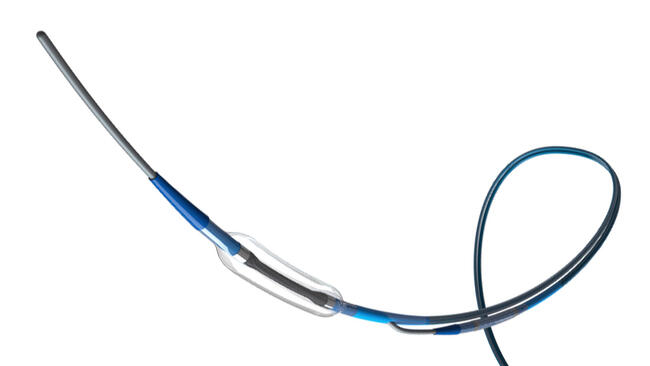
Abiomed, Inc. announced that it recently completed shipment of its breakthrough Impella® 2.5 Cardiac Assist Device under 510(k) clearance to 100 U.S. hospitals. In June 2008, Abiomed received U.S. Food and Drug Administration (FDA) 510(k) clearance of the Impella 2.5 device for partial circulatory support for periods up to six hours. The intra-aortic balloon pump (IABP) also has 510(k) clearance, and approximately 124,000 are used each year in the United States.1 Abiomed is currently conducting two U.S. pivotal studies comparing the Impella 2.5 to the IABP (Protect II for high-risk percutaneous coronary intervention, or PCI; and Recover II for acute myocardial infarction, AMI or heart attack). There are an estimated 60,000 annual high-risk PCI patients and 100,000 AMI anterior infarct patients annually in the U.S. The Impella 2.5 is inserted percutaneously in the catheterization laboratory via the femoral artery into the left ventricle. Up to 2.5 liters of blood per minute are delivered by the pump from the left ventricle into the ascending aorta, providing the heart with active support in critical situations. The Impella 2.5 is now approved in more than 40 countries, including in Europe under the CE Mark. The Impella platform has been used to treat over 1,500 patients outside the U.S. and has been the subject of more than 50 peer-reviewed publications. Reference: 1. Medtech Insight: Current and Emerging Technologies for the Management of Heart Failure in the U.S., March 2007. _____________________________Boston Scientific Announces FDA Approval of Taxus® EXPRESS2™ Atom™ Stent System for Small Vessels
Company Also Announces FDA Approval of Taxus® Express2™ Stent System for Treatment of In-Stent Restenosis Boston Scientific Corporation announced that it has received approval from the U.S. Food and Drug Administration (FDA) to market its Taxus® Express2™ Atom™ Paclitaxel-Eluting Coronary Stent System. The Taxus Express Atom Stent is a highly deliverable drug-eluting stent (DES) specifically designed for treating small coronary vessels. It is the only DES approved by the FDA for use in vessels as small as 2.25 mm in diameter. No other DES for sale in the U.S. market is approved for use in vessels smaller than 2.50 mm in diameter. The company plans to launch the product immediately. The company also announced FDA approval of its Taxus® Express2™ Paclitaxel-Eluting Coronary Stent System for the treatment of in-stent restenosis in bare-metal stents. This is the first such approval granted by the FDA, making the Taxus Express2 Stent System the only drug-eluting stent approved in the United States for the treatment of in-stent restenosis in bare-metal stents. “The Taxus Express Atom Stent will provide better options for U.S. patients with coronary artery disease in small vessels,” said Gregg Stone, MD, Chairman of the Cardiovascular Research Foundation and Professor of Medicine at Columbia University Medical Center, and Principal Investigator of the TAXUS IV and V clinical trials. “This is a welcome addition to the range of available drug-eluting stents, since patients with small vessels who are currently treated with bare-metal stents experience high rates of restenosis. In the TAXUS V clinical trial, the Taxus Express Atom Stent significantly reduced the chance of restenosis and the need for repeat procedures compared to bare-metal stents, in patients with small vessel disease.”NULL
Subscriber
Cath Lab Digest Newsletter