Cath Lab Spotlight
Baptist DeKalb
May 2003
What is the size of your cath lab facility and number of staff members?
Our cath lab facility includes one cardiac catheterization suite with a staff of six, including:
Four registered nurses,
One registered radiology technologist,
One registered respiratory therapist.
All employees have worked for the Baptist System for an average of 13 years.
What is the size of your cath lab facility and number of staff members?
Our cath lab facility includes one cardiac catheterization suite with a staff of six, including:
Four registered nurses,
One registered radiology technologist,
One registered respiratory therapist.
All employees have worked for the Baptist System for an average of 13 years.
What type of procedures are performed at your facility?
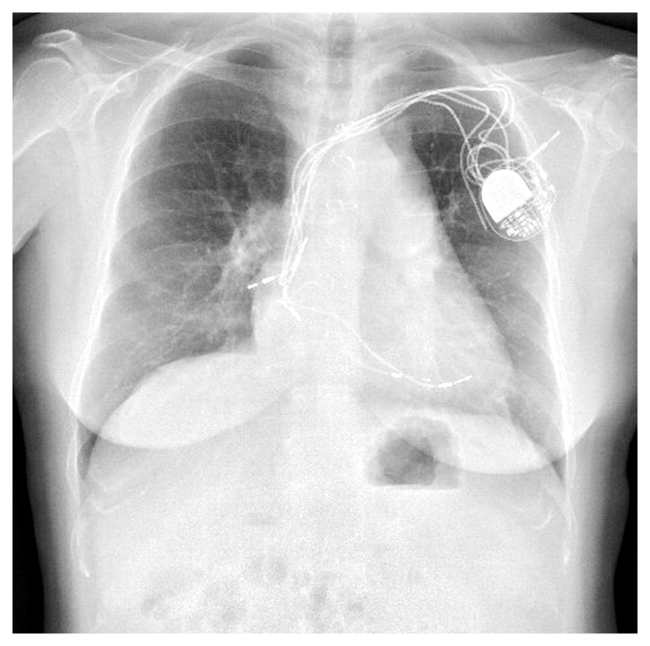
Our facility performs cardiac catheterization, pacemaker insertion, carotid angiography, peripheral angiography, and renal angiography.
Currently, we do not perform interventions, nor do we have cardiac surgical backup.
At present, we are averaging 3 cases per week, with the majority of these cases diagnostic cardiac catheterizations.
Cardiac catheterization, carotid angiography, peripheral angiography and renal angiography can be done at our facility on an outpatient basis. At present, 60% of our procedures are done on an outpatient basis.
Who manages your cath lab?
The supervisor of the cardiac cath lab is Vence Light, RT(R). The director of Cardiovascular/ Cardiopulmonary Services is Vicki Kay, RRT.
Do you have cross-training in your cath lab?
All employees of our cath lab are trained to scrub, circulate, monitor, and run the table. The employees rotate positions for each case. Only registered nurses, however, are allowed to administer medications (per hospital regulations).
Does your lab have a clinical ladder?
Neither our hospital, nor our department, has a clinical ladder.
What are some of the new equipment, devices and products introduced at your lab lately?
All of our equipment is new. Our radiology equipment is Shimadzu Digitex premier (Torrance, CA), the first of its kind in the U.S. It has a 16 image intensifier, to better deal with cardiac caths and peripheral angiography. We have been highly impressed with the image quality and service to date. We utilize Witt (Melbourne, FL) for our physiomonitoring.
Is your cath lab filmless?
Our lab is filmless. All images are digital and stored on CD-R.
How does your lab handle hemostasis?
Currently, we implement manual compression on the majority of our cases, with a limited use of Perclose (Redwood City, CA), Angio-Seal (St. Jude Medical, Minnetonka, MN), and VasoSeal® (Datascope Corporation, Mahwah, NJ).
We have a dedicated holding and recovery area staffed by registered nurses employed by each department. PACU nurses recover the cath lab patients in the recovery room.
Included in our sheath removal policy is a hematoma management policy. We monitor each patient for hematoma development or other complications and track for trends.
How is inventory managed at your cath lab?
We rotate our stock and utilize consignment. The supervisor is responsible for PAR levels and purchasing.
Has your cath lab recently expanded in size and patient volume, or will it be in the near future?
We opened our lab on September 10, 2002, and expect rapid growth due to regional demographics. Currently, we are up to approximately 8 cases per week.
Have you had any cath lab-related complications in the past year requiring emergent cardiac surgery?
We have not had any complications to date that required emergent cardiac surgery.
What measures has your cath lab implemented in order to cut or contain costs?
We are a part of the Baptist Health System and are able to use corporate purchasing and contracts in addition to working with consignment items to help contain our costs.
What types of quality control/quality assurance measures are practiced in your cath lab?
All equipment was installed and calibrated according to manufacturer’s recommendations and published guidelines. The room and equipment were checked and verified by an external agency prior to opening. We perform daily QC and calibration as recommended on all equipment. We utilize patient follow up, questionnaires, patient satisfaction surveys, and monthly reports to track and trend any opportunities for improvement. Our performance improvement initiatives we have identified to track this year include:
Patient wait times;
Any complications or undesired outcomes;
Patient satisfaction;
Patients transferred for intervention;
Percentage of normal caths.
We track salary and wage cost per procedure and supply cost per procedure on our financial goals. Procedure data is turned over to our C.F.O. and then to Administration for summarizing and breakdown.
How does your cath lab compete for patients?
We compete for patients by remaining very patient-focused and oriented, and by being close to home. The nearest facility is 45 minutes away. The only alliance we have with another facility is being part of a large health system with 11 sister institutions, one of which is a well-known cardiac center. If a patient needs services not offered by our facility, they are transferred to the tertiary care center of their choice.
How are new employees oriented and trained at your facility? What licensure is required for all professionals who work in your lab?
All employees go through orientation and competency verification to work in the cath lab. JCAHO and OSHA standards and statements are utilized to develop our orientation and competency training. Inservices are ongoing for members of the cath lab. Current state and national registries for each individual profession are required, as well as BCLS and ACLS.
What types of continuing education opportunities are provided to staff members?
Our department promotes continuing education. Classes are offered each month related to all areas of nursing, as well as cardiac-related topics. We develop our continuing education classes based on identified needs. These needs may be identified by staff, peers, or leadership.
How do you handle vendor visits to your lab?
Vendors must meet and sign in with the purchasing representative, where they will get a registration badge that allows them to visit our lab. They must also call ahead to the cath lab to arrange a visit. Vendors are limited to the control room, and are not allowed in the viewing room when the doctor is present.
How is staff competency evaluated?
Competencies are evaluated by individual didactic learning, lab training, and observation of clinical practice. Competencies are also evaluated by review of data collection and comparison with national or regional standards or benchmarks.
Does your lab utilize any alternative therapies (such as guided imagery, etc.)?
No alternative therapies are used at this time.
How does your lab handle call time for staff members?
We currently have day shift, 7am-3pm, with no call time.
What trends do you see emerging in the practice of invasive cardiology?
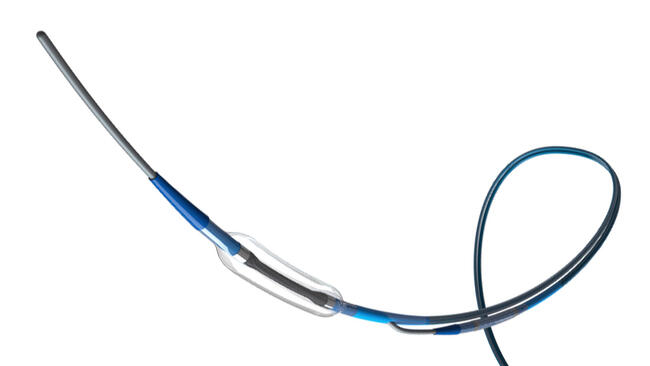
Trends we see emerging are the use of extensive brachytherapy, cryoplasty, and biventricular pacing as well as more elective interventions being done without surgical backup.
Has your lab undergone a JCAHO inspection in the past three years?
We have not undergone a JCAHO inspection, but anticipate one in mid-June of this year.
Please tell the readers what you consider unique or innovative about your cath lab and its staff.
Our lab is new, with new equipment. Our staff background includes experience in the cath lab, ER, ICU, and managerial experience. The staff has shown enthusiasm and the initiative to learn, including completing cross-training within a 3-month time period, which is outstanding.
Is there a problem or challenge your lab has faced?
One challenge was starting a new cath lab with one experienced cath lab employee. Aggressive cross-training and teamwork led to a quick resolve of the challenge.
What’s special about your city or general regional area in comparison to the rest of the U.S.?
Fort Payne is nestled between two mountain ranges in the foothills of the Appalachians, in the northeast region of Alabama. Fort Payne is a rural, densely populated community where cardiac services were desperately needed close to home. Fort Payne is also a closely knit community with many generous and friendly citizens who have been excited to see the advances Baptist DeKalb has made.
NULL
Subscriber
Cath Lab Digest Newsletter