Complex Aortic Dissection: You Either Master It—or It Takes You Down

ICVE, São Paulo, Brazil
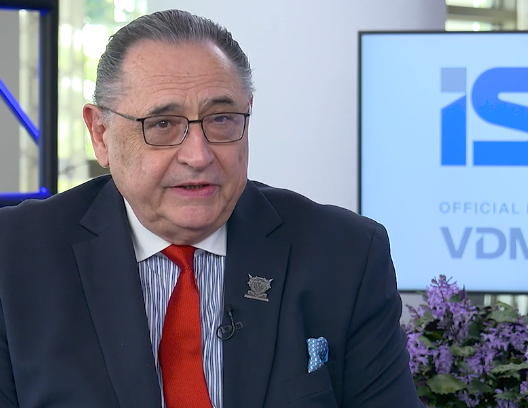
As endovascular techniques push further into complex dissection anatomy, the margin for error narrows – and the consequences of a wrong assumption can be immediate. In a wide-ranging interview with LINC Today regarding his talk “Complex aortic dissection: You either master it – or it takes you down”, Armando Lobato (ICVE, São Paulo, Brazil) set out a practical framework for decision-making in complicated acute type B and hybrid post-arch scenarios, from securing true-lumen (TL) control and reversing malperfusion, to escalation strategies, landing-zone choices, spinal cord protection and when to stage for durability.
Professor Lobato began by stressing that in complex aortic dissection (especially complicated acute type B and ‘hybrid’ scenarios after arch/ fenestrated repair), there is no single universal error that dominates. However, there is one recurrently catastrophic, preventable mistake that can lead to rapid deterioration.
“This is proceeding with endovascular repair without unequivocal TL control and without a malperfusion-first physiological plan,” he noted. This usually manifests in one of two ways, Professor Lobato continued. The first is inadvertent false-lumen (FL) wiring and/or deployment – a ‘game over’ complication when unrecognized. This can worsen FL pressurization, precipitate rupture, and/or trigger visceral/ renal/limb malperfusion.
“Contemporary reviews emphasize that this is likely under-reported and that intravascular ultrasound [IVUS] and transoesophageal echocardiography [TOE] outperform angiography alone for detecting TL/FL position and preventing catastrophic deployment,” he said.
The second manifestation is under-treating malperfusion. That is, in complicated acute type B aortic dissection (TBAD), malperfusion is the key determinant of early death, and it can be dynamic (hemodynamic TL collapse), static (branch ostial dissection/thrombosis), or mixed. “Entry coverage alone (standard proximal thoracic endovascular aneurysm repair) fixes many dynamic cases, but if you don’t prove restoration of TL caliber and end-organ flow, patients can spiral into persistent ischemia, to acidosis, to multiple organ failure,” said Professor Lobato.
He added that contemporary summaries and systematic reviews repeatedly frame complicated acute TBAD as ‘rupture and/or malperfusion’ and support urgent endovascular strategies tailored to the obstruction mechanism.
“In practice, the core ‘single mistake’ is not simply about timing or sizing; it’s failing to verify (in real time) that your wire, device, and final hemodynamics are truly in the TL, and that malperfusion has been definitively reversed.”
In acute complicated TBAD, Professor Lobato said the first decision is not “thoracic endovascular aneurysm repair [TEVAR]-first versus malperfusion-first” as a matter of philosophy, but a rapid assessment of mechanism and physiology. If rupture or impending rupture is the dominant problem, he described TEVAR-first as the clear priority because immediate entry control is lifesaving. When malperfusion is the main driver, he said the key step is to define whether the obstruction is dynamic or static, because that distinction determines what needs to happen first.
For dynamic obstruction, where TL collapse is hemodynamic, Professor Lobato stated that TEVAR-first can be a reasonable approach, provided it can be delivered immediately and safely, because sealing the entry tear often restores TL expansion and improves branch inflow. For static obstruction, where there is a fixed branch problem such as an ostial flap, thrombosis, or true occlusion, he said early branch-directed reperfusion – via stenting and/or fenestration – is frequently required, either before TEVAR or immediately afterwards, because entry closure alone may not correct a fixed lesion. The practical refinement he highlighted for current practice was simple: “You do not choose a philosophy; you choose the fastest path to physiological normalization (lactate, runoff, urine output, visceral blush). This approach aligns with the STS/AATS TBAD guidance and the broader aortic-organ guideline framework.”
TL collapse is one of the moments in acute complicated type B dissection where teams can be lulled into thinking the job is done once the entry tear is covered. Professor Lobato said the real question is whether distal hemodynamics recover after TEVAR, and he outlined the intraoperative signs that the true lumen is unlikely to rebound with TEVAR alone. These warning signals include ongoing severe TL compression distal to the graft on IVUS or angiography, persistent visceral, renal, or iliac hypoperfusion with poor blush and delayed runoff, and a mismatch between what is seen and what the physiology is doing – such as persistent metabolic failure, with lactate not improving or acidosis continuing. He added that morphology suggesting a fixed problem, such as a branch ostial flap, thrombosis, or TL occlusion, should also prompt teams to assume TEVAR alone will not be enough.
His escalation approach is deliberately stepwise. First, he described a “non-negotiable” check: re-confirming TL wiring, with IVUS often decisive. If the pattern remains consistent with dynamic collapse, he said the next move is distal TL scaffolding using a PETTICOAT-style bare stent to expand the true lumen beyond the covered segment. If the collapse remains critical or re-lamination is required, a STABILISE-style strategy can be considered in selected anatomy and experienced hands.
Then, where the driver is static disease, escalation should shift to branch-directed solutions – targeted stenting or fenestration to the failing vascular bed. He noted that systematic reviews have reported high technical success and low early mortality for PETTICOAT and STABILISE in complicated acute TBAD, while emphasizing careful patient selection and physiology-led use.
Professor Lobato went on to highlight that proximal landing should prioritize a safe, durable seal without provoking arch injury. In practice, that means choosing the best-quality proximal aorta and being willing to extend proximally if needed. If zone 3 looks marginal, a planned zone 2 landing with a deliberate left subclavian artery (LSA) strategy can be safer than accepting a precarious seal that risks type Ia endoleak and repeated traumatic maneuvers. He also cautioned against aggressive oversizing and routine ballooning in the acute setting.
Distally, he argued that the concept of a perfect anatomical seal often does not apply. In many complex dissections that extend into visceral and iliac segments with extensive distal re-entry, he said the distal goal is frequently functional rather than anatomical. The objective is to restore TL caliber, reverse malperfusion and stabilize the thoracic driver, rather than to “seal every re-entry” in one sitting.
Residual FL perfusion and distal re-entry may therefore be acceptable in the short term if physiology normalizes and there is a clear staged plan for durability. He positioned this as consistent with guideline frameworks that prioritize entry-tear control in complicated TBAD, while recognizing that distal remodeling and later degeneration may require planned secondary intervention.
When asked if he has a practical rule for when to add a distal bare stent or other adjunct (PETTICOAT/STABILISE-style concepts) versus TEVAR alone, Professor Lobato said his rule was deliberately non-dogmatic. A TEVAR-only approach is acceptable if, immediately after deployment, the team can document meaningful TL expansion distally, normalized visceral, renal and iliac perfusion, and no hemodynamic or biochemical evidence of ongoing ischemia. If significant distal TL collapse or unresolved dynamic malperfusion persisted, or if extensive distal re-entry kept the false lumen pressurized and prevented recovery, he said he would add a PETTICOAT-style distal bare stent. Finally, STABILISE is a consideration when PETTICOAT proved insufficient and rapid re-lamination is needed, provided anatomy and team experience support controlled re-lamination.
In 2026, Professor Lobato’s threshold for branch intervention is intentionally low once malperfusion syndrome is present. “The approach is to treat superior mesenteric artery [SMA] malperfusion as the most time-critical,” he noted. “Persistent poor SMA blush/ runoff or worsening lactate after initial maneuvers should trigger immediate escalation (i.e. branch stenting/fenestration or adjunct TL expansion depending on mechanism).”
For renal malperfusion, he said early intervention was warranted when oliguria or anuria, or deteriorating renal function, persisted after entry control, particularly if static ostial compromise was evident. Coeliac and hepatic beds, he noted, are often collateralized, so intervention can be more selective unless there is combined visceral compromise or clinically meaningful hepatic ischemia.
His overarching principle remained blunt: “If perfusion does not normalize promptly after a TEVAR-first approach (dynamic), or if static obstruction is present, branch-directed reperfusion is not optional – it is the treatment. This is consistent with guideline framing of complicated TBAD and contemporary malperfusion paradigms.”
Framing his approach to retrograde dissection/arch complications after TEVAR – including aspects such as prevention-first and bailout strategies – Professor Lobato emphasized that the best strategy was prevention, i.e. reducing proximal aortic stress before it becomes a crisis. He advised conservative sizing, avoiding routine aggressive ballooning, respecting arch geometry rather than “forcing” apposition in hostile angulation, and having a clear supra-aortic plan, including LSA management, to avoid chaotic intra-operative changes.
If a proximal catastrophe does occur, the response depends on the event. For suspected or confirmed retrograde type A dissection – new ascending or arch involvement or tamponade physiology – he described it as “an acute type A emergency” requiring immediate surgical activation for ascending and/or hemiarch or arch repair, warning that endovascular “tinkering” only delays definitive care. For a proximal type Ia endoleak without retrograde dissection, he said the focus should be on correcting the mechanism with minimal trauma, using extension or landing zone solutions while avoiding repeated ballooning in fragile tissue.
Referring to his technique of the same name, Professor Lobato said a ‘Lobato-type’ improvised strategy comes into play when standard endovascular pathways are physically impossible in a time-critical emergency. “For example, when there is: no usable femoral TL corridor (TL occlusion/collapse/thrombosis); hostile iliofemoral anatomy preventing safe delivery; an emergency without a suitable off-the-shelf branched/ fenestrated device; or a need to preserve limb/organ perfusion while addressing the driver lesion,” he said.
“The core principle is not improvisation for its own sake, it is constraint-driven rerouting to create an alternative safe endovascular route to achieve entry control/exclusion while ensuring systemic and limb perfusion, using adjunctive perfusion strategies when necessary. This fits the ‘emergency options under constraints’ paradigm discussed in contemporary complex aortic endovascular practice.”
A key consideration is how to balance life-saving measures now versus durability later in dissections that also involve aneurysmal degeneration, i.e. when is it acceptable to stage? “Staging is acceptable when lifesaving physiology is secured and single-stage durability would impose disproportionate risk,” Professor Lobato stated.
In fact, staging is acceptable, and often preferable, once malperfusion syndrome has resolved and the patient is metabolically stable, particularly if the durable repair would require extensive coverage or complex reconstruction with a high spinal cord ischemia or renal burden. In that setting, he said the key is having a clear next-step plan, with structured surveillance and a defined second-stage strategy. He proposed this as consistent with modern guideline logic: treat the complicated features urgently, then plan durable “rehabilitation” once the patient is stable.
He added that it is not acceptable to stage if there are ongoing signs of instability – persistent rupture physiology or radiographic instability, ongoing mesenteric ischemia or rising lactate, or continued TL collapse with end-organ hypoperfusion after TEVAR.
Looking to imaging and guidance, Professor Lobato said the non-negotiables in complex dissection are the tools that prevent irreversible errors and prove success. He prioritizes high-quality computed tomography (CT) angiography planning with center-line analysis, then intraprocedural certainty with IVUS to avoid FL deployment and confirm TL expansion and branch mechanism.
He described TOE and fusion or cone-beam CT as situational essentials – TOE when proximal risk is high or a low-contrast strategy is needed, and fusion or cone-beam CT when branch work or contrast minimization is central. “The ‘master’ endpoint is not a nice angiogram: it is documented TL position plus documented reperfusion plus no proximal catastrophe signals,” he said.
But what peri-procedural protocol details most affect outcomes in extensive coverage and spinal cord risk? “The highest-yield protocol elements are those that protect spinal cord perfusion pressure and collateral network integrity, and that rescue deficits early,” Professor Lobato reasoned.
Preoperatively, he prioritized identifying high spinal cord ischemia risk and planning collateral preservation, including a clear LSA strategy and preserving at least one internal iliac artery where possible.
Intraoperatively, he said avoiding hypotension was critical, alongside maintaining oxygen delivery by avoiding anemia and hypoxemia. Postoperatively in the ICU, he emphasized protocolized neurological checks and an immediate rescue bundle centered on mean arterial pressure augmentation, cerebrospinal fluid pressure control, and hemoglobin and oxygen optimization.
Bringing his conversation with LINC Today to a close, Professor Lobato commented on what characteristics define a “master” in complex dissection, leaning more towards repeatable behaviors that make outcomes reliable, rather than bold individual moves. First, he said mastery begins with strategic clarity – the operator quickly identifies the dominant physiological problem (rupture versus malperfusion, and dynamic versus static obstruction) and then chooses the fastest path to normalization. Second is technical discipline: the master refuses to deploy without TL certainty and avoids preventable proximal stressors that can trigger arch complications. Third, he described a verification culture – the case is not “done” until reperfusion is proven where it matters (visceral, renal and iliac beds) and proximal safety has been confirmed.
He then said mastery is shown in escalation readiness, with a rehearsed, mechanism-led ladder rather than improvised guessing – moving from TEVAR to PETTICOAT, to selected re-lamination approaches, to targeted branch reperfusion when required. Finally, he emphasized systems mastery: spinal cord ischemia prevention is “a matter of protocol, not hope”, built around mean arterial pressure discipline, collateral preservation and ICU rescue pathways that activate early.
“This profile of a master is consistent with the recent ‘aortic-organ’ guideline model, where aortic dissection outcomes improve when decisions are anatomy-driven, physiology driven, and protocolized rather than heroic.”
His final take-home message was clear: “A master is the operator who never leaves the operating room with an unproven physiology, who prevents predictable disasters through verification (IVUS/TOE), mechanism-driven escalation, and spinal cord ischemia-protective protocols, and who plans durability as a staged rehabilitation, without ever compromising immediate survival.”