AVM Embolization Strategies: Tools and Tactics That Work
© 2026 HMP Global. All Rights Reserved.
Any views and opinions expressed are those of the author(s) and/or participants and do not necessarily reflect the views, policy, or position of Vascular Disease Management or HMP Global, their employees, and affiliates.

University of Virginia, Charlottesville
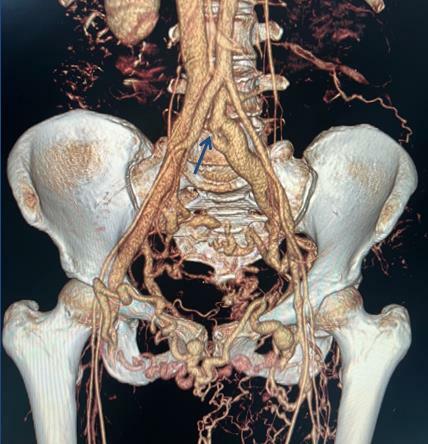
At a Tuesday evening session at ISET 2026, interventional radiologist John Fritz Angle, MD, of the University of Virginia in Charlottesville, walked attendees through the evolving landscape of arteriovenous malformation (AVM) embolization. His presentation emphasized that while AVMs are non-proliferative lesions, their behavior over time can be unpredictable, progressive, and clinically significant.
Dr. Angle began by reframing how clinicians think about vascular malformations, underscoring the importance of distinguishing venous malformations, arteriovenous fistulas, and true AVMs based on flow dynamics and architecture. He highlighted that AVMs exist along a spectrum, with clinical staging that ranges from incidental findings to severe complications such as tissue necrosis and high-output heart failure. Through case examples, including older adults and pediatric patients, attendees were reminded that the decision to treat is rarely straightforward and must balance symptoms, hemodynamics, and long-term risk.
A central theme of the session was challenging the long-held assumption that arterial access is always the primary or best route. While closing the nidus remains the goal, Dr. Angle demonstrated how complex inflow and outflow patterns, particularly when viewed through the lens of Yakes classification, often make a venous-first strategy more effective and controlled. Venous coil embolization near the nidus, sometimes combined with liquid agents, was presented as a flexible approach that can still be complemented by arterial embolization when needed.
The session also provided a practical overview of embolic agents currently in use and on the horizon. Traditional tools such as ethanol, ethylene-vinyl alcohol copolymer (EVOH) copolymers, and cyanoacrylates were discussed candidly, with attention to their technical demands and limitations in high-flow settings. Newer liquid embolics, such as Squid (Balt Inc.) and PHIL (Terumo), were highlighted for their improved handling characteristics, reduced artifact, and evolving clinical data. Looking ahead, investigational technologies such as polymerizing hydrogels, phase-transitioning agents, and shear-thinning materials offered a glimpse into how embolization may become more precise and adaptable in the future.
The presentation concluded with a clear takeaway: AVM embolization remains one of the most individualized and technically demanding areas in endovascular therapy. There is no single best approach, no universal embolic, and little true consensus—only a growing toolbox that requires experience, anatomical insight, and careful patient selection to use well.