Feature
VDM's Top 5 Most Popular Articles of 2025
01/20/2026
© 2026 HMP Global. All Rights Reserved.
Any views and opinions expressed are those of the author(s) and/or participants and do not necessarily reflect the views, policy, or position of Vascular Disease Management or HMP Global, their employees, and affiliates.
Which articles captured the most attention from the VDM community in 2025? Here, Vascular Disease Management looks back at the most-read articles of the year—highlighting practice-changing insights in critical limb-threatening ischemia (CLTI) revascularization, the true burden of peripheral arterial disease (PAD), the resurgence of renal denervation (RDN), emerging roles for stereotactic body radiotherapy (SBRT), and rare but high-stakes venous cases every professional in the peripheral intervention field should recognize.
- Revascularization Strategies for CLTI: A Nationwide Analysis of Medicare Beneficiaries

How hospitals choose between endovascular and surgical revascularization for CLTI may matter more than the anatomy alone. In this interview, Eric Secemsky, MD, breaks down nationwide Medicare data showing wide practice variation—and why high-volume endovascular programs may better preserve limbs, even if repeat procedures are needed. A sharp look at how expertise, volume, and patient-centered strategy should shape CLTI care.
- The Current U.S. Prevalence of Peripheral Arterial Disease
Peripheral arterial disease (PAD) may be far more common than most clinicians realize. Using a diabetes and age-based model, this analysis shows that PAD prevalence has nearly doubled since the 1990s—reaching at least 21 million Americans in 2020 and possibly exceeding 26 million. These findings challenge long-standing estimates and underscore a much larger, often silent population at risk.
- Renal Denervation: Patient Selection for Hypertension and Beyond

With renal denervation (RDN) in focus, choosing the right patient may matter more than the device itself. In this interview, Lindsay Machan, MD, explains who stands to benefit most from RDN today, why team-based hypertension care is essential, and how future data could expand RDN far beyond blood pressure control. A timely, practical look at where RDN fits—and where it may be headed next.
- SBRT for Colorectal Metastases: Is There a Role?
Stereotactic body radiation therapy (SBRT) is emerging as a powerful, noninvasive option for colorectal liver metastases—especially when surgery or thermal ablation aren’t ideal. In this interview, Laura Dawson, MD, explains where SBRT fits best, why it complements interventional therapies, and how advances in imaging and delivery are reshaping local treatment strategies. A must-read for professionals managing complex liver metastases in a multidisciplinary setting.
- May-Thurner Syndrome Masking Concomitant Arteriovenous Fistula: A Deadly Combination With Diagnostic and Therapeutic Challenges
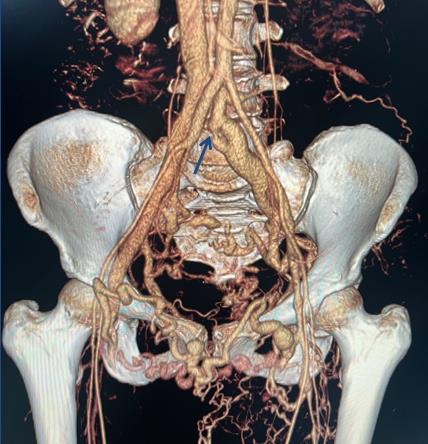
May-Thurner syndrome rarely presents with an ilio-iliac arteriovenous fistula (AVF)—but when it does, missing the diagnosis can derail treatment. This case shows how advanced imaging uncovered the hidden AVF and how targeted endovascular closure alone rapidly relieved severe venous hypertension and limb symptoms. A compelling reminder that in complex venous disease, treating the dominant lesion can make all the difference.