SEPARATE: Could Novel Impedance Sensor be the Best Way to Differentiate Clots in PAD?

AZ Sint-Blasius Hospital, Dendemonde, Belgium
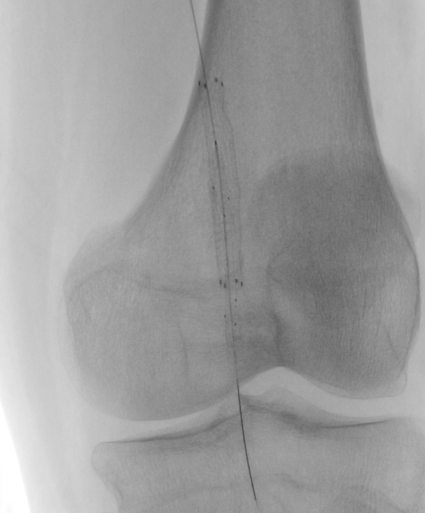
An introduction to the SEPARATE feasibility clinical study of the Clotild Smart Guidewire System (Sensome) in peripheral artery disease (PAD) was presented on Tuesday afternoon, with attendees learning about the device’s capability to detect various characteristics of blood vessel blockages in PAD patients. SEPARATE principal investigator1 Koen Deloose (head of Vascular Surgery at AZ Sint-Blasius Hospital, Dendemonde, Belgium) introduced the neurovascular guidewire and its core feature: a distal impedance micro-sensor that can assess the electrical impedance characteristics of a stroke-causing occlusion during endovascular treatment.
“With Clotild, the guidewire tip embeds a miniaturized impedance sensor that applies an alternating electrical current to the tissues in contact with the sensor during the intervention,” explained Dr Deloose. “Bioimpedance takes advantage of the fact that different biological tissues have distinct characteristic electrical behaviors. Thus, by measuring impedance across a range of frequencies, it is possible to obtain an electrical signature or ‘fingerprint’ from tissues touching the sensor.”
Framing the specific limitations of current imaging or tactile feedback that this technology hopes to overcome, Dr Deloose stressed that in modern algorithms, the preparation and definitive treatment technologies of PAD lesions are partially determined by the ‘lesion crossability’. “If the wire crosses the lesion smoothly, the presence of a fresh clot is expected,” he said. “On the other hand, if the lesion is difficult to cross, the strategies of prepping and treating are completely different.”
Unfortunately, sometimes the symptom onset and the guidewire-feedback may not be so clear, added Dr Deloose. In these ambiguous cases, selecting optimal vessel preparation and definitive treatment can be very challenging, and making the wrong decisions can lead to serious adverse outcomes, such as distal embolization, vessel perforation and unnecessary bleeding risk, not to mention the expense of using the wrong tools.
Intravascular ultrasound (IVUS) and optical coherence tomography aren’t used routinely (especially in PAD), Dr Deloose continued, the main barriers being workflow complexity, lack of specialized training and the high additional costs of the equipment. “As such, what we really hope is that impedance-based tissue sensing technology could fill the gap, offering an easy-to-use alternative for real-time occlusion characterization, and limit the use of advanced imaging techniques,” he said.
Dr Deloose went on to reason that Clotild’s sensor technology is most valuable when facing ambiguous situations, as well as in any case where physicians lack experience, confidence or are uncomfortable with the subjectivity of the tactile feedback assessment, and where there is no reimbursement for intra-arterial imaging.
The SEPARATE Study
In the SEPARATE study, a machine learning model trained on Sensome’s proprietary impedance datasets was used to recognize the electrical signature of fresh (‘red’) clot, distinguishing it from other lesion components, explained Dr Deloose.
“The sensor worked as a highly miniaturized data-collection tool, continuously acquiring impedance signals as the device moved through the lesion,” he said. Data in the study was gathered from predictive algorithms, the ‘smart’ part of Clotild converting raw impedance signals acquired by the sensor to relevant clinical information.
In the study, Dr Deloose found that the output from the impedance-based device aligned very well with his own assessment of lesion type and nicely complemented what is seen on angiography, and what would be expected from the patient’s clinical history.
“In most cases where I did not expect a fresh clot, the model consistently showed very low probabilities of fresh clot along the intervention, giving us a hint of a high level of specificity,” added Dr Deloose. “On the other hand, when the clinical context pointed toward an acute onset, the impedance measurements reliably identified fresh clot throughout the lesion.
“What I found particularly interesting was that in some cases where tactile feedback and angiographic findings were conflicting or potentially misleading, the model’s predictions actually matched better with what we later observed clinically after treatment.”
As an example, Dr Deloose shared how in one case the occlusion felt easy to cross, and there were no calcifications on digital subtraction angiography. In his global assessment he suspected a rather thrombogenic lesion. However, the prediction model showed low probability of fresh clot across the entire lesion. “Based on my own tactile feedback I decided to opt for catheter-directed thrombolysis,” he said.
“After 24 hours, a control angiography showed a very partial success of the thrombolysis, supporting Clotilds’ findings, and indicating that atherothrombectomy was probably a better option in this case. Meanwhile, we lost 24 hours in intensive care and incurred high pharmacological costs.”
Overall, results from the study provide valuable insights into the feasibility of using impedance-based technology to instantly detect fresh clot in PAD lesions during an interventional procedure.
Looking to the Future
Currently, the artificial intelligence (AI) developed in the SEPARATE study translates impedance signals into fresh clot detection. Sensome’s AI is core to converting real-time raw impedance data into intuitive occlusion information displayed to the operator. “In the future, we expect that the AI models will evolve further, going beyond objective occlusion characterization to provide recommendations for optimal treatment strategies,” stressed Dr Deloose. This would require larger datasets to build AI models capable of effectively bridging occlusion information with treatment selection and their corresponding outcomes.
As SEPARATE was an early safety and feasibility study, the device wasn’t mechanically optimized for PAD interventions, noted Dr Deloose. “The device was actually developed for use in the neurovasculature. It was used purely as a sensing probe after the lesion had already been passed with standard guidewires and catheters. As a result, acquiring impedance measurements added an extra step. Nevertheless, the impedance data could be collected safely, with no adverse device effects or serious adverse device effects observed.”
Future studies will include updates to the device, such as integrating the prediction models into a dedicated guidewire or supporting catheter and AI-based real-time display features. These changes are designed to save procedure time by combining lesion access and tissue-sensing functions into a single step with real-time interpretation and guidance of the procedural steps.
“I expect these improvements to allow the technology to fit smoothly into routine endovascular workflows, without adding extra steps or requiring special training to understand the results,” continued Dr Deloose. “This kind of technology could potentially help identify other tissues in chronic PAD lesions, including fibrosis and calcification. Impedance-based technology has already shown promise in assessing atherosclerotic plaques.2
“The technology is already in the regulatory phase for acute ischemic stroke, where it has demonstrated the ability to detect the proximal and distal boundaries of a clot without the need for contrast injections, and characterize clot composition. That’s a pretty powerful capability in a setting where speed and precision are essential.”
As to what clinical endpoints future studies of impedance-based characterization should focus on, e.g. improved outcomes like reduced embolization, higher patency, or more efficient procedures, Dr Deloose commented: “If we are speaking just about fresh clot detection, distal embolization, serious adverse events (like major bleedings during unneeded thrombolysis) and cost reduction are the most relevant outcomes to check.
“If we are able in the future to differentiate different tissues, we can also add patency and freedom from reintervention rate to evaluate the clinical effectiveness of the device in future studies.”
Looking more broadly, Dr Deloose “definitely sees potential” in other vascular beds, as having access to occlusion characteristics is relevant across multiple vascular territories. “We often discuss the potential of this impedance-sensing technology in detecting fresh clot in the context of venous thromboembolism, such as pulmonary embolism and deep vein thrombosis,” he said.
“With deep vein thrombosis, for example, endovascular intervention is not recommended after 14 days from symptom onset.3 Although 14 days is the current consensus for the definition of acute thrombus, in practice, the efficacy of clot removal over time will not change as suddenly on the 14th day. The impedance-sensing device could challenge this cutoff by providing objective information on the composition of the occlusion, allowing physicians to balance treatment efficacy versus treatment-associated complications.”
In his concluding remarks, Dr Deloose touched on the next steps in evidence generation for this technology after SEPARATE. “The next step will be to test the technology in a larger patient cohort, with IVUS imaging support. IVUS is really key because it allows more accurate labelling of the impedance measurements. This is imperative for the assessment of performance metrics like the prediction model’s sensitivity and specificity, and to ensure the device works reliably in different clinical scenarios.
“Finally, future studies will compare the device with standard-of-care treatments, to see how it can guide procedural decisions and improve outcomes.”
References
1. ClinicalTrials.gov. Impedance Sensor Evaluated in Peripheral Artery Disease for Tissue Detection (SEPARATE). Available at: https://clinicaltrials.gov/ study/NCT06112054; accessed January 2026.
2. Yu F, Dai X, Beebe T, Hsiai T. Electrochemical impedance spectroscopy to characterize inflammatory atherosclerotic plaques. Biosensors and Bioelectronics. 2011;30:165–173.
3. Ortel TL, Neumann I, Ageno W, et al. American Society of Hematology 2020 Guidelines for Management of Venous Thromboembolism: Treatment of Deep Vein Thrombosis and Pulmonary Embolism. Blood Advances. 2020;4:4693–4738.