Aligning Patient Goals With Novel Mechanisms in MDD Anhedonia Treatment
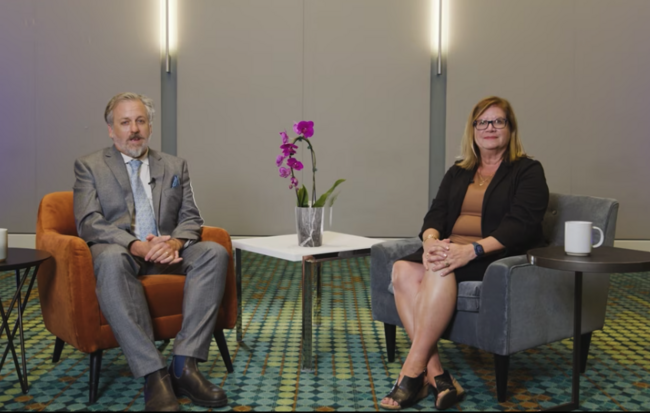
In this interview from the 2026 Psych Congress Elevate, Craig Chepke, MD, DFAPA, Chief Medical Officer, Psych Congress, and Kevin Williams, MS, MPAS, PA-C, Co-Chair, Psych Congress Elevate and PA Institute, discuss how clinicians can align major depressive disorder (MDD) treatment goals with patients’ lived experience of anhedonia. They examine the patient-physician goal gap, why small moments of pleasure and anticipation matter, and how traditional serotonergic antidepressants may fall short for some patients. They also discuss why novel mechanisms may expand future options for addressing anhedonia in routine clinical discussions and treatment planning.
Missed the first video in this series? Watch it here: Anhedonia in MDD: What to Ask When Visit Time Is Short.

Key Takeaways for Clinical Practice:
- MDD with anhedonia requires clinicians to explore the patient-physician goal gap, including small pleasures such as enjoying a movie, anticipating children coming home, or responding to everyday social contact.
- Selective serotonin reuptake inhibitors (SSRIs) and serotonin-norepinephrine reuptake inhibitors (SNRIs) may not relieve anhedonia for many patients and may add emotional blunting.
- AXS-05 (45 mg dextromethorphan plus 105 mg bupropion SR twice daily) has post hoc anhedonia data using a moderate anhedonia subscale; icalcaprant is being studied for major depressive disorder and bipolar depression.
Read the Transcript
Craig Chepke, MD, DFAPA: Hi, my name is Craig Chepke. I'm the Medical Director of Excel Psychiatric Associates in Huntersville, North Carolina. I'm also the Chief Medical Officer of Psych Congress.
Kevin Williams, MS, MPAS, PA-C: I'm Kevin Williams. I'm a psychiatric physician assistant in Tampa, Florida, as the CEO and lead clinician for On Point Behavioral Health and a Co-Chair for Psych Congress Elevate and PA Institute.
You know, a struggle that I commonly find is getting my patient out of anhedonia or the recognition that we have to get out. We call that the patient-physician goal gap. Now help us with some examples of a treatment goal that may look different from a patient's perspective versus the clinician's perspective. What are your thoughts on that?
Chepke: Yeah, I think we tend to think about very hard, concrete things about, okay, are you going to work? Are you engaging with your kids? Things that are kind of harder outcomes, whereas the patient might say, “I just want to enjoy sitting on the couch with my wife and watching a movie. I just want to look forward to when my kids get off the school bus at the end of the day.”
We're probably not going to think about those things and it's sometimes the more—I don't know, I hesitate to call them mundane—but some of the real kind of salt of the earth pleasures, the little things that we tend to think about very big picture large domains of, “are you functioning well at work? In your home life? In your social life?” when it's kind of these little microtransactions that people have. Maybe it could be that I just want to enjoy if someone says hi to me in the parking lot of the grocery store saying, “Hey, how are you doing?” Which for those of you in the Northeast that might be unfamiliar, here in the South this is a common thing to feel pleasure about. Having gone to med school in New York City, it was a rude awakening that people did not want to hear me say, “Hey, how's it going? Are you having a good day in Manhattan?” Finding out those things from them. What is it that you are troubled by? What is it that before this all started, whether that was six months ago, a year ago, what are those little things that gave you a little spark in your life that made you smile, made you feel some pleasure and feel like things are good, things are okay? Questions like that can really help to give us the information of what their goals are rather than just assuming, “Okay, well, I'll check off work, home, social, academic, whatever.”
Williams: So, one more question. Why are traditional antidepressant treatments limited when it comes to addressing anhedonia? Additionally, what are some novel or some new investigational therapies for MDD that address anhedonia more effectively?
Chepke: Yeah, I alluded to it earlier that SSRIs and SNRIs, any serotonergic reuptake inhibitor type medication, really does not help anhedonia for a lot of people. Now, that's not to say it can't help with anyone. But the thing is, neurobiologically, we have at least 14 serotonin receptors. That's what we know about today. Could be more. We haven't discovered yet. When you block the serotonin reuptake transporter, you're just flooding the CNS with extra serotonin. Now, you would imagine that you don't want to necessarily stimulate all 14 of those. Some of those you don't want to stimulate. You might want to antagonize those, whatever. Everyone is wired differently is the complicated part. So, for a lot of people, the SSRIs and SNRIs are not going to relieve the anhedonia, and like I said, could layer emotional blunting on top of that.
So, what's exciting is that we're moving beyond monoamines in many fields of psychiatry, but especially MDD. glutamatergic treatments are incredibly exciting for this. There's a combination pill, AXS-05, a combination of a fixed dose 45 mg dextromethorphan with 105 mg of bupropion SR given twice daily, and that has some post hoc data. There are limitations here. It was not prospective. They used a moderate anhedonia subscale, not one of the specific anhedonia rating scales, but it shows an indication that could be beneficial with some symptoms of anhedonia. And that, we believe, is operating primarily as an NMDA receptor antagonist, that's glutamate, but also sigma-1 receptor agonism, which can modulate both monoamine signaling without just blocking the reuptake pumps, and also to fine-tuning the glutamate system, and also decreasing neuroinflammation potentially.
Then we also discussed some kappa opioid receptor antagonists. There are a couple of them that have not done so great in clinical trials, but there are still 2 of them out there, one that is, the status is kind of unclear, and then another one that, icalcaprant, that is very exciting and being studied not just for a major depressive disorder, but also bipolar depression as well.
Williams: Man, you've heard it here. It's such exciting information regarding such a challenging condition with major depressive disorder, and more specifically with anhedonia. Craig, we say thank you for your knowledge and really diving into some of these key concepts that helps us.I know I'm walking away even today through the presentation, walking away better understanding how to treat my patients tomorrow. So, thank you.
Chepke: My pleasure, Kevin.
Craig Chepke, MD, DFAPA, is a board-certified psychiatrist in clinical practice as the medical director of Excel Psychiatric Associates in Huntersville, NC. He serves as an adjunct associate professor of psychiatry for the Atrium Health Psychiatry Residency Program and is the Chief Medical Officer of the Psych Congress portfolio of continuing education conferences. Dr Chepke earned his medical degree from NYU School of Medicine and completed his psychiatry residency at Duke University. As part of an interdisciplinary treatment team in his practice, he employs a person-centered care model to tailor treatments to each individual's needs, integrating traditional pharmacotherapy with psychotherapeutic and physical health and wellness interventions. His clinical and academic interests include serious mental illness, movement disorders, ADHD, and sleep medicine. Dr Chepke has been recognized as a Distinguished Fellow of the American Psychiatric Association and is a recipient of the NAMI Exemplary Psychiatrist Award.
Kevin N. Williams MS, MPAS, PA-C, is the CEO and Lead Clinician at OnPoint Behavioral Health. He is a physician associate that specializes in psychiatry and has a mission to provide care that is experienced, holistic, and compassionate. He holds 2 master's degrees in interdisciplinary medical sciences and physician assistant studies from the University of South Florida and South University, respectively. He has gained experience treating children, adolescents, and adults for the past 11 years in the areas of inpatient, outpatient, and long-term care. Kevin has 10 years of experience teaching as an adjunct professor at several institutions around the country. Kevin also has over 10 years of executive leadership experience and maintains a passion for educating others to lead with effective influence. He has participated in mission work abroad and has enjoyed volunteering in several organizations in the Tampa Bay community. He enjoys spending time with his family, along with his hobbies of aviation and traveling abroad.
© 2026 HMP Global. All Rights Reserved.
Any views and opinions expressed above are those of the author(s) and do not necessarily reflect the views, policy, or position of the Psych Congress Network or HMP Global, their employees, and affiliates