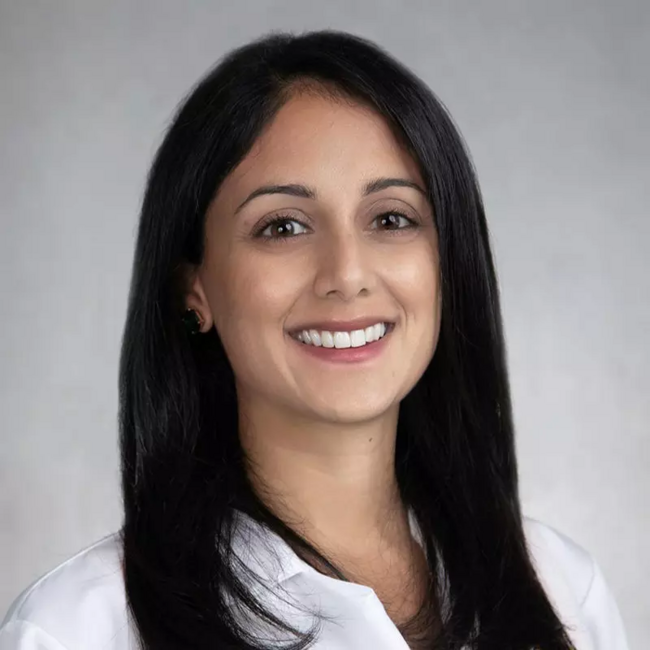




Gut Check: Vivek Kumbari, MD, on Third Space Endoscopy
Dr Vivek Kumbari and Dr Brian Lacy discuss the evolution of third-space endoscopy and how it has enabled more and safer procedures throughout the gastrointestinal tract, as well as the potential future of endoscopy as primarily a therapeutic modality.
Brian Lacy, MD, is professor of medicine in the Department of Medicine at the Mayo Clinic in Jacksonville, Florida. Vivek Kumbari, MD, is chair of the division of gastroenterology and professor of medicine in the Department of Medicine at the Mayo Clinic in Jacksonville, Florida.
Welcome to Gut Check, a podcast from the Gastroenterology Learning Network. My name is Brian Lacy. I'm a professor of medicine at the Mayo Clinic in Jacksonville, Florida. And I am absolutely delighted to be speaking today with Dr. Vivek Kumbari, chair of the division of gastroenterology and professor of medicine in the Department of Medicine at the Mayo Clinic in Jacksonville, Florida. As many of our listeners know, Dr. Kumbari is an international expert in the field of therapeutic endoscopy. He's a sought-after speaker to discuss novel endoscopic techniques. He has published more than 290 peer-reviewed articles, an amazing accomplishment in a short career to date. A current career focus and research focus is that of delivering gene therapy endoscopically with a vision of treating cancer and rare diseases, such as hereditary tyrosinemia, via injections in the biliary tree.
So Dr. Kumbari, welcome. What an honor to have you on our podcast today. To set the stage for our listeners, it's hard to believe, but just over 50 years ago the first colonoscopy was performed in the United States, 1969, at Beth Israel in New York. And this event really transformed the field of gastroenterology. Tremendous advances have been made in therapeutic endoscopy over the last few decades. And with that in mind, can you define what first space endoscopy is?
Dr Kumbari: Absolutely, Dr. Lacy. Delighted to be here and have enjoyed listening to your podcast and the path and it's so great to have such amazing speakers and for me to now be part of it.
You're right, gastroenterology traditionally, you know pre that colonoscopy in 1969, wasn't really considered a procedural specialty and that advent of that colonoscopy and then the subsequent growth of endoscopy and of course the screening colonoscopy becoming part of the NCCN guidelines, that really sort of drove this field of endoscopy within gastroenterology and then that subsequently grew this field of therapeutic endoscopy.
And so what is first space endoscopy? It's effectively what we conventionally consider endoscopy, putting a camera through the mouth or through the anus into the rectum to look at what we call the luminal gastrointestinal tract. So you'd think the esophagus, stomach, small bowel, colon, and rectum.
Dr Lacy: Wonderful. So obviously, if there's a first-space endoscopy, there's second-space endoscopy. Can you educate our listeners to what that means?
Dr Kumbari: Yeah, fantastic. Folks thought, you know, why do we need to limit endoscopy to the first space? There are obviously key organs, the pancreas, the liver, kidneys, gallbladder, and so on, outside of the luminal gastrointestinal tract. And so they coined this term the second space, which is effectively the peritoneum or mediastinum. So it's any structure that surrounds the luminal gastrointestinal tract. And the third space then is, you know, the wall itself of the lumen. So the wall of the esophagus, the wall of the stomach.
Dr Lacy: Wonderful, and so maybe to clarify a little bit for our readers and our listeners, in the early 2000s, there was a lot of interest in what was called NOTES—natural orifice transluminal endoscopic surgery. And example, this embraced the concept of transgastric surgery, where you could take out the gallbladder through the stomach. What's the difference between NOTES and second space endoscopy? And right now in the current field, is there any value for transgastric surgery? Should we be doing cholecystectomies or tubal ligations?
Dr Kumbari: Yeah, it's a great question. You're as fortunate, as you did when you spent some time at Johns Hopkins, I worked and was mentored by Dr. Tony Kalloo, I’d say the father of NOTES. And so I did some NOTES procedures with him certainly in large animal models and also more recently in patients. I think about sort of NOTES versus second space endoscopy like this, you know—they're somewhat different, as NOTES is really the ‘how’ and the second space is the ‘where.’ So, you know, if our objective is to perform a procedure in the second space of a peritoneum or mediastinum, that's the ‘where.’ The method we do this is through NOTES, so they're slightly different.
And in terms of your question about where there were days where there were societies and task force and people, both surgeons and gastrointestinal endoscopists, were really exploring this idea of transgastric surgery—effectively puncturing a hole in the stomach to allow access into the peritoneum and then do a liver biopsy. People had ligated in animal models fallopian tubes. People were looking to remove the gallbladder. Folks even incised the gallbladder wall, you know, to remove stones, doing gallbladder-preserving gallstone removal, you know. Part of the sort of several challenges, you know, of this—and that's probably why it hasn't become mainstream—it’s sort of multiple arguably competing forces, you know, many of the benefits of sort of natural orifice procedures are really theoretical. There hasn't been any strong evidence to suggest that it is in fact safer or really any meaningfully better for that patient.
Coinciding with this, surgery has made tremendous advances and has really become far more minimally invasive. You go from open cholecystectomy to laparoscopic to very small single incision robotic surgery and so on and so forth. And so as surgeries become safer and sort of less complex, it's actually being done in day surgery centers as outpatients. And so for us to do a sort of NOTES procedure in an OR, which takes much longer than surgery, requiring a patient to be admitted, it's very hard to make that case.
Now, there are some rare instances, such as someone has got what we'd deem a ‘hostile abdomen,’ so they had abdominal wall multiple abdominal surgeries where you might say surgery’s ultra high-risk and even if there was a sort of longer procedure or more sort of laborious it's still worth doing but those cases are generally rare. And also one challenge is if we do run into trouble endoscopically to try and say remove the gallbladder, then we're in a real bind if we need salvage surgery because they're sort of deemed a nonsurgical candidate.
And again, the other competing forces in interventional radiology, like surgery, has developed very quickly with specialized tools to support their increased complexity of procedures. And largely—and this is part of one of my sort of disappointments with the field as I reflect—is that endoscopes have largely remained unchanged, aside from slightly improved optics and dexterity. The field has largely thrived on endoscopy being diagnostic, and I think the future of using the endoscope is very much ripe for disruption, moving away from diagnostics to therapeutics.
And I think in closing, I think the big challenge of transgastric surgery is really that the camera is entering through the mouth and into the esophagus and stomach and that environment is not sterile. And so there's sort of contamination there. We really have limited instruments to perform our procedures and this lack of specialized tools leads to higher-complexity procedures, more risk, prolonged procedure times. And therefore, procedures need to be often done in an operating room and in patients need to stay.
People have used sort of transvaginal and transrectal routes though, for example, for cholecystectomy, rather than having to sort of turn your camera back on itself or retroflex from the stomach, looking back at the gallbladder, you have a straighter shot coming from the rectum or the transvaginal route. But then again, it hasn't really been well received and hasn't taken off. So I think for the field to grow in, in my opinion, we'll need instruments that are far more dexterous.
You have to remember that endoscopes sort of bounce off walls to progress forward. And when you're in a cavity, like the peritoneum or mediastinum, that there is no walls to bounce off. If you want the camera to move in a certain direction, you know, sometimes it just won't. Also, we have to have the ability to triangulate, which we don't have. Everything is a single axis. And our camera is at the same site as where our accessories come out. And I think in surgery, of course, you have a camera that is offset from the tools. The camera can be moved around and you get different fields of view, and we don't have that. So I think these are some of the limitations why transgastric surgery, as an example, hasn't become prime time.
Dr Lacy: So many amazing points there. And I think for our listeners, you may even want to listen to that a second time because there's so much information packed in.
So you mentioned the third space, the submucosa, that lining underneath the mucosa. And a landmark study illustrating the value of submucosal endoscopic myotomy was published in 2008 by Inouye and colleagues with their report on POEM, per oral endoscopic myotomy, for the treatment of achalasia. Can you explain how POEM is performed and why this is so valuable for the treatment of achalasia?
Dr Kumbari: Absolutely, and very proud now working at the Mayo Clinic because really this whole concept of POEM came out of some work done in large animal models in Mayo Clinic in Rochester, you know, really spearheaded by Dr. Christopher Gostout.
And so, you know, we think about the wall of the esophagus as a potential space, you know, the wall of the esophagus, stomach, colon, you know, these are only several millimeters thick, whereas our endoscopes are around 10 millimeters thick. And so how is it that we're able to do anything with a large camera in a thin wall? Well, you know, Dr. Gostout and team sort of learned that the submucosal space, that third wall layer, is actually a potential space that can be expanded significantly. So we can transiently take a space that is less than 1 millimeter thick to over 10 millimeters thick. And that really allows us to put an endoscope inside the wall and then it sort of opens up that particular space for a variety of new procedures.
And so the initial work done for POEM was actually to provide a conduit for the camera to safely enter the peritoneum for NOTES procedures. It actually wasn't designed for POEM. Now part of the challenge of doing NOTES procedures is that you had to make an incision in the wall of the stomach. Okay, that's not particularly hard. But closing that incision is actually quite complex, particularly, pre-2008, where we didn't have very good tools such as large clips or suturing systems to close these holes. And so you could arguably do your intervention in the peritoneum, but then you wouldn't have a mechanism to close a hole. And if you're removing a gallbladder, for example, we have to bring that gallbladder through that incision in the stomach, and so it's not small. And so the team thought, well, how do we create an offset whereby our entry into the wall of the lumen, the wall of the esophagus or wall of the stomach, for example, is actually separate from where it exits. And by doing so, you don't have these complexities in closure and you can create a reliable closure just by bringing the mucosa together as opposed to doing a sort of full thickness surgical closure of say the wall of the stomach. And so that really spawned that field.
And so what they learned is that you put the camera in the submucosal space, they were doing it in the esophagus, they were using a balloon to inflate and dissect the submucosa, progressing forward dissecting the submucosa, and then they would enter into the peritoneum through the stomach. They also saw, well, it's quite fascinating here, I can actually see the entire muscle layer of the luminal GI tract. And then someone had the idea, Dr. Jay Pasricha, who's now in Mayo Clinic Arizona, well, you know, achalasia is a disorder of a hypertensive lower esophageal sphincter, while we can see it, why don't we just cut it? Why does a patient need to have surgery to cut it? And so Dr. Pasricha actually approached Dr. Inouye, who was a very skilled endoscopic surgeon who was doing surgical sort of obliterations of lower esophageal sphincter and said, "Look, what do you think of this? Would you mind doing a clinical study?” which he did in Japan, and it was obviously sort of launched this entire field. So really fascinating story of how one thing led to something completely different. And so there's esophageal POEM and other sort of POEMs that we now do that has really been transformative and really saved patients from surgery.
Dr Lacy: So that's a perfect segue. So let's talk a little bit about some of these other types of POEM procedures. And one is called the Z-POEM, which stands for Zenker's POEM, per oral endoscopic myotomy. Could you just briefly educate our listeners, you know, what is a Zenker's diverticulum? And why is Z-POEM better than the traditional surgery we used to do for that?
Dr Kumbari: Yeah, absolutely. So I think what we can say is that that endoscopy seems to be better than surgery, which requires a neck incision often to treat a diverticulum. And there are various different types of endoscopic strategies to treat the Zenker's diverticulum. In essence, Zenker's diverticulum forms because you've got a hypertensive upper esophageal sphincter that does not appropriately relax. And there is an anatomical triangle called the Killian triangle that is relatively weak and so as pressure builds up above this sphincter, which is not relaxing on swallow, the swallow bolus generates high pressure there's this blowout through this area of weakness, forming a sack. And so the problem is not so much the sack, the problem is the high pressure that's generated from the muscle.
And so what we do effectively is obliterate that high-pressure zone by cutting this muscle. And because these muscles, both the lower esophageal sphincter and upper esophageal sphincter, are circular, we believe that if we break a circle at any one point, we effectively obliterate its hypertensive strength. And so that's what we do with a Zenker’s per oral endoscopic model. We make an incision, we tunnel on either side of the cricopharyngeal muscle and then we cut the muscle and then we close the little mucosal incision that we made to allow our camera to enter the submucosal space. It seems to be at least as effective as other methods of endoscopically treating the diverticulum and we can just sort of incise the septum itself. People have actually tried to cut and remove some of the muscle rather, so actually take out the muscle rather than just cut it. But all in all, I think endoscopy is certainly the now preferred option as compared to surgery and there's variety of different endoscopic ways of doing it.
There are other POEMs as mentioned. There's G POEM; there's something called S-POEM where we sort of treat a sleeve stenosis after a tortuous stomach in someone who's had a surgical sleeve gastrectomy. There's rectal POEM for patients with Hirschsprung's disease and so I think they're sort of finding reasons to do POEMs all throughout the GI tract.
Dr Lacy: Wonderful, and we know that for many patients with gastroparesis and these debilitating symptoms of nausea and vomiting, providers and patients wonder if G-POEM is appropriate for them if they've failed multiple medication trials. In your experience—and I know you do this and do this so well—do you think that we can select out a patient group more likely to respond to G-POEM?
Dr Kumbari: Yeah, you know, G-POEM is particularly close to my heart, you know. Dr. Khashab, another of my mentors at Johns Hopkins, sort of led the effort and Dr. Inouye and Dr. Pasricha and I were all in the room as we did this first human procedure and so glad to see that what's happened in 2013 has also been so impactful. I think we initially felt that that the procedure took an hour, hour and a half. We keep patients in hospital and so we really wanted to reserve it for those patients who we firmly believed it would have meaningful benefit. And so it was initially it was the patients of gastroparesis, a disorder whereby the stomach doesn't propagate effectively enough. Those who had sort of nausea and vomiting as their predominant symptoms, and effectively patients who had idiopathic gastroparesis, so gastroparesis with no known cause. I would say that today, because the procedure takes about 45 minutes, it's done as an outpatient, and so there's no admission required, very minimal pain. It's somewhat de-risked, and so we've been comfortable expanding the patient population that could receive this. And so now patients who've got diabetic gastroparesis, patients who've had sort of surgery and have post-surgical gastroparesis, also seem to be benefiting from this procedure. I think the patients that don't tend to benefit are those who have gastroparesis that manifests with pain as their predominant symptom.
Dr Lacy: So fortunately, I don't have gastroparesis nor do I yet have a Zenker's diverticulum because you've got me sold on POEM as the way to treat this. But we all know that some procedures have some potential downstream side effects or complications. And what are some of the most common ones we need to alert patients and providers to?
Dr Kumbair: There's clinically meaningful adverse events and then there's intraprocedural adverse events that don't really cause any harm to the patient. And so, I think clinically meaningful adverse events are actually exceedingly rare. The procedures are done very well. Now, there's a lot of training programs, many expert centers, and so things like leaks, infection, post-procedure bleeding, or sort of abandoning a procedure, or conversion to surgery, are all extremely rare.
Now, intraprocedurally, we do sometimes nick a vessel and cause bleeding that we treat, or sometimes we damage the mucosa, which is a key protection layer whose integrity must be intact. And if that happens, that has to be addressed in the procedure. And so, you know, in general, the clinically meaningful complications are really very, very rare. And we've learned that, you know, pneumoperitoneum, for example, you know, associated with some pain, is transient. And again, we don't really consider that a clinically meaningful complication.
Dr Lacy: So no discussion about third space endoscopy would be complete without reviewing ESD or endoscopic submucosal dissection. Could you briefly kind of tell our listeners what that is? And maybe why is that better than maybe just removing a polyp with a snare during colonoscopy.
Dr Kumbari: Yeah, so ESD, again, is a procedure whereby you place the endoscope in the submicosal space, that third space, and what its objective is, is to provide an en bloc resection, so effectively a surgical-type resection where a single piece of tissue comes out that allows you to assess the lateral margins, the sides, as well as the deep margins. So you can tell if you've successfully completely removed the lesion as opposed to placing a snare, which for larger lesions will often only allow you to sort of cut out tissue in multiple pieces and it's hard to sort of piece them back together to know if you have a quality sort of complete resection.
The field is growing, we're getting better at doing it. It originally used to be sort of an Asian or Eastern art and we have learned from them and are now doing it more and more in the US. It's going to get a CPT code in January 2027, which I think is really going to open up opportunities for reimbursement and hopefully really lead to ongoing dissemination. And so ESD is really a technique that allows for en bloc resection of really sort of high-risk lesions or early cancers that are restricted to the mucosa or potentially the very superficial submucosa. And it can be performed in the rectum, esophagus, or gastric antrum. And they’re the 3 sort of easiest places to do it. But really, you know, skilled endoscopists can perform it throughout the gastrointestinal tract.
Dr Lacy: Wonderful. Thank you. Vivek, you know, I really think you're a visionary in this field, and I know you've thought a lot about where the future is going. So, you know, 5 years from now, can you envision long-distance robotic third space endoscopy, or 10 years, or are we going to have robotic devices controlled remotely doing colonoscopies? What are the possibilities?
Dr Kumbari: Yeah, I think you know, medicine as a field you know has not always embraced all the possibilities. I think there is, generally the health care system has been relatively conservative. If you were to be bold, and arguably a realist, and if we believe we are going to be an interplanetary species and that we will spend time in space and spend time on other planets, then I think there really is going to be a need for a sort of long-distance robotic type work. And as satellites enhanced the internet, you know, both speed and reliability, clearly important when you're doing surgeries, anything's possible. And I think we've learned a lot from 2 industries: one, the video gaming industry, which allows real-time multiplayer, folks from around the world to engage; and also autonomous vehicles, which you know, someone in another country can drive a vehicle and that's happening now in the US.
And so I have every confidence that if we need it that we will be able to do sort of long- distance robotic endoscopy.
Dr Lacy: I like the concept of a ‘bold realist.’ I think that’s a good phrase. Vivek, this really has been a wonderful conversation. Thank you so very much. Any last thoughts for our listeners?
Dr Kumbari: Yeah, thank you. I think there is a lot of opportunity here. I think one way I think about endoscopy is to break it down to its basic concepts. I believe that endoscopy should be therapeutic. If we're going to bring a patient to hospital, subject them to anesthesia, they carry cost, it's disruptive to their daily life. We really should be moving towards using the endoscope predominantly for therapy. Even the reimbursement landscape is driving us to do so. For example, in sort of realized terms, colonoscopy reimbursement has effectively dropped by 40% over the last 20 years. And so, we have financial drivers and patient desire drivers to really reserve endoscopy for therapeutics. And I believe GI diagnostics should be noninvasive and ideally decoupled from the physical hospital.
Now with improved optics and artificial intelligence, the need to actually remove tissue to make a diagnosis is perhaps no longer required. And so I predict in the coming 10 years what we'll actually see is an increase in complexity of what we do using endoluminal robotic platforms, for example, in these complex, expensive systems. But then ultimately, after 10 years, I believe we're going to be far more elegant and simple in our approach. I'll give you an example. Maybe as we see a lesion in the luminal gastrointestinal tract, we don't need to cut it out carefully with ESD. We can spray something on it, which will simply ablate the lesion.
And so that's how I sort of see the future of endoscopy and the only other sort of last comment is, you know, as much as I perform complex therapeutic endoscopy and I enjoy doing it, I think rather than marveling at how we do things and what disease states we're able to address, you know, I sort of encourage folks in the space to really think about what we're doing and challenging how we're doing it. I wonder if we could be far more elegant in in sort of targeting the cause of disease rather than obliterating a sphincter for example. You know, achalasia and POEM is a great example here, where the sphincter itself is simply not getting the message to relax and rather than correcting that, such that it reacts as appropriately, we properly, we cut it. Someone has a stone in the bile duct. We do a complex procedure to remove and drag that stone out. Could we not simply get them to consume something that dissolves the stone? And so rather than just sort of trying to increase our complexity to do things, maybe we should try and sort of get to the cause and be more elegant.
Dr Lacy: Well said, and so maybe incredibly elegant techniques, but maybe still sometimes a bit of a blunt approach and maybe it just shows how much more we need to do in this field. So Dr. Kumbari, again, thank you for lending your expertise on this important topic to our listeners on Apple, Spotify and other streaming networks. I'm Brian Lacy, a professor of medicine at the Mayo Clinic in Jacksonville, Florida. You have been listening to Gut Check, a podcast from the gastroenterology learning network. Our guest today was Dr. Vivek Gumbari, professor of medicine for the Mayo Clinic in Jacksonville, Florida. I know you found this just as enjoyable as I did, and I look forward to having you join us for future Gut Check podcasts. Stay well.
© 2025 HMP Global. All Rights Reserved.
Any views and opinions expressed are those of the author(s) and/or participants and do not necessarily reflect the views, policy, or position of the Gastroenterology Learning Network or HMP Global, its employees, and affiliates.