PeaceHealth Sacred Heart Medical Center at RiverBend
A regional hub in Oregon for stroke, STEMI, structural heart, and other complex cardiovascular care.
A regional hub in Oregon for stroke, STEMI, structural heart, and other complex cardiovascular care.
© 2026 HMP Global. All Rights Reserved.
Any views and opinions expressed are those of the author(s) and/or participants and do not necessarily reflect the views, policy, or position of Cath Lab Digest or HMP Global, their employees, and affiliates.
Sudeshna Banerjee, MD, FACC, FSCAI, Medical Director, Invasive Cardiology and Structural Heart Disease
Richard Padgett, MD, FACC, System Medical Director – Cardiovascular Services, Executive Medical Director – Oregon Heart & Vascular Institute
Barry Royce, RN, MHA, Vice President, Surgical and Cardiovascular Services
Billy Lucas, RT, Supervisor, Cath Lab
Laura Smith, MBA, BSN, RN, CAPA, Nurse Manager, Cath Lab
Michael Wilder, MD,
Neurointerventional Surgery
Contributors:
Margaret Shatzel, BS, MSPH, RN, SCRN, ASC-BC, Stroke Program Manager
Emily Caldera, BSN, RN, CV-BC, Structural Heart Program Manager
Megan S., BSN, RN, PCCN, SCRN, Chest Pain Program Manager
Chris Martin, RN, NRP, CCP-C, MBA, TeleNeuro/Stroke Coordinator
Oregon Heart & Vascular Institute, PeaceHealth Sacred Heart Medical Center at RiverBend, Springfield, Oregon
The authors can be contacted at HEARTsafe@peacehealth.org.
Editor's Note: A PDF of this article is available by clicking the red PDF icon to the right of the article title.
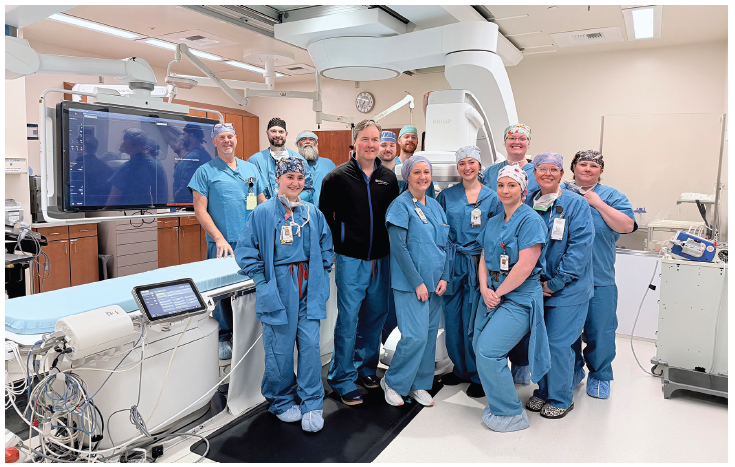
Tell us about your cath lab and facility.
Our Cardiac Catheterization Lab is a key part of Sacred Heart Medical Center at RiverBend (SHMC), a leading cardiovascular and stroke center in the Pacific Northwest. SHMC sees >76,000 patients per year, coming from up to 350 miles away. We are a part of PeaceHealth, a Catholic, non-profit health system with sites in Washington, Oregon, and Alaska.
Sacred Heart Medical Center at RiverBend (SHMC) is the only HeartCARE Center within the Pacific Northwest (PNW), holding the only American College of Cardiology (ACC) Accredited Cardiac Cath Lab also within the PNW, the only ACC Accredited Chest Pain Center with Primary Percutaneous Coronary Intervention (PCI) within the state of Oregon, and is also an ACC Accredited Transcatheter Aortic Valve Replacement (TAVR) Center. The HeartCARE Center National Distinction of Excellence is the highest recognition a hospital or health system can receive from the ACC. We are the only DNV Comprehensive Stroke Center between Portland and San Francisco, and an American College of Surgeons (ACS)-verified Level II Trauma Center.
The SHMC cath lab has 47 amazing professionals, registered nurses (RNs) and radiologic technologists, and a total of 10 suites, including 2 electrophysiology (EP) labs and 2 hybrid operating rooms.
What procedures are performed in your cath lab?
SHMC averages 130 cases/week, including:
-
Angiography, coronary angioplasty, PCI, and thrombectomy;
-
Neurointerventional procedures: emergent mechanical thrombectomies, emergent and non-emergent aneurysmal treatment, middle meningeal artery (MMA) embolization, carotid stenting, diagnostic cerebral angiograms, vasospasm treatment, arterio-venous malformation (AVM) embolization, and dural sinus/venous disorder treatment;
-
Electrophysiology (EP): cryo-ablation, pulsed field ablation (PFA) for atrial fibrillation, pacemaker/implantable cardioverter defibrillator (ICD) device implantations, and (at the time of publication) 60 left atrial appendage occlusion (LAAO) procedures;
-
Cardiothoracic surgery: minimally invasive valves and robotic coronary artery bypass graft (CABG) procedures;
-
Structural heart: transcatheter aortic valve replacement (TAVR), 50 (at the time of publication) mitral transcatheter edge-to-edge repairs (m-TEER), tricuspid transcatheter edge to edge repair (t-TEER), patent foramen ovale (PFO) closure;
-
Interventional radiology procedures such as Transjugular Intrahepatic Portosystemic Shunt (TIPS), Transarterial Chemoembolization (TACE), and radioembolization Y-90 treatments;
-
Vascular surgery procedures such as Thoracoabdominal Branch Endoprosthesis (TAMBE).
Has your cath lab recently expanded in size and patient volume, or will it be in the near future?
We have a fifth cath lab that opened in May of 2026 and plans for a sixth, projected to open in the summer of 2027.
What is the mix of credentials and experience for staff in your cath lab?
Fifty percent of our RNs are Certified Critical Care RNs and 50% have completed our Professional Nurse Advancement Program. The majority of our radiologic technologists hold either Advanced Cardiac (CI) or Vascular Intervention (VI) certification. We also have staff with the Registered Cardiac Invasive Specialist (RCIS) and Registered Cardiac Electrophysiology Specialist (RCES) credentials.
Who manages your cath lab?
The SHMC cath lab is managed by Laura A. Smith, MBA, BSN, RN, CAPA, Nurse Manager, and Billy Lucas, RT, Cath Lab Supervisor.
What is unique or innovative about your cath lab and staff?
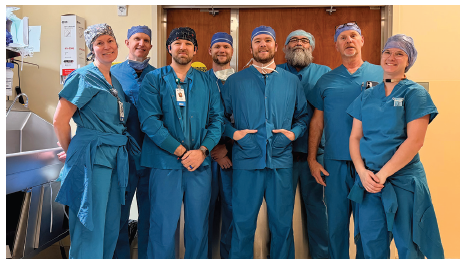
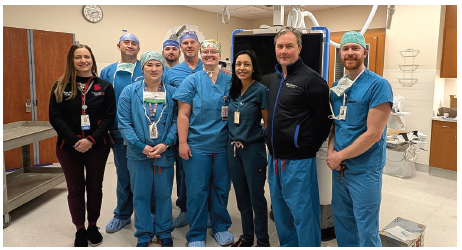
We are an energetic team that takes pride in showing up in the hours of need for our patients. Our staff are innovative in solutions-based thinking at our Cath Lab Executive Committees, as well as the Cath Lab Unit-Based Practice Council (UBPC) meetings. A tech professional liaison sits on the UBPC as well. Our attending physicians have worked to bring new procedures to the lab and therefore our community, such as TAVRs and m-TEERs (see history below):
History of Sacred Heart
-
1969: Cardiac Cath Lab opened
-
1971: 1st Open-Heart Surgery
-
1983: Oregon Heart Center founded
-
1986: Cardiac Rehab Program established
-
1994: 1st stent
-
1997: Bi-plane Electrophysiology Lab opens (1st in Oregon!)
-
2004: Oregon Heart & Vascular Institute (OHVI) officially named
-
2008: ‘Old hospital’ moved to new building, RiverBend
-
2010: 1st mechanical thrombectomy performed for emergent large vessel occlusion
-
2012: 1st TAVR
-
2016: 1st transcatheter mitral valve repair (TMVR)
-
2018: 1st mitral transcatheter edge-to-edge repairs (m-TEER)
-
2019: 1st ACC Chest Pain Accreditation, 1st Watchman Device (Boston Scientific), and 1st Comprehensive Stroke Center designation
-
2023: 1st ACC Transcatheter Valve Certification and Minimally Invasive (MIS) Mitral Valve
-
2024: 1st tricuspid transcatheter edge to edge repair (t-TEER) and 1st ‘Concomitant’ Ablation and Watchman
-
2024: 1st in state to perform PFA
-
2025: 1st ACC Cardiac Cath Lab Accreditation
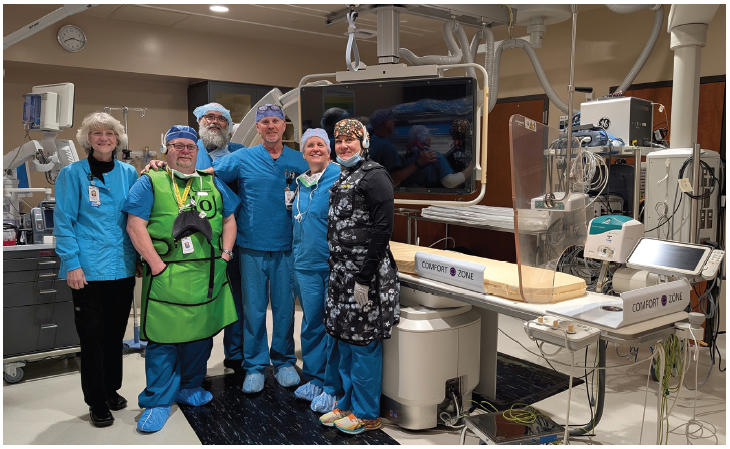
Frankly, this team is a humble team, which is one reason we want to have them featured for the amazing work they do!
Can you share more of your experience with structural heart interventions?
The structural heart team at RiverBend is a comprehensive, highly engaged team made up of two (soon three!) interventional cardiologists, three cardiovascular surgeons, anesthesiologists, heart failure specialists, structural heart advanced practice clinicians (APCs), cath lab and cardiovascular operating room (CVOR) procedural staff, echo technologists, and structural heart RN coordinators.
OHVI is a high-volume structural heart center performing about 280-300 TAVRs, 50 m-TEERs, 60 LAAO procedures, and 40 PFOs annually. In late 2024, we also began doing doing t-TEERs, with 15 procedures completed to date. As our structural heart program has grown and as demand for operating resources has increased, we have slowly migrated many of our cases from the CVOR to the cath lab. Historically, all TAVRs were done in our hybrid CVOR room, but starting in May of 2025, we began doing the more straightforward TAVRs in the cath lab. In addition, to help manage our TAVR backlog, we will begin doing 6-7 TAVRs in one day by flipping rooms between the CVOR and cath lab, utilizing two crews. We will do this 1-2 times a month when we have an extra anesthesiologist available. TAVRs are performed with either cath lab or CVOR RNs (depending on the day and room), and 3-4 cath lab technologists. Anesthesia provides sedation for all cases.
At present, we are routinely doing 8-12 TAVR cases a month in the cath lab. When our new planned “MegaRoom” is complete, we will perform more TAVRs in the cath lab, except for those requiring cutdown (femoral or carotid). m-TEERs and t-TEERs are all performed in the cath lab under general anesthesia. LAAO closures are performed in our EP suite under general anesthesia. PFO closures are performed in the cath lab with nurse-led sedation.
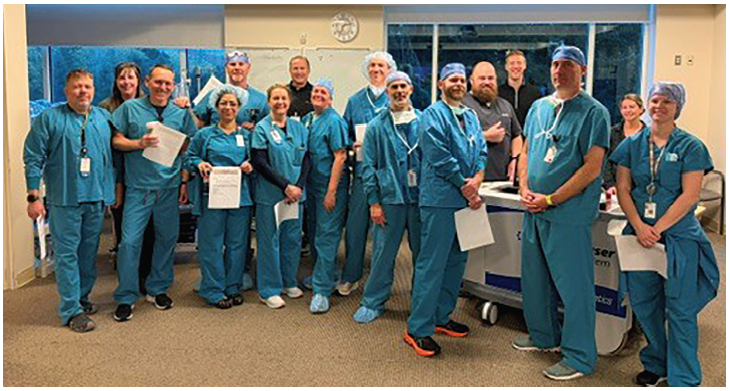
What are some of the new equipment, devices and products recently introduced at your lab?
Our latest equipment includes two Philips Azurion cath labs and two Philips Azurion neuro biplane systems. New devices/products include the AVEIR Leadless Pacer (Abbott), TriClip (Abbott), OmniaSecure defibrillator lead (Medtronic), Surpass Elite Flow Diverter (Stryker), WEB Embolization System (Terumo), and FARAPULSE PFA Platform (Boston Scientific).
Can you tell us about your intravascular imaging?
We use the Philips Volcano intravascular ultrasound (IVUS) with SyncVision.
Can you describe the extent and use of radial access at your lab?
According to data from Q3 2025, approximately 85% of diagnostic coronary angiography procedures were radial access, and for PCI with and without diagnostic coronary angiography, approximately 71% were radial access. Diagnostic cerebral angiograms are performed predominantly via radial access.
Is your cath lab utilizing same-day discharge (SDD)?
Yes, we currently are at 94.14% SDD. Patients are eligible for SDD unless they have the following:
-
Left main bifurcation with hemodynamic support
-
Cath lab complications, such as perforation or dissection
-
Hematoma not resolving with manual hemostasis
-
Retroperitoneal bleed
-
TR Band (Terumo) complication
-
Poor social support
Through our ACC Chest Pain Accreditation, we also have a process where the Cath Prep and Recovery RNs make follow-up phone calls to SDD patients. They ask:
-
How are you feeling?
-
How is your access site doing?
-
Were you able to fill your prescriptions?
-
Do you have a follow-up appointment?
-
Will you have any issues making it to that appointment?
-
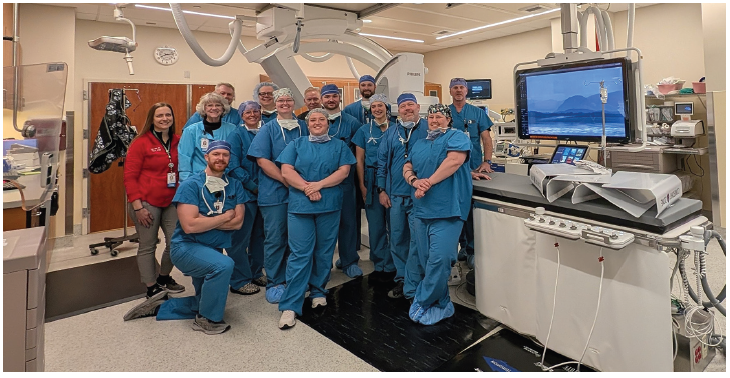
How does your cath lab handle radiation protection for the physicians and staff?
Everyone has their own lead aprons. There is a visual lead apron check and cleaning policy and process that is followed by the cath lab and imaging department. We have a process in place for collection and replacement of radiation badges. Aprons are reviewed annually for potential replacement. We also have access to two Zero-Gravity (Biotronik) lead systems. SHMC is in the process of adding a radiation protection system to our new lab.
What is the process that occurs if a patient receives a higher-than-normal amount of radiation exposure?
Radiation is measured constantly in each case. If the team is approaching 5 gray (Gy), it gets called out by the monitor tech. If exposure reaches 5 Gy, it is reported to the radiation safety officer (RSO) in real time so they can follow up with the patient and physician during the patient’s stay. We also have a process in place to monitor, track, and report radiation exposure quarterly at our Radiation Safety Committee (per regulatory standards), led by our RSO and including our physician operators. Patients receiving higher than usual doses of radiation are referred for clinical follow-up.
How do you determine contrast dose delivered to the patient during an angiographic procedure?
We use the “green zone” process where the green zone is automatically calculated in Epic prior to the case. The cath lab RN will let the interventionalist know if they are approaching the green zone; however, it does not require a dose change because we consistently stay out of the green zone (creatinine clearance x3).
Are you tracking the incidence of contrast- induced acute kidney injury in patients?
Yes, we track this through the National Cardiovascular Data Registry’s (NCDR) CathPCI registry, reviewing and comparing all cases to see where we can improve. Currently, we are above the NCDR’s 75th percentile. Our Registry department will also flag cases and send them to us for review.
We have introduced the POSEIDON protocol. There is an Epic ‘dot phrase’ Smart Phrase that the RNs use to automatically pull in the creatinine lab for their pre-procedure notes and cue the POSEIDON protocol. Our pre-procedure “Prep for Case” and order set include creatinine and glomerular filtration rate (GFR) in the labs. Left ventricular end diastolic pressure (LVEDP) is a routine part of non-contraindicated cases.
We also focus on medication management for nephrotoxicity. The order set indicates when to start intravenous fluids post procedure. The patient’s congestive heart failure status, such as their current ejection fraction and kidney function, accounts for a lower hydration dose in selected cases. There are also cases of much lower contrast use where limited to no hydration is used.
Who pulls the sheaths post procedure, both post intervention and diagnostic?
Who can pull sheaths:
-
Cath Lab Techs
-
Cath Prep and Recovery RNs
-
Cardiovascular ICU RNs
-
Cardiopulmonary Unit RNs
Only RNs who have received both written and didactic training, with a minimum amount of 3 sheath pulls, are signed off to pull sheaths. Most sheaths are pulled in Cath Prep and Recovery. Given our 70-80% radial usage, we are pulling fewer femoral sheaths as time goes on.
Where are patients prepped and recovered (post sheath removal)?
SHMC has a dedicated Cath Prep and Recovery Unit. We use TR Bands primarily. Currently, we are above the NCDR’s 90th percentile for risk standardized bleeding.
How is inventory managed at your cath lab?
Our supply chain department has 1.5 full-time employees (FTE) dedicated solely to cath lab inventory.
Can you share some data about your lab’s door-to-device (D2D) times and some of the ways employees at your facility have worked together in order to lower D2B times?
Our median time to PCI for immediate ST-elevation myocardial infarction (STEMI) is 54 minutes and in-house STEMI is 65 minutes for the rolling 4 quarters, benchmarked through Q32025.
Our comprehensive stroke program serves as a regional referral center for endovascular stroke intervention. We routinely accept patients from communities located up to 200 miles away, including many patients who require fixed-wing transport to reach our center for timely mechanical thrombectomy. Our median door-to-groin puncture time for emergent mechanical thrombectomy for 2025:
-
Overall: 46 minutes
-
Transfers: 28 minutes
-
Patients arriving to our door: 75 minutes
For 2025, our median door-to-device times for emergent mechanical thrombectomy were:
-
Overall: 61 minutes
-
Transferred patients: 43 minutes
-
Direct-arrival: 79 minutes
For calendar year 2025, Sacred Heart Medical Center at RiverBend will be receiving the Get With the Guidelines (GWTG) Honor Roll Advanced Therapy recognition for meeting the door-to-device times for emergent mechanical thrombectomy in greater than 50% of patients.
We have multidisciplinary STEMI meetings quarterly (in addition to the quarterly Chest Pain Committee meetings that also cover STEMI workflow) to review cases for opportunities for improvement. Subgroups form out of need with trends in the data to work on process improvement, bringing topics to the Cath Lab Unit-Based Practice Council (UBPC) meetings for frontline staff input.
We have multidisciplinary monthly Stroke Quality meetings to review ongoing processes across departments. We provide feedback to the cath lab team for all emergent large vessel occlusion (ELVO) cases, including time metrics. Proceduralists conduct post-case debriefings and participate in monthly ELVO case conferences focused on technique, workflow, devices, equipment optimization, and any process opportunities to improve device times. We have monthly ELVO case conference where proceduralists review cases and discuss technical issues including equipment, device, and products used and/or needed.
Who transports the STEMI or stroke patient to the cath lab during regular and off hours?
The cath lab transports STEMI/stroke patients during both regular and off hours, which includes an after-hours call team, 24/7. This includes 24/7 interventional cardiology coverage. Our neurointerventional program is supported by two neurointerventionalists and two interventional radiology physicians credentialed to perform mechanical thrombectomy. This model ensures broad regional access to emergent STEMI/stroke intervention coverage.
What do you do when the call team is already busy doing a procedure and a STEMI/stroke comes into the emergency department?
We have a second weekend call team, from Friday night until Monday morning, as well as a Monday through Thursday “ghost call”, which is an after-hours call roster incentive for weekday second team call coverage. During daytime hours, we coordinate to free up a room for an incoming STEMI/stroke.
Is there a particular mix of credentials needed for each call team?
We have a four-person call team that has one RN, one RT, and the other two members can be a mix of either. Preference to leaving early is given to the prior night’s call team. Starting later is assessed on a case-by-case basis with the team.
How does your lab schedule team members for call?
There is a minimum call shift of one weeknight a week and one weekend a month. Teams are scheduled with requested parameters: not to be on call the night before your day off.
Within what time period are call team members expected to arrive to the lab after being alerted?
SHMC has a policy of 30 minutes.
What measures has your cath lab implemented in order to cut or contain costs?
We use many re-processed items, such as intracardiac echocardiography (ICE) catheters, EP supplies, etc., which has saved us over $2M annually. Most of our inventory is on contract. We also have reviewed how call teams are activated in an effort to reduce costs associated with false activations.
How is coding and coding education handled in your lab?
SHMC has a dedicated coder with a special training in neurointerventional, cardiology, and interventional radiology coding. With new codes being added annually, our coder attends multiple ZHealth Publishing seminars, as well as completing relevant education and eLearnings.
Who documents medication administration during the case?
Both the RN and if present, anesthesia.
Are your physicians dictating their cath procedure reports?
Yes, our physicians dictate cath procedure reports with use of shared templates, such as the bleeding risk assessment, anticoagulation, antiplatelet, and dual antiplatelet duration assessments, conscious sedation, TIMI flow, and closure devices.
Can you share more about SHMC’s use of ACC-NCDR registries and any other outside data collection registry?
Yes, we use the NCDR CathPCI, Transcatheter Valve Therapy (TVT), and LAAO registries, as well as Vascular Quality Initiative (VQI), Carotid Artery Stenting Registry (CAS), Cardiac Arrest Registry to Enhance Survival (CARES), National Surgical Quality Improvement Program (NSQIP), American Heart Association’s Get With the Guidelines (GWTG) for Stroke, and the Cardiac Care Outcomes Assessment Program (COAP).
How are you populating the registry data records?
We have a registry department with abstractors dedicated to cardiovascular care, with NCDR specifically, as well as Stroke for GWTG. Records are populated through ICD-10 code reports. There are some data points that are accomplished through medical record reports and there are some data points that must be manually abstracted.
What recognitions have you received from the registries you submit data to?
For 2025, PeaceHealth Sacred Heart Medical Center at RiverBend received the following recognitions:
-
COAP, NCDR CathPCI Registry
-
Performance Recognition Award for PCI: Performed as well or better than the COAP average in at least 7 of 9 quality indicators, with no metric are outliers.
-
-
AHA GWTG
-
Gold Plus Achievement Award
-
Advanced Therapy Recognition
-
Stroke Honor Roll Elite Plus
-
Type 2 Diabetes Honor Roll
-
How does your cath lab compete for patients? Has your institution formed an alliance with others in the area?
We are one of two hospitals with a cath lab in our metropolitan area. We receive patients from up and down the Interstate 5 corridor, as well as the Oregon coastal and Central Oregon range. We have a no-diversion policy for STEMI and ELVO. Due to recent changes in surrounding city’s cath lab hours, we are seeing an increase in STEMI transfers for our cath lab’s availability. SHMC is the only certified Comprehensive Stroke Center between Portland and Sacramento. Our goal is to get patients transported to the closest center with mechanical thrombectomy capabilities. Mechanical thrombectomy transfer patients represented 52% of thrombectomy volume in 2025 and 63% in 2026, reflecting our expanding role and commitment as a Regional Stroke Referral Center. Patients come from a wide area, including the central and southern Oregon coast as well as the I5 corridor (north and south).
How do you handle vendor visits to your lab?
The SHMC policy states that vendors must have appointments or be supporting a procedure. We use Green Security to vet our vendors.
How is staff competency evaluated?
On hire and annually, through inservice, module, or didactic training.
What continuing education opportunities are provided to staff members?
We provide two quarterly education Cardiology Grand Rounds as well as an annual Heart & Vascular Symposium. Technologists get 10 hours a year of continuing education hours. RNs have pooled paid educational hours available annually. We require the Resuscitation Quality Improvement Program (RQI). SHMC has a Professional Nurse Advancement Program, where nurses can build portfolios with certification, education, volunteer experiences, etc., and receive extra pay per hour upon successful completion of the three levels (pay is higher as RNs advance levels).
What works well for your lab in onboarding new team members?
All new hires are paired with a skilled preceptor. The charge RN acts as an on-shift mentor for all new hires, providing support and guidance as needed. We have a comprehensive handbook for all cath lab emergencies, with roles outlined. We also offer shadowing experiences for new hires on other units and students to tour our cath labs and view procedures.
Do you require your clinical staff members to take the registry exam for the Registered Cardiovascular Invasive Specialist (RCIS) or any other specialized credential?
It is not required; however, there is an incentive bonus (typically 2% of annual salary) upon proof of passing completion.
What do you like about the physical space in which you work?
We like the efficiency of flow in and around the cath lab suites, with external access from all sides. The cath lab is on the third level of OHVI — an integrated facility attached to the main RiverBend hospital — with the cath lab positioned to adjoin the Oregon Cardiology clinic, providing streamlined access for both emergency and scheduled procedures.
RiverBend was built with a lot of natural wood, stone, and other Pacific Northwest elements that give more of a peaceful feel. There are fireplaces in the lobbies, as well as volunteer piano players in the main lobby. We have a healthy restaurant, Café Yumm!, on the ground floor that takes pay by badge. There are two coffee shops on campus, one of which is available 24/7 with badge entry and has special coffee and smoothie machines. The chefs in our cafeteria ensure we have many hot and cold options, including snacks from local vendors and alternative foods for people with food allergies/sensitivities.
The RiverBend campus is built adjacent to the McKenzie River and there are walking trails and bikes available for breaks on and around campus. The building also has a water feature with benches just off the main lobby.
Do staff members have any particular perks that you might like to share?
We have call team preferred parking closer to the hospital, otherwise parking is free. The call team has preference for leaving early.
A respite room with massage chairs is on the second floor.
RNs have sponsored educational expenses available through their Oregon Nurse’s Association funds as well as our Institute of Nursing excellence. We have a tiered standby system that pays $10, $16, and $23/hr for Tier 3. We have rest-less, next-day pay of time and a half for all work done past 2100 hours. We have sixth and consecutive pay of time and a half.
Has your lab recently undergone a national accrediting agency inspection?
Yes, we are now the first American College of Cardiology-accredited Cardiac Cath Lab in our state. We recommend reaching out to the ACC to speak with one of their members about the Cardiac Cath Lab accreditation. You are likely meeting many of the requirements and ones that you are not meeting are evidence-based opportunities for your team.
What trends have you seen in your procedures and/or patient population?
After the height of COVID, our volumes have steadily increased. Patients are more knowledgeable and due to age, comorbidities, and advanced disease, are more complex.
We now have more treatment options, including minimally invasive surgeries, adjunct PCI therapies, and hybrid treatments in the hybrid suite of the cath lab. One example of a hybrid procedure we perform is femoral endarterectomy with iliac stents.
Is there a problem or challenge your lab has faced?
Challenges are similar to all labs, but we are focusing on First Case On Time Starts (FCOTS), turnover times, and lab utilization. We are tracking FCOTS and ensuring staff and physicians have real-time feedback daily, weekly, and monthly. In making progress visual, daily, we are able to make adjustments to support FCOTS.
At times, it has been challenging to get STEMI patients into the lab within 30 minutes of arrival, regardless of their presentation symptoms, and through our culture of safety’s Safe2Share review process, our hospital’s leadership supported providing Cath Lab RNs with an emergency elevator key to expedite getting time-sensitive emergency patients up to the lab faster.
What’s special about your city or general regional area in comparison to the rest of the U.S.?
Due to our location in the central Willamette Valley of Oregon, we are one hour from the mountains/high desert, one hour from the ocean, and are surrounded by waterfalls, lakes, and hiking/biking trails. Our Eugene/Springfield city areas are big enough to keep you occupied, with a small-town community feel. There is something for everyone, with a wide variety of hobbies and activities, and accessibility to these activities is unparalleled. We are the home of the Oregon Ducks, and Track Town USA. These are items known and recognized nationally. It is an inclusive environment. Those who stay here take pride in this area. We also participate in the Citizen CPR Foundation’s HEARTsafe Community cause, diligently working on all 13 requirements and providing a lot of hands-only CPR and AED education to the community.
American College of Cardiology’s National Cardiovascular Data Registry (ACC-NCDR)
How do you use the NCDR Outcome Reports to drive quality improvement initiatives at your facility?
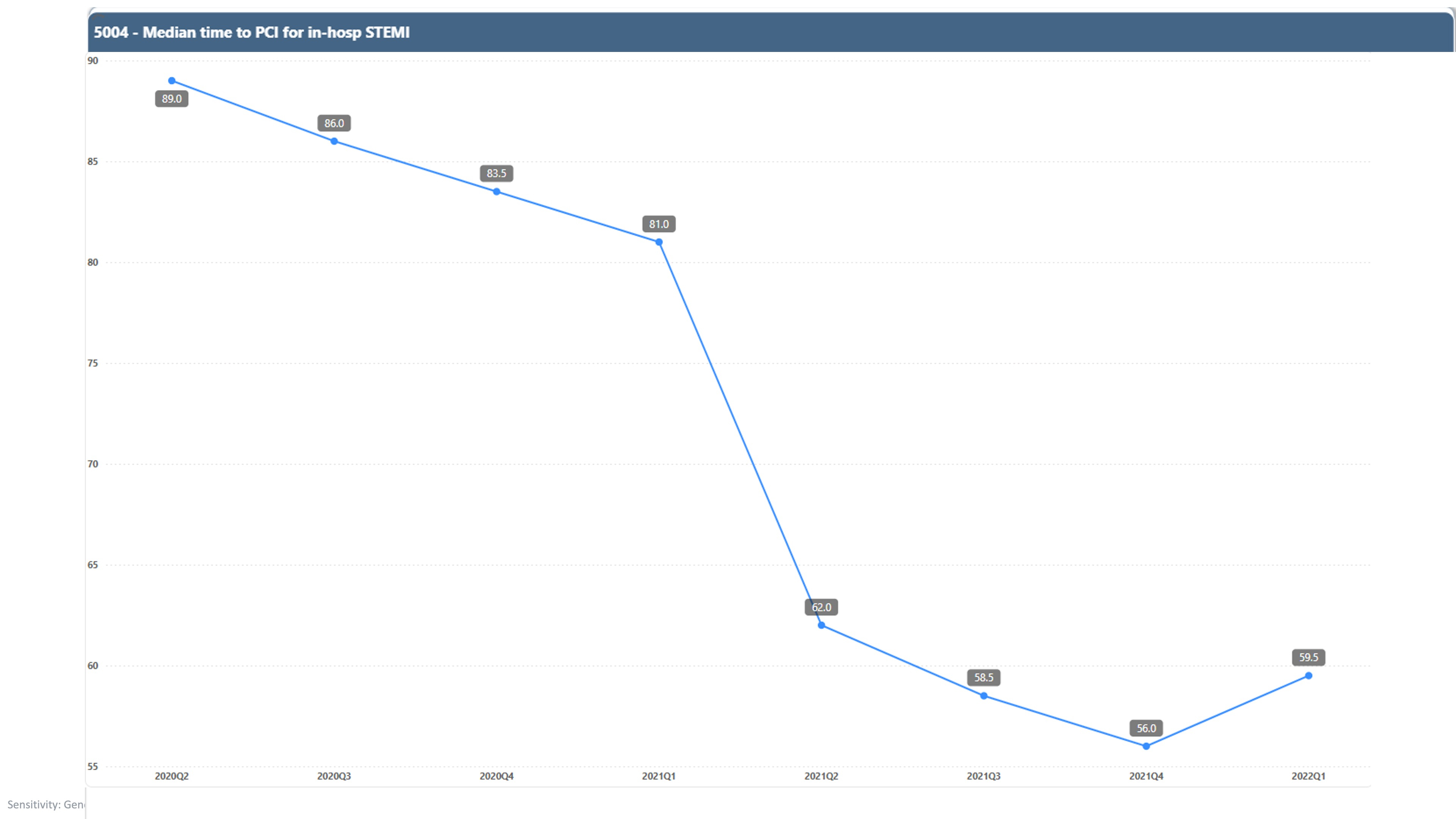
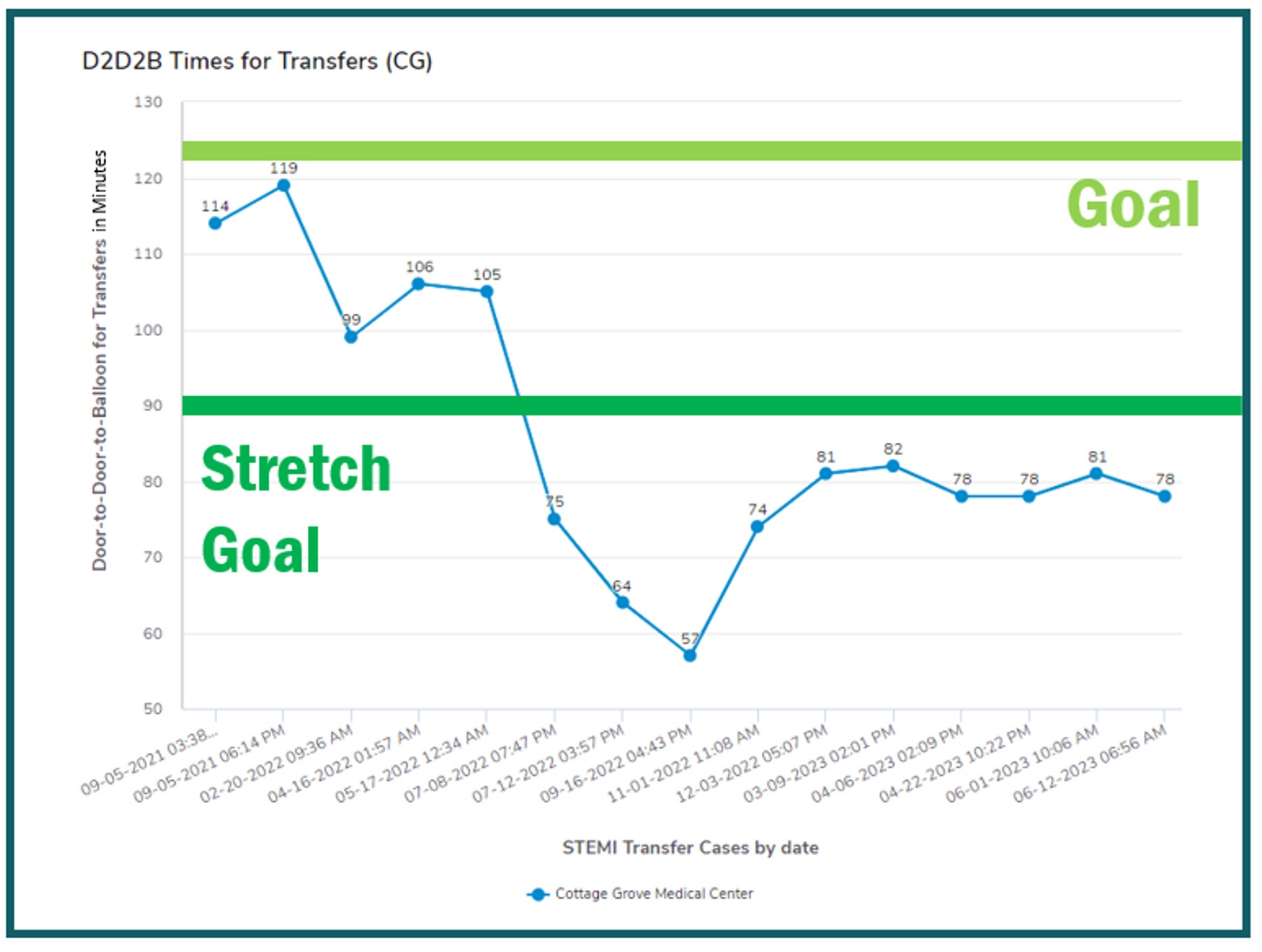
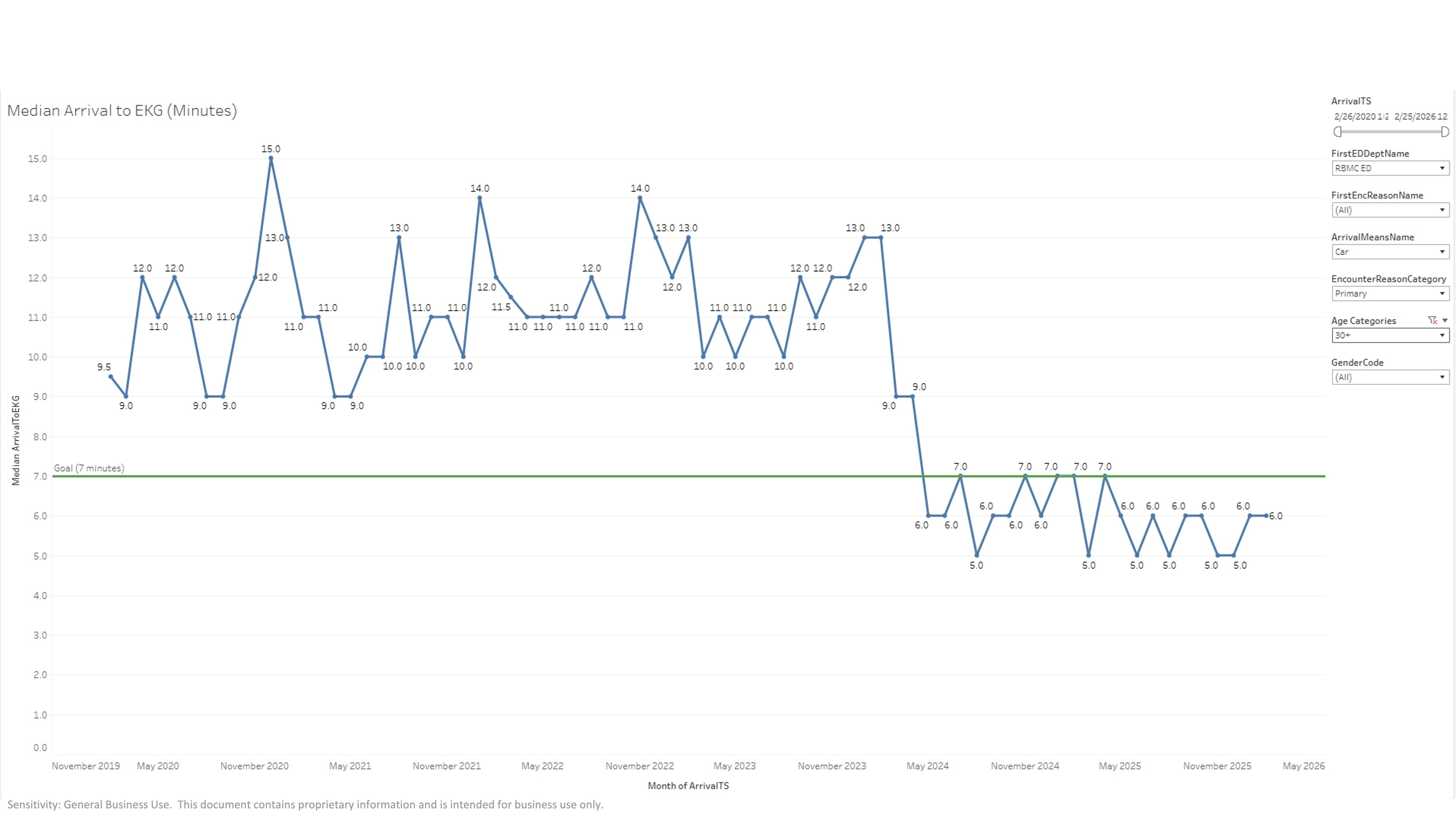
As an ACC-accredited Chest Pain Center with Primary PCI, we have utilized NCDR data to illuminate areas of improvement. Our notable process improvement projects since 2021 have been reducing in-house STEMI times, door-in-door-out, door-to-door-to-balloon (D2D2B) times with transfer facilities, and door-to-EKG times in the emergency department. We were able to decrease and sustain each of these times to further protect our patients from complications such as heart failure or death.
The authors can be contacted at HEARTsafe@peacehealth.org.
Sudeshna Banerjee, MD, FACC, FSCAI, Medical Director, Invasive Cardiology and Structural Heart Disease
Richard Padgett, MD, FACC, System Medical Director – Cardiovascular Services, Executive Medical Director – Oregon Heart & Vascular Institute
Barry Royce, RN, MHA, Vice President, Surgical and Cardiovascular Services
Billy Lucas, RT, Supervisor, Cath Lab
Laura Smith, MBA, BSN, RN, CAPA, Nurse Manager, Cath Lab
Michael Wilder, MD,
Neurointerventional Surgery
Contributors:
Margaret Shatzel, BS, MSPH, RN, SCRN, ASC-BC, Stroke Program Manager
Emily Caldera, BSN, RN, CV-BC, Structural Heart Program Manager
Megan S., BSN, RN, PCCN, SCRN, Chest Pain Program Manager
Chris Martin, RN, NRP, CCP-C, MBA, TeleNeuro/Stroke Coordinator
Oregon Heart & Vascular Institute, PeaceHealth Sacred Heart Medical Center at RiverBend, Springfield, Oregon