Learning From the Masters: David Rubin, MD, and Stephen Hanauer, MD
Dr David Rubin delivered the inaugural Stephen B Hanauer Lecture at the Advances in IBD annual meeting, and then sat down with Dr Hanauer, former cochair of the AIBD meeting, to discuss the pearls learned from his mentor.
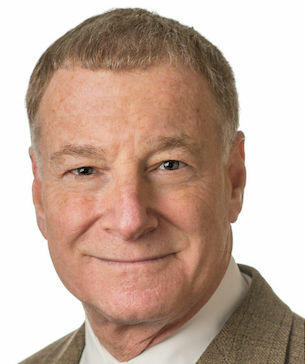
Stephen Hanauer, MD, is the Clifford Joseph Barborka Professor of Medicine at the Feinberg School of Medicine and medical director of the Digestive Health Center at Northwestern University in Chicago, Illinois.
David T. Rubin, MD, is the Joseph B. Kirsner Professor of Medicine, chief of the Section of Gastroenterology, Hepatology and Nutrition, and director of the Inflammatory Bowel Disease Center at the University of Chicago.
VIDEO HIGHLIGHTS
Inflammatory Bowel Disease Care: Patient-Centered Management, Therapeutic Drug Monitoring, and Evolving Clinical Trial Frameworks
- Inflammatory bowel disease (IBD) management should prioritize patient-centered outcomes—rapid symptom improvement, sustained remission, and safety—over mechanism-focused discussions, with emphasis on quality of life and communication in both inpatient and outpatient settings.
- Anti–tumor necrosis factor (TNF) therapy requires structured evaluation of loss of response using serum drug levels and anti-drug antibodies, forming a logical algorithm for treatment adjustment; earlier misinterpretations, such as underestimating immunogenicity and combination therapy with azathioprine, highlight limitations of post hoc analyses and low-evidence guideline recommendations.
- Regulatory and research frameworks for IBD therapies evolved through clinician input but current needs include redefining disease severity classifications, improving clinical trial design (largely unchanged since 1995 infliximab protocols), identifying first-line therapies for Crohn’s disease, and incorporating AI-driven drug development while maintaining human clinical trial validation.

Transcript
Hi, it's David Rubin from the University of Chicago and I'm here with my mentor, Steve Hanauer, and we're at the Advances in IBD meeting in Orlando and it's 2025. Hi Steve.
Dr Hanauer: That's a 25-year history.
Dr Rubin: It's the 25-year history—good point. So I had the pleasure and privilege today to deliver the inaugural Steve Hanauer lecture. Dr. Hanauer was a cochair of this meeting for many years and last year transitioned out of that role and they named a lecture for him and it was a wonderful opportunity for me to reflect on all the things he's taught me about IBD in my career. And I know many of our colleagues out there have learned similarly from him. So I thought we would chat about that a little bit.
Dr Hanauer: It's very kind of you to have presented and it was a fabulous discussion as always.
Dr Rubin: To be very honest with you, I had never read your whole CV until I worked on this talk.
Dr Hanauer: I could see that.
Dr Rubin: And it was amazing.
Dr Hanauer: No, your summaries were amazing.
Dr Rubin: Okay, well I had a few pearls that you taught me and I thought you could explain them more.
Dr Hanauer: Just a few after 20-plus years?
Dr Rubin: I summarized. The first one was just about the fact that taking care of people with IBD is about taking care of people, that it's about quality of life.
Dr Hanauer: I actually got interested in IBD from handling the patients, the inpatients under both of our mentors, Dr. Kirsner, and at the time when I was young and then you were young in training, what we found was the patients in the hospital were young people. They were kind of like us and suffering these embarrassing diseases, whether it was based on their symptoms or having scars or having stomas or anything like that. And I became a cheerleader because someone needs to support them through this chronic illness, at least until we get them better, which happily we're now able to do for the majority of people.
Dr Rubin: Well, I think that what moved me when I was younger similarly was seeing people that I could relate to and understand that this could be me. But also from you, I learned that you always were communicating to people as people first, and then we talked about what was going on with their bowels.
Dr Hanauer: Well, I think that's the way we need to communicate in general.
Dr Rubin: I agree. But it's certainly something that can get lost these days as people have shorter and shorter amounts of time with patients and have to rush through clinics.
Dr Hanauer: Let me give you an example of that. We talk about in our shared decision about the different options we have and the different mechanisms. The patients don't care what mechanism it is. They care about what's going to get me better quickly, keep me well, and keep me safe.
Dr Rubin: I learned that from you, which leads to the next point, which was you also taught me that things need to make sense. You want to elaborate on that?
Dr Hanauer: Oh, absolutely. We're often confronted by situations where we didn't understand something. So for instance, just take the example of TNF therapy. When TNFs were first developed, infliximab as the first one, our friends in rheumatology already had several different therapies and different mechanisms of action for this. And so if a patient lost response to a drug, they would switch them to another. Well, at that time we didn't have any other drugs and we needed to make sense of why patients lost response. And we began to evaluate this by measuring serum levels and then antibodies to the agents. And we were able to come up with a very logical algorithm of how to assess loss of response to infliximab and then subsequently other biologics.
Dr Rubin: Well, one of the lessons that I shared with the audience today, too, was how you have always put the patient first and pointed out when we've made mistakes in our field, like when we started studying infliximab and didn't know what immunogenicity was and people were exposed to therapy and then couldn't come back to it. In your reflection on your amazing career, what do you think are a couple of the errors we've made in the field that we've tried to correct?
Dr Hanauer: That's an easy answer for me because I've made those mistakes. I published early on that a combination therapy with infliximab wasn't important. I published that antibodies to infliximab wasn't important and they were wrong because they were based on post hoc analyses of trials that were not powered or specified endpoints from the beginning. And when we did the reverse, studied infliximab alone and azathioprine alone, and the combination, we found indeed there was a difference. And that's one of my problems with many of our guidelines now because many of our guidelines are not based on primary data. They're based on post hoc assessment of trials, which should be hypotheses rather than recommendations.
Dr Rubin: Well, I learned from you, because that's how the ACG guidelines read, is that we didn't weigh in on those network meta-analyses. So I think that that's important.
Dr Hanauer: And that's seen in the levels of evidence in the different guidelines. They're all very low level of evidence.
Dr Rubin: But just getting back to the point about recognizing mistakes and then owning them so that you can teach people this is what we thought, but I think it's a really valuable leadership lesson as well.
Dr Hanauer: I agree because I've made the mistakes.
Dr Rubin: But you learn from them as well and teach us, which is what I said.
Dr Hanauer: Many times in my career, many times. As I think you pointed out!
Dr Rubin: No, that's not what I did! But another thing I pointed out today was just how much of a role you played in helping the FDA develop regulatory pathways for us and defining that.
Dr Hanauer: Well, that's actually an interesting story. I'll try and tell it briefly. When mesalamine enemas were first coming into the possibility, they weren't approved, I called down to the company and said, could I engage in the clinical trial? And they said, no, we've already met our criteria, but we'll give you the drug open label under our investigational drug.
And over that time I kept very good track of the patients who we were administering them to, what was their background medicine, how much of this was involved. And I actually went with the company to the FDA at their request to provide supplemental information. And at the end of the meeting, the head of the FDA asked me back to the office, said he knew our mentor, I presented well, we need someone on the committee. So I was brought onto the FDA committee and the first drug I had to evaluate was actually olsalalzine. And in that study I saw patients getting better, but based on their outcomes, they couldn't get approved. And so I told the agency, I said, the problem is you need to give some guidance to industry. And they said, you're correct. Write ‘em.
Dr Rubin: That's the best way to answer when someone tells you that.
Dr Hanauer: Yes.
Dr Rubin: And then you did write them, which I highlighted.
Dr Hanauer: Not alone, but with all of the different investigators and looking at the prior trials that were in ulcerative colitis and Crohn's disease and using those.
Dr Rubin: The lesson for me in reviewing this and learning it from you was that we can change how things are done when it makes sense and when it's needed.
Dr Hanauer: And we're at that point with the agencies currently.
Dr Rubin: Yes.
Dr Hanauer: To me, the biggest needs going forward are a first drug for Crohn's disease and get rid of this mild to moderate, moderate to severe criteria because they don't mean anything.
Dr Rubin: Right.
Dr Hanauer: And as you and I have discussed, you put a patient on steroids and they feel better and they're well, and yet they still have moderate to severe disease. It just doesn't make sense in that situation. So we need to make sense to the agency.
Dr Rubin: One of the points I covered today was just related to how much you've contributed in bringing new therapies and therapeutic approaches to what we do. Tell the audience your story of smoking and IBD.
Dr Hanauer: Well, that goes back to when I was a first year faculty member.
Dr Rubin: That was the second paper I wrote with you.
Dr Hanauer: Yes. Well, my mother's aunt from Texas called me and said, I have colitis. And I said, Aunt Bea, I never knew that. And she went on to describe that when she was a teenager, she was smoking and then she stopped and started bleeding and she went back to smoking. And now she's 80 years old. Her doctor told her she has emphysema and she needs to stop smoking. And she did. And now he says, I've got colitis. I said, I never heard of that. But within weeks, the Women's Health Initiative came out with the nurses study looking that smoking may actually be protective of ulcerative colitis. And so we then followed up with case series, a case control study with Brett Lashner, and looked at patients with ulcerative colitis. Now, this was back in the 1990s and looked at patients with ulcerative colitis, Crohn's, and an IBS population. And we showed that the UC patients were nonsmokers, the Crohn's patients were smokers, and the IBS was the same as the general population.
Dr Rubin: I remember when I wrote this paper with you, it was meant to be a review article, but at the time I didn't have perspective in terms of when you made that observation or how the field had moved. It's very interesting and I think important for people to be able to go back and understand where things came from.
Dr Hanauere: But we also broke it down. We thought, okay, what's the obvious thing? It's nicotine. Here's where we went wrong. We started looking at nicotine therapy, oral. The only things we had at the time were the chewing gum, and so we could give nicotine chewing gum. They then developed the patches and individuals actually developed nicotine enemas. But who did we apply it to? We applied it to the general group and it didn't matter. We never applied that to exsmokers. We still haven't.
Dr Rubin: Right, but you did publish that nice paper with Emma showing that resuming smoking in exsmokers can be a treatment.
Dr Hanauer: Well, I actually learned that from one of my patients who is a dentist who smoked marijuana. And every time he stopped smoking marijuana, his colitis got worse. It was one joint at night.
Dr Rubin: Interesting. Well, the other point I made among many during this nice opportunity was about your sense of humor. That is something that has stuck with me, but nobody delivers the jokes the way you do.
Dr Hanauer: Because I'm a dad. You're a dad too now. And you've learned that too.
Dr Rubin: I remember one of the things you told me when you went to Northwestern from the University of Chicago True, was that one of the good things about it was that no one had heard your jokes yet.
Dr Hanauer: Exactly. And now our IBD fellows asked the prior fellows, what? So they haven't changed. And one of the biggest rewards I had was you talked about Judaism was when I went to a conference in Atlanta and I didn't know the speaker, and she referred to that terminology. And afterwards I went to her and I said, well, where'd you train? And she says, Mayo. And I said, it was either Susie Kane or Laura Raffals that told you that.
Dr Rubin: That's right. Well, that's your influence, which is very wide and deep.
Dr Hanauer: But these aren't funny diseases.
Dr Rubin: But having a sense of humor is your way to make it more available to people to talk about.
Dr Hanauer: When we make rounds on the patients, and you and I have done this for decades with the house staff and the house staff go in and say, hi, Mrs. Jones, how many bowel movements did you have today? It's the first thing, they go to these numbers. And we go in the room and we say, hi, Mrs. Jones, how are you today?
Dr Rubin: Correct. But that's about being a human.
Dr Hanauer: It's all about being human. These are not funny diseases, but we can still find humor.
Dr Rubin: I talked about all the people you mentored and I gathered a few pictures to show, which is a really nice legacy of course. And all the people you coauthored with and how much you emphasize that taking care of IBD is a team sport.
Dr Hanauer: A collaborative effort. Definitely no one can do this alone. And nowadays the teams are different, right?
Dr Rubin: Yes.
Dr Hanauer: Nowadays we have the hospital team. Nowadays we need our nurses, we need our liaisons, we need our nurse practitioners, we need our pharmacists, now we need our social workers and we need our behavioral therapists. And it's a holistic approach.
Dr Rubin: So looking forward, this meeting has been a fabulous success and ongoing success. What do you foresee being the future of our field? What's your pearl for the audience as we wrap this?
Dr Hanauer: Well, a number of years ago I asked Claudio Fiocchi, I said, these diseases are so complicated, there must be a simple answer. And his answer was, no, Steve, they're complicated because they're complicated. And I think that the future of these diseases is not all of us. If we put all of the information we know into computers and they're going to answer the things that we don't even think about. So I think AI is going to be what demonstrates pathogenesis. And we're already seeing new small molecules that are being developed based on modeling and 3D projections. And I think that that's going to continue to be the future.
But we still need our patients in clinical trials because mice aren't human and what works in mice isn't necessarily important for us. So we need to figure out better ways of performing clinical trials. And as we discussed, it hasn't really changed since 1995. The protocol for infliximab is no different than the protocols nowadays. We've added some endpoints, but it's the same patients. And I think the two areas we need to improve upon immediately are the first line drug for Crohn's and a head-to-head versus mesalamine with one of our newer agents. Because just simply with what we've got now, would you rather take 12 pills a day at a great expense or get an injection every 8 weeks for $5 a month?
Dr Rubin: Right. Well, as usual, you have a way of predicting the future, but that's because you've also made the future. So thank you. It was my honor to review your career this way and to thank you very publicly for being my mentor.
Dr Hanauer: Don't make me tear up again.
Dr Rubin: Well, the one thing that I wanted to say, because I speak to fellows and others about mentorship, is that mentorship is lifelong. And it's about creating opportunities. And what you've done for me in every stage of my career is just that. So thank you.
Dr Hanauer: You're welcome. And my example of mentorship is the sport curling. Okay. And I ask the trainee, “You push the rock and I will sweep for you to get to your target.”
Dr Rubin: I like that.
Dr Hanauer: So I'm a sweeper
Dr Rubin: Sweep to target?
Dr Hanauer: Yes.
Dr Rubin: Great. Thanks for this conversation. Thank you, my friend.