Beyond Stenosis: Identifying the Truly High-Risk Carotid Plaque
© 2026 HMP Global. All Rights Reserved.
Any views and opinions expressed are those of the author(s) and/or participants and do not necessarily reflect the views, policy, or position of Vascular Disease Management or HMP Global, their employees, and affiliates.
Stony Brook University Medical Center, Long Island, New York
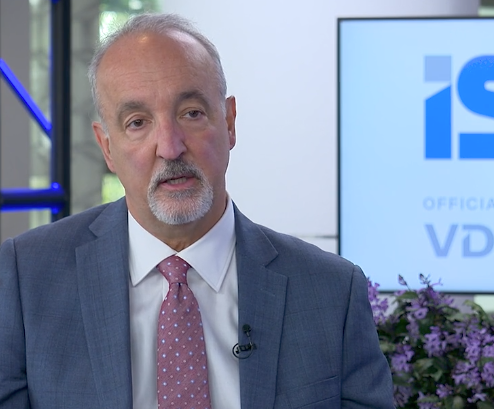
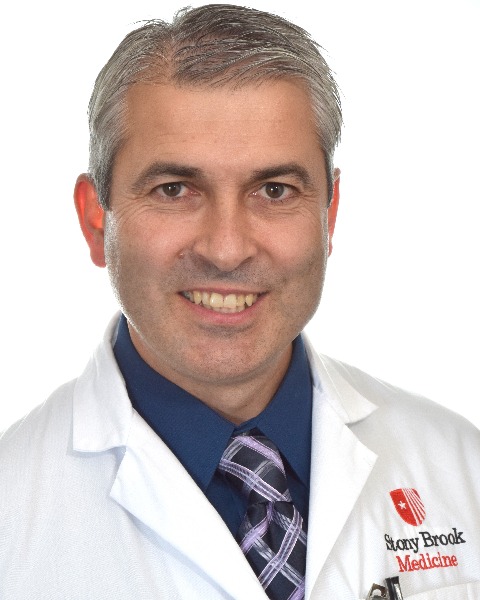
At ISET 2026 on Monday morning, Nicos Labropoulos, MD, from Stony Brook University Medical Center in Long Island, New York, presented an overview of what defines a “high-risk” carotid plaque and why relying on luminal stenosis alone is no longer enough.
He began by reviewing decades of randomized and nonrandomized data showing a steady decline in stroke rates among asymptomatic patients treated with contemporary best medical therapy. Across all stenosis subgroups, annual stroke risk is now well under 10%, and far lower in many patients. The implication is that the majority of carotid endarterectomies and stenting procedures performed in asymptomatic patients are ultimately unnecessary, even if procedural risk were hypothetically zero.
The focus then shifted from “how narrow is the artery?” to “how dangerous is the plaque?” Drawing from natural history studies and contemporary trials, Dr. Labropoulos emphasized that plaque composition, surface morphology, and biological behavior are far stronger predictors of embolic risk than percent stenosis. Echolucent plaques, irregular or ulcerated surfaces, juxtaluminal hypoechoic regions, and features such as intraplaque hemorrhage consistently correlate with higher ipsilateral stroke risk.
A major theme of the presentation was the complementary role of imaging modalities. Magnetic resonance imaging (MRI) findings, including intraplaque hemorrhage, lipid-rich necrotic core, and fibrous cap thinning or rupture, emerged as powerful predictors of future cerebrovascular events, with hazard ratios that remain significant in both symptomatic and asymptomatic patients. Dr. Labropoulos highlighted that duplex ultrasound, when properly normalized, can identify low gray-scale median plaques and juxtaluminal “black” areas that closely parallel high-risk MRI features, making advanced risk stratification more accessible.
The presentation also addressed recurrent carotid stenosis after endarterectomy, cautioning that many reinterventions are performed without rigorous indications. Given the generally benign prognosis of restenosis, particularly when driven by myointimal hyperplasia, reintervention should be reserved for carefully selected symptomatic patients after alternative embolic sources are excluded.
In closing, Dr. Labropoulos aligned his message with emerging perspectives from CREST-2 and other contemporary trials: the future of carotid disease management lies in identifying the small subset of patients who remain at meaningful stroke risk despite optimal medical therapy. Duplex ultrasound and MRI are increasingly central to decision-making. The challenge ahead is refining patient selection so revascularization is reserved for those who genuinely need it.