










ISET 2026: What Live Aortic Cases Can Teach Us About Real World EVAR and Arch Repair
Complex aortic cases at ISET Week 2026 will help clinicians build confidence in multibranch repair, arch strategies, and decision making for difficult anatomy.
Complex aortic cases at ISET Week 2026 will help clinicians build confidence in multibranch repair, arch strategies, and decision making for difficult anatomy.
As someone who treats patients with complex aortic disease, I have seen how quickly routine situations can turn into high-stakes problems. Many clinicians feel comfortable with standard endovascular aneurysm repair, but the challenges show up later: Type IA endoleaks, graft failures, and arch pathology that pushes us to the edge of our technical limits.
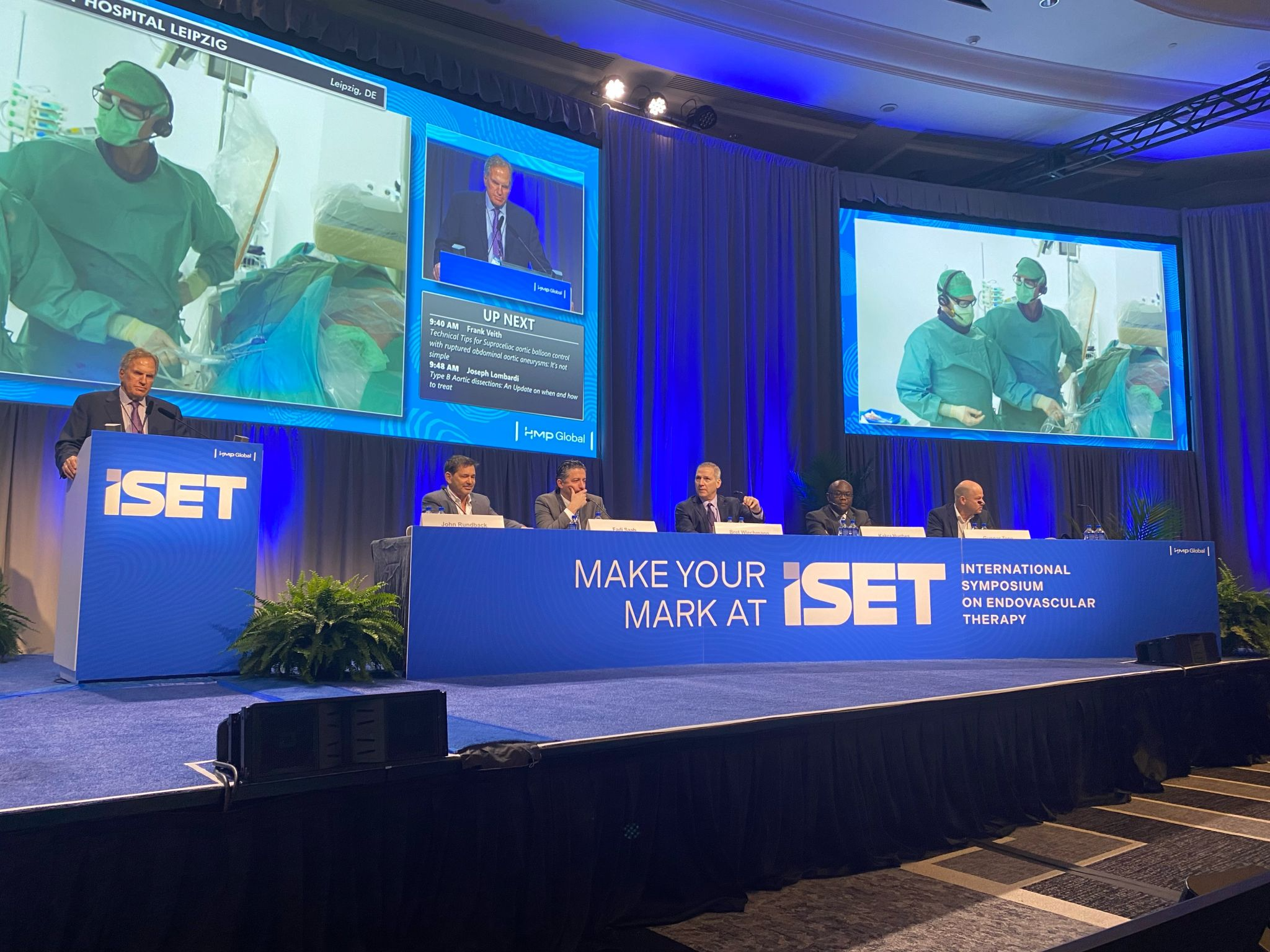
At ISET Week 2026, held February 9-12 in Miami Beach, I will present two live aortic cases that speak directly to these realities. My goal is to help you see the decision making behind these procedures, not just the devices we use.
Why this work matters for everyday EVAR reintervention
Type I endoleaks remain a leading reason for post-EVAR reintervention, with studies reporting rates that can reach around 10 percent of patients after initial repair. A failing seal zone is rarely a surprise, but it is always a problem that requires fast, thoughtful action.
In my first live case on February 10 at 2:30 PM EST, I will demonstrate a fully transfemoral thoracoabdominal multibranch endoprosthesis (TAMBE) approach for a patient with a Type IA endoleak after prior EVAR. I want attendees to see:
• How I assess a hostile proximal neck after the index repair
• How branch planning guides the choice of a multibranch device
• How I protect visceral flow while minimizing procedural complexity
• What I watch for when considering long term durability
What Zone 0 arch repair can teach us about judgment, planning, and risk
Zone 0 arch repair is one of the most challenging areas of endovascular therapy. Hybrid arch strategies can help high risk patients avoid open repair, but they come with recognized stroke risks.
My second live case on February 11 at 2:20 PM EST will show a Zone 0 hybrid dual vessel arch repair using a fenestrated thoracic branched endograft. I will focus on:
• How to choose patients who truly benefit from a hybrid Zone 0 strategy
• How to plan head vessel management to protect cerebral circulation
• How fenestrated design influences access and positioning
• How to navigate the arch safely to reduce embolic risk
How to get the most out of these sessions
ISET Week 2026 offers four full days of complex live cases, discussion, and practical skill building. Before you arrive in Miami Beach, I encourage you to review your recent EVAR reinterventions and any arch cases you have struggled with. Bring questions. Think about the steps that made you pause. Those are the scenarios where live education has the most value.
A few ways to get ready:
• Identify where your current workflow slows down or becomes uncertain
• Review recent imaging from your toughest EVAR and arch cases
• Make a list of complications or scenarios you want clearer strategies for
• Plan to discuss device selection, access planning, and stroke mitigation directly with faculty
I encourage you to attend ISET Week to benefit from these cases and the broader program. ISET consistently delivers high-value education, real-world decision making, and the opportunity to learn directly from complex live cases.
Event Details
• Event: International Symposium on Endovascular Therapy (ISET)
• Dates: February 9 to 12, 2026
• Location: Miami Beach, Florida
• Website
• Registration
Sukgu Han, MD, MS, is Professor of Clinical Surgery and Neurological Surgery at the Keck School of Medicine of USC, Chief of the Division of Vascular Surgery and Endovascular Therapy, and Co-director of the Comprehensive Aortic Center at Keck Hospital of USC.






