Below-the-Knee Atherectomy Requires a Selective Approach
An Interview With Luke R. Wilkins, MD, FSIR
An Interview With Luke R. Wilkins, MD, FSIR
Key Summary
- Luke R. Wilkins, MD, FSIR, discusses below-the-knee (BTK) interventions for patients with chronic limb-threatening ischemia (CLTI) and Rutherford 2-6 disease, emphasizing that evidence supporting BTK atherectomy remains limited and difficult to interpret because of heterogeneous devices, operators, and patient populations.
- Interventional ultrasound (IVUS) may improve foot perfusion and patency in CLTI by enabling more accurate vessel assessment and balloon sizing, whereas evidence for atherectomy is only marginally supportive in CLTI and does not support routine use in Rutherford 2-3 BTK disease.
- A selective, lesion-specific approach to atherectomy is recommended, primarily for heavily calcified lesions that impede balloon passage or when angioplasty response is inadequate. The evidence base for both IVUS and atherectomy in BTK interventions remains limited, highlighting the need for careful patient selection and further data.
© 2026 HMP Global. All Rights Reserved.
Any views and opinions expressed are those of the author(s) and/or participants and do not necessarily reflect the views, policy, or position of Vascular Disease Management or HMP Global, their employees, and affiliates.
VASCULAR DISEASE MANAGEMENT. 2026;23(6):E79-E80

UVA Health, Charlottesville, Virginia
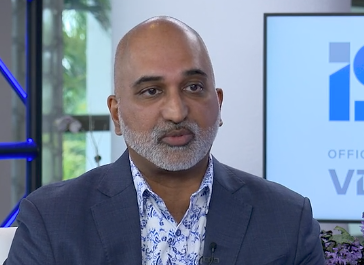
At the 2026 Society of Interventional Radiology Annual Scientific Meeting in Toronto, interventional radiologist Luke R. Wilkins, MD, FSIR, from UVA Health in Charlottesville, Virginia, presented “The Role of IVUS and Atherectomy in BTK,” examining the evolving evidence behind 2 widely used tools in below-the-knee (BTK) interventions. While intravascular ultrasound (IVUS) can help optimize treatment by improving vessel assessment and guiding balloon sizing, Dr Wilkins cautioned that atherectomy should be reserved for carefully selected cases, particularly in patients with chronic limb-threatening ischemia (CLTI). Drawing on both current data and clinical experience, he highlighted the importance of thoughtful patient selection and lesion-specific decision-making to maximize outcomes and avoid unnecessary intervention.
Your presentation explores the role of IVUS and atherectomy in BTK interventions. Why is this important?
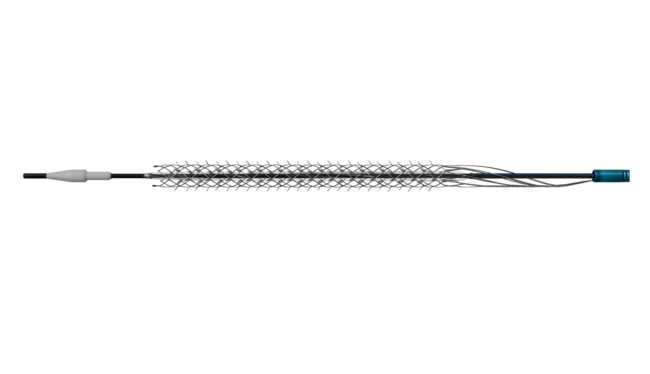
This is important because both IVUS and atherectomy are increasingly used in BTK interventions, but the strength of evidence supporting each is very different. It has been available for a very long time, but we are still working to define when it truly improves outcomes. Part of the problem is that the data that is used in one specific patient population, namely CLTI, are extrapolated to another patient population, such as patients with Rutherford 2-3 claudication. That extrapolation is problematic, because the data would not support routine atherectomy in patients with claudication, and even in CLTI the data remain nuanced and difficult to interpret. Part of the challenge is that atherectomy is not a single intervention. There are multiple devices, different lesion types, variable degrees of calcification, different operator approaches, and many confounding factors that make it difficult to isolate the true effect of atherectomy itself.
When it comes to IVUS, I think that's a little more straightforward. While the evidence is not as robust as we would like, IVUS can improve our understanding of vessel size, lesion morphology, and treatment effect. In BTK interventions, one of its most practical benefits is that it helps avoid angiographic underestimation of vessel diameter, which can lead to undersized balloons and suboptimal angioplasty. So, it's almost a better diagnostic tool. Even though we don't have quite the level of evidence to support IVUS use, I think given that it's a noninvasive tool that is mostly used as diagnostic adjunct, it's a bit easier to justify use in that setting.
How does IVUS change your decision-making during BTK procedures, particularly when determining when and how to use it?
IVUS can change decision-making in several important ways, but I think its use remains somewhat subjective and operator-dependent. The most immediate impact is on balloon sizing. Angiography can underestimate vessel diameter, particularly in small, diseased, calcified tibial vessels, and IVUS can help identify a more appropriate balloon size for angioplasty.In the setting of Rutherford 4-6 type disease, IVUS can help characterize lesion morphology along with degree and distribution of vessel calcification. This information can help in determining what atherectomy device would be most appropriate. In addition, with angioplasty, if you do not have sufficient response to angioplasty after vessel prep with an atherectomy device and angioplasty, IVUS may be better able to detect that lack of technical effect that would then prompt you to be more aggressive either with vessel prep and atherectomy or more aggressive with balloon sizing.
That said, IVUS should not be viewed as a mandate to do more. It is a diagnostic adjunct that should help refine the procedure. The goal is not simply to use more devices; the goal is to better understand the vessel, optimize the technical result, and avoid unnecessary intervention.
What does the latest evidence in your own experience suggest?
My interpretation of the evidence, combined with my own experience, is that atherectomy has a role, but it should be selective. I am most likely to consider it when there is severe calcification that makes it difficult to cross or deliver a balloon, or when the lesion clearly requires vessel prep to achieve a meaningful angiographic result. In that scenario, atherectomy is not being used routinely; it is being used to solve a specific technical problem.
It may also be approriate to consider atherectomy when angioplasty alone produces an inadequate result like persistent narrowing or poor vessel expansion. In those cases, additional vessel preparation may be reasonable, particularly in CLTI patients where the clinical goal is wound healing, limb salvage, and restoration of inline flow to the foot.
But I think the key is restraint. Atherectomy should not be used simply because a lesion is below the knee or because a device is available. It should be used when lesion morphology, technical limitations, and the patient’s clinical presentation justify it.
What’s the one takeaway that you wanted attendees to get from the presentation?
The main takeaway is that atherectomy BTK should not be used routinely in Rutherford 2-3 disease. If you are going to use atherectomy, it should be a deliberate decision based on clinical presentation, lesion morphology, degree of calcification, and expected technical benefit.
In CLTI patients, atherectomy may have a role in selected cases, but it should be used sparingly and with a clear procedural goal. Operators should be thoughtful about which atherectomy device they choose, why they are choosing it, and what technical success they expect to achieve. The broader message is that IVUS can help us better understand the vessel and optimize treatment, but atherectomy should remain a selective tool and not a default strategy. n