To Screen or Not to Screen? Rethinking Biologic Monitoring in the Modern Era
Dermatology has entered an era of remarkable therapeutic precision. The rapid expansion of biologics and small molecules has transformed outcomes for patients with psoriasis, atopic dermatitis, hidradenitis suppurativa, and a growing list of chronic inflammatory skin diseases. Yet the screening and monitoring protocols built around these therapies have not always kept pace. For many clinicians, the question has shifted from what to screen for to whether longstanding habits are generating unnecessary testing, and at what cost.
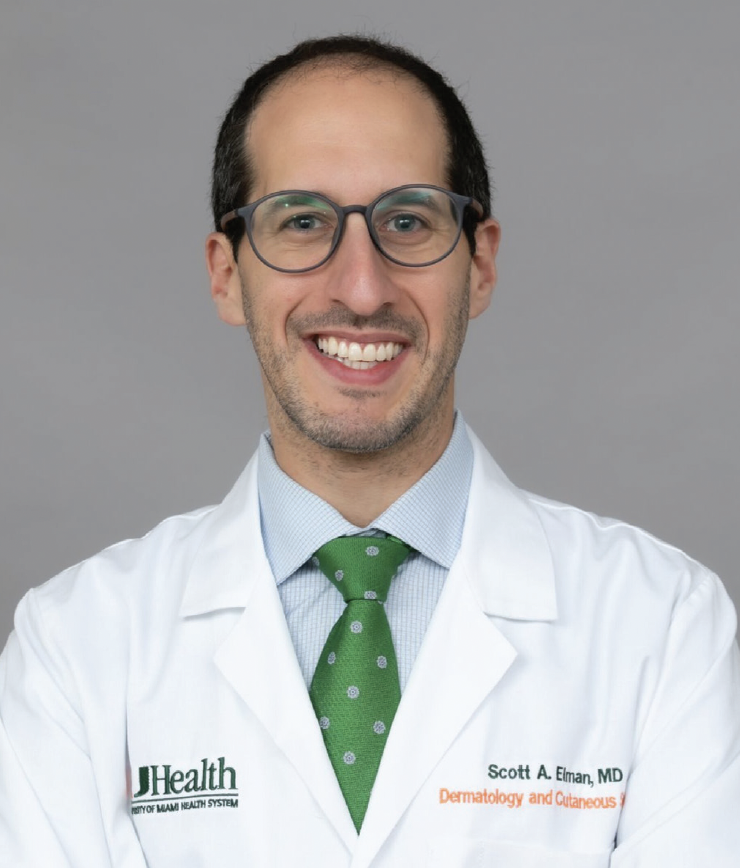
Scott Elman, MD, FAAD, an internist and dermatologist at the University of Miami Miller School of Medicine, has thought carefully about these questions. In this conversation, he offers a mechanism-driven approach to biologic screening, drawing on the latest data, including a landmark 2025 joint position statement from the National Psoriasis Foundation (NPF) Medical Board and the International Psoriasis Council (IPC) that challenges more than a decade of standard practice on tuberculosis (TB) testing.1
A PARADIGM SHIFT AND A MONITORING MISMATCH
The Dermatologist: Dermatology now has one of the most expansive biologic armamentaria in medicine. How has this changed how you think about routine screening?
Dr Elman: It really is a remarkable time to be practicing. When you look at the timeline of approvals over the past 20 years, TNF inhibitors, IL-17 inhibitors, IL-23 inhibitors, IL-4/13 inhibitors, TYK2 inhibitors, JAK inhibitors, each class represents a meaningful leap in mechanistic precision. But our screening protocols have not always moved at the same pace. Dermatology has the highest biologic utilization of any specialty, and with that has come a monitoring burden built on a “screen everyone for everything” reflex that made sense early on but now deserves scrutiny.
The question I ask myself with every new biologic start is: Are we doing what the evidence supports, or are we doing what we have always done? Over-monitoring has real consequences: patient burden, extra cost, delays in getting people on therapy. And under-monitoring, in the wrong situations, has its own risks. I think of it as a Goldilocks problem. We want the right fit based on mechanism, patient risk, and the best available data.
The Dermatologist: Where are the biggest gaps between evidence and everyday practice right now?
Dr Elman: The clearest one is how we took the screening logic from TNF inhibitors and applied it to every drug class that followed, for well over a decade, without the evidence to justify it.
TNF inhibitors are immunologically broad. They disrupt granuloma maintenance by activating macrophages, which creates a genuine, well-documented risk of TB infection reactivation and hepatitis B virus (HBV) reactivation. That risk profile does not transfer to IL-17 or IL-23 inhibitors, which operate through much more targeted pathways. But because TB screening was standard with TNF inhibitors, and because early mouse model data suggested theoretical caution with the newer drug classes, we carried those same rules forward. A 2024 paper in JAMA Dermatology analyzed over 122,000 patients across drug classes and found enormous variation in testing rates, with many patients getting less testing than recommended and many others getting considerably more than the evidence supports.2 Both problems trace back to the same root cause: protocols that were never differentiated by mechanism of action.
RETHINKING TB SCREENING: WHAT CHANGED IN 2025?
The Dermatologist: TB screening before biologic initiation has been standard practice for years. How should clinicians be thinking about it now?
Dr Elman: In November 2025, the NPF Medical Board and the IPC published a joint position statement concluding that routine testing for latent TB infection is not required before or during treatment with IL-17 or IL-23 inhibitors.1 That statement was endorsed by 87.5% of voting members, which reflects a broad and considered consensus built on preclinical data, clinical trial results, and real-world evidence. It is a major shift, and I think dermatologists should understand the biology behind it, not just the headline.
IL-12 plays the dominant role in controlling TB infection by driving Th1 immune responses and interferon-gamma production, both of which are essential for granuloma formation and containment of Mycobacterium tuberculosis. Ustekinumab blocks the shared p40 subunit of IL-12 and IL-23, which suppresses that Th1 pathway, and this is why TB screening is still appropriate with ustekinumab. The selective IL-23 inhibitors guselkumab, risankizumab, and tildrakizumab only block the p19 subunit, leaving IL-12–mediated protective immunity intact. IL-17 inhibitors act even farther downstream. Real-world data from thousands of patient-years across all 3 selective IL-23 inhibitors showed no TB reactivation cases. An analysis of the US Food and Drug Administration (FDA) Adverse Event Reporting System found no signal for TB with IL-17 or IL-23 agents, while the TNF inhibitor signal was clear.1 We had been applying TNF inhibitor rules to mechanistically distinct drugs for 15 years without justification. Now we have the data to do better.
Exceptions remain. Testing is still warranted for patients in TB-endemic regions, anyone with prior TB exposure, and patients on concomitant immunosuppressants, such as prednisone and tacrolimus, that can independently raise reactivation risk. Clinicians should also be aware that FDA labeling has not yet been updated to reflect this consensus. The position statement gives you peer-reviewed, multi-expert backing to approach this differently in most patients but document your reasoning and stay attentive to individual circumstances.
HEPATITIS B AND C: A MORE NUANCED PICTURE
The Dermatologist: What about hepatitis B and C? Does the same mechanistic logic apply?
Dr Elman: The hepatitis story follows a similar gradient, but the risk attenuation is not as dramatic as with TB, so the practical guidance lands in a different place. A 2021 study by Chiu and colleagues analyzed over 1500 patients with psoriatic disease and concurrent HBV or hepatitis C virus (HCV) infection on biologics.3 Among HBsAg-positive patients not receiving antiviral prophylaxis, overall reactivation occurred in about 10% to 11%. The rates broke down by mechanism: TNF inhibitors had the highest HBV reactivation risk, followed by IL-12/23 inhibitors, then IL-17 inhibitors, with IL-23 inhibitors having the lowest rate. HBsAg positivity, HBeAg positivity, elevated baseline viral load, and concurrent immunosuppressant use all drove higher reactivation risk, while antiviral prophylaxis was clearly protective.
My practical approach: Hepatitis B and C screening is required before TNF inhibitors and JAK inhibitors. For IL-12/23 inhibitors, it remains reasonable. For IL-17 and IL-23 inhibitors, the risk is low, but until the NPF and IPC conduct the same kind of formal review for hepatitis that they just completed for TB, I continue to get serologies and use shared decision-making for lower-risk patients. If someone just had hepatitis labs through their primary care physician and has no risk factors, that is a conversation worth having before ordering a repeat blood draw.
LABORATORY MONITORING: TAILORING INTENSITY TO DRUG CLASS
The Dermatologist: Beyond infection screening, how do you approach ongoing laboratory monitoring across the different drug classes?
Dr Elman: The evidence supporting routine serial laboratory monitoring during ongoing biologic therapy is quite thin. A retrospective analysis of 199 patients with psoriasis on long-term TNF inhibitors and ustekinumab found that routine monitoring caught very few clinically significant problems.4 Only 15 grade III or IV adverse events occurred across 340 treatment-years, and just 2 of those required a change to the biologic regimen. The authors concluded that unguided monitoring of routine lab parameters was unnecessary under long-term biologic treatment. That finding is consistent with my own clinical experience.
For TNF inhibitors, I get a baseline complete blood count (CBC) and comprehensive metabolic panel, including liver function tests (LFTs), and repeat annually or when something comes up clinically. Cytopenias and LFT elevations are uncommon, but annual labs are reasonable given the breadth of immune modulation with this class. No lipid or creatine kinase monitoring is needed. For IL-12/23, IL-17, and IL-23 inhibitors, baseline labs are optional but sensible; ongoing serial labs are low yield and generally not warranted.
The most recent addition to this picture is icotrokinra, which was FDA-approved in March 2026 as the first oral IL-23 receptor antagonist for moderate-to-severe plaque psoriasis. It is a once-daily targeted oral peptide, and the label requires no routine baseline labs and no ongoing laboratory monitoring. TB testing is framed as a clinical judgment call rather than a requirement, consistent with the NPF-IPC consensus on IL-23 inhibitors. For a drug class where we have been arguing for years that the monitoring burden is not evidence based, having the FDA label itself reflect that in a brand-new approval is significant. It is the clearest signal yet that the regulatory thinking on IL-23 inhibitors is starting to align with the clinical data.
JAK inhibitors are a different category entirely, and the only class where structured ongoing monitoring is genuinely evidence supported and FDA required. At baseline, I obtain a CBC with differential, a comprehensive metabolic panel with LFTs and creatinine, a lipid panel, hepatitis serologies, and TB testing. After initiation, I recheck the CBC and metabolic panel at 4 to 8 weeks, then every 3 to 6 months. Lipids go back at 8 to 12 weeks and annually after that. JAKs tend to raise both low-density lipoprotein cholesterol and high-density lipoprotein cholesterol together, so the ratio often stays relatively stable, but I manage lipids per standard guidelines rather than JAK-specific thresholds. LFT elevations come up in roughly 5% to 10% of patients; severe hepatotoxicity is rare but worth keeping in mind. Creatine kinase monitoring is something I skip unless someone develops muscle symptoms.
JAK INHIBITORS: CARDIOVASCULAR RISK AND PATIENT SELECTION
The Dermatologist: How do you handle the cardiovascular and thrombotic risk signals that came out of the JAK inhibitor trials?
Dr Elman: The ORAL Surveillance trial raised important questions about cardiovascular risk with tofacitinib in patients with rheumatoid arthritis (RA) aged 50 years and older with established cardiovascular risk factors, and the FDA issued a class-wide boxed warning across all JAK inhibitor indications. The dermatology populations for alopecia areata and atopic dermatitis tend to be younger and carry different baseline risk profiles than the RA population studied, but that does not mean the concern disappears. Before starting any JAK inhibitor, I explicitly go through cardiovascular risk: smoking, hypertension, diabetes, prior thrombotic events, and family history of malignancy. For patients with meaningful cardiovascular burden, I have a direct conversation about whether a selective biologic might be a better fit. I also consider herpes zoster vaccination to be a prerequisite before JAK inhibitor initiation for any patient aged 19 years or older on systemic immunosuppressants, given the well-documented increase in zoster risk with this class.
VACCINATION: THE GAP NO ONE IS CLOSING
The Dermatologist: You have described vaccination status as one of the most clinically important and most under-addressed parts of the biologic workflow. What do the data show?
Dr Elman: The numbers are genuinely sobering. A study of biologic users at a large dermatology center found vaccination rates of around 9% for influenza, around 6% to 7% for herpes zoster, and roughly 16% for the pneumococcal vaccine.5 Only about 3% of patients who came back with a low hepatitis B titer received the hepatitis B vaccine afterward. These are not numbers driven by patient refusal. They reflect a failure to make vaccine review a routine part of the biologic initiation process. The rates were also significantly worse in the 19–64 age group compared to patients aged 65 years and older, which tells you this is not simply a matter of older patients getting more reminders from their primary care physicians.
My practice is to go through vaccination status at every biologic start visit. For patients on systemic immunosuppressants that means annual influenza vaccination, pneumococcal vaccination at age 19 years and older, herpes zoster vaccination at age 19 years and older (and this must happen before JAK inhibitor initiation), and hepatitis B vaccination for anyone with low or absent titers. Live vaccines are contraindicated during biologic therapy, so the pre-initiation window is the only window.
THE HIDDEN COSTS OF OVER-SCREENING
The Dermatologist: How significant is the over-screening problem in dermatology, and at what cost?
Dr Elman: More significant than it gets credit for. When a patient must get TB testing, wait for results, come back to clinic, and get hepatitis serologies drawn, and none of that was mechanistically necessary for the drug they are about to start, you have introduced real delays, real costs, and real friction into the care pathway. At a population level, that adds up fast. There is also a subtler clinical problem: When clinicians order tests that have near-zero yield for a given drug class on a routine basis, they start to tune out the results. Vigilance erodes when there is too much noise. Ordering a CBC every 3 months on a stable patient on risankizumab with no symptoms and no risk factors does not make someone more alert; it makes them less so, because nothing ever comes of it. High-value care means ordering the right tests for the right patients and engaging with what comes back.
A PRACTICAL APPROACH FOR 2026
The Dermatologist: For clinicians who want to put a smarter, evidence-aligned approach into practice, how do you operationalize this in a busy clinic?
Dr Elman: My approach has 5 steps. Start with the drug class, because mechanism drives everything downstream. Then assess TB risk factors specifically: prior exposure, travel to or residence in endemic regions, and concomitant immunosuppressants. That assessment, not the drug label, determines whether TB testing is warranted. Third, work through HBV and HCV risk and check serology status. Fourth, address vaccination gaps before the patient starts therapy. Fifth, apply drug-specific laboratory monitoring, which for most biologic classes means minimal or no routine serial labs; for JAK inhibitors, this means a structured schedule.
Electronic medical record (EMR) alerts and pharmacy protocols can help, but the mindset shift matters more than the checklist. The question I encourage every clinician to ask before ordering a test is: What would I do differently if this came back abnormal? If the honest answer is probably nothing, reconsider the order. If the answer is that a finding would genuinely change management, order it.
WHAT NEEDS TO CHANGE AT THE GUIDELINE AND REGULATORY LEVEL?
The Dermatologist: What changes would you most like to see in guidelines and labeling? And where do you think this is all heading?
Dr Elman: The most pressing near-term need is FDA label updates for IL-17 and IL-23 inhibitors that remove the routine TB testing requirement, in line with the NPF-IPC consensus. The evidence is robust and the expert community is aligned. The current divergence between what leading specialists recommend and what the label says creates unnecessary confusion and medicolegal anxiety for clinicians who are simply trying to practice evidence-based medicine. I would also like to see the American Academy of Dermatology-NPF guidelines on hepatitis screening go through the same kind of rigorous, mechanism-stratified review that TB just received.6 The data increasingly suggest that IL-23 inhibitors in particular carry very low hepatitis reactivation risk, and that should eventually be reflected in differentiated guidance.
Longer term, I think monitoring will become more individually tailored, driven by patient-specific biomarkers, pharmacogenomics, and risk scores that account for comorbidities, immune phenotype, and geography. There may be a role for decision support tools embedded in the EMR to help triage which patients need closer monitoring, and which can safely follow a minimal protocol. The goal is not less vigilance; it is vigilance calibrated to real risk so that when something does show up, clinicians are paying attention.
Conclusion
The expansion of the biologic armamentarium in dermatology has been one of the more consequential developments in the specialty over the past 2 decades. But the screening and monitoring practices built around these therapies have often reflected habit more than evidence, applying broad precautions from earlier drug classes to agents with fundamentally different mechanisms. Dr Elman's approach offers a correction: Match monitoring intensity to mechanism, individualize for patient risk, and stay current with a body of evidence that is moving faster than the labels.
References
1. Blauvelt A, Strober BE, Eakin GS, et al. Joint position statement from the National Psoriasis Foundation Medical Board and the International Psoriasis Council on routine testing for latent tuberculosis infection prior to and during treatment of psoriasis patients with IL-17 or IL-23 inhibitors. J Am Acad Dermatol. 2026;94(3):802-809. doi:10.1016/j.jaad.2025.11.033
2. Schneeweiss MC, Shays D, Ly S, et al. Prevalence of pretreatment testing recommended for patients with chronic inflammatory skin diseases. JAMA Dermatol. 2024;160(3):334-340. doi:10.1001/jamadermatol.2023.5895
3. Chiu HY, Chiu YM, Chang Liao NF, et al. Predictors of hepatitis B and C virus reactivation in patients with psoriasis treated with biologic agents: a 9-year multicenter cohort study. J Am Acad Dermatol. 2021;85(2):337-344. doi:10.1016/j. jaad.2019.12.001
4. Hoffmann JH, Knoop C, Enk AH, Hadaschik EN. Routine laboratory parameter dynamics and laboratory adverse events in psoriasis patients on long-term treatment with adalimumab, etanercept, and ustekinumab. Acta Derm Venereol. 2017;97(6):705-710. doi:10.2340/00015555-2644
5. Hren MG, Khattri S. Low rates of vaccination among atopic dermatitis, alopecia areata, psoriasis, and psoriatic arthritis patients on biologics. Arch Dermatol Res. 2024;316(6):285. doi:10.1007/s00403-024-03037-6
6. Menter A, Strober BE, Kaplan DH, et al. Joint AAD-NPF guidelines of care for the management and treatment of psoriasis with biologics. J Am Acad Dermatol. 2019;80(4):1029-1072. doi:10.1016/j.jaad.2018.11.057
Disclosure: Dr Elman is a consultant for Biogen, Blueprint, EMD-Serono, Novartis, and Priovant and has received research/grant support from Clinuvel, Immunovant, Insmed, Pfizer, and Priovant.
© 2026 HMP Global. All Rights Reserved.
Any views and opinions expressed are those of the author(s) and/or participants and do not necessarily reflect the views, policy, or position of the Dermatology Learning Network or HMP Global, their employees, and affiliates.