Dermatologic Ultrasound in 2026: Cosmetics and Hidradenitis Suppurativa
At the 2026 Masterclasses in Dermatology Annual Meeting, Jane Yoo, MD, MPP (janeyoomd.com), and Alice Bendix Gottlieb, MD, PhD, outlined how handheld ultrasound is reshaping dermatology, from aesthetic precision to hidradenitis suppurativa (HS) management, becoming a “fourth eye” in modern dermatologic practice.
Dr Yoo began with the fundamentals. Ultrasound emits high-frequency acoustic waves that reflect off tissue interfaces, with echogenicity determined by density differences. Understanding grayscale terminology—anechoic, hypoechoic, hyperechoic—and artifacts, such as posterior acoustic enhancement or shadowing, is essential for accurate interpretation.
In skin oncology and general dermatology, ultrasound supports lesion characterization and treatment planning. A mucocele, for example, appears as a “well-defined, fluid-filled, anechoic cystic structure with distinct borders.” In inflammatory diseases such as morphea, ultrasound can distinguish active inflammatory phases from inactive atrophy, allowing objective monitoring over time.
Cosmetic applications are rapidly expanding. Ultrasound enables mapping of facial “danger zones”—glabella, temple, nose/nasolabial fold, perioral, and infraorbital regions—to guide safer toxin and filler placement. It assists with dissolving hyaluronic acid filler, identifying nodules, and managing vascular compromise with hyaluronidase. Early ultrasound has been shown to support the diagnosis and treatment of vascular adverse events associated with hyaluronic acid fillers.
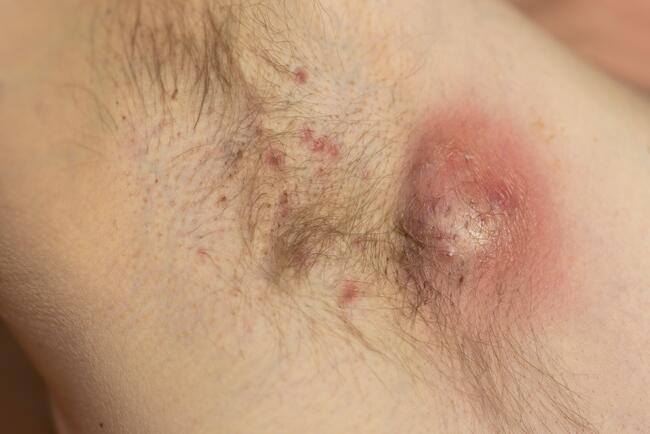
In HS, ultrasound detects subclinical disease not visible on surface examination. Characteristic sonographic findings include the “donor” sign—ballooned hair follicles embedded in a fluid collection or fistulous tract—and the “bridge” sign, a connecting hypoechoic band between follicles. These findings can alter staging and therapeutic decision-making.
Dr Gottlieb then reviewed HS treatment advances. US Food and Drug Administration-approved biologics include adalimumab (TNF-α inhibitor), secukinumab (IL-17A inhibitor), and bimekizumab (IL-17A/F inhibitor). Infliximab remains an off-label IV option with weight-based dosing.
Pipeline agents are expanding rapidly. Phase 2 and 3 programs include sonelokimab (IL-17A/F nanobody), dual-target anti-TNF/OX40 ligand nanobodies, remibrutinib (BTK inhibitor), povorcitinib (JAK inhibitor; STOP-HS program), upadacitinib, and lutikizumab (dual IL-1α/β mAb). Conventional therapies—antibiotics, spironolactone, dapsone, corticosteroids, and surgery—remain part of the armamentarium.
Dr Gottlieb concluded with the key takeaway: “We need to treat HS earlier to prevent scarring, chronic draining tunnels, disability, and poor quality of life.” Ultrasound offers a means to detect tunnels and abscesses before they are clinically evident.
For dermatologists, handheld ultrasound is no longer experimental; it is increasingly an extension of clinical vision.
For more meeting coverage, visit the Masterclasses in Dermatology newsroom.
Reference
Yoo J, Gottlieb AB. Transforming the dermatologic toolkit with ultrasound: multifunctional applications from cosmetic imaging to HS assessment. Presented at: Masterclasses in Dermatology; February 19–22, 2026; Sarasota, FL.