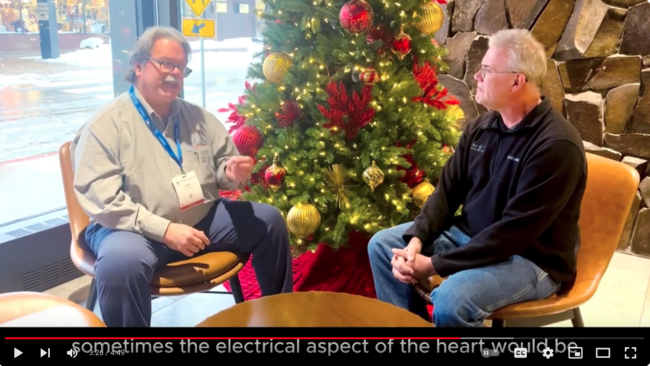
Following AHA Procedures Improves Polk County Fire Rescue’s STEMI Care
The data proves it: The decision by Florida’s Polk County Fire Rescue (PCFR) to implement the American Heart Association’s Mission: Lifeline standardized procedures for EMS STEMI patients is improving their overall quality of care and chances for recovery.
STEMI (ST-elevation myocardial infarction) is caused by the buildup of clots and/or plaque in the coronary arteries. Mission: Lifeline’s primary goal is to reduce “EMS-to-Balloon (E2B) time”—the interval from a STEMI patient's arrival at hospital to balloon inflation during primary angioplasty to a gold standard of less than 90 minutes.
Published in the International Journal of Emergency Medicine, the study titled “Continuous quality improvement for prehospital STEMI improved triage rates and achievement of gold standard < 90-min EMS-to-balloon time” analyzed data from 2,585 PCFR chest pain patients over 35 years of age. They were transported to hospital by PCFR ambulances between 2015 and 2023.
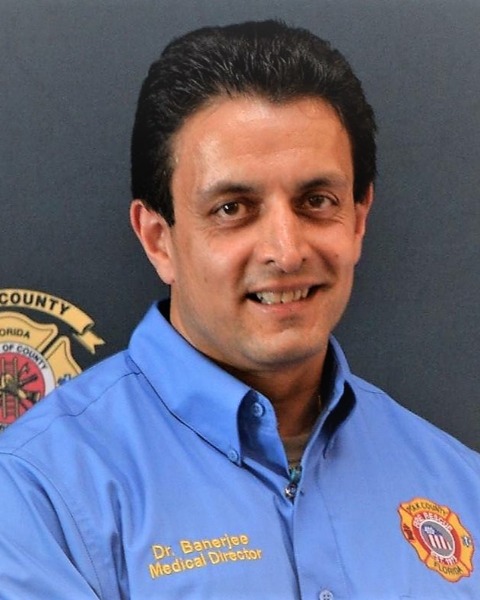
Dr. Paul Banerjee is Medical Director of Polk County Fire Rescue in Bartow, Florida, and one of the study’s co-authors. He and his agency have worked diligently with area hospitals to get them on board with Mission: Lifeline, a commitment that requires hospitals to be as ready as possible to administer angioplasty as soon as a STEMI patient is delivered there by ambulance.
“Unless we get the hospitals on board, the E2B times get longer,” said Banerjee. “The longer the times are, the higher the mortality rates are. This is why we’re measuring E2B times and aiming for them to be under 90 minutes. When we are able to hit that time limit, more STEMI patients survive.”
By adopting AHA Mission: Lifeline standardized STEMI treatment procedures, Polk County Fire Rescue has achieved some lifesaving results. “Among 2,585 patients, the percentage meeting the 90-min EMS-to-Balloon time increased from 74% in 2015 to 84% by the year 2019,” according to the study. “The average annual under-triage rate for STEMI [i.e. EMS missing a STEMI diagnosis] decreased from ranging from 2% in 2015 to 4% in 2017 to below 1% after the year 2020, reaching as low as 0% in 2021 and 2023. Over-triage rates [i.e. EMS misdiagnosing a non-STEMI patient as STEMI] initially fluctuated, increasing to a height of 12% by 2017, but decreased to < 3% by 2022 and further dropped to 0.6% of cases … by 2024.”
The study’s conclusion supported the usefulness of PCFR’s Mission: Lifeline STEMI efforts. “Implementation of Mission: Lifeline procedures, including obtaining pre-hospital 12-lead ECG and hospital pre-activation, significantly enhanced STEMI care,” it said. “These interventions led to improved E2B times and more accurate prehospital STEMI identification, underscoring the importance of coordinated, protocol-driven prehospital STEMI care in improving patient outcomes.”
In recognition of the PCFR’s efforts to improve E2B times for STEMI patients, the AHA presented it with the American Heart Association’s Mission: Lifeline EMS Silver Achievement Award in July 2024.
“Polk County Fire Rescue is honored to be recognized by the American Heart Association with the esteemed Mission: Lifeline EMS silver distinction,” said Fire Chief Hezedean A. Smith at the time. “The Mission: Lifeline EMS silver distinction proves that we are honoring our commitment to providing the highest-quality pre-hospital patient care. This distinction would not have been possible without the unwavering support of the Polk County Board of County Commissioners.”
For Banerjee and his team at Polk County Fire Rescue, these results justify their efforts to ensure the availability of prompt angioplasty treatment at area hospitals.
“The key to achieving reduced E2B times is having the hospitals on board,” he said. “When this is the case, the ambulance’s EMS personnel can send the patient’s EKG to them from the road, so that the hospital's staff is ready to administer this procedure immediately upon arrival.”