Selective Strategy for Thrombus Management in STEMI Interventions: Abridged from the Textbook of STEMI Interventions
February 2011
 Reprinted with permission from the Textbook of STEMI Interventions, 2nd Ed., copyright 2010, HMP Communications.
Thrombus is central to the pathophysiology of ST-elevated myocardial infarction (STEMI). In percutaneous coronary interventions (PCI), thrombus is especially challenging. Not only is it associated with increased abrupt vessel closure, lower procedural success, and increased
Reprinted with permission from the Textbook of STEMI Interventions, 2nd Ed., copyright 2010, HMP Communications.
Thrombus is central to the pathophysiology of ST-elevated myocardial infarction (STEMI). In percutaneous coronary interventions (PCI), thrombus is especially challenging. Not only is it associated with increased abrupt vessel closure, lower procedural success, and increased  major in-hospital complications, including death and myocardial infarction (MI), but it is also associated with an increased incidence of emergency bypass surgery.1–4 Several mechanical adjunctive devices and pharmacologic options have shown diverse benefits in managing thrombus.
Mechanical adjunctive devices for the retrieval of thrombus can be classified into two
categories: (1) thrombectomy and/or aspiration catheters; and (2) distal protection wires,
major in-hospital complications, including death and myocardial infarction (MI), but it is also associated with an increased incidence of emergency bypass surgery.1–4 Several mechanical adjunctive devices and pharmacologic options have shown diverse benefits in managing thrombus.
Mechanical adjunctive devices for the retrieval of thrombus can be classified into two
categories: (1) thrombectomy and/or aspiration catheters; and (2) distal protection wires,  filters, or balloons. While several devices have been developed (Table 1), there remains an equivocal consensus in the literature regarding their conclusive clinical value.
Thrombus Burden
The TIMI thrombus grade classifies the thrombus based on angiography and is the basis for the Mehta Strategy for Thrombus Management (Table 2). The pioneering work by Sianos et al47 led to this classification that has now been routinely practiced in over 200 short D2B time STEMI interventions in the SINCERE database.48 Table 3 has formulated the stepwise technique of performing the entire STEMI procedure using this standardized algorithm.
Clinical experience recommends against the use of balloon angioplasty, as it causes distal
the Mehta Strategy for Thrombus Management (Table 2). The pioneering work by Sianos et al47 led to this classification that has now been routinely practiced in over 200 short D2B time STEMI interventions in the SINCERE database.48 Table 3 has formulated the stepwise technique of performing the entire STEMI procedure using this standardized algorithm.
Clinical experience recommends against the use of balloon angioplasty, as it causes distal  embolization and myocardial necrosis. Thrombus grade 0 represents no cineangiographic characteristic suggestive of thrombus. Grade 1 lesions demonstrate characteristics on angiography such as reduced contrast density, haziness, irregular lesion contour, or a smooth convex meniscus at the site of total occlusion, suggestive, but not diagnostic, of thrombus. Grade 2 lesions represent definite thrombus with greatest dimensions ½ but 2 vessel diameter. Finally, grade 5 thrombus is total occlusion on angiography.
Thrombus burden has been shown to adversely affect clinical outcomes in both cerebrovascular accidents and acute coronary syndromes. Barreto et al undertook a retrospective review of stroke patients and correlated the clinical outcomes to the angiographic thrombus burden using the same classification scheme previously described. As compared to the patients with thrombus grades 0–3, patients with thrombus grade 4 required longer treatment times and experienced increased mechanical clot disruption, poor outcomes, and mortality.46 Using the same classification scheme, Sianos et al demonstrated in their landmark work the importance of thrombus burden in clinical outcomes in acute coronary syndromes.47 Compared to small thrombus burden (grades 0–3), they found that a large intracoronary thrombus burden (grade 4) was an independent predictor of mortality and major adverse cardiac events (MACE).
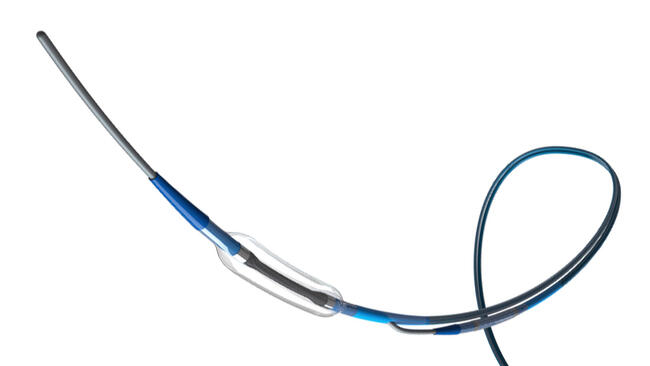
Evidently, clinical outcome is dependent upon thrombus burden. Because thrombus burden or grade can be quickly assessed angiographically, a thrombus-grade approach is practical. The major advantage of the Mehta Classification is that it provides a selective strategy for thrombus management based upon the thrombus grade. This methodology contradicts the notion that thrombus can be managed by a single modality, as proposed with the TAPAS trial, which used thromboaspiration as an effective strategy, irrespective of the thrombus grade.22 In Table 3, we have identified five distinct situations where we feel that the use of mechanical thrombectomy is mandatory. Situations with organized, dense thrombus in late-presenting STEMI patients are the most noteworthy. These can be extremely difficult cases and their management — from crossing the impenetrable lesions to debulking them — requires considerable skills and often mechanical thrombectomy. Like the TAPAS trial, the AiMI trial by Ali et al32 was similarly constrained by having a single strategy for all-comers without volumetric adjustments for thrombus burden. This drawback has been partially corrected in the JETSTENT trial.48 For almost the same reasons of lacking a selective strategy, we have some reluctance about the design for the new INFUSE AMI trial.49 This trial is planned to utilize the otherwise remarkable Atrium Clearway catheter (Atrium Medical Corp., Hudson, New Hampshire) as a single therapy for managing thrombus, without its grading or having a selective methodology. In defense of this technique, however, we must add that the mechanism of debulking with a powerful dethrombotic pharmacological agent that is delivered through a novel catheter is very attractive, and it is therefore a part of the Mehta strategy. Nevertheless, we reserve it as an alternative to situations that do not favor rheolytic thrombectomy use, mainly in terms of anatomy. It is also quite possible that the results of INFUSE AMI and several additional trials will guide us to more effective strategies. In the interim, the Mehta strategy is offered as “a selective strategy for thrombus management in STEMI interventions based upon the thrombus grade, with direct stenting recommended for low-grade thrombus, thrombo-aspiration for moderate thrombus, and rheolytic thrombectomy for high-grade thrombus (depending upon suitable anatomy). For unsuitable anatomy or unavailability of rheolytic thrombectomy, a strategy of dethrombosis with intracoronary abciximab via the Clearway catheter is an acceptable approach.”49,61
embolization and myocardial necrosis. Thrombus grade 0 represents no cineangiographic characteristic suggestive of thrombus. Grade 1 lesions demonstrate characteristics on angiography such as reduced contrast density, haziness, irregular lesion contour, or a smooth convex meniscus at the site of total occlusion, suggestive, but not diagnostic, of thrombus. Grade 2 lesions represent definite thrombus with greatest dimensions ½ but 2 vessel diameter. Finally, grade 5 thrombus is total occlusion on angiography.
Thrombus burden has been shown to adversely affect clinical outcomes in both cerebrovascular accidents and acute coronary syndromes. Barreto et al undertook a retrospective review of stroke patients and correlated the clinical outcomes to the angiographic thrombus burden using the same classification scheme previously described. As compared to the patients with thrombus grades 0–3, patients with thrombus grade 4 required longer treatment times and experienced increased mechanical clot disruption, poor outcomes, and mortality.46 Using the same classification scheme, Sianos et al demonstrated in their landmark work the importance of thrombus burden in clinical outcomes in acute coronary syndromes.47 Compared to small thrombus burden (grades 0–3), they found that a large intracoronary thrombus burden (grade 4) was an independent predictor of mortality and major adverse cardiac events (MACE).
Evidently, clinical outcome is dependent upon thrombus burden. Because thrombus burden or grade can be quickly assessed angiographically, a thrombus-grade approach is practical. The major advantage of the Mehta Classification is that it provides a selective strategy for thrombus management based upon the thrombus grade. This methodology contradicts the notion that thrombus can be managed by a single modality, as proposed with the TAPAS trial, which used thromboaspiration as an effective strategy, irrespective of the thrombus grade.22 In Table 3, we have identified five distinct situations where we feel that the use of mechanical thrombectomy is mandatory. Situations with organized, dense thrombus in late-presenting STEMI patients are the most noteworthy. These can be extremely difficult cases and their management — from crossing the impenetrable lesions to debulking them — requires considerable skills and often mechanical thrombectomy. Like the TAPAS trial, the AiMI trial by Ali et al32 was similarly constrained by having a single strategy for all-comers without volumetric adjustments for thrombus burden. This drawback has been partially corrected in the JETSTENT trial.48 For almost the same reasons of lacking a selective strategy, we have some reluctance about the design for the new INFUSE AMI trial.49 This trial is planned to utilize the otherwise remarkable Atrium Clearway catheter (Atrium Medical Corp., Hudson, New Hampshire) as a single therapy for managing thrombus, without its grading or having a selective methodology. In defense of this technique, however, we must add that the mechanism of debulking with a powerful dethrombotic pharmacological agent that is delivered through a novel catheter is very attractive, and it is therefore a part of the Mehta strategy. Nevertheless, we reserve it as an alternative to situations that do not favor rheolytic thrombectomy use, mainly in terms of anatomy. It is also quite possible that the results of INFUSE AMI and several additional trials will guide us to more effective strategies. In the interim, the Mehta strategy is offered as “a selective strategy for thrombus management in STEMI interventions based upon the thrombus grade, with direct stenting recommended for low-grade thrombus, thrombo-aspiration for moderate thrombus, and rheolytic thrombectomy for high-grade thrombus (depending upon suitable anatomy). For unsuitable anatomy or unavailability of rheolytic thrombectomy, a strategy of dethrombosis with intracoronary abciximab via the Clearway catheter is an acceptable approach.”49,61
The Mehta Classification
Presented in Table 2 is the Mehta Classification — a thrombus-guided interventional strategy. Central to the classification is the recognition that thrombus is a sensitive, dynamic process that demands accurate classification and compulsive management based on thrombus burden load. Using the defined TIMI thrombus burden definitions, a precise and routine approach can be established. Some features of this methodology merit description. Optimal angiographic visualization of thrombus is the first step; however, thrombus is very labile and its grading for the purpose of further management is better done after crossing the thrombotic lesion with the guide wire. Often, there is no change in thrombus grade, but thrombus grade 5 most commonly is downsized after wire passage. If the extent of thrombus is small (thrombus grades 0–1), direct angioplasty and stenting may be sufficient. Moderate thrombus burden, grades 2–3, warrants pretreatment with an aspiration catheter. As described previously, several randomized, controlled trials have demonstrated that aspiration catheters result in superior myocardial perfusion grade (MPG), ST segment elevation resolution (STR), improved clinical outcome, TIMI-3 flow rates, and decreased angiographic evidence of distal embolization.22–24 Moderate thrombus burden management with aspiration catheters can be augmented with some practical techniques. Passes with the aspiration catheters should be made until there is no angiographic evidence of thrombus; often, just two passes are sufficient. It is important to advance the catheter throughout the entire length of the thrombus. Despite their ease of use and effectiveness, aspiration catheters are not perfect monorail devices and attention should be paid to the tip of the guide wire as these catheters are advanced. Reducing the imaging magnification and monitoring the distal end of the guide wire as the aspiration catheter is advanced are practical techniques in preventing adverse results. Thrombus will often clog the aspiration holes of these catheters, halting aspiration. Before abandoning them as unsuccessful, it is important to remove the catheter, flush it profusely, and reuse. Finally, in rare situations, the aspiration catheter will drag the tail of a long thread thrombus that may get dislodged. In one clinical case documented in the SINCERE database, a thrombus was dragged from the obtuse marginal branch (OMB) and lodged at the bifurcation of the left circumflex (LCX). This was managed by suctioning with the AngioJet catheter (Medrad/Possis, Warrendale, Penn.). A larger thrombus burden (grades 4–5) presents more challenges. Aspiration may be insufficient in cases with thrombus grades 4–5. In such cases, thrombectomy may be justified. The AngioJet catheter is an effective device for debulking such voluminous thrombi. Thrombus is aspirated and extracted after high-velocity water jets create a vacuum in this catheter-based system.51 Compared to stenting alone, trials have found the AngioJet to be very successful in improving epicardial flow, frame count, myocardial perfusion grade, and infarct size.52,53 The VeGAS 2 trial found that the AngioJet catheter system was superior to intracoronary urokinase administration in improving device and procedural success, with lower major adverse effects, bleeding, and vascular complications.54 Some practical techniques in using the AngioJet thrombectomy device improve clinical outcomes. The new catheters, including the 4 Fr thrombectomy catheter, track well. Thrombectomy should be performed through the entire length of thrombus; in fact, the most frequent error with this device is inadequate passes and not ablating through the complete length of the thrombotic segment. In addition to being a critical device for removing large and bulky thrombus, the AngioJet is invaluable in managing organized thrombus in late-presenting patients.References
1. Ellis SG, Roubin GS, King SB 3rd, et al. Angiographic and clinical predictors of acute closure after native vessel coronary angioplasty. Circulation 1988;77:372–379. 2. Singh M, Berger PB, Ting HH, et al. Influence of coronary thrombus on outcome of percutaneous coronary angioplasty in the current era (the Mayo Clinic experience). Am J Cardiol 2001;88:1091–1096. 3. Mabin TA, Holmes DR Jr, Smith HC, et al. Intracoronary thrombus: role in coronary occlusion complicating percutaneous transluminal coronary angioplasty. J Am Coll Cardiol 1985;5(2 Pt 1):198–202. 4. White CJ, Ramee SR, Collins TJ, et al. Coronary thrombi increase PTCA risk. Angioscopy as a clinical tool. Circulation 1996;93:253–258. 22. Svilaas T, Vlaar PJ, van der Horst IC, et al. Thrombus aspiration during primary percutaneous coronary intervention. N Engl J Med 2008;358:557–567. 23. Vlaar PJ, Svilaas T, van der Horst IC, et al. Cardiac death and reinfarction after 1 year in the Thrombus Aspiration during Percutaneous coronary intervention in Acute myocardial infarction Study (TAPAS): A 1-year follow-up study. Lancet Jun 7 2008;371:1915–1920. 24. Silva-Orrego P, Colombo P, Bigi R, et al. Thrombus aspiration before primary angioplasty improves myocardial reperfusion in acute myocardial infarction: The DEAR-MI (Dethrombosis to Enhance Acute Reperfusion in Myocardial Infarction) study. J Am Coll Cardiol 2006;48:1552–1559. 32. Kaltoft A, Bottcher M, Nielsen SS, et al. Routine thrombectomy in percutaneous coronary intervention for acute ST-segment-elevation myocardial infarction: a randomized, controlled trial. Circulation Jul 4 2006;114(1):40-47. 46. Barreto AD, Albright KC, Hallevi H, et al. Thrombus burden is associated with clinical outcome after intra-arterial therapy for acute ischemic stroke. Stroke 2008;39:3231–3235. 47. Sianos G, Papafaklis MI, Daemen J, et al. Angiographic stent thrombosis after routine use of drug-eluting stents in ST-segment elevation myocardial infarction: The importance of thrombus burden. J Am Coll Cardiol 2007;50:573–583. 48. Antoniucci D. Comparison of AngioJET rheolytic thrombectomy before direct infarct artery STENTing in patients with acute myocardial infarction: The JETSTENT trial. Presented at: American College of Cardiology Annual Scientific Session/i2 Summit; March 16, 2010; Atlanta, GA. 49. The INFUSE-Anterior Myocardial Infarction (AMI) Study. ClinicalTrials.gov - A service of the U.S. National Institutes of Health [https://clinicaltrials.gov/ct2/showNCT00976521. Accessed April 29, 2010. 51. Whisenant BK, Baim DS, Kuntz RE, et al. Rheolytic thrombectomy with the Possis AngioJet: Technical considerations and initial clinical experience. J Invas Cardiol 1999;11:421–426. 52. Antoniucci D, Valenti R, Migliorini A, et al. Comparison of rheolytic thrombectomy before direct infarct artery stenting versus direct stenting alone in patients undergoing percutaneous coronary intervention for acute myocardial infarction. Am J Cardiol 2004;93:1033–1035. 53. Margheri M, Falai M, Vittori G, et al. Safety and efficacy of the AngioJet in patients with acute myocardial infarction: Results from the Florence Appraisal Study of Rheolytic Thrombectomy (FAST). J Invas Cardiol 2006;18:481–486. 54. Kuntz RE, Baim DS, Cohen DJ, et al. A trial comparing rheolytic thrombectomy with intracoronary urokinase for coronary and vein graft thrombus (the Vein Graft AngioJet Study [VeGAS 2]). Am J Cardiol 2002;89:326–330. 61. Thiele H, Schindler K, Friedenberger J, et al. Intracoronary compared with intravenous bolus abciximab application in patients with ST-elevation myocardial infarction undergoing primary percutaneous coronary intervention: The randomized Leipzig immediate percutaneous coronary intervention abciximab IV versus IC in ST-elevation myocardial infarction trial. Circulation 2008;118:49–57.Disclosure: The authors report no conflict of interest regarding the content herein. The Textbook of STEMI Interventions is available for purchase at www.stemiinterventions.com
Subscriber
Cath Lab Digest Newsletter