Medical Food Accelerates Healing in Diabetic Foot Ulcers
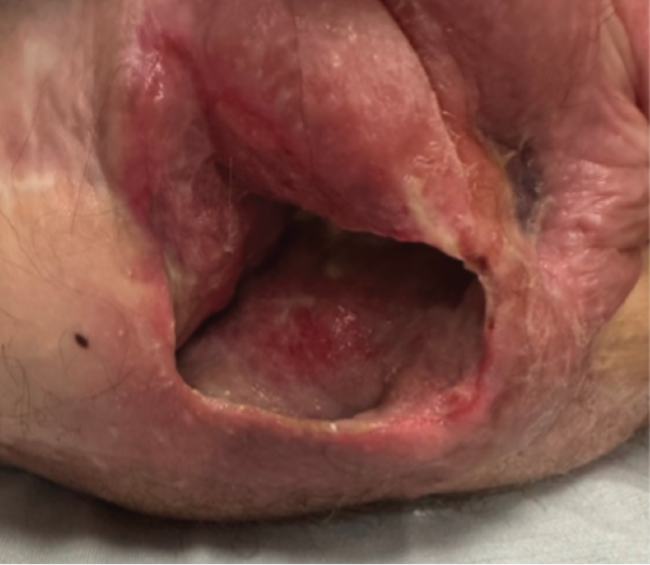
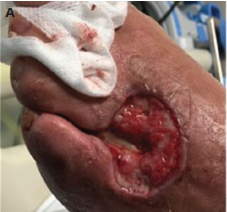
A small case series presented at SAWC Spring 2026 found that adding a prescription medical food to standard care reduced diabetic foot ulcer healing time by 50–60%, with all wounds closing within 4–6 weeks and no adverse events reported. These findings suggest that targeting neurovascular and metabolic pathways may enhance healing, though larger studies are needed to confirm efficacy.
Key Clinical Summary
- Adjunctive use of a prescription medical food was associated with complete DFU healing in 4–6 weeks, compared to a typical 12-week timeframe.
- All 5 Wagner grade 2 ulcers achieved closure with standard care plus medical food, with no reported adverse events.
- Findings suggest a potential role for metabolic and neurovascular support in accelerating wound healing and reducing complication risk.
Introduction
At the Symposium on Advanced Wound Care (SAWC) Spring 2026 in Charlotte, NC, researcher Eric S Trathen, DPM, FACPM, CWSP, presented a case series evaluating a prescription medical food as an adjunctive therapy for diabetic foot ulcers (DFUs). The most notable finding was a substantial reduction in healing time when the medical food was added to standard of care.1 Given the high prevalence, recurrence, and cost burden of DFUs, strategies that accelerate healing remain a critical priority in wound care.
Poster Highlights
In this retrospective chart review, 5 patients with Wagner grade 2 diabetic foot ulcers measuring at least 1 cm in diameter were treated with standard wound care alongside a prescription medical food. Standard of care included regular debridement, decolonization, moisture balance, offloading, and weekly evaluations with serial debridement as needed.1
The adjunctive therapy consisted of a medical food formulation containing pyridoxal 5’-phosphate (35 mg), L-methylfolate (3 mg), and methylcobalamin (2 mg), prescribed for diabetic peripheral neuropathy. This formulation is designed to support neurovascular repair by promoting nitric oxide–mediated vasodilation, reducing glycation end-product damage, and aiding nerve remyelination.1
Read the full summary on WoundSource.com.
Reference: 1. Trathen ES. Medical Food Doubles the Healing Rate for Diabetic Foot Ulcer: A Case Series. Presented at the Symposium on Advanced Wound Care Spring, April 2026.