Real-World Acute Limb Ischemia: What the PROWL Registry Is Teaching Us
© 2026 HMP Global. All Rights Reserved.
Any views and opinions expressed are those of the author(s) and/or participants and do not necessarily reflect the views, policy, or position of Vascular Disease Management or HMP Global, their employees, and affiliates.

Cleveland Clinic, Ohio
At a Tuesday afternoon ISET 2026 session, Sean P. Lyden, MD, DFSVS, FACS, chairman of Vascular Surgery at Cleveland Clinic, walked attendees through new real-world data from the PROWL Registry, offering a candid look at how acute, subacute, and chronic limb ischemia are being treated outside the confines of traditional clinical trial exclusions.
Dr. Lyden began by framing the persistent challenge of acute limb ischemia (ALI), reminding attendees that ALI remains a high-stakes diagnosis with sobering 30-day amputation and mortality rates, substantial hospital costs, and a patient population that is often older, sicker, and more complex than those enrolled in prior studies. The PROWL Registry was designed to reflect that reality. With 160 patients treated across 9 sites, the study intentionally included all comers, capturing immediately threatened limbs, Rutherford class 4–6 disease, and patients whose symptoms extended well beyond the 2-week window that often excludes them from other datasets.
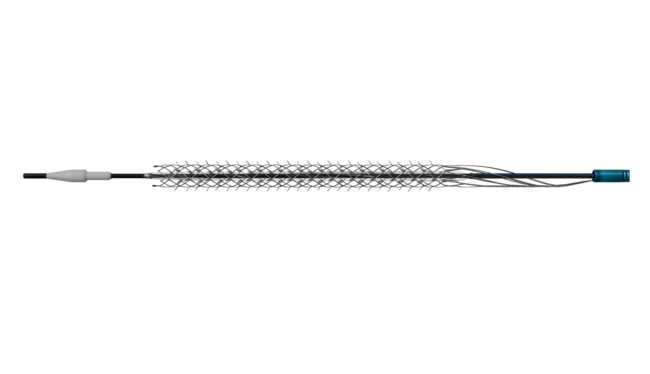
Central to the presentation was the performance of the Pounce™ Thrombectomy Platform (Surmodics) in this real-world setting. Dr. Lyden described the device’s physician-designed approach to mechanical thrombectomy, emphasizing its ability to remove thrombus without thrombolytics, aspiration, or capital equipment. By deploying self-expanding nitinol baskets distal to the clot and retracting captured thrombus into a collection funnel, the system aims to simplify clot removal across a wide range of peripheral arterial vessel sizes while minimizing blood loss and procedural complexity.
The PROWL data demonstrated consistent thrombus removal and restoration of flow across acute, subacute, and chronic presentations, with the majority of patients requiring no additional thrombus-removal therapy after use of the Pounce system. Outcomes were core-lab adjudicated and reflected dependable technical and procedural success even in patients with advanced disease severity.
Safety outcomes were another key focus. The registry reported a low rate of device-related events, with no device-related deaths and reassuring 30-day rates of amputation, mortality, and clinically driven target lesion revascularization. Causes of death observed during follow-up were attributed to underlying illness rather than the device itself, underscoring the complexity of the ALI population rather than procedural risk.
Dr. Lyden closed by returning to the broader implications for practice. PROWL, he noted, highlights opportunities to simplify care pathways, reduce treatment variability, and potentially lower costs by favoring efficient, single-session strategies that can be applied confidently across diverse anatomies and clinical presentations. While clinicians cannot control how or when patients present with limb ischemia, thoughtful first-line treatment choices can meaningfully influence outcomes.