Percutaneous Mechanical Thrombectomy Without Lytics: The FlowTriever System
An Interview With Mitchell D. Weinberg, MD
An Interview With Mitchell D. Weinberg, MD

© 2026 HMP Global. All Rights Reserved.
Any views and opinions expressed are those of the author(s) and/or participants and do not necessarily reflect the views, policy, or position of Vascular Disease Management or HMP Global, their employees, and affiliates.
VASCULAR DISEASE MANAGEMENT. 2026;23(1):E3-E4

Northwell Health, Staten Island, New York
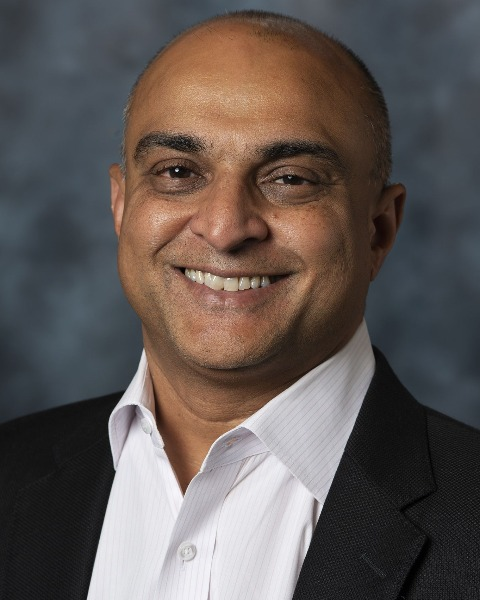
At the 2025 VEITHsymposium, Vascular Disease Management spoke with interventional cardiologist Mitchell D. Weinberg, MD, from Northwell Health in Staten Island, New York, to talk about his presentation on percutaneous mechanical thrombectomy without lytics. Dr Weinberg discussed the advantages of the FlowTriever system (Inari Medical) and how mechanical thrombectomy is evolving within the field of interventional cardiology.
What motivated your focus on percutaneous mechanical thrombectomy without the use of lytics, and what clinical gaps does the FlowTriever System aim to address?
For many years, before mechanical thrombectomy took hold, lytics were our therapy. Back then, lytics were administered over a prolonged period, typically 1 or 2 milligrams an hour for 8-12 hours, depending on the style. Lytics intuitively increased the risk for bleeding and were a protracted therapy. So, when the FlowTriever came to market or was studied in research, we participated significantly.
Then, as it rolled out into the marketplace, it allowed us to treat pulmonary embolism directly and quickly, with devices becoming more refined over its time on the market. Once a device like the FlowTriever gets past its fourth generation of modifications, it becomes quite slick.
Can you describe how the FlowTriever System works in practice and what distinguishes it from other thrombectomy devices?
The FlowTriever is quite easy to navigate; it easily navigates the pulmonary arteries and it effectively aspirates. It also has a variety of sizes and shapes that are built to allow the operator to navigate both the proximal and distal pulmonary artery vessels. With that, it becomes a pretty effective tool.
The FlowTriever also has a variety of accessories that are offered with it, which have solved some of the earlier problems associated with mechanical thrombectomy, such as blood return. Blood return has become important because if there is one potential deficiency of mechanical thrombectomy, it is that we have to aspirate blood along with the clots. There are a variety of devices that are seeking to address that in different ways. However, the FlowTriever, with its return system, allows us to be far less consistent about the aspiration process because we know that blood is going back into the system.
What have clinical studies and your own experience shown regarding outcomes when using the FlowTriever System?
Clinical studies in a variety of forms, both in registry form and in randomized fashion, have shown the FlowTriever to be quite safe. It’s proved its efficacy through clot removal, improvement of the right heart function or right ventricular function, and very low mortality rates. It is very safe.
What is really interesting about recent data around the FlowTriever is that a patient's quality-of-life (QoL) metrics, in a variety of forms, have been shown to improve after mechanical thrombectomy with the FlowTriever.
Various companies now study patient QoL and other responses to mechanical thrombectomy. We're seeing more rapid improvements in scores like dyspnea and pulmonary embolism QoL after thrombectomy, compared with conventional therapies like anticoagulation alone. This is exciting as we rigorously study these devices. The field must prove mechanical thrombectomy is effective not only at removing clots and improving right heart function, but also that it saves and improves lives. These newer data sets truly excite the field.
Looking ahead, how do you see mechanical thrombectomy evolving within interventional cardiology, and what should physicians take away from your VEITH presentation?
I think mechanical thrombectomy is at a crossroads as a therapy. Over the next months to a small number of years, we expect to see real, hard data around mechanical thrombectomy as a therapy. We expect that a lot of the questions that are currently unanswered will be answered. Specifically, is there a true mortality benefit with this therapy? What benefit does it provide? What hard outcome and QoL outcomes does it confer to patients in excess of just anticoagulation alone? And therefore, is it the therapy we all thought it should be?
Tremendous competition exists among new products, each subtly different. I am hoping that, through my presentation, the audience understands that we face many interesting questions regarding the therapy's validity, its deployment, and the various devices made for it across the country to treat patients. So many devices exist that the space has become incredibly complex. Now we, as a field, now have to contemplate, is this going to be a field that is composed of a small number of devices treating a large number of patients, or is this going to be a far more nuanced field, where every operator will have their preferred device or a whole bevy of devices that they can deploy? There are a lot of very interesting unanswered questions. n