Confronting the Gender Gap in AAA Care: Women Face Worse Outcomes and What Needs to Change
An Interview With Jon Matsumura, MD
An Interview With Jon Matsumura, MD
Key Summary
- Women experience markedly higher postoperative mortality; in the National Swedish Registry (Dr Mareia Talvitie), from 2008-2022, 90-day (3.5% vs 1.9%) and 1-year (7.1% vs 4.4%) mortality was higher for women than men. In some cohorts, such as unselected Dutch asymptomatic women over age 77, prophylactic open abdominal aortic aneurysm (AAA) repair is associated with such high risk that it is “basically never indicated”.
- Observational survival comparisons in AAA show excess mortality by sex. In treated AAA cohorts, men have a twofold mortality risk, whereas women approach fourfold excess mortality.
- Women comprise ~20% of treated patients but were underrepresented (5/881) in OVER (a Veterans Affairs-funded randomized controlled trial) and only 14% in N-TA3CT.
© 2026 HMP Global. All Rights Reserved.
Any views and opinions expressed are those of the author(s) and/or participants and do not necessarily reflect the views, policy, or position of Vascular Disease Management or HMP Global, their employees, and affiliates.
VASCULAR DISEASE MANAGEMENT. 2026;23(2):E23-E24

Aurora, Colorado
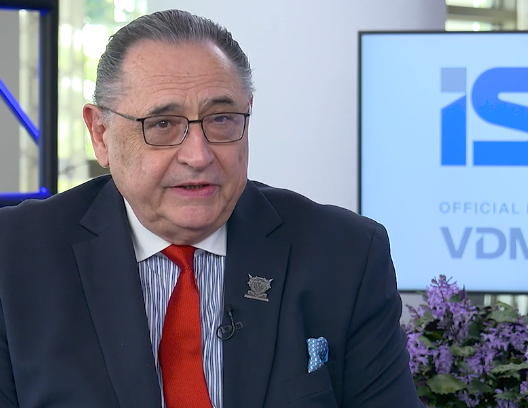
At VEITH 2025, Jon Matsumura, MD, a vascular surgeon in Aurora, Colorado, delivered a presentation titled “Abdominal Aortic Aneurysm Treatment and Outcomes for Women: There Are Dramatic Differences Compared to Men," shining a spotlight on an under-recognized disparity in vascular care. In an interview with Vascular Disease Management, Dr Matsumura detailed the survival differences women face after an abdominal aortic aneurysm (AAA) diagnosis—differences he describes as dramatic and comparable in impact to certain advanced cancers.
Despite advances in endovascular technology and surgical technique, women with AAA continue to experience disproportionately higher mortality rates and remain significantly underrepresented in clinical trials. Dr Matsumura argues that meaningful progress will require more than incremental change: it will demand focused research efforts, dedicated women-centered aneurysm clinics, and a systematic rethinking of how the vascular community studies and treats this disease.
Your presentation focuses on the “dramatic differences” in AAA treatment and outcomes between women and men. Could you start by outlining what some of the most striking disparities are, and why they’ve persisted despite advances in technology and technique?
I would say the most striking is the excess mortality. These are elderly patients with comorbidities, and the men have a higher risk of death, about twofold; however, the women are almost quadruple. That's probably the most striking thing. Everybody knows vascular patients are sick and have limited life expectancy, but this is markedly worse. It is equivalent to having colon or breast cancer with lymph node involvement. It’s really a transformative diagnosis. If we started to tell patients that was the meaning of it, they would undergo the same type of emotional challenge as cancer patients who have a diagnosis. That's the most striking difference, but we know that there are many others.
How do these differences influence your approach to diagnosing and treating AAAs in women?
There are very few situations now where we know how this data can provide an evidence-based care plan. But there are a few. For example, we know from Statistics Netherlands (Dr Mathijs Biemond) that a prophylactic open aneurysm repair of unselected asymptomatic elderly women over age 77 is associated with such high risk that it is basically never indicated. We shouldn't be doing high-tech, high-cost, high-risk preventive operations in patients with limited life expectancy. But that’s not the message I want to give; the message I want to give is let's study this. Let's concentrate these women with aortic aneurysm in specific clinics for them, just like we would do a multidisciplinary clinic for colon cancer. Let's address the issues that are leading to this excess mortality so that the prophylactic operations may become more effective because they are living longer. So when I say there are limited ways to change now, that is not the way we want it to be. We want to be able to address head-on the underlying problem, which is how can we bring their survival to the same as men? And ideally, just with the men, how can we bring it down to the level of anybody who doesn't have an aneurysm?
Do you think current clinical trials adequately represent female patients?
We are doing a little better, but we’re still failing. While one 1 of 5 patients who are treated are women, they are severely underrepresented in the clinical trials, which is why we don't know why this is happening and what to do about it. I would reference a trial that I was deeply involved with, the OVER (Open vs Endovascular Repair) trial, financed by the Department of Veterans Affairs. One can say, well, the World War II and Korean War veterans are mostly men, they’re the ones who smoke. And that is, I guess, a form of excuse. But the fact is there were only 5 self-declared women in the 881 that we enrolled. Fast forward 10 years, and we specifically ran the N-TA3CT (Non-Invasive Treatment of Abdominal Aortic Aneurysm Clinical Trial) with a supplement from the Office of Women's Health to specifically recruit more women. We got up into the teens percent for recruitment, but what we are looking in the future to do is to develop clinics that are primarily for women. And we'll put in some men for control purposes.
There are several groups that I outlined in my talk around the world who actually work on this effort. There is a very important reason why a clinic for women with aneurysm is important: They want it. Many women in this country prefer women-focused specialty clinics.
It started, of course, in OB/GYN, then general internal medicine, and now every specialty. Simply, women prefer to be treated by women. So now that more than half of the doctors we are training for the past decade are women, it's not a hard thing to deliver what they want, which is care for women by women. Our clinic in Colorado is led by a female vascular surgeon, Dr. Meg Smith. I specifically excluded myself because of those optics. I'm happy to advise, but I'm not going to be the clinician there.
Further, we looked at how we are going to improve the care of these women with various interventions, such as specific focus groups to understand their health self-efficacy or how to develop deeper patient engagement for challenges like smoking cessation. We are going to need to concentrate the women into one clinic. We can't have 1 out of 5 aneurysm patients in a clinic and have the whole research apparatus set up for that small minority; there might only be one a day. So from a practical basis of study, we also have to concentrate them. There are a lot of good reasons to have this. It is what women prefer, and it's a more efficient way to use our precious research funds efficiently.
I hope your readers will read this and decide they should form a clinic because it's not going to be sufficient for just what I outlined in the talk (the Swedes, the New Zealanders, our Coloradans). We need a clinic in every major urban environment, so we can accrue these studies quickly and learn faster.
What's the one key takeaway that you wanted attendees to get from your presentation?
Women with aneurysm have a different disease than men with aneurysm, it is more often fatal, and let's study them together. Let's concentrate them so we can study them intensively and efficiently, which means quicker, and find out how to address this disparity quicker.
I am very passionate about this. It's one thing that I feel like, through ignorance, I was not aware of earlier in my career. And it's something that I hope to be the prime focus of the last third of my research career. n