









Ensuring Safety and Effectiveness in Outpatient Settings

© 2026 HMP Global. All Rights Reserved.
Any views and opinions expressed are those of the author(s) and/or participants and do not necessarily reflect the views, policy, or position of Vascular Disease Management or HMP Global, their employees, and affiliates.
 VASCULAR DISEASE MANAGEMENT. 2026;23(1):E15.
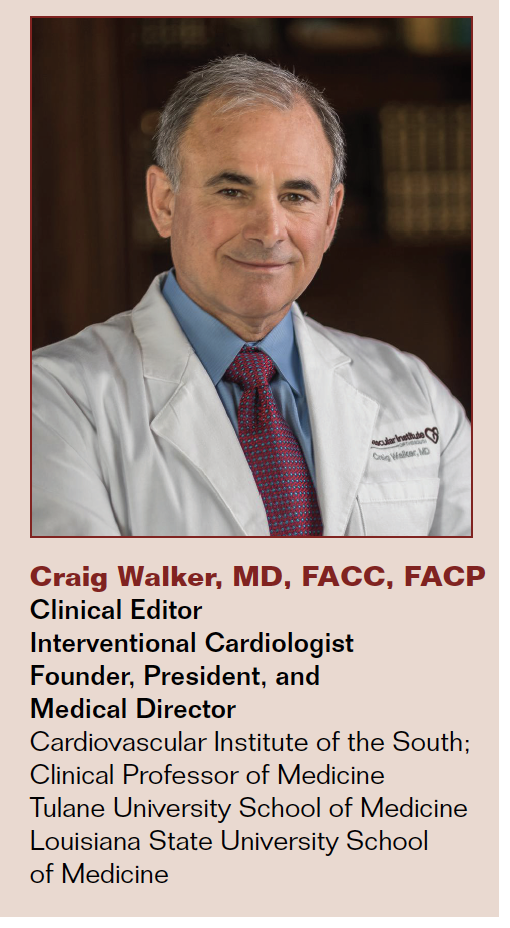
Hello and welcome to the January edition of Vascular Disease Management. I have chosen to comment on Dr. Krishna Jain’s article, “Safety in Office-Based Laboratories and Ambulatory Surgical Centers”.
In this article, Dr Jain accurately points out the keys to ensure patient safety when performing vascular interventions in an outpatient setting. He highlights the importance of credentialing and competence, infection control, anesthesia management, radiation management, emergency preparedness, and continuous quality improvement. He points out that by adhering to these principles, safety and outcomes are equivalent or even superior to the results of the same procedures performed in a hospital. He adds that some high-risk procedures should be preferentially performed in a hospital setting.
I sincerely believe that anyone considering creating an outpatient cardiovascular interventional program will benefit from adhering to Dr. Jain’s suggested protocol listed in this article. He has been a pioneer in establishing outpatient interventions. His multiple publications on outcomes have demonstrated that safety and effectiveness are achievable.
In my opinion, the move to outpatient treatment will continue to grow. Patient costs are significantly less than in the hospital setting. Multiple publications note that the patient experience is better. Procedural scheduling is easier. It is dramatically easier to achieve timely approval of research protocols. The approval process for allowing medical trainees to observe procedures to ensure that these future healthcare providers will be as well-trained as possible is also facilitated. The choice of equipment is physician directed and doesn’t require presentation to multiple hospital committees often composed of unrelated specialties.
Many hospital-based interventional programs have tremendous turnover of health care professionals who are vital to success. In physician-directed outpatient centers, the choice of technical staff is determined by the physicians performing the interventions, and there is flexibility afforded in creating programs to retain those that are most capable. This may be impossible in tier-directed pay adopted in most hospitals. Special skillset professionals such as vascular ultrasound techs and anesthetists can be incorporated easily, whereas most hospitals will not routinely employ these groups directly in catheterization labs. I think these professionals vastly improve patient safety and outcomes by decreasing bleeding complications and improving comfort and emergency response.
Physicians working in outpatient labs often cite that, compared with hospitals, patient turnover is quicker, there are fewer delays secondary to emergencies, and the work environment is preferable.
Health care in the United States is unaffordable for many of our patients, including those who have insurance, as the deductibles may represent thousands of dollars. A large proportion of the increased costs is related to the dramatic rise in hospital costs. Moving some procedures from the hospital to outpatient settings can clearly lower overall health care costs. Outpatient care appears to be preferred by most patients.
I now perform many of my cases in an outpatient lab, and I find it preferable in most cases as it is more comfortable and I find the world-class vascular ultrasound techs invaluable in achieving better access, improved crossing of total occlusions, and fewer bleeding complications. If one is considering starting an outpatient interventional lab, I would strongly advise adhering to the recommendations outlined by Dr. Jain to ensure safety and effectiveness. n
Click here to see a video of Dr Walker’s commentary.






