Closing Gaps in Eczema Research
The National Eczema Association (NEA) is the largest private nonprofit funder of research for adult and pediatric eczema, investing nearly $4.9 million to date. In this article, NEA shares an inside look at research from 3 of its latest grant recipients and the potential impact on the eczema community.
How B Cells Could Predict Eczema Treatment Success
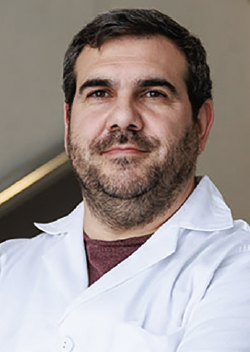
Carlos J. Aranda, PhD, from the University of Granada, recalls the moment he realized he wanted to study an area of atopic dermatitis (AD) research that many were overlooking. He was already deep into immunology, working with complex systems and diseases that did not have easy answers. But a piece of the puzzle kept nagging at him: B cells. “They say ‘B is for boring,’” Dr Aranda said with a laugh. “But I do not think so.”
Much of current eczema research focuses on T cells, the immune cells known for driving inflammation. B cells, which produce antibodies, are often treated as secondary players. But to Dr Aranda, B cells could be the missing piece of the puzzle needed to predict treatment response and long-term eczema management. That instinct led him, alongside his clinical collaborator, Emilo Berna-Rico, MD, PhD, from the Hospital Universitario Ramón y Cajal, to apply for and receive an NEA Champion Research Grant. The grant encourages proven researchers to continue research on emerging or ongoing challenges in eczema or to bring their expertise to the field. Their project, B-SIDE AD—B Cell Signatures Within Distinct Endotypes in Atopic Dermatitis, could reshape how people understand AD treatment.
What causes AD symptoms to persist is a question Dr Aranda is seeking to answer. For many people, eczema does not come alone. It is often tied to asthma, food allergies, or hay fever in what is known as the atopic march. Even when symptoms improve, the underlying immune sensitivity can persist. Dr Aranda is exploring whether part of the answer to this recurrence could lie in a specific type of B cell he is studying: memory B cell type 2 MBC2). These cells act like a biologic memory bank. Instead of forgetting past allergic reactions, they store them. This “allergic memory” phenomenon continues to drive the production of IgE antibodies. These antibodies respond to allergic reactions and are often elevated in individuals with AD, long after the original trigger is gone. Researchers, including Dr Aranda and his team, have found that MBC2 levels are elevated in people with eczema. This discovery raised a bigger question: What if eczema inflammation persists beyond flares and is a form of immune memory that can persist over time?
In medical offices everywhere, this question comes up in a frustratingly familiar way. Two patients start the same treatment. One improves while the other does not. Right now, there is no clear way to predict which patient will be which. Over 16 weeks, Dr Aranda will follow 40 adult patients with moderate-to-severe eczema as they begin treatment with either dupilumab, a targeted therapy, or cyclosporine, a broader immunosuppressant, to compare how these 2 different types of treatments affect the immune system. But instead of only looking at the skin, he is looking deeper, tracking what happens to those memory B cells over time. In the lab, that means analyzing blood samples and using advanced tools, such as single-cell molecular and functional analyses, to see how these cells behave and change. On the clinical side, Dr Berna-Rico will track how patients’ symptoms evolve and respond to treatment. Then the 2 sides will come together to see if the lab results match what happens to the patient compared to a 10-person control group.
“We want patients to know they are not forgotten,” Dr Aranda said, underscoring the importance of turning scientific progress into meaningful improvements in patients’ day-to-day care. Right now, patients often must wait months to find out whether a treatment is working. Dr Aranda hopes this research could shorten that timeline, giving patients and physician’s earlier answers and more confidence in what comes next. “If we can understand early on if a treatment is going to work,” he said, “we can move to something different sooner.” He hopes to use the treatments already available more effectively, reduce trial and error, avoid months of frustration, and help patients feel there is a more transparent path forward. Just as importantly, Dr Aranda also hopes his study can provide reassurance to people living with AD. “The treatment options are huge now,” he said. “We need to understand how to choose.”
Improving Eczema Screening for Children With Neurodevelopmental and Complex Needs
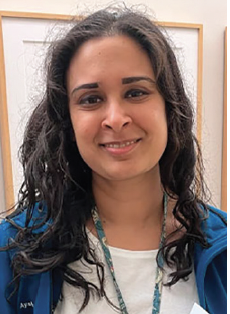
Eczema is often underrecognized or undertreated, especially in children with neuro-developmental or complex medical needs. Symptoms can be missed, misunderstood, or overshadowed by other diagnoses, and families are often left without clear guidance on how to manage flares at home or identify environmental triggers that may be making things worse. For Aysha Jawed, EdD, MSW, MPH, LCSW-C, a pediatric social worker turned public health leader at the Kennedy Krieger Institute and professor at Johns Hopkins University School of Medicine, and Ernest Carter, MD, PhD, a pediatrician, systems engineer, and director of the Research and Innovation Center for Excellence in Public Health Leadership at Kennedy Krieger, this gap in recognition and care felt too important to overlook. Dr Jawed and Dr Carter received a Childhood Eczema Challenge Grant, created in collaboration with the Pediatric Dermatology Research Alliance, to accelerate their research to improve the health and quality of life of pediatric patients and their families.
Their first-of-its-kind exploratory study, Advancing Screening and Education for Eczema in Children with Neurodevelopmental and Complex Medical Needs, reaches beyond the clinic. By integrating screening tools into care and examining how eczema is discussed on social media, the team hopes to deliver clearer at-home guidance to families, reducing caregiver burden in meaningful, everyday ways.

For 3 months, Dr Jawed and Dr Carter will examine the effectiveness of existing tools that screen for eczema: the Child Eczema Control Tool, Patient-Oriented Eczema Measure, and Atopic Dermatitis Control Tool. These tools capture patient- and caregiver-reported information about symptoms, flare frequency, itch severity, sleep disruption, and day-to-day disease impact, offering insight into experiences at home that may not always be discussed or observed during clinical visits. Patients can opt in to participate during their regular clinic appointments with their provider. These providers include the Center for Autism Services, Science, and Innovation; Phelps Center for Cerebral Palsy; and Philip A. Keelty Center for Spina Bifida and Related Conditions from Kennedy Krieger and the division of pediatric dermatology at Johns Hopkins Children’s Center. If the tools prove effective in diagnosing and treating eczema sooner, then they could become a regular part of the patient screening process. The goal is to make the eczema assessment seamless during real clinical visits, in real time, with real families, not an additional inconvenient step.
Dr Jawed and Dr Carter are also analyzing eczema-related content on social media platforms to understand what families are seeing and where misinformation may be circulating, with the goal of developing educational resources that are accurate, culturally relevant, and accessible.
Eczema care can often feel fragmented, especially for families already navigating complex medical needs. Dr Jawed and Dr Carter hope their work can help change that by making eczema a visible, measurable, and actionable part of care. “It is about building trust and empathy with families,” Dr Jawed said, “so they feel like they are being valued... like nothing is being neglected.”
Giving Kids With Eczema and Their Families a Voice
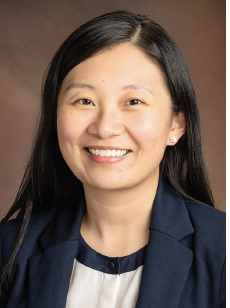
When a child with eczema comes in for a clinic visit, a provider can assess the skin. What they cannot always assess, at least not without asking or clearly observing, is everything else. How disruptive is the itch? How is the child sleeping? How is the family holding up? For Joy Wan, MD, MSCE, pediatric dermatologist and assistant professor of dermatology at Johns Hopkins University School of Medicine, those questions are not secondary to treatment. And for too long, she has watched them fall through the cracks of routine care. Her newly awarded NEA Spotlight Research Grant, which promotes patient-centered outcomes research, is designed to change that. Her project, Patient-Reported Outcomes Integration in Pediatric Eczema Care, starts with a question many researchers have not stopped to ask: What do families want to tell us?
Dr Wan has spent years as a pediatric provider caring for children with eczema. She will tell you directly that it is rarely just about the child; it is about the whole family. She has also spent years doing research, and there she has noticed something that troubles her. The tools to capture the patient and caregiver experience exist. Researchers have developed and validated patient-reported outcomes (PROs) measures that can rigorously and quantifiably document a family’s experience without any input from a clinician. They have been used in clinical trials and appear in research studies. And yet, in the routine care of children with eczema, they are largely absent.
There is no shortage of PRO tools available, but asking families to complete 10 surveys during a clinic check-in is not realistic or fair. The goal is to identify a focused, meaningful set of questions that families want to answer and providers can easily use. Once selected, those PROs will be embedded electronically into the check-in process at pediatric dermatology practices within Dr Wan’s department at Johns Hopkins University, where hundreds of children with eczema are seen each year.
Dr Wan and her team will collect data for approximately 9 months, then look back and analyze what they find. How many families completed the PROs? How long did it take? Who did not complete them and why? Interviews with families on both sides of that line will help capture the full story behind the numbers. But there is a second layer of analysis that may be equally revealing. Throughout those 9 months, the team will also track how families’ reports compare with clinicians’ documentation at the same visits. Are they aligned? If they are not, what does that mean for the care families are receiving?
The most immediate measure of success is what happens in the exam room: a child receives more comprehensive care, a caregiver feels heard and empowered, and a provider makes a more informed treatment decision. But Dr Wan is also thinking about what this could look like on a larger scale beyond the study. Electronic medical records contain enormous amounts of data on how patients with eczema are treated and what happens next. What they do not contain, in any systematic way at least, is the patient voice. Researchers relying on these datasets often must piece together indirect signals, like how long someone stayed on a treatment, to get a rough sense of whether it was working. “It would be really great if we actually had information about how patients and families were doing with respect to their disease, their reported symptoms, captured as part of these data,” Dr Wan said, “so that researchers, even many years from now, could actually say X treatment led to this amount of improvement in Y symptom, as reported by patients themselves.”
With more treatment options for childhood eczema available today than ever before, that kind of direct patient data could change how the field evaluates those treatments over time and at scale. And for Dr Wan, the motivation behind all of it traces back to the same place it always has: the families she sees in clinic. “I hope what we learn helps us care better for our patients and families,” she said, “and ultimately for them to have better outcomes.”
Conclusion
Through the generosity of its donors and partners, NEA continues to advocate for and support scientists, research projects, and research dollars devoted to eczema in pursuit of better therapies, better care, and better outcomes—and one day, potentially, a cure. This year’s grant application cycle opened May 12 and runs through August 14. Visit https://nationaleczema.org/research-we-fund to learn more about NEA’s eczema research grants, their impact, and how you can get involved.
Related Content