Evolution of Aesthetics in Dermatology
In 2026, aesthetic dermatology stands at a pivotal intersection of innovation, integration, and responsibility. Rapid advances in neuromodulators, next-generation fillers, regenerative medicine, and energy-based technologies are reshaping what is possible in both cosmetic and medical dermatology. At the same time, the rise of glucagon-like peptide-1 (GLP-1) receptor agonist–associated aesthetic concerns, artificial intelligence (AI)-driven patient expectations, and the growing emphasis on longevity and skin health are redefining how clinicians approach patient care. In this wide-ranging conversation, Dr Michael H. Gold and Dr Brian S. Biesman, cofounders and codirectors of the Music City SCALE Symposium, explore the trends transforming aesthetic practice, the expanding therapeutic landscape in medical dermatology, and the evolving skillset required of the modern aesthetic dermatologist. Together, they offer insight into how innovation, evidence-based care, and thoughtful patient guidance will shape the future of the specialty.
TRENDS SHAPING AESTHETIC DERMATOLOGY
The Dermatologist: What is new in aesthetic medicine?
Dr Biesman: Traditional aesthetic medicine is changing rapidly these days. We now have short-acting neuromodulators and those that come already premixed so they can be drawn directly from the vial. There are new fillers coming out and some next generation hyaluronic acid gels. There is also a tremendous amount of work in the biostimulator area, new approaches to some energy-based devices, and the entire world of regenerative medicine. And, of course, longevity, which is being embraced across multiple disciplines in medicine because of its wide-reaching effects, but which certainly has dermatologic applications. We have a lot of interesting, exciting areas of growth in the aesthetic realm.
The Dermatologist: What are the latest trends in laser and light devices?
Dr Biesman: Laser and light devices are continuing to evolve and innovate to a degree. There is a new resurfacing technology—the 2910 nm erbium fiber laser—that has completely changed the way I practice. I consider this to be one of the few truly disruptive devices that I have come across during my 30+ year career. This device has been a real game changer for me because of what we can accomplish clinically with a greater margin of safety and a shorter recovery time for patients, as well as a better patient experience. We can do these treatments with minimal discomfort, as opposed to the 25 years I spent doing CO2 resurfacing, which I mostly did in the operating room under anesthesia.
Another new trend in energy-based devices is to do what we refer to as stackable treatments. For example, rather than doing resurfacing on one day and vascular laser on another day, we are now realizing that we can get synergistic effects by performing multiple treatments on the same day. Not only are outcomes enhanced, but it is also more convenient for patients. In addition to exploring and learning how to best combine energy-based treatments, we are using a stackable approach with some of our topicals to give patients the best overall outcomes, such as for enhancement of wound healing after an ablative procedure. These are some of the different ways we can give patients better outcomes that they can appreciate sooner.
The Dermatologist: How are GLP-1s impacting aesthetic care?
Dr Biesman: GLP-1s are obviously something that we are hearing a lot about. Some patients, for example those with hypertension or diabetes, lose a substantial amount of weight over a short period of time and there are health benefits for those patients. And then there are the patients who maybe had a few pounds to lose but lost considerably more than they probably needed to. For those patients, there are several manifestations aesthetically that need to be addressed.
Certain fat pads or areas of soft tissue in the face, such as in the cheeks, are very responsive to weight loss. The temples and the submental regions will also lose fat substantially with systemic weight loss. In the mid and lower facial regions, when you lose the soft tissue, especially when you lose it rapidly, you tend to get either hollowing or skin laxity or both. Significant hollowing can be addressed with volume correction. Skin quality in these patients is also a real issue and needs to be addressed from a skin health standpoint with combinations of topicals, biostimulators, and energy-based devices. Muscle stimulating devices can be used on the face and body because muscle mass is lost as patients lose weight quickly. Hair loss, which sometimes gets overlooked, can also be an issue for patients who lose weight rapidly. There are numerous ways in which we have opportunities to help our patients walk through their weight loss journey. We like to get involved early and be there with them so we can either prevent or minimize unwanted changes.
The Dermatologist: How is AI shaping workflows and patient outcomes?
Dr Biesman: The question about AI is an interesting one. I think AI is like many tools when used appropriately; it can be beneficial, but it also has a downside that can be problematic for us as well. Certainly, it can make it easier to generate information for patients, which can help us with our communication. And it can help us with workflow efficiencies by adapting some language or documents so they are personalized for our practices in a way that previously would have taken a tremendous amount of work. Where AI gets a bit challenging is from a patient perspective. There are patients who find something on their favorite AI platform and tend to take that information as the absolute truth. If the care we deliver to them is not fully aligned with what the AI research said they should have had, some patients will believe we did not deliver appropriate care. This is a challenge we are increasingly encountering, and we obviously try to head it off during the consultation.
We are also encountering scenarios where patients are uploading their photos into an AI platform and having an idealized outcome generated for them in ways that we cannot achieve. It is almost as if someone drew an airbrushed digital portrait and then the patient comes in with this airbrushed headshot and says that is what they want to look like. Some people believe you can do this and if you tell them that you cannot, then they think you are holding back or you are not a good physician. These patients will likely never be happy with our treatments and should be indentified before care is administered. I think we need to use AI as a communication and workflow tool but also be on the lookout for the information our patients bring to us that may be influencing their expectations.
INTERSECTION OF MEDICAL AND AESTHETIC DERMATOLOGY
The Dermatologist: When managing inflammatory skin diseases, what practical strategies help clinicians individualize treatment plans amid an expanding therapeutic landscape?
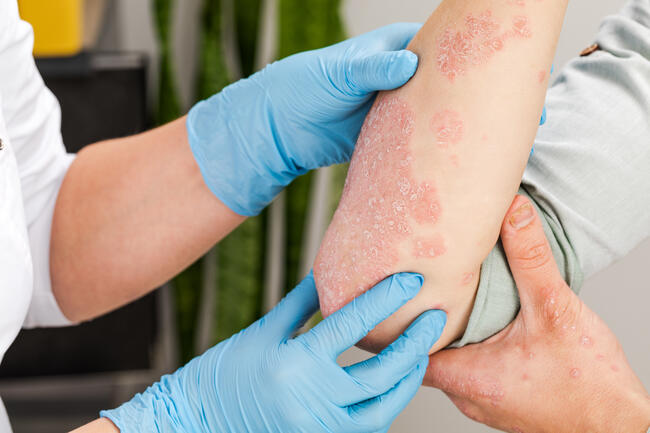
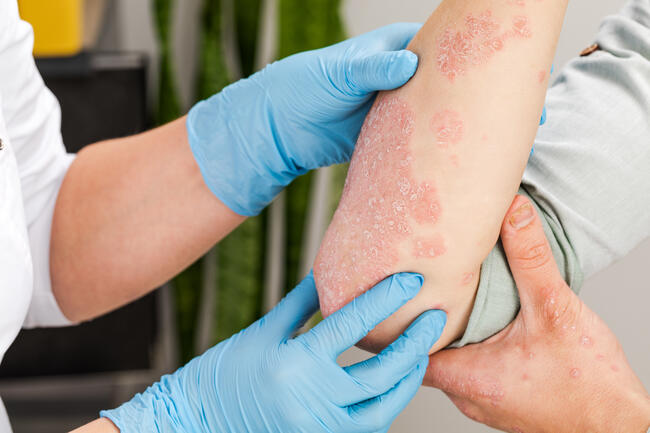
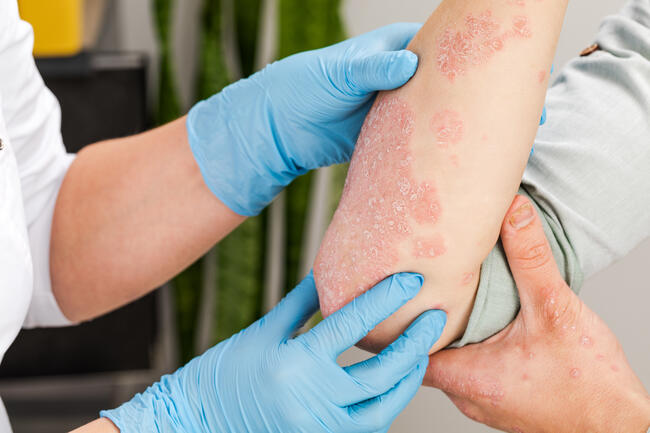
Dr Gold: Over the last 10 years, targeted therapies have exploded. They have changed how we approach patients and how we deal with the medical side of dermatology, especially with psoriasis and atopic dermatitis (AD), where we are looking to get patients clear and get them clear fast. Itch is a major problem for our patients with AD and with the development of our new therapies, we can make itch better very fast. And if you make itch better fast, then patients can get better even faster. When I was in training, we were constantly battling the questions: Will patients use our creams and lotions? Will they take our medications that have adverse reactions? Now we have safe medications, and they work fast and well, even down into pediatric dosing for some of them.
We have US Food and Drug Administration (FDA)-approved biologics for hidradenitis suppurativa (HS), and the newer ones are really making a difference in our patients. Whereas I see patients with psoriasis and AD maintain clearance, I still see HS with breakthroughs. Even though our patients are on a biologic and doing well, something will trigger a flare, but most of them understand that we can get the flare under control quickly with other things. I am a big fan of using everything I can at my disposal to make patients better. For most of our patients with HS, we have seen great responses and happier patients.
The Dermatologist: What do acne and rosacea devices bring to the table?
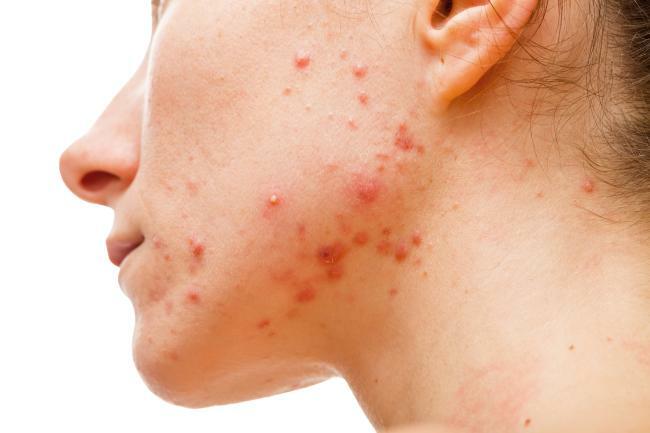
Dr Gold: One of the things I have seen over 40 years of being in dermatology is that dermatologists tend to give medications and then we wait. And time is okay, but not if you are the patient. The patient wants to get better yesterday, which is something very important to me. We can bring to the table a lot of different therapeutic options for our patients. I call it the acne journey. I bring the whole journey into the discussion with my acne patients because there are psychosocial issues associated with it that we do not spend enough time talking about. We start them on medications and have a follow-up appointment in a few weeks to see how they are doing and then we discuss energy-based devices to help clear the acne, and rosacea is similar. We can clear acne faster using a short-pulse 1064 nm laser, a vascular laser, intense pulsed light, or a targeted sebaceous 1726 nm laser. Then we might be left with post-inflammatory erythema or hyperpigmentation, and we can use pigmentary lasers or the 1064 nm laser to help with that. We might see texture or scarring problems, and we can deal with that using parallel beam ultrasound technology, microneedling, radiofrequency, or fractional CO2 lasers.
The Dermatologist: How is the treatment landscape for vitiligo evolving, and what new or emerging therapies should dermatologists be prepared to incorporate into practice?
Dr Gold: I do a lot of work in India, and I think they are ahead of us when it comes to vitiligo. I participate in a vitiligo forum on WhatsApp and the therapeutic modalities I see coming from India, which are not in the United States yet, are spectacular. We do have new targeted medications that are showing promise; some with FDA clearance. In my practice, we will use some of the topical Janus kinase inhibitors, and there are new ones coming that will hopefully be available to patients at a reasonable cost. We also have targeted excimer laser therapy, which is FDA approved. I think the biggest hurdle I have with light therapy is that patients must come into the office to get it done. The second hurdle is that many US insurance companies consider vitiligo to be what is called a “lifestyle disorder,” not a true disease, which is a real problem for dermatologists. Vitiligo is an inflammatory skin disease, and we need to treat it, but we must make sure we can get it covered.
The Dermatologist: What are the most meaningful recent advances in alopecia treatments, and how should dermatologists integrate newer and emerging hair growth therapies into patient care?
Dr Gold: With alopecia areata (AA), I still regularly treat patients with injectable steroids into the scalp and a lot of them we can make better. But if the patient’s AA is refractory or they have 30% or more hair loss, we can look to our newer oral therapies for these patients. I think these medications are safe and our patients are responding to them.
For androgenetic alopecia, the therapies are changing. I give talks on this all the time, and my slide deck keeps getting longer! There are 3 FDA-approved treatments for androgenetic alopecia: topical minoxidil, oral finasteride for men, and low-level light therapy. And there are new things coming. We have ongoing clinical trials with an extended-release, low-dose oral minoxidil. Prolactin receptor treatment, which alters the prolactin receptors on hair follicles to grow hair, is making its way through the FDA right now. And then in the cosmetic world, we are using non-ablative fractional lasers, microneedling, radiofrequency devices, and exosomes. There is whole gamut of things out there changing the landscape of androgenetic alopecia that we are learning about. At the same time, scarring frontal fibrosing alopecia is a big concern, but I think we are seeing the beginnings of how we can treat it better. There are some low-level lasers that have been shown to work and drugs being evaluated.
The Dermatologist: How should dermatologists approach the treatment of melasma in a comprehensive, long-term way that balances efficacy, safety, and patient expectations?
Dr Gold: I often see patients with melasma who have been to other clinicians, and they are frustrated because they thought they were getting their melasma cured. I always tell these patients that I am clearing them, not curing them, and help them understand what triggers melasma. We discuss the importance of sun protection, the various topical therapies that exist for melasma, and devices such as intense pulsed light or the new 2910 nm erbium fiber laser, which I use very superficially over a series of 10-minute treatments. We also discuss the importance of maintenance.
The Dermatologist: What do clinicians need to know about skin care in 2026?
Dr Gold: Skin care is moving into the longevity world. The big deal now is how we target what we call the hallmarks of aging with different skin care products. We have peptides and polynucleotides. But I think we need to be very careful. We need to stay away from the TikTok and Instagram skin care trends that have no data; without evidence, it makes me nervous. However, we do have some new ways to heal the skin post procedure and things we can do to make the skin glow better. And, of course, we have great therapies now to deal with pigmentary issues. My advice to patients is to talk to their clinicians, but do not get caught up in the hype of things that have no science.
THE FUTURE OF AESTHETIC DERMATOLOGY
The Dermatologist: With social media, AI-driven consultations, and personalized skin care all evolving rapidly, how do you think the aesthetic landscape will change over the next 5 years?
Dr Biesman: I think the role of the physician is A) to be the best possible technician and B) to be aware and knowledgeable about advancements to understand how they all relate and why someone is a good candidate for something and not a good candidate for something else. It is up to the physician to conduct a risk-benefit assessment to make recommendations that are best suited to a patient given their personal goals and expectations. Consumers are going to have a lot more tools available and will be knowledgeable to a degree about these procedures, but it is our job to help them sort through the massive information they have accumulated, tell them which pictures they can forget about seeing in terms of AI-generated potential outcomes, and decide what really is going to help them reach their desired goals. It is our job to stay on top of everything and then help our patients in the real world get the best outcomes.
The Dermatologist: What does the aesthetic dermatologist of the future look like in terms of skillset and patient approach?
Dr Biesman: Our job today, as in the future, will be to have the best possible understanding of the potential for each procedure. What can it do? What can it not do? How do we get the best outcomes from the procedures we offer? How do we do facial assessments in such a way that we respect ethnicity, race, and gender? How do we put all of that together, assess our patient’s goals, assess the outcomes they want to achieve crossed against the tools we have available, and add in the mix how much time it is going to take and how much it is going to cost to get the outcome they want?
We need to be better at understanding what we want to accomplish and being able to be spot on with our patients, helping them recognize what we can achieve and what costs and risks are involved, and then making sure we guide our patients appropriately. We also need to maintain an awareness of the information that patients are getting, whether on social media or from AI, so we know the preconceived notions they are coming to us with. If we know what messaging our patients are getting and receiving, we can help them understand the actual truth.
The Dermatologist: What key message do you have for the next generation of dermatologists entering aesthetics today?
Dr Biesman: The key message is more than ever, there is a need to stay on top of an incredibly rapidly developing field, whether that is going to meetings or looking at accurate resources online. But you also need to understand that every source you seek will have its inherent bias. Going to different conferences can be extraordinarily helpful. The meetings each have their own approach and, again, their own biases. I think it is important to not just take the information being presented as the only information you need. It is up to the dermatologist of the future to stay vigilant with so many sources of information, all of which have their own angle. Think about those, draw your own conclusions, and when you talk with your patients, talk to them about what you believe to be their best option. You may not agree with some of us, and that is okay. What works for me or someone else may not work for you.
I think it is very important to be well-informed and to really think carefully about some of the treatments you want to offer. What expectations do you want to lead your patients to have as they go into treatments? Because at the end of the day, we are here to help our patients. We are not salespeople, and we are not here to overhype and oversell people. We are here to deliver great medical care and, ultimately, we need to do that in a rapidly changing environment with an overload of information. We need to sort through it all for our patients and help them learn to trust that we are there to provide them with the best knowledge and we can, over a period of time, help them make the best aesthetic choices for themselves and their families.
Conclusion
As aesthetic and medical dermatology continue to converge, the therapeutic toolbox has never been more expansive, from laser technologies and combination energy-based treatments to targeted biologics, regenerative strategies, and emerging hair and pigment therapies. Yet with rapid growth comes increasing complexity, including heightened patient expectations shaped by social media and AI, evolving definitions of beauty and longevity, and an ever-accelerating stream of new products and devices. The dermatologist of the future must be both technically excellent and intellectually agile, grounded in evidence, aware of bias, and skilled at translating information into realistic, personalized treatment plans. Ultimately, the goal remains unchanged: to deliver safe, thoughtful, and ethical care that prioritizes patient trust and long-term outcomes.