Vitiligo: JAK Inhibitors, Combination Phototherapy, and Cell-Based Repigmentation
At the 2026 Masterclasses in Dermatology Annual Meeting, Andrew F. Alexis, MD, MPH, delivered a comprehensive update on vitiligo, emphasizing both the psychosocial burden and the rapidly expanding therapeutic landscape.
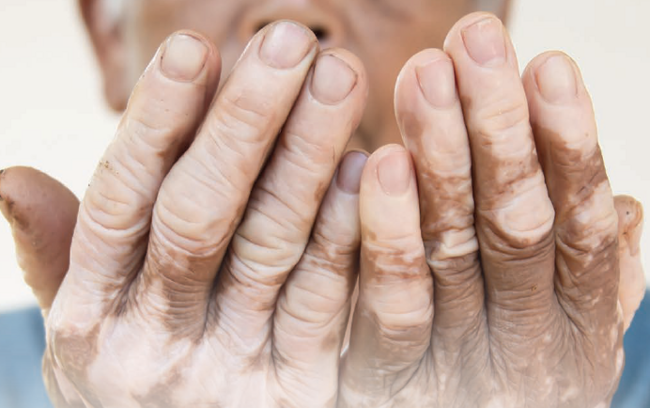
Vitiligo has profound quality-of-life implications. Nearly 24.5% of patients report a formal diagnosis of depression, and 55% experience moderate-to-severe depressive symptoms on Patient Health Questionnaire-9 screening. The burden is greater among younger patients, Fitzpatrick skin types IV–VI, and those with facial or hand involvement.
Pathogenetically, CD8+ T cells in vitiligo lesions produce interferon-γ, implicating the JAK-STAT pathway in melanocyte destruction. This mechanistic insight underpins the success of JAK inhibition.
Topical ruxolitinib 1.5% cream, studied in 2 phase 3 TRuE-V trials, significantly improved facial Vitiligo Area Scoring Index (F-VASI) responses vs vehicle. Long-term extension data through 2 years demonstrated sustained repigmentation. For patients without early facial response at 24 weeks, continued treatment yielded F-VASI75 gains through weeks 52–104.
Combination therapy is also evolving. Adding narrow-band UVB (NB-UVB) phototherapy to ruxolitinib cream enhanced repigmentation in extension studies. For rapidly progressive vitiligo—marked by trichrome borders, confetti depigmentation, or Koebner phenomenon—oral minipulse dexamethasone (4 mg on weekends for 3 months) plus NB-UVB stabilized disease in 92% of patients compared with 53% on NB-UVB plus topical therapy alone.
Systemic JAK inhibitors are advancing. Povorcitinib (oral JAK1 inhibitor) achieved statistically superior total VASI improvement at week 24 vs placebo (P<.01), with ongoing phase 3 evaluation. Upadacitinib 15 mg daily demonstrated promising repigmentation in phase 3 studies of extensive nonsegmental vitiligo. Ritlecitinib (JAK3/TEC inhibitor) is under investigation in phase 3 trials for vitiligo. Baricitinib combined with phototherapy also showed benefit in randomized controlled data.
For stable vitiligo, procedural therapy offers durable outcomes. Autologous skin cell suspension transplantation—applying a 1:20 cell suspension to an ablated depigmented area followed by NB-UVB—demonstrated effective and durable repigmentation across diverse populations. Patients reported meaningful quality-of-life improvements.
Dr Alexis emphasized the need to align treatment with disease activity and patient goals. Rapidly progressive disease may require systemic stabilization, whereas stable disease may benefit from procedural repigmentation.
For more meeting coverage, visit the Masterclasses in Dermatology newsroom.
Reference
Alexis AF. Updates in vitiligo. Presented at: Masterclasses in Dermatology; February 19–22, 2026; Sarasota, FL.