Cutaneous T-Cell Lymphoma: When to Worry in MF/SS—and What’s Next in Targeted Therapy
At the 2026 Masterclasses in Dermatology Annual Meeting, Heather Woodworth Goff, MD, MPH, delivered a comprehensive update on cutaneous T-cell lymphomas (CTCL), focusing on mycosis fungoides (MF) and Sézary syndrome (SS), with an emphasis on early recognition and emerging targeted therapy.
MF is a “malignancy of CD4+ resident memory/effector T cells,” characterized by CLA+, CCR4+, CD69+ phenotype, whereas SS reflects a circulating central memory T-cell process (CD62L+). Flow cytometry findings in SS often show CD4+, CCR4+, CD7−, CD26−, and CD158K+ (KIR3DL2) populations, aiding diagnosis. Incidence is approximately 6.4 per million annually, with higher rates in men and African American patients; prognosis is poorer in young African American women.
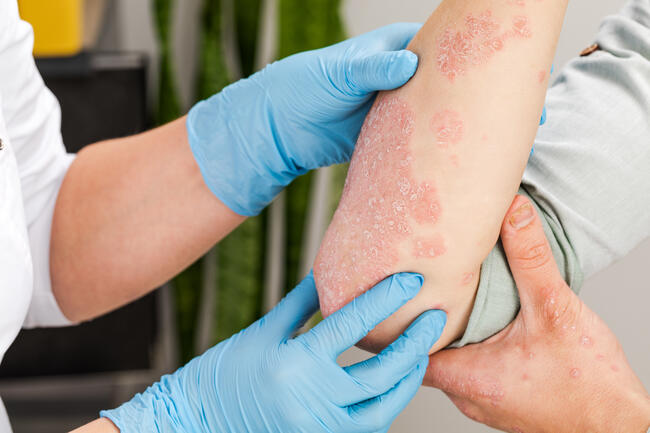
“When do we worry?” Dr Goff highlighted plaque disease in younger patients, tumors early in the disease course, plaques involving more than 10% body surface area, impetiginization, and worsening blood involvement as red flags. Controlling infections by controlling disease is critical.
Next, Dr Goff moved to therapeutics. For stage I MF, narrow-band UVB (NB-UVB) remains highly effective. In 1 cohort of 117 patients, 80% achieved complete response (CR), and 60% remained disease-free >5 years without maintenance therapy. “This represents a substantial number of patients…potentially cured,” she noted, suggesting NB-UVB may be disease-modifying in early MF.
Spot radiation therapy offers another durable local option. CR rates approach 90% to 96% at doses ≥10 Gy, with relapse inversely related to dose. “Radiation clears…steroids do not,” Dr Goff emphasized.
Systemic options continue to expand. Brentuximab vedotin (anti-CD30 antibody-drug conjugate) delivers monomethyl auristatin E intracellularly after endocytosis, providing potent antimitotic activity. “It is 200 times more potent than vincristine.” Mogamulizumab targets CCR4 and is approved in relapsed MF/SS.
Lacutamab, an anti-KIR3DL2 monoclonal antibody, exploits overexpression of KIR3DL2 in SS, where it functions as both a diagnostic marker and therapeutic target. Early data demonstrate objective responses and progression-free survival signals in advanced CTCL.
Perhaps most forward-looking is volamcabtagene durzigedleucel (CTX130), a CD70-directed allogeneic CAR-T therapy. In relapsed/refractory T-cell lymphoma, objective responses occurred in 51.6%, including complete responses in 19.4% of patients with MF/SS at therapeutic doses. Safety was described as manageable.
For more meeting coverage, visit the Masterclasses in Dermatology newsroom.
Reference
Goff HW. Current and emerging treatment of cutaneous lymphomas. Presented at: Masterclasses in Dermatology; February 19–22, 2026; Sarasota, FL.