Addressing Unmet Needs in Psoriatic Arthritis: Diagnosis, Pathogenesis, and Newer/Emerging Oral Therapies
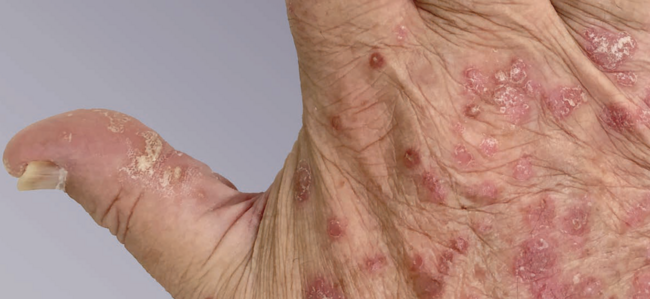
At the 2026 Masterclasses in Dermatology Annual Meeting, Dr Alvin Wells delivered a forward-thinking discussion on psoriatic arthritis (PsA), emphasizing that up to 30% of patients with psoriasis develop PsA and reinforcing that psoriasis is a systemic inflammatory disease rather than a condition limited to the skin. He strongly encouraged aggressive upfront treatment, stating that in 2026 waiting to adequately treat active PsA may approach malpractice, as early intervention may alter long-term outcomes and potentially drive sustained disease control.
Dr Wells reviewed risk factors for developing PsA, including scalp and genital psoriasis, obesity, and smoking, noting that smoking may blunt therapeutic response. He highlighted the clinical relevance of the ClASsification for Psoriatic ARthritis, or CASPAR, criteria, which require established inflammatory articular disease plus at least 3 additional points, such as current psoriasis, nail dystrophy, dactylitis, negative rheumatoid factor, or radiographic changes. He also discussed the concept of immune connectivity between the gut, bone, and enthesis, with TH17 cells and JAK-STAT signaling playing central roles in propagating inflammation across these domains. By targeting the JAK-STAT pathway, clinicians can modulate multiple downstream cytokines simultaneously.
The session explored currently used biologic and oral small molecule therapies for PsA and rheumatoid arthritis, including TNF inhibitors, IL-17 inhibitors, IL-12/23 inhibitors, costimulation modulators, PDE4 inhibitors, and JAK inhibitors. Dr Wells reviewed apremilast joint response data demonstrating meaningful American College of Rheumatology (ACR) 20 responses in clinical trials, with sustained benefit in longer-term follow up. Comparative efficacy data at week 12 show strong joint responses with several biologic agents, particularly TNF and IL-17 inhibitors, with notable differences in magnitude of ACR20, ACR50, and ACR70 responses across drug classes.
He also addressed safety considerations, package insert warnings, and the growing medicolegal implications of undertreatment when effective therapies are available. When “push comes to serve,” he emphasized, clinicians must be prepared to justify therapeutic decisions based on disease severity, prognostic indicators, and patient specific factors. As treatment options expand, understanding both efficacy and safety profiles becomes essential for shared decision-making.
Finally, Dr Wells underscored the expanding role of artificial intelligence and telemedicine in identifying patients at risk and facilitating earlier referral and intervention. With recognition of severe phenotypes such as PsA mutilans and the broad spectrum of disease manifestations, including peripheral arthritis, axial disease, enthesitis, dactylitis, and nail involvement, he emphasized that timely, targeted, and domain specific therapy offers an opportunity not just to manage PsA but to meaningfully change its trajectory.
Reference
Wells AF. Addressing unmet needs in psoriatic arthritis: diagnosis, pathogenesis, and newer/emerging oral therapies. Presented at: Masterclasses in Dermatology; February 19–22, 2026; Sarasota, FL.