VMAT-2 Inhibitor Differences and Dosing in Tardive Dyskinesia
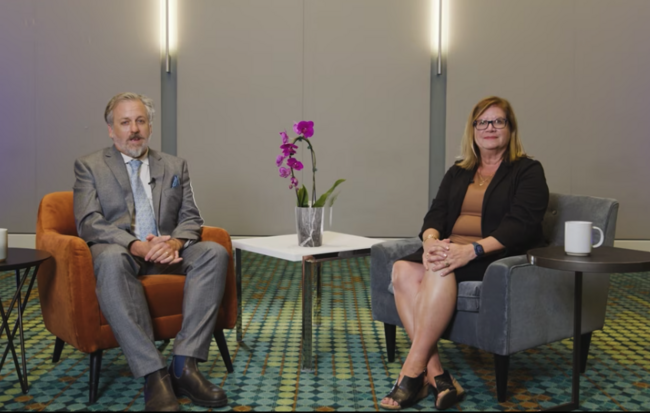
In this video, Psych Congress Co-Chair Greg Mattingly, MD, breaks down the key pharmacologic differences between the US Food and Drug Administration (FDA)-approved vesicular monoamine transporter 2 (VMAT-2) inhibitors for the treatment of tardive dyskinesia (TD). In addition to sharing practical dosing considerations for each agent, Dr Mattingly touches on the associated stigma that TD patients often face, underscoring how meaningful successful medical intervention can be for this patient population.
For more TD insights, visit the Tardive Dyskinesia Excellence Forum.
Key Takeaways for Clinical Practice:
- US FDA-approved treatments for tardive dyskinesia: Valbenazine and deutetrabenazine are effective VMAT-2 inhibitors that improve TD symptoms and stigma.
- Deutetrabenazine dosing: Deutetrabenazine is available in immediate-release and once-daily extended-release formulations and requires titration in 6-mg increments, with optimal response typically achieved at doses of 24 mg daily or higher.
- Valbenazine dosing/formulation: Valbenazine is dosed once daily at 40, 60, or 80 mg, with the starting dose remaining effective, and is often given at night due to somnolence. It is available in a sprinkle formulation for patients with difficulty swallowing.
Read the Transcript:
Greg Mattingly, MD: I'm Greg Mattingly, an associate clinical professor at the Washington University School of Medicine, president of the Midwest Research Group in St. Louis, Missouri, and co-chair of Psych Congress.
I'm here to talk today about a group of patients that I find really interesting. It's those patients that have mental health challenges but are also ticky-twitchy. They have various types of movement disorders.
What's going on in the brains of our patients that have movement disorders? It could be a primary movement disorder such as Tourette's or an essential tremor. It could be a medication-induced movement disorder such as a dystonic reaction, or medication-induced Parkinsonism.
What I'm here to focus on today, though, is a group of patients that quite often get missed—and that's patients struggling with tardive dyskinesia.
Psych Congress Network: How do the pharmacologic differences among VMAT-2 inhibitors influence treatment selection and dose titration in patients with TD?
Mattingly: Let’s talk about treatments. The good news is we have 2 treatments that are now FDA-approved for the treatment of tardive dyskinesia. We have valbenazine, which has the highest selectivity of just hitting the V-MAT 2 pump and nothing else, and we have deutetrabenazine. It's a version of tetrabenazine that's been deuterated. It's got a heavy hydrogen to extend the half-life so we can now have once daily dosing. Between those two, they're both highly effective molecules. They both have significant improvement in tardive dyskinesia and associated stigma with TD.
Remember, when you treat TD, it's not just the movement, it's how [TD] affects that individual's life: someone who stopped going to restaurants, they're avoiding being in public. Things that are stressful will worsen TD, so what happens with many of my patients is they start avoiding stressful events: being in public, family get-togethers, going to a restaurant, shopping. They become more and more isolated as they're struggling with both their mental health condition and their movement disorder.
Among the two, there's a couple of things to keep in mind. Deutetrabenazine comes in an immediate release version and an extended-release version that's once daily. I prefer the once daily version. I like to keep it simple for my patients whenever possible.
Deutetrabenazine has to be titrated. We titrate in 6 mg increments, typically, and you want to get patients up to 24 mg and above for optimal response. So it's going to involve titration and remember, get them up to a therapeutic dose.
Valbenazine comes in 3 doses, all once daily: 40 mg, 60 mg, and 80 mg, and the lowest dose is still an effective dose.
In my clinical practice, I tend to lean a little more towards valbenazine because that starting dose is an effective dose. It makes things a little bit more simple for my patients, a once-daily dose. I will titrate that dose up to 60 to 80 mg. Most of my patients eventually do take either the 60 or 80 mg, given once daily, typically at night with valbenazine, because the number one side effect is it causes some people to be sleepy. So use it at night; use it for that reason.
Valbenazine also now comes in a version that can be sprinkled. One of the reasons that’s important is that for many people with TD, [impact] won’t just be in the lips and the tongue, it'll be in the swallowing muscles. So we have a version that can be utilized for those patients.
Help with the stigma. Make sure you're assessing patients that have movement disorders. Make sure you ask them not just about the movement, but how that impacts their lives. Two molecules, very effective for improving the lives of patients with tardive dyskinesia.
Greg Mattingly, MD, is a physician and principal investigator in clinical trials for Midwest Research Group. He is also a founding partner of St. Charles Psychiatric Associates where he treats children, adolescents and adults. A St Louis native, he earned his medical degree and received a Fulbright scholarship while attending Washington University. Dr Mattingly is board certified in adult and adolescent psychiatry and is a Diplomat of the National Board of Medical Examiners. He is an Associate Clinical Professor at Washington University where he teaches psychopharmacology courses for the 3rd year medical students. Dr Mattingly has been a principal investigator in over 400 clinical trials focusing on ADHD, anxiety disorders, major depression, bipolar disorder and schizophrenia. Having served on numerous national and international advisory panels, Dr Mattingly has received awards and distinctions for clinical leadership and neuroscience research. Dr Mattingly is the President for APSARD-The American Professional Society of ADHD and Related Disorders and is on the Scientific Advisory Board for the Workd Federation of ADHD. Having served on the board of Headway House, a community support program and as a certifed evaluator for both the NFL and MLB, Dr Mattingly is firm believer in holistic mental health, education and advocacy.
© 2026 HMP Global. All Rights Reserved.
Any views and opinions expressed above are those of the author(s) and do not necessarily reflect the views, policy, or position of the Psych Congress Network or HMP Global, their employees, and affiliates.