Is It Fatigue or Sleepiness? Identifying Narcolepsy in Practice
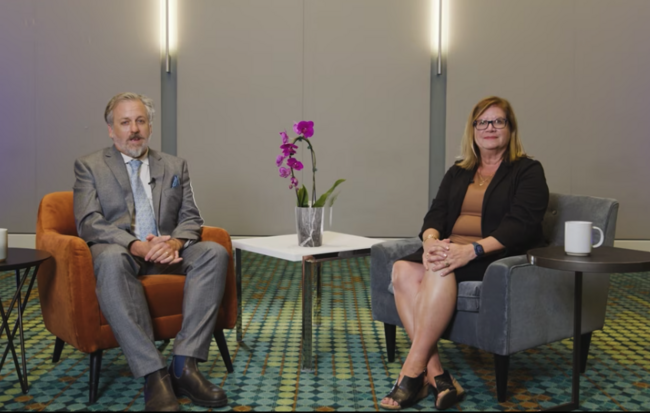
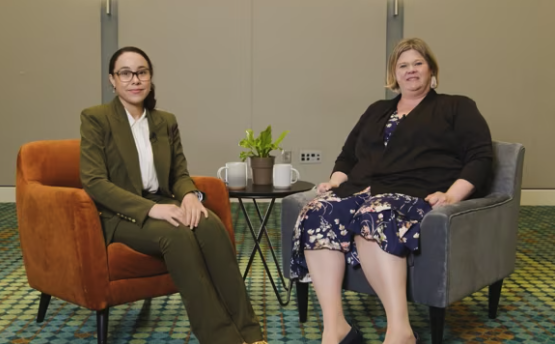
At Psych Congress, Chelsie Monroe, APN, PMHNP-BC, presented on distinguishing fatigue from excessive daytime sleepiness and improving detection of narcolepsy in psychiatric practice. In this interview, she discusses practical screening strategies, including the use of the Epworth Sleepiness Scale, the importance of collaboration with sleep specialists, and the clinical relevance of the orexin system. Monroe also shares her perspective on how emerging orexin agonists may reshape treatment approaches for narcolepsy and overlapping psychiatric conditions.
Key clinical summary
- In psychiatric settings, excessive daytime sleepiness in narcolepsy is characterized by wanting to fall asleep, taking daytime naps, or difficulty staying awake, which differs from fatigue seen in major depressive disorder that presents as sluggishness and reduced cognitive efficiency; patients often conflate the two.
- The Epworth Sleepiness Scale is a free, self-administered screening tool that helps identify pathologic daytime sleepiness and supports earlier referral to sleep specialists, potentially shortening a diagnostic process that can take months.
- Orexin, a neuropeptide that promotes wakefulness and interacts with multiple neurotransmitter systems, is a key target of emerging orexin agonists that may enhance wakefulness without stimulant-related dependence, tolerance, or access concerns.
Read the Transcript
Chelsie Monroe, APN, PMHNP-BC: Hi, I'm Chelsea Monroe, psychiatric nurse practitioner. I'm based out of Inglewood, Colorado, and I have a practice called Balanced Mental Wellness.
Psych Congress Network (PCN): What signals should psychiatric clinicians look for during an intake or follow-up visit that might distinguish excessive daytime sleepiness from general fatigue?
Monroe: Fatigue and sleepiness can look a lot alike, especially if we’re not astute enough to ask the right questions. Fatigue is something common that we’re used to seeing with major depressive disorder or some other conditions where you have some sluggishness throughout the day, you may not be able to complete tasks as cognitively aware as you’d like to be. That’s a little different than feeling sleepy. These individuals feel like they’re tired, they want to fall asleep or they do take naps throughout the day or they’re having trouble staying awake. So, 2 very different things, but patients don’t recognize those as 2 very different things, they often will coincide together.
One of the biggest tips I have is about your patients you’re giving stimulants to, asking how they’re working, how are they benefitting from that stimulant? I had someone with attention-deficit/hyperactivity disorder (ADHD) who kept telling me, “It’s helping me stay awake.” And I thought, “That’s not an ADHD symptom, let’s explore that a little bit more.” We get all kinds of patients who are using stimulants for many different things, and we just make assumptions: “Oh, you’re having fatigue, cognitive impairment, you’re not able to get things done, you’re procrastinating—great, that looks like ADHD.” But maybe we’re missing part of that, if someone is also having sleepiness.
PCN: What screening tools or practical clinical strategies do recommend clinicians incorporate into their assessments to improve detection of narcolepsy in patients with comorbid psychiatric symptoms?
Monroe: So I highly recommend using this really easy screener called the Epworth Sleepiness Scale (EPS) and what that measures is essentially, “Is someone sleepy during the day? Are they having more sleepiness than the average person?” And that's going to give you clue number 1 that perhaps there's an excessive daytime sleepiness symptom. and then potentially a hypersomnolence disorder, something like narcolepsy. It's free, it's easy to do online, the patient can score it themselves, very similar to what we use for a PHQ -9.
PCN: How can clinicians best partner with sleep specialists in the evaluation and long-term care of patients with narcolepsy?
Monroe: Sleep specialists are fewer and far between in our communities, and sometimes the waitlists are long to get in. So, to speed up the process, we need to establish a relationship with your local sleep specialist. Find someone that you like—not all sleep specialists are alike, so find someone that understands narcolepsy. Not everyone treats narcolepsy, and so get to know them, have a relationship with them, so that you can send clients back and forth.
But even if you don't have that personal relationship, the first thing that you can do as a psychiatric provider is to look for excessive daytime sleepiness, which is that hallmark feature of narcolepsy. If there's something going on where there's excessive daytime sleepiness and you've done an Epworth Sleepiness Scale, you can then send them on to a referral where you've already screened them and ruled some things out. That really helps the sleep disorder specialist take the baton from there because the journey for that patient to get a diagnosis sometimes can take months, and the steps in the process can feel defeating at times. So, getting that process going and in helping advocate for the patient throughout their journey of diagnosis, I think is really important.
PCN: Can you explain the role of orexin in promoting wakefulness and why understanding this system is so critical for psychiatric clinicians managing patients with overlapping sleep and psychiatric disorders?
Monroe: We may not have ever learned about orexin before, but this is a neuropeptide that has been well-known on the sleep disorder side to promote wakefulness throughout the day. We need to know about orexin because it highly innervates across all of our other neurotransmitters that we manage in psychiatry. If you're having patients that are having difficulty with wakefulness throughout the day or, potentially, excessive sleepiness, we need to understand how orexin is working in the brain and how this is implicated with some of our other psychiatric medications because many of our medications can actually interrupt that process as well.
PCN: How do you think emerging treatments like orexin agonists will reshape the therapeutic landscape for narcolepsy?
Monroe: I am so excited to have potentially a new mechanism of action that is effective and maybe even more effective than stimulants in providing wakefulness without the side effects that stimulants come with, without the controlled substance having an issue of dependence and tolerance and access issues that we have now with our stimulants out in the field. We know that when treating narcolepsy, just stimulants aren't always the best thing. They aren't doing the trick. So, we need something additional that can promote wakefulness and really restore that person to a state of wellness. I'm really excited about these orexin agonists. There's a lot of potential out there in understanding orexin a bit more, and I'm curious to see what other psychiatric implications will come down the pipeline, even with starting with narcolepsy 1.
I'm Chelsea Monroe. Thank you so much for joining us today. I hope you find this helpful and find the information really informative for your practice.
Chelsie Monroe, APN, PMHNP-BC, is a board-certified psychiatric mental health nurse practitioner and founder of a group private practice, Balanced Mental Wellness in Littleton, Colorado where she serves as medical director. She has over 15 years of experience working in a variety of settings, including inpatient, outpatient, psychiatric emergency services, forensics, community mental health, and private practice settings. She specializes in complex trauma, forensics, addiction, and severe mental illnesses, and has special interest in psychedelic-assisted therapies and entrepreneurial APN roles. Chelsie is board-certified in integrative psychiatry, and is an expert in ketamine-assisted psychotherapy (KAP). She is trained as a psychotherapist and believes the relationship is the key to being an excellent clinician.
© 2026 HMP Global. All Rights Reserved.
Any views and opinions expressed are those of the author(s) and/or participants and do not necessarily reflect the views, policy, or position of Psych Congress Network or HMP Global, their employees, and affiliates.