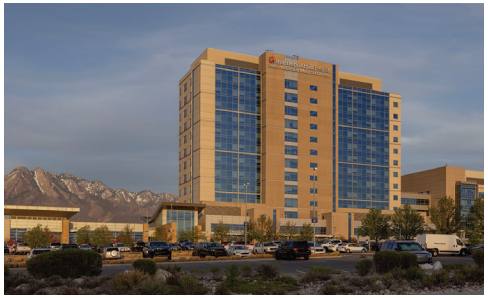
Intermountain Medical Center
© 2026 HMP Global. All Rights Reserved.
Any views and opinions expressed are those of the author(s) and/or participants and do not necessarily reflect the views, policy, or position of EP Lab Digest or HMP Global, their employees, and affiliates.
EP LAB DIGEST. 2026;26(2):18-20.
Michael J Cutler, DO, PhD
Murray, Utah
When was the cardiac electrophysiology (EP) program started at your institution, and by whom?
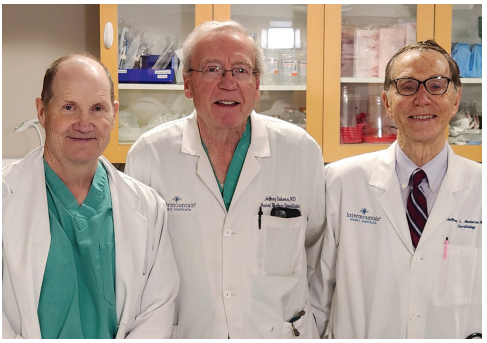
The EP program at Intermountain Medical Center originated in the late 1980s at its predecessor institution, LDS Hospital. Key members of the early EP team included Drs Jeffrey Osborn, Brian Crandall, Jeffrey Anderson, and Michael Vincent. Dr Anderson and colleagues participated in the Cardiac Arrhythmia Suppression Trial (CAST), a pivotal study that underscored the importance of randomized clinical trials in medicine.
Dr Vincent, together with collaborators at the University of Utah—most notably Dr Mark Keating—played a key role in identifying the genetic basis of long QT syndrome. The first implantable cardioverter-defibrillator (ICD) implantation, which required thoracotomy, was performed in 1988 at LDS Hospital by Dr Osborn (EP) and Dr Roger Millar (cardiovascular [CV] surgeon). In 1990, Dr Osborn performed the institution’s first radiofrequency (RF) catheter ablation for Wolff-Parkinson-White syndrome.
In the early 2000s, the first biventricular ICD at Intermountain was implanted as part of the MIRACLE ICD trial. Also, during this period, Drs John Day and Crandall were instrumental in establishing the atrial fibrillation (AF) ablation program at Intermountain after visiting the EP lab of Dr Carlo Pappone in Italy. In 2007, the EP program at LDS Hospital was moved to Intermountain Medical Center.
What drove the need to implement an EP program?
The early development of EP at Intermountain Health arose from the need to treat patients who had survived cardiac arrest and those with various supraventricular and ventricular tachycardias (VT).
What is the size of your EP lab facility? Has the EP lab recently expanded in size, or will it soon?
The program includes 3 standard EP labs capable of performing catheter ablations and device implantations. These labs are equipped with multiple mapping systems. A fourth lab is used primarily for Stereotaxis cases, typically involving premature ventricular contractions, VT, or complex cardiac anatomy; this lab has the Genesis robotic magnetic navigation system (Stereotaxis). One lab is designated for lower-risk lead extraction procedures. Higher-risk extractions and hybrid ablation procedures are performed in a hybrid operating room (OR) in collaboration with CV surgeons. A flexible cardiac catheterization lab is also available for device implantations, as needed. There are currently no plans for additional labs at the medical center; however, plans are in place to expand lower-risk EP procedures to ambulatory surgical centers.
Who manages your EP lab, and what is the mix of credentials and experience?
The lab is managed by a nurse manager, with support from an EP coordinator and educator. Both hold registered nurse (RN) and registered cardiac electrophysiology specialist credentials and assist with team scheduling and education. The current EP lab manager is Anesa Curic, RN, and the EP lab medical director is Jared Miller, MD.
What is the number of staff members?
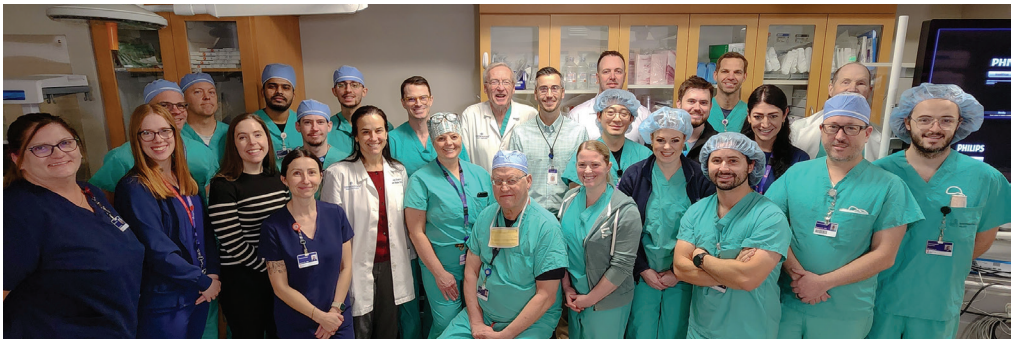
Currently, we have a total of 16 members on our EP lab team.
What types of procedures are performed?
We perform the full spectrum of EP ablation and device procedures, including high-volume AF ablation and complex VT ablation programs. In addition, we have a well-developed hybrid ablation program in collaboration with our CV surgeons, including hybrid ablation for AF and inappropriate sinus tachycardia.
Approximately how many ablations (for all arrhythmias), device implants, lead extractions, and left atrial appendage closures (LAAC) are performed each week?
We perform approximately 25-30 ablations, 20-25 device implants, and 3-5 lead extractions. LAAC procedures are primarily managed by the structural heart team.
What are some of the new technologies and techniques recently introduced in your lab? How have these changed the way procedures are performed?
One of the most notable advances has been the addition of pulsed field ablation (PFA) technologies, including Farapulse (Boston Scientific) and Varipulse (Johnson & Johnson MedTech). PFA has become a key energy source for AF ablation, and the majority of de novo AF ablations in our EP lab are now performed using PFA.
In collaboration with colleagues in radiation oncology and advanced cardiac imaging, we perform stereotactic body radiation therapy (SBRT) for the treatment of refractory VT. This program has been active for the past 3 years. Our EP program was the first in the Intermountain West to perform hybrid ablation for the treatment of inappropriate sinus tachycardia and SBRT for refractory VT.
Tell us more about your use of hybrid AF ablation.
We maintain an active hybrid AF ablation program that incorporates a team-based approach, with regular meetings between the EP and CV surgery teams to discuss and evaluate patients who are considered good candidates for a hybrid AF ablation strategy. Although the volume of this approach has decreased somewhat with the introduction of PFA, it remains an important component of our program.
How is inventory managed in your EP lab?
Inventory is managed by 2 inventory coordinators who closely work with the manager, EP coordinator, and lead physicians to maintain par levels and ensure the availability of all supplies.
Tell us about your device clinic, including its staffing model, day-to-day function, and tools/software used.
The following section outlines the operational structure of our device clinic, including staffing, scheduling, workflow, and technology utilization. It also describes our approach to remote monitoring of arrhythmias and strategies for managing the increasing volume of data generated by cardiac implantable electronic devices (CIEDs).
Staffing Model:
Our device clinic is staffed by:
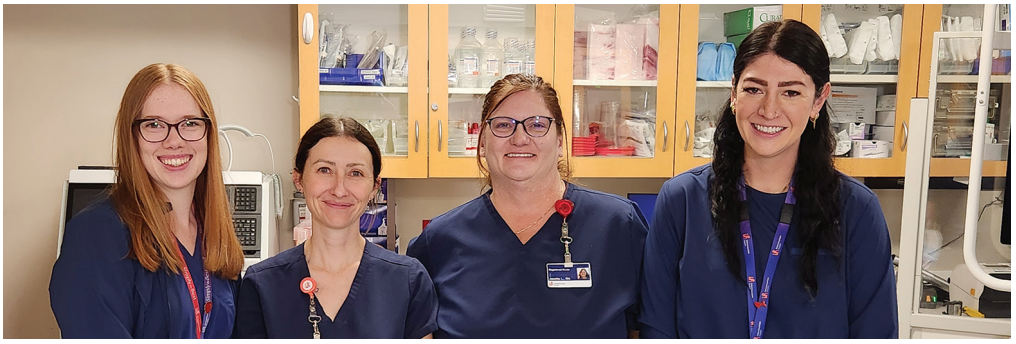
- Four full-time RNs working four 10-hour shifts
- One RN currently in training
- Among the team, one RN has successfully passed the International Board of Heart Rhythm Examiners exam, and several others are preparing to take it.
The clinic operates under the supervision of EP providers who are present in the clinic on a given day. These providers oversee device checks, address clinical questions, and issue orders as needed.
Scheduling and Day-to-Day Function:
We utilize 2 distinct patient schedules for device checks:
- Traditional device schedule: Patients are always seen by a provider following the device check. Appointment duration is 20 minutes.
- Nurse device schedule: Designed for patients requiring incision checks and device interrogation post-procedure. This is also used for post-radiation checks or 3- to 6-month follow-ups for patients not enrolled in remote monitoring. Appointment duration is 40 minutes, allowing time for patient education and Q&A. Each RN rotates through specific roles, including remote monitoring, on a weekly basis. This rotation model, implemented about a year ago, has improved productivity and reduced errors by allowing nurses to focus on dedicated tasks.
Tools and Software:
We have been using Murj for approximately 3 years to consolidate device data and streamline workflow. The remote monitoring nurse is responsible for:
- Reviewing and assessing all transmissions in Murj before the end of the day (1730).
- Completing charges for scheduled remote monitoring.
- Contacting patients per protocol for missed annual follow-ups or connectivity issues.
Additionally, our clinic monitors ambulatory cardiac events using Holter and Mobile Cardiac Outpatient Telemetry (MCOT) systems (Philips).
Process Improvement Initiatives:
We recently participated in a pilot program designed to streamline perioperative device interrogation. By collaborating with the OR pre-screening team, we have improved communication and processes to enhance patient safety and continuity of care.
Discuss your approach to remote monitoring of arrhythmias, including management of data deluge from CIEDs.
Managing the increasing volume of data generated by CIEDs is a growing challenge. Our approach includes the following strategies:
- Dedicated rotation: Assigning one nurse per week to manage remote monitoring allows for focused attention and helps reduce errors.
- Murj integration: Use of the Murj platform consolidates data from multiple device manufacturers into a single platform, reducing time spent navigating separate systems.
- Prioritization protocols: Alerts are triaged according to clinical significance (eg, sustained arrhythmias, device integrity issues) to minimize alert fatigue.
- Patient engagement: Proactive outreach to address connectivity issues and missed transmissions supports patient compliance and reduces unnecessary alerts.
- Future goals: We are exploring artificial intelligence (AI)-driven analytics within Murj or similar platforms to automate handling of low-risk alerts and flag clinically significant events.
Can you describe the extent and use of vascular closure devices at your lab? Tell us about your approach for same-day discharge.
A high percentage of our ablation, LAAC, and leadless pacing cases utilize vascular closure devices to shorten time to postprocedural ambulation. More than 90% of our elective outpatient ablation and device implant procedures are discharged same day. We reported the “Clinical, Healthcare Utilization and Economic Impact of Same-Day Discharge Following AF Ablation” at Intermountain Health during Heart Rhythm 2023.
How do you ensure timely case starts and patient turnover?
We record and track all relevant operational data, including case start times and patient turnover. These data are used to identify opportunities to improve workflows and reduce turnover times. For example, first-case start times have improved since we began systematically tracking, graphing, and monitoring this metric. The same approach is currently being applied to improve turnover times between cases. Our new lab manager, Anesa Curic, has extensive experience improving operating room turnover times and will be instrumental in further enhancing efficiency within the EP lab.
How does your lab schedule team members for call?
At present, EP team members are not scheduled for formal on-call shifts; however, staff members may volunteer for weekend on-call coverage or extended work hours as needed.
Do you have flexible or multiple shifts? How do you handle slow periods?
We offer four 10-hour shifts from 0700-1730 and do not provide flexible scheduling options. Though rare, during slower periods, we may flex days off for caregivers, and occasionally call staff off for the entire day, unless volunteers are present that would like to request the day off.
How are vendor visits managed?
Vendors are required to check in through the symplr system, and all visits are coordinated and managed by the nurse manager and program coordinators.
What are the best features of your EP lab’s layout or design?
We have significant flexibility to use multiple mapping systems in each room or perform device implants. That flexibility allows us to keep all the rooms in use. We also have a good layout with being right next door to our preoperative and postoperative unit and having all supplies in the room or in an adjacent central core.
What measures has your lab implemented to cut or contain costs?
We have a robust program to evaluate cost per case in the EP lab, conducted in collaboration with our EP service line partners. These data are provided to each EP physician and used to identify opportunities for case-level cost optimization through a team approach.
What quality control measures are practiced in your lab?
Multiple quality control measures are implemented in our EP lab, including review of door-to-procedure times. Additional measures include ongoing staff education and simulation training, skills assessments, routine chart audits, monitoring of infection prevention compliance, and radiation safety monitoring for both staff and patients. Together, these and other measures support continuous performance monitoring and help maintain optimal patient outcomes.
What works well in your lab for onboarding new team members?
We partner with CHART Healthcare Academy to provide an intensive onboarding program consisting of lectures, coursework, and in-lab training designed to bring new hires up to speed. This program has significantly enhanced caregivers’ understanding of EP, enabling greater participation in hands-on training with assigned mentors. In addition, the program offers weekly teaching sessions focused on specific EP processes or structures, allowing for a more in-depth understanding of procedural workflows and underlying cellular functions.
What continuing education (CE) opportunities are provided for staff members? How do staff typically maintain and renew credentials?
We provide multiple CE credit opportunities for staff through grand rounds, a morbidity and mortality conference, and many other educational activities. Staff typically participate in these offerings in addition to completing required CE coursework to maintain licensure and credentialing. When renewal is due, caregivers are notified to ensure adequate time to complete the renewal process.
Discuss the role of mid-level practitioners in your lab.
Within our practice, advanced practice providers (APPs) manage patient care in the cardiac procedure and recovery unit (CPRU). They assist with preoperative and postoperative assessments for all procedures performed in the EP lab. In addition, APPs independently manage outpatient and inpatient cardioversions performed in the CPRU, with support from an anesthesiologist for sedation and an imaging cardiologist when transesophageal echocardiography is required. We have also transitioned all implantable loop recorder procedures from being performed by electrophysiologists in the EP lab to being performed by an APP in the CPRU. n
Does your lab use a third party for reprocessing or catheter recycling? How has it impacted your lab?
We do not use a third party for reprocessing or catheter recycling; all of this is done in house, which has allowed for a seamless and efficient turnover.
Discuss your program’s approach to conduction system pacing.
We employ conduction system pacing for most pacemaker implantations that are expected to require significant right ventricular pacing. We are also rapidly adopting leadless pacing—having participated in the early Nanostim (Abbott) studies—as well as extravascular and subcutaneous ICDs to minimize the use of transvenous leads. We welcome the renewed evolution of these cardiac devices, which emphasizes patient safety and clinical benefit.
Tell us about your primary approach for LAAC.
Our approach to LAAC is to offer multiple procedural options in collaboration with our structural heart team. We implement this procedure in accordance with current professional society guidelines. LAAC is offered to patients who are unable to tolerate anticoagulation because of bleeding concerns, as well as to patients who prefer this approach for other reasons. The procedure may be performed as a stand-alone intervention or in combination with catheter ablation for AF.
Does your program have a dedicated AF clinic?
We do not have a dedicated AF clinic; patients with AF are seen by all providers within our clinic. Nevertheless, our management approach emphasizes collaborative and comprehensive care, with a focus on lifestyle modification. A key future goal is to develop a more structured and integrated lifestyle modification program for patients with AF.
Discuss your approach to lead extraction and management.
Our lead extraction program is led by Dr Osborn, who performed the first laser-assisted lead extraction at Intermountain Health in 1999. Since that time, our lead extraction program expanded greatly, including with the Fidelis and Riata lead issues, in the next decade. We employ a comprehensive range of extraction tools, including mechanical devices and snares as well as laser sheaths. Our approach is aggressive for cases involving infection and judiciously aggressive for elective extractions. ICD leads over 5 years old and pacing leads over 10 years old are extracted in a hybrid OR in collaboration with our CV surgeons. Drs Michael Crawford and Alissa Kauffman have recently joined our lead extraction program.
Discuss your approach to treatment of AF in patients with heart failure (HF).
We maintain a strong collaboration with the advanced HF team to partner in the management of patients with AF and HF. In general, early AF ablation is a central component of the management strategy for these patients.
How does your EP lab handle radiation protection for physicians and staff?
We follow standard radiation protection practices in the EP lab. Specifically, we minimize fluoroscopy time whenever possible and use appropriate radiation protection measures such as lead aprons.
What approaches has your lab taken to reduce fluoroscopy time? What percentage of cases are done without fluoroscopy? How do you record fluoroscopy times/dosages?
All providers strive to achieve the lowest necessary fluoroscopy time for each procedure. We do not routinely perform procedures without fluoroscopy. Fluoroscopy time and radiation dose are recorded for every procedure and documented in the procedure report. Provider radiation exposure is tracked using standard dosimetry badges worn on lead aprons, with exposure data reported directly to providers at regular intervals.
What are some of the dominant trends you see emerging in the practice of EP?
Early ablation remains a key strategy in the treatment of most arrhythmias. Ongoing advancement and optimization of PFA technology is anticipated for the treatment of both atrial and ventricular arrhythmias, with likely broader adoption of dual-energy ablation approaches. In addition, continued advances in the use of AI across all areas of EP practice are expected.
How do you use digital health and wearable technologies in your treatment strategies? Have you seen an increase in the number of patients using digital health technologies? What challenges or benefits do you associate with that? Has use of digital health improved patient outcomes?
We have observed increased utilization of digital health and wearable technologies among our EP patients. Use of these technologies is encouraged, and patients are educated on how to upload data through electronic medical record–based tools for provider review. This growing volume of data will require new strategies to efficiently manage information and to minimize the time providers spend reviewing clinically normal findings. Collaboration with industry partners will be essential to optimizing digital health and wearable technology platforms. These tools hold substantial potential to support lifestyle modification efforts in the management of patients with cardiac arrhythmias.
Is your EP lab involved in clinical research studies? Which ones?
Yes, we have been and continue to be actively involved in clinical research studies. Previously, we were a top-enrolling site for the CABANA trial, and Dr Douglas Packer—who recently joined Intermountain Health—and colleagues are currently developing the CABANA-HF study. At present, we are participating in AVANT Guard (Boston Scientific), OMNY-AF (Johnson & Johnson MedTech), HEAL-IST (AtriCure), CONTEMP-ICD, and investigator-initiated LD-CAF trials. In addition, we anticipate enrolling patients in the PKN605 phase 2a study (Novartis) in patients with AF.
Please tell our readers what you consider special about your EP lab and staff.
We recently celebrated the retirements of 2 EP lab staff members who had been part of the team for more than 25 years. Historically, our EP lab culture has been associated with higher-than-expected retention among EP staff and physicians. The EP program and staff at Intermountain Medical Center foster a culture of collaboration, teamwork, collegiality, and dedication to excellence in patient care.