










Feature
EPLD's Top 5 Most Popular Stories of 2025
01/19/2026
© 2026 HMP Global. All Rights Reserved.
Any views and opinions expressed are those of the author(s) and/or participants and do not necessarily reflect the views, policy, or position of EP Lab Digest or HMP Global, their employees, and affiliates.
Which stories resonated most with the EP lab community in 2025? EP Lab Digest revisits its most-read articles of the year—covering advances in mapping and ablation, solutions to everyday procedural challenges, and emerging approaches to improving patient outcomes.
- Early Insights With a Novel Mapping and Ablation System: Interview With Brett Atwater, MD
In this interview, EP Lab Digest speaks with Brett Atwater, MD, of Inova Medical Group in Virginia, about how his high-volume EP program is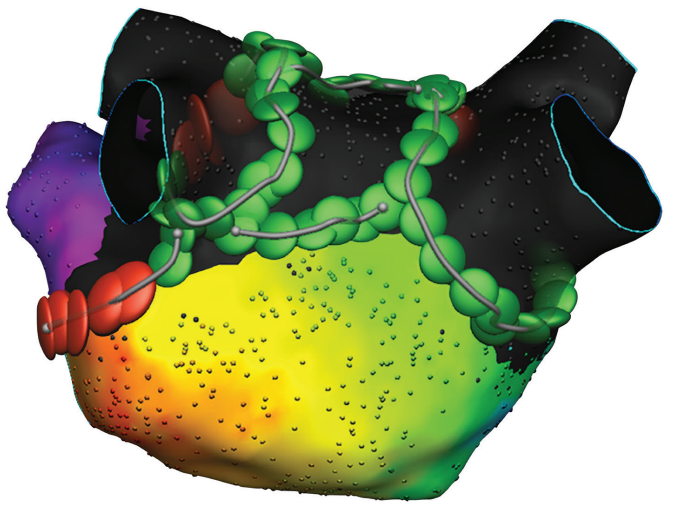 integrating the Affera™ mapping and ablation system with the Sphere-9™ catheter (Medtronic). He shares insights into his workflows with the system, observed patient experience, what it’s changing inside the EP lab, and what he most looks forward to in the future of electrophysiology.
- Vertebral Vein Electrical Stimulation to Provoke Ventricular Ectopy During Ablation in the Electrophysiology Lab
Patients with symptomatic or high-burden premature ventricular contractions (PVCs) causing ventricular dysfunction are good candidates for catheter ablation; however, variability in PVC frequency can result in infrequent intraprocedural ectopy, limiting activation mapping and often leading to procedure cancellation. This editorial highlights an emerging technique to provoke PVCs in the EP lab to facilitate mapping and successful ablation: stimulation of the sympathetic nervous system from the vertebral veins.
- Integrating Pharmacologic Weight Management Into the Electrophysiology Practice for Better Atrial Fibrillation Outcomes

In this podcast episode, Olivia Gilbert, MD, MSc, an advanced heart failure and transplant cardiologist at Atrium Health Wake Forest Baptist, explains the American College of Cardiology’s 2025 Concise Clinical Guidance report on obesity management for optimization of cardiovascular health—and why electrophysiologists should be paying close attention.
- Addressing Atrial Fibrillation and Atrial Flutter in Patients With Severe Tricuspid Regurgitation Undergoing Evaluation for a Transcatheter Valve Procedure
As transcatheter tricuspid valve replacement (TTVR) becomes more common for patients with severe tricuspid regurgitation, electrophysiologists are increasingly involved in the care of these complex patients. While heart block and pacing needs during TTVR are well recognized, this editorial shines a spotlight on another major—and often underappreciated—issue: the high prevalence of atrial fibrillation in this population.
- Redefining FARAPULSE™ Mapping Integration: Harnessing the Power of the OPAL HDx™ Mapping System
Jason Meyers, MD, and Justin Kline, BS, RN, have been early adopters of the FARAPULSE™ PFA Platform (Boston Scientific), and the integration of the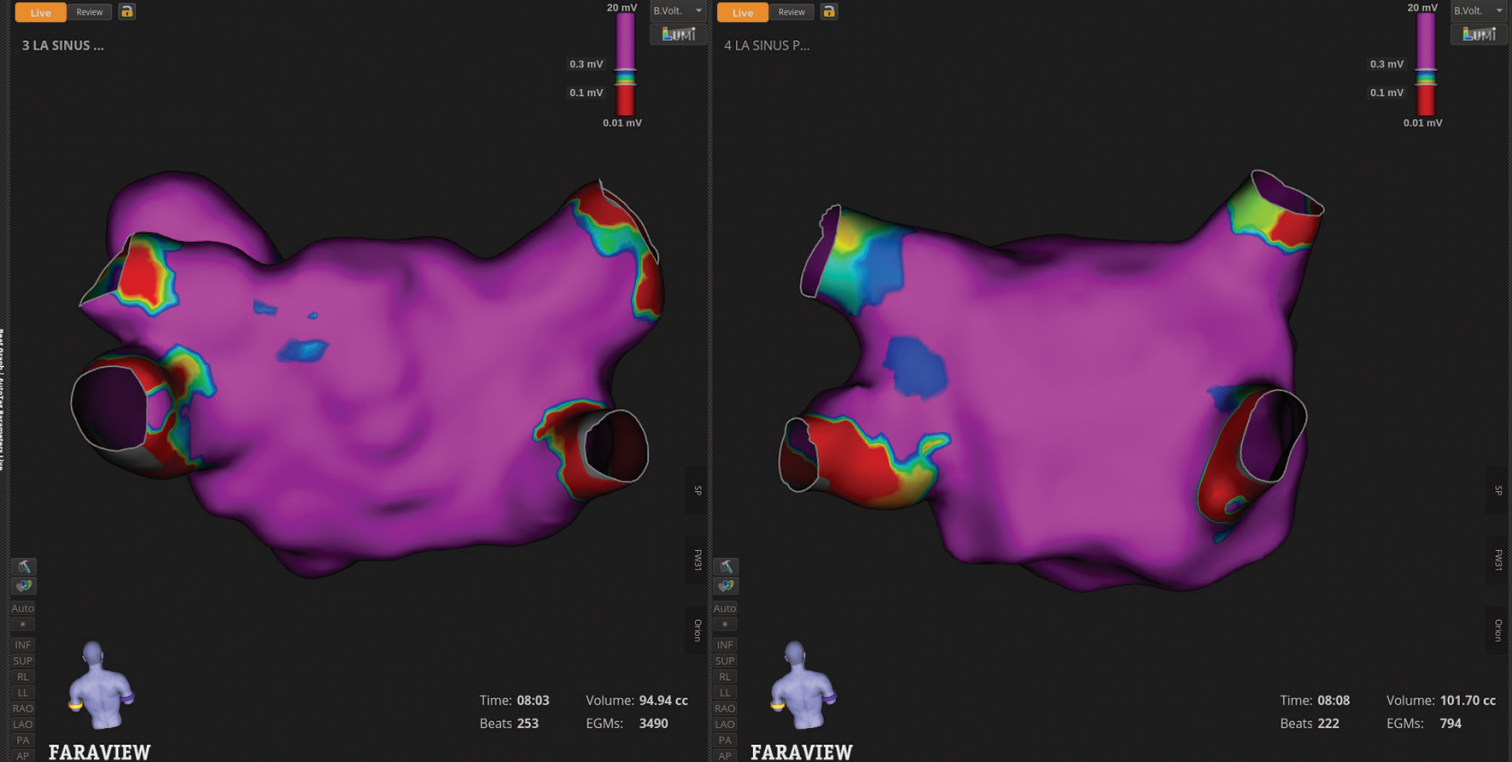 FARAVIEW™ Software Module on the OPAL HDx™ Mapping System has markedly changed the way they approach pulmonary vein isolation. This case includes several mapping images that demonstrate the value of the enhanced FARAPULSE mapping experience with FARAVIEW on OPAL HDx.
Do you have a case or new technique you’d like to share with the EP Lab Digest audience? Would you like to have your EP lab featured? Contact managing editor Jodie Elrod for more information, at jelrod@hmpglobal.com.
Current Issue
January 2026
Volume 26
Issue 2
Stay in the know.
EP Lab Digest Newsletter






