Building an Electrophysiology Lab at Norman Regional Health System: Advancing Heart Care Close to Home
© 2026 HMP Global. All Rights Reserved.
Any views and opinions expressed are those of the author(s) and/or participants and do not necessarily reflect the views, policy, or position of EP Lab Digest or HMP Global, their employees, and affiliates.
EP LAB DIGEST. 2026;26(1):13-15.
Seth Barnett, RN
Electrophysiology Supervisor, Normal Regional Health Systems, Norman, Oklahoma
Norman Regional is a health system with more than 320 beds, located in Norman, Oklahoma. The hospital is owned by a public trust and overseen by a board of Norman citizens in conjunction with the hospital C-suite. A recent hospital expansion in July 2024 increased the footprint of the main campus, which is strategically located along Interstate 35, the primary route connecting the greater Oklahoma City and Dallas–Fort Worth metropolitan areas. Because of this location, the hospital cares for not only patients in the Norman and surrounding areas, but as far south as the Oklahoma-Texas border, as well as travelers passing through the area. This included new intensive care unit, progressive cardiac care unit, and intermediate care beds, as well as ambulatory care center operating room (OR) suites, postanesthesia care unit, same-day surgery (SDS) pre- and postoperative rooms, 3 cardiac catheterization suites, a hybrid catheterization/OR suite, and a fully dedicated cardiac electrophysiology (EP) suite. While the expansion increased the total number of OR, cardiac, and hybrid catheterization suites, the EP program and suite are new to the hospital system. Over the past years, Norman Regional has been referring all EP-specific procedures to Oklahoma City.
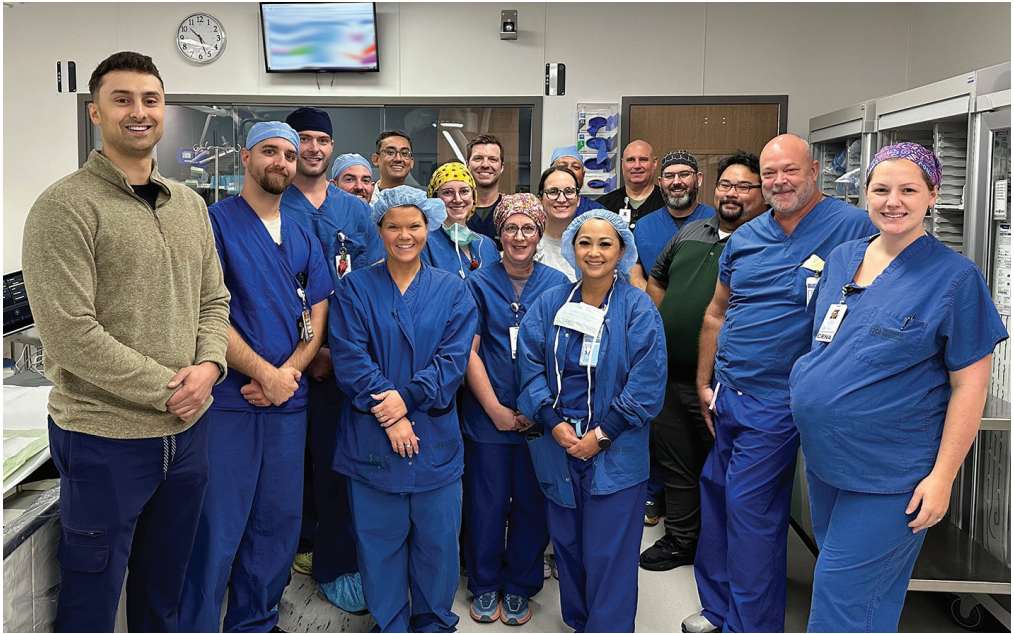
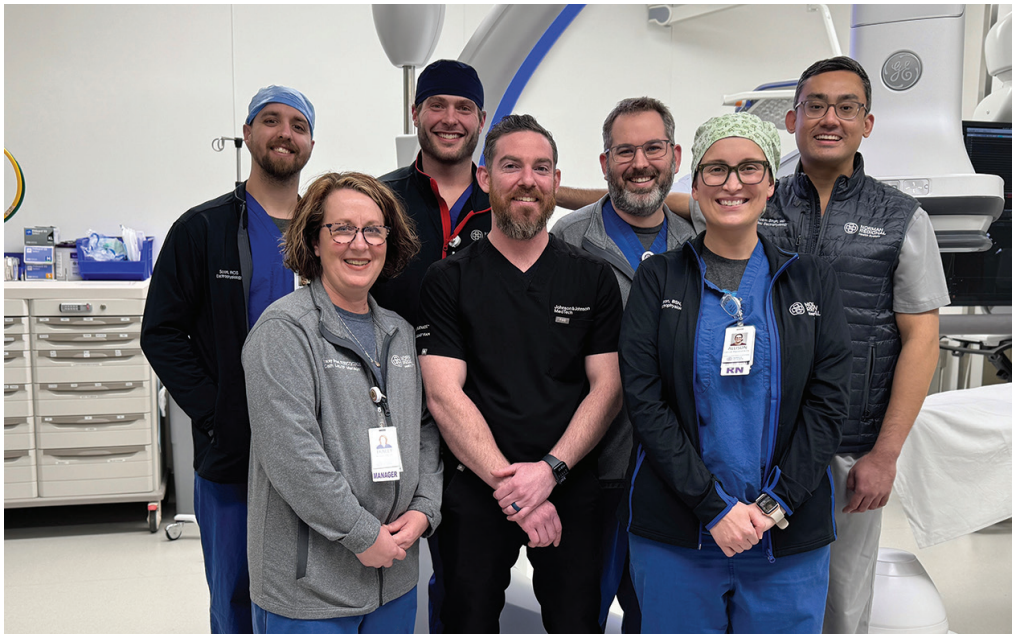
Robin Singh, MD, is the hospital’s interventional cardiac electrophysiologist and performs ablations as well as cardiac device implantations, including leadless pacemakers and extravascular implantable cardioverter-defibrillators (ICDs). Dr Singh had been previously practicing ad locum and staff was hired after Dr Singh committed to Norman Regional. The EP team includes 4 full-time dedicated staff members: Allison Hadlock, BSN; Scott McCullough, RCIS; Ty Nelson, BSN; and Seth Barnett, RN. Three additional team members are cross-trained from the catheterization lab to provide coverage when dedicated staff are unavailable: Chris Deemer, RN; Katie Mathews, RT(R), RCIS; and Lauren Ready, RT(R)(CI), RCIS. The team is supported by manager Tracey Brown, RT(R)(CI), RCIS. Each of these team members played an instrumental role in building the laboratory and establishing the new cardiac EP service line, contributing to workflow design, supply cart development, and creation of procedure-specific documentation.
Design and Buildout
The goal for the suite was to create a designated EP lab that could be utilized for other procedures when no EP cases are scheduled. Because the program currently has a single interventional cardiac electrophysiologist and is a new service line, the laboratory operates 2.5 days per week. On non-EP days, the room can be converted for cardiac catheterization or hybrid OR procedures. Because of the need for flexibility, the attention to design and workflow were paramount.
This process required meetings and collaboration between architects, construction teams, hospital engineering and administration, equipment vendors, and end users.
The lab was built within a shell space that had already been constructed prior to the hiring of the electrophysiologist and staff. Priorities considered:
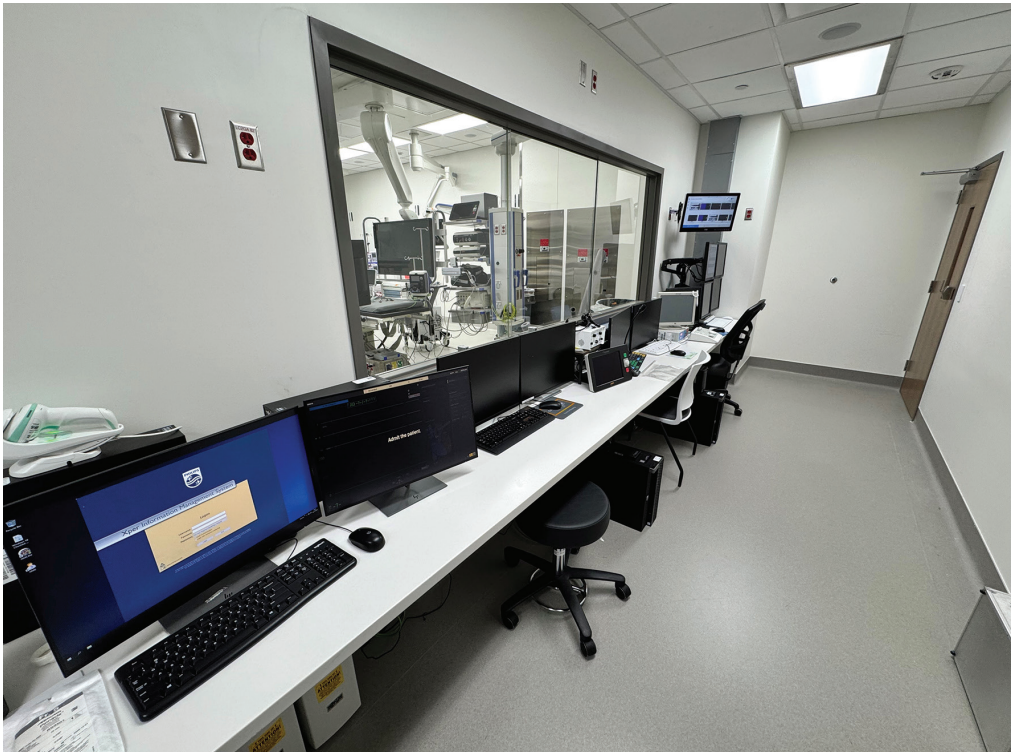
- Direct visualization of the table/electrophysiologist from the control room (where the mapper and staff member on the stimulator sit)
- Efficient patient transport and workflow
- Designated location for mobile supply carts and ultrasound machine
- Ease of access for anesthesia and perfusion in case of emergency
Because the shell space had already been built, the control room door to the surgical suite had to be moved, and the suite had to be lengthened to allow for more counter space in the control room to accommodate the extra equipment necessary for EP procedures.
The decision was made to design the lab with a hardwired EP system (Carto 3, Johnson & Johnson MedTech; and Prucka 3, GE HealthCare) mounted on a moveable boom. This design keeps cables off the floor, takes up less floor space than a mobile workstation, and allows for more efficient conversion of the room for other procedures. The biggest challenge was sequencing the installation of EP system cabling through the boom to allow for redundancy and future expansion. Multiple meetings, in-person conversations, and onsite walkthroughs resulted in a boom with built-in potential equalization (grounding), image output to a third-party video integration system (Helion Integrated Surgical System, Baxter), and minimal time to transfer from EP to catheterization cases. This ability to convert does not affect signal quality during EP cases.
Adequate spacing between equipment, built-in grounding plugs, and select cables routed through conduit as isolators within the boom have allowed for minimal
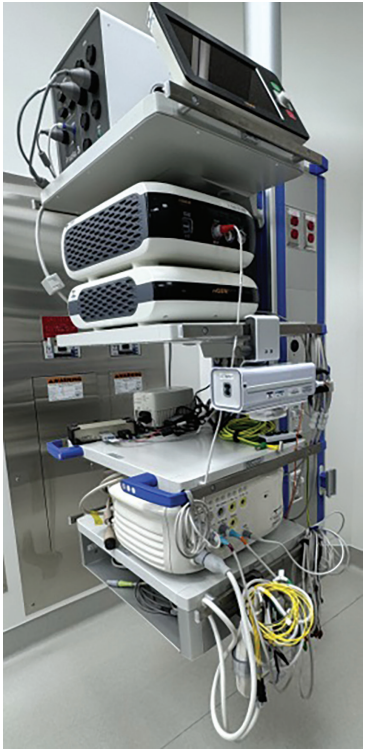
filtering on the Prucka system. With the newer systems, the equipment’s ability to filter electrical noise is greatly enhanced over previous generations. At the time the laboratory was finalized, Johnson & Johnson MedTech’s pulsed field ablation technology had not yet been released, so cables could not be routed through the boom. However, the boom’s design accommodates future placement of the generator.
At the head of the bed is a dedicated boom equipped with all required anesthesia gas hookups. The boom also includes network capabilities for the wireless charting system and video integration, allowing vital signs from the anesthesia machine to be displayed on a wall-mounted monitor in the room.
To enhance visibility and education, a monitor was installed on the wall opposite the fluoroscopy screen near the nurse’s station. Integrated with the Helion Integrated Surgical System, this screen provides real-time views of Carto, Prucka, fluoroscopy, and hemodynamic data, useful for training staff and students. It also allows the physician to comfortably view echocardiography images from the patient’s left side.
The hospital installed the Allia IGS 7 system (GE HealthCare) for fluoroscopy, which allows independent movement for improved accessibility and a more customized workflow throughout the suite. The flexibility of this C-arm also permits full mobility around the table, which can be beneficial in emergency situations. Because the system’s leftward offset C-arm design can influence patient loading and the positioning of the anesthesia boom and equipment, careful planning of C-arm configuration, anesthesia location, and room entry is essential during early lab design.
The procedure table includes an integrated underbody patient warmer (HotDog Patient Warming System, Augustine Surgical, Inc). This airless warming system also functions as an electrosurgical grounding pad for device implantation procedures, providing patient comfort while reducing the number of grounding pads required. Although not approved for EP-specific grounding, the warming feature does not interfere with signal integrity.
Support
In a community such as Norman, near the greater Oklahoma City metropolitan area, a strong network of referring cardiologists and administrative support is essential
for establishing a successful service line. The financial and logistical investments required to start an EP program—including equipment, anesthesia services, construction, fluoroscopy systems, and staff education—are substantial. Support from hospital leadership and the surrounding community is critical to the successful launch and growth of a new EP laboratory and program.
Developing the program also requires careful attention to workflow processes, including central sterile protocols, ordering of disposables, and procedure billing and documentation. Demonstrating that the service line would be cost-effective, clinically valuable, and expand access for the local population was essential to securing administrative support.
Vendor collaboration has been an important asset in developing the lab. Johnson & Johnson MedTech provided essential input during the design and buildout phases, and continues to offer education and resources to support staff development and ongoing program growth.
Support from within the hospital extends beyond financial assistance. The marketing team has excelled in informing the public about the new services and benefits to the community and its surrounding areas. This, along with the staff’s work with the hospital’s foundation, promotes the hospital and brings a face to the program.
Conclusion
While building an EP lab can be a daunting endeavor, the completion of the first ablation in the lab makes it all worthwhile. The collaboration and commitment of all modalities have led to the establishment of a state-of-the-art lab capable of performing various procedures and accommodating future growth. All involved parties have some shared ownership in the success of this lab, and with the rapid advancement of technology in this field, we are excited to see where the future takes us.
Disclosures: The author has completed and returned the ICMJE Form for Disclosure of Potential Conflicts of Interest, and has no disclosures to report.