


A New Investigational Concept in Left Atrial Appendage Closure for Stroke Prevention in Atrial Fibrillation: Interview With Atman P Shah, MD, FSCAI, FPICS
© 2026 HMP Global. All Rights Reserved.
Any views and opinions expressed are those of the author(s) and/or participants and do not necessarily reflect the views, policy, or position of EP Lab Digest or HMP Global, their employees, and affiliates.
EP LAB DIGEST. 2026;26(4).
Interview by Jodie Elrod
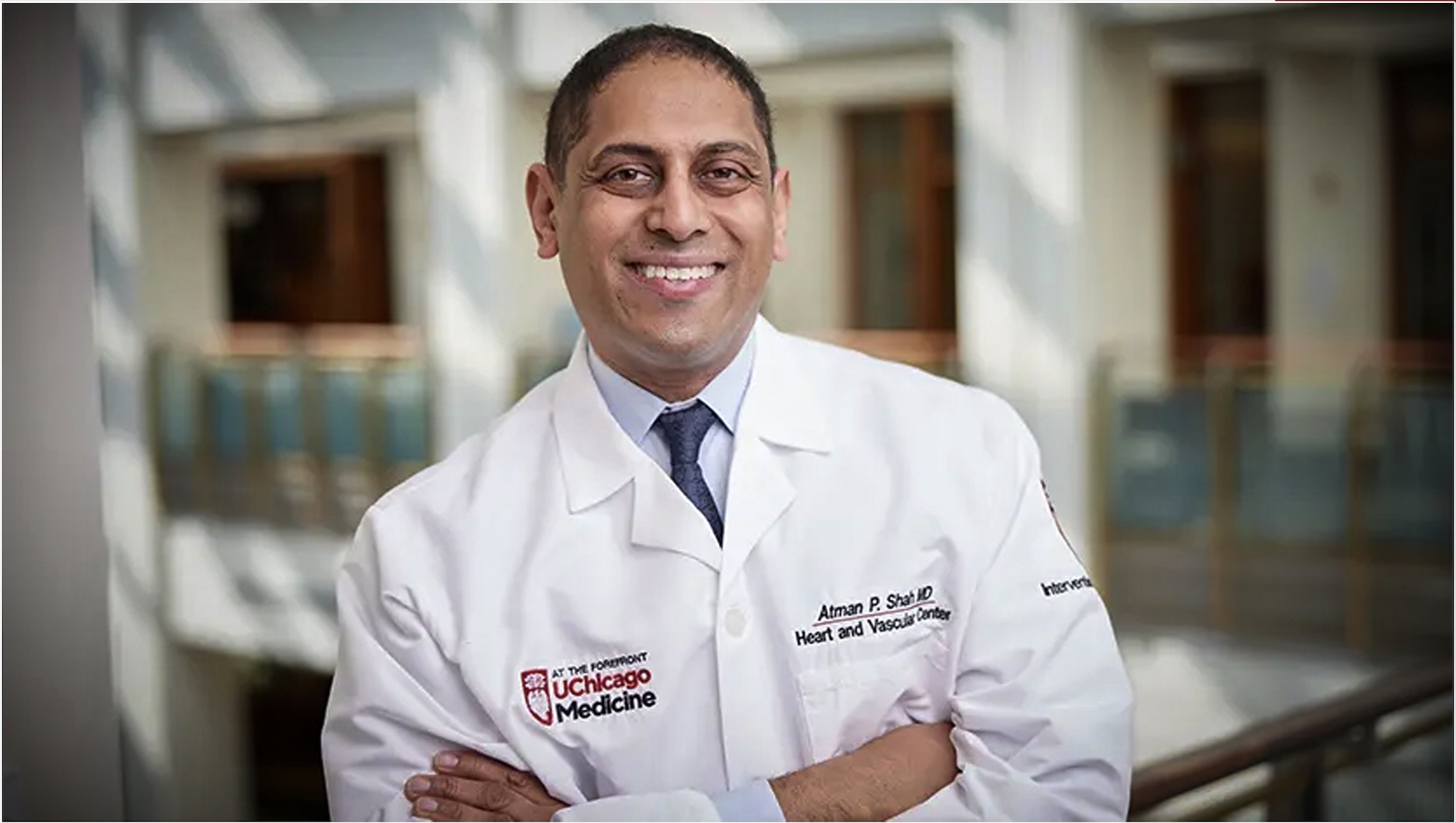
In this interview, EP Lab Digest speaks with Atman P Shah, MD, FSCAI, FPICS, interventional cardiologist, Professor of Medicine, Clinical Director of the Section of Cardiology, and Co-Director of the Adult Cardiac Catheterization Laboratory at the University of Chicago. Dr Shah discusses current challenges in left atrial appendage closure (LAA) and shares insights into the early development of an investigational device designed to provide a more personalized approach to LAA closure, potentially expanding stroke prevention options for patients with atrial fibrillation (AF).
 What do you see as the most pressing clinical challenges in LAA closure today—whether related to postprocedural medication strategies, imaging guidance, patient selection, or device design?
I would start by saying that all of these are challenges. I think we are on the precipice of a massive public health issue. We are an aging population. Fortunately, medical care has improved, so people are living longer—but not only that, they are remaining more active as they age. We know that as patients get older, the risk of AF increases, and with AF comes a significantly higher risk of stroke.
Often, stroke can be more worrisome and concerning than almost any other clinical end point—even death. Many patients say they would rather die than experience a major disabling stroke. So, as we think about patients getting older and living their best lives, we want them to be present for their grandchildren’s graduations and weddings, and we want them to be able to fully enjoy those moments.
This is a rapidly growing population—up to 20% of people over the age of 80 will have AF. As that population increases, the number of patients with AF will also increase. Regarding patient selection, many of these individuals are older and may be cognitively intact, but they are still 80 years old or older. I practice in Chicago, where we have long winters. What happens if these patients slip on ice? What happens if they bump into their snowblower? Or if they live in Florida, what happens if they are snorkeling and run into a coral reef? If they are on blood thinners to prevent stroke, they are at risk of bleeding. So we have many patients whose lifestyles create potential risks when taking anticoagulation.
There are also medical considerations. Cancer treatments, for example, have fortunately improved significantly, but some chemotherapeutic agents can increase bleeding risk, and patients’ blood counts may drop during treatment. If they are already at increased risk of bleeding due to anticoagulation, that risk becomes even higher. So we must consider fall risk, occupational or lifestyle risk, and concomitant medical risk.
This leads to the key question: how can we prevent these patients from having a stroke without giving them blood thinners?
The field of LAA closure has been absolutely remarkable over the past 15 to 20 years. There are currently 2 devices approved in the United States: the Watchman (Boston Scientific), which has been nothing short of transformational in delivering care to hundreds of thousands—if not millions—of patients, and the Amplatzer Amulet LAA Occluder (Abbott), which has also been transformative both in its design and its ability to treat additional patients.
There have also been surgical advances. AtriCure’s surgical systems are excellent, but some patients may not want surgery, even though it is performed through a lateral thoracotomy. The Lariat device is also transformational, but it requires a dry pericardial tap, so not every patient is a candidate and not every provider may feel comfortable performing that procedure.
However, the fundamental issue is that the LAA is like a snowflake—everyone’s appendage is different. The ostium, depth, and morphology can all vary. There are different types of “chicken wings”—anterior, posterior, or whale tail. They are all unique. Even though the Amulet and Watchman devices are excellent, they are round and require a certain degree of depth within the appendage. Because appendages vary so much in depth and often contain multiple lobes, this can create a challenge.
What does the clinical data show us? Overall, it suggests that up to 20% of patients referred for closure with currently available devices cannot undergo the procedure successfully because the device does not sit perfectly. Another challenge is that even when an occluder can be placed, it may sit too deep, be canted outward, or allow leak around the device. In some cases, clot can form on the device if it sits too deep. We are increasingly recognizing that device-related thrombus and peri-device leak can pose serious risks if we do not achieve a strong seal. Again, this becomes more difficult because appendage anatomy varies so widely.
The last challenge relates to anticoagulation. We often find ourselves in a difficult situation: we have a patient who cannot tolerate anticoagulation, yet we place a device and then require them to take anticoagulation for at least a month afterward. If they could not tolerate it in the first place, how can they tolerate it after the procedure? As a result, patients who were unable to take anticoagulants initially may still need an oral anticoagulant, aspirin, or clopidogrel after implantation—and they may also experience bleeding complications from those medications.
To summarize, the patient population is growing rapidly. Many patients are living longer, remaining cognitively intact, and needing protection against stroke. We have many excellent devices available today, but they are primarily designed for a round orifice, while the appendage itself is not round. These devices also rely on active fixation—meaning there are small hooks or “fishhooks” on the outside that must anchor into a very thin-walled appendage. This can potentially damage surrounding tissue, cause bleeding if fixation is imperfect, or even lead to device embolization.
So even though the current devices are very good, the appendage is such a unique anatomic structure that it likely requires a more personalized approach for each patient. Ideally, we want a solution that minimizes the need for anticoagulation afterward and is relatively straightforward for most operators to use.
Some patients are not ideal candidates for current LAA closure devices because of complex anatomy. How does the Parasol design address the limitations of existing devices, and what impact could that have on stroke prevention outcomes and patient access?
I want to preface my answer by saying that the Parasol has only been tested in a small number of animals and primarily on the bench. So whether any of these claims or hypotheses will ultimately translate to humans remains uncertain—but I certainly hope they will.
The concept is that, rather than implanting a round metallic device that relies on small hooks to anchor into the thin wall of the LAA, the Parasol would allow the delivery of a gel into the LAA. That gel would then harden, essentially creating a cast within the appendage and sealing it off. In this approach, there is no metal device and no sharp hooks involved. Because every patient’s appendage anatomy is different, the advantage is that the gel could conform to the exact anatomy of each individual patient.
The hypothesis is that this could lead to less trauma to the LAA and reduce the risk of device-related thrombus or peri-device leak, because the gel functions as a mold within the appendage. There is also the possibility that patients may require less anticoagulation afterward, since the material is gel-based rather than metallic.
Finally, because the approach could be relatively straightforward to use and does not involve a traditional metal implant, the cost of the implant itself would not factor into the overall procedure cost. As more patients potentially require LAA closure in the future, this could translate into meaningful cost savings for the health care system as a whole.
You worked with the Polsky Center for Entrepreneurship and Innovation at the University of Chicago to bring Parasol from concept to prototype. Can you describe how that collaboration shaped the development process, and what it means for academic physicians to have that kind of innovation ecosystem supporting translational device development?
Thank you for asking that—none of this would have been possible without the Polsky Center, which has been absolutely instrumental. It is an incredible organization that works directly with clinicians who have hands-on experience with medical devices and are constantly thinking about how things could be improved.
Before working with Polsky, if I had an idea, I would have had to figure everything out on my own. That would have meant creating the initial drawings myself, developing CAD designs, finding an engineering firm, locating patent lawyers, determining how to secure funding, and so on. The Polsky Center helped make that process possible.
It really started with Benjamin Cox, Senior Manager of Intellectual Property at Polsky, who was instrumental from the very beginning. He worked with me on the early stages of the design, helped develop the drawings, and then connected us with a local bioengineering company in the Chicago area to build the first prototypes. Without Polsky, I would not have known where to start—I would not have had the contacts or known which engineers to work with.
Alongside Ben, Alyssa Master, Director of Venture Development, has helped move the project forward. She has guided me in understanding venture capital and angel investing—where to look for funding and, with her extensive connections and experience, who I should be speaking with to advance the project.
In addition, there are advisors such as Steven Gould, who has been an entrepreneur with several companies and has offered valuable guidance on the entrepreneurial process. Jennifer Fried has also been very helpful, bringing extensive experience working with other medtech startups. So, in addition to scientific expertise, we have people contributing financial insight and real-world startup experience.
Another key contributor has been Shyama Majumdar, Senior Director of Accelerators and Investment at Polsky, who focuses on helping medtech companies move forward. She has helped coordinate opportunities such as accelerator grants, including the George Shultz Innovation Fund. Shyama has also helped me understand how deep tech funding could support the startup.
What has also been extremely helpful is that early-stage startups often struggle to secure initial funding. The Polsky Center and the University of Chicago were fantastic in providing initial seed funding that allowed me to build the prototype. They also helped connect me with programs through the U.S. National Science Foundation where early-stage startups can learn how to launch and grow.
I also want to acknowledge Samir Mayekar, Managing Director at Polsky, and Mark Anderson, Dean of the Biological Sciences Division at the University of Chicago. There are many people who have contributed, and I could go on and on.
Overall, the Polsky Center has been fantastic. In many ways, it serves as a model for academic institutions everywhere—bringing together clinicians and patient-focused professionals with experts who understand how to develop technology and launch startups, allowing great ideas to move from concept to reality.
The transcripts were edited for clarity and length.