Global Perspectives, Practical Solutions: Advancing Sports Electrophysiology at Heart Rhythm 2026
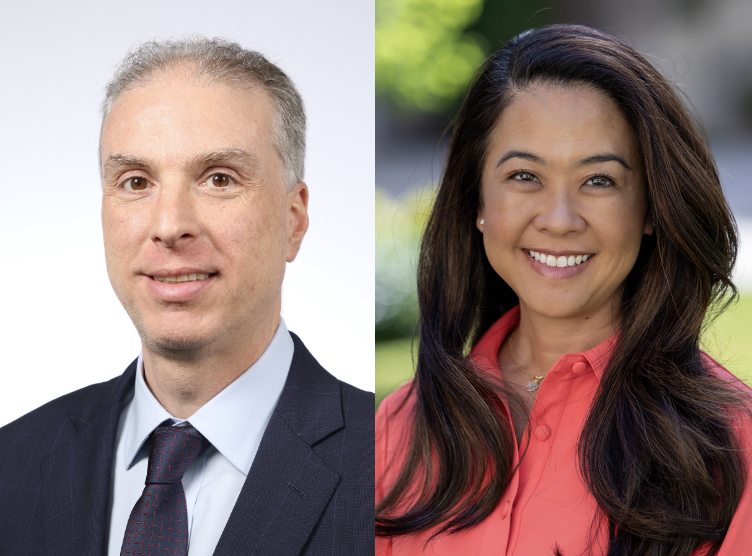
Interview With Eduardo Saad, MD, PhD, FHRS and Christina Miyake, MD, MS, MPH
Interview With Eduardo Saad, MD, PhD, FHRS and Christina Miyake, MD, MS, MPH
© 2026 HMP Global. All Rights Reserved.
Any views and opinions expressed are those of the author(s) and/or participants and do not necessarily reflect the views, policy, or position of EP Lab Digest or HMP Global, their employees, and affiliates.
EP LAB DIGEST. 2026;26(3).
Interview by Jodie Elrod
In this exclusive interview, Eduardo Saad, MD, PhD and Christina Miyake, MD, MS, Chair and Vice-Chair for the Global Relations Committee, share key insights from the Global Summit at Heart Rhythm 2026: Sports, Exercise, and Medicine—The Athlete’s Heart and Beyond. They discuss the most important takeaways for clinicians navigating the rapidly evolving field of sports electrophysiology (EP), from balancing performance and safety to addressing regional differences in care. The conversation also highlights actionable strategies clinicians can implement today to improve arrhythmia management and athlete safety, while looking ahead to emerging technologies and innovations poised to transform how we monitor and treat athletes worldwide. The Global Summit at Heart Rhythm 2026 takes place April 23 from 1:00-5:00 PM in the Exhibit Hall at McCormick Place.
 Can both of you provide a brief introduction?
Christina Miyake, MD, MS: I am Christina Miyake, a pediatric electrophysiologist at Texas Children’s Hospital. I serve as Director of the Cardiovascular Genetics Arrhythmia Program, where I focus on patients with genetically-driven heart rhythm disorders, including sports screening and guiding safe return-to-play decisions.
Eduardo Saad, MD: I’m a general cardiac electrophysiologist, primarily focused on the care of adults. However, due to the shortage of pediatric EPs in many parts of the world, I also perform some pediatric electrophysiology. I practice in Rio de Janeiro, Brazil, at Hospital Samaritano, where I serve as Director of the Cardiac Arrhythmia Center. My main focus is general EP, with a particular emphasis on atrial fibrillation (AF). We are also very committed to promoting exercise within our population, which is why I believe this summit is especially timely.
Can you share the background and purpose of the Global Summit?
Christina Miyake, MD, MS: The Global Summit is organized and promoted every year by the Global Relations Committee for the Heart Rhythm Society (HRS). Historically, it focused on region (eg, Africa, Latin America, and Asia), and last year the decision was moved to topic. Last year's topic was sudden cardiac death (SCD). This year, the HRS team chose sports because we thought that would be something that is important and appealing to many people, both in cardiology and electrophysiology.
As Chair and Cochair of this year’s Global Summit, what do you see as the most important takeaways for clinicians from the global conversation around sports EP?
Christina Miyake, MD, MS: I think the first key takeaway is that there are important differences in how people approach sports participation and how and why certain individuals should or should not be restricted. One of the main goals of the Global Summit is to highlight these regional differences so clinicians can better understand how others are approaching these decisions and what resources they have available.
As part of the summit, we will present 2 case scenarios, one involving SCD and another focused on hypertrophic cardiomyopathy (HCM). Each region will share how they would approach these cases based on their local practices and available resources.
It is important for physicians to recognize that not everyone has access to the resources outlined in guidelines. For example, recommendations may include advanced screening such as magnetic resonance imaging (MRI) or genetic testing, but these may not be available in all settings. We want to raise awareness of these gaps and show how clinicians are managing patients in real-world conditions. At the same time, we will explore whether a more unified global approach to sports screening, restriction, and return to play is possible. This includes discussion around how we as a global community should communicate with professional organizations such as FIFA and others. Ultimately, we want clinicians to understand these differences and consider how the field should move forward.
The second major takeaway is that sports is not just about competitive athletics, but also about exercise as an essential part of overall health. We will discuss conditions such as AF and the concept of the right dose of exercise, recognizing that both too little and too much activity may have implications. This includes a debate on how exercise impacts AF and how much or how little patients should be doing.
Importantly, clinicians need to think beyond competitive athletes. It is easy to focus on restricting high-level athletes, but we also need to consider recreational activity, such as a child or adult playing a casual game of basketball. That is still sports, and it matters. We will explore how to guide these patients, including whether there is an optimal amount of exercise and how it affects the heart. This will also include discussion of tools such as exercise testing and how technologies like the treadmill test can help guide decision-making.
The final point is the importance of staying informed about emerging research and understanding how to apply it in local practice. There is a growing body of data that clinicians need to be aware of in order to make the best management decisions. We want to encourage clinicians to learn from global and national perspectives while also adapting that knowledge to their own environments.
Overall, the summit will focus on regional differences, screening approaches, and how to apply evolving evidence across a range of conditions such as AF and SCD disorders such as catecholaminergic polymorphic ventricular tachycardia, HCM, arrhythmogenic cardiomyopathy, and others.
Given the global variability in resources and practice patterns, what practical steps can clinicians take today to improve arrhythmia management and athlete safety in their own regions?
Eduardo Saad, MD: This summit brings together not only experts, but representatives from all continents, allowing us to share perspectives on screening protocols, access to advanced imaging, and genetic testing. We will also discuss return-to-play decisions and even basic emergency action plans, which can differ dramatically from region to region. Ultimately, this is about adapting evidence-based principles to local infrastructure, culture, and the broader ecosystem, recognizing that each region approaches these challenges differently. This kind of global dialogue creates valuable opportunities for learning.
From a practical standpoint, one key takeaway is how to translate this knowledge into local practice. For example, clinicians can work to build or strengthen local emergency action plans. Every venue, whether a school, club, or college, should have a written emergency action plan in place. Increasing access to automated external defibrillators, training community members in cardiopulmonary resuscitation, rehearsing protocols, and establishing clear routines are all low-cost, high-impact interventions that can be implemented in almost any setting, including those with limited resources.
Another important area is screening at the local level. While not all regions have access to advanced tools like echocardiography or MRI for widespread screening, many can implement 12-lead electrocardiograms (ECGs). Promoting their use and improving clinician education on interpretation can make a meaningful difference. Looking ahead, technologies such as artificial intelligence (AI) have significant potential to enhance this process. AI-supported ECG screening may help identify individuals who need further evaluation, including specialized care, genetic testing, or more advanced diagnostics.
We also have an opportunity to better educate not only athletes and patients, but also coaches and staff in schools and colleges about warning signs such as syncope, palpitations, and unusual fatigue. In addition, there is a need to advocate for policies within local sporting organizations that address these risks, rather than waiting for broader recommendations that may not always be applicable in every setting.
Overall, this is an opportunity to learn from one another and implement creative, practical strategies to improve care locally. Looking to the future, AI has the potential to be a major advance in screening, while genetic testing remains an evolving area where we still need to improve how results are applied to individual patients.
That leads into my final question of looking ahead to the future of sports EP, which emerging technologies or strategies do you believe will most meaningfully change how we monitor and treat athletes?
Christina Miyake, MD, MS: To frame this, the summit begins with regional, case-based discussions, where speakers from different parts of the world share how they approach care. We then move into sessions discussing involving professional sports organizations and global policy, followed by discussions on exercise dosing, management of AF and specific SCD disorders in athletes, and finally a forward-looking session on the future of sports EP.
Looking ahead, several key areas stand out and will be discussed in the summit by experts. As Dr Saad noted, the potential role of AI in ECG screening to help identify athletes at risk may also expand access in regions with limited resources. Genetic testing will also be discussed as it may play an important role, particularly in screening and preventing SCD, and in moving toward more individualized, gene specific decision-making around sports participation.
Device technology is another area of rapid evolution. At the same time, there has been a shift toward shared decision-making, where clinicians guide and educate patients rather than making strictly binary decisions about participation and thus there may be more patients with implantable cardioverter-defibrillators (ICDs) participating in sports in the future. In the past, devices were larger and more prone to complications, particularly in active individuals. Today, we are seeing smaller, more durable options, including leadless devices and extravascular ICDs, and as the technology continues to advance these newer devices and may allow greater participation in sports.
In each of these areas, ongoing research is essential, as clinical decision-making depends on high-quality evidence-based data to guide care.
Finally, education is key. We need to continue educating clinicians, as well as coaches, patients, and athletes, on how to recognize and manage different conditions. It is also important to move away from grouping all SCD conditions together and instead tailor management to each specific disease.
Any final thoughts?
Eduardo Saad, MD: I can clearly say that HRS has a mission to be the global leader in arrhythmia research and care, and the Global Summit is very timely in supporting that goal. The Global Relations Committee has developed a comprehensive program that addresses all aspects of sports-related issues. It reflects our commitment to understanding what is happening across regions and learning from one another. This is an exciting program, and I hope it brings strong engagement, with meaningful interaction and scientific discussion.
Christina Miyake, MD, MS: I hope attendees leave feeling more confident when a patient asks if they can play sports. My goal is that participants will feel they have learned a great deal and are better equipped to make these decisions. We have an outstanding group of experts participating, and the sessions will offer practical, applicable knowledge that clinicians can take back to their own practice. The goal of the global relations committee for this summit is to bring us together as a global community, recognizing regional differences and working together to improve the safety and quality of lives among individuals with heart rhythm disorders.
The transcripts have been edited for clarity and length.