Comprehensive Cardiac Ablation at NCH: Enhancing Outcomes in Both Complex and Routine Electrophysiology Cases
© 2025 HMP Global. All Rights Reserved.
Any views and opinions expressed are those of the author(s) and/or participants and do not necessarily reflect the views, policy, or position of EP Lab Digest or HMP Global, their employees, and affiliates.
EP LAB DIGEST. 2025;25(10):1,8-11.
Interview by Jodie Elrod
In this interview, EP Lab Digest speaks with Dinesh Sharma, MD, Section Head, Cardiac Electrophysiology at NCH Rooney Heart Institute, in Naples, Florida, about his use of the Affera™ mapping and ablation system (Medtronic) in every case, highlighting its broad usage in both complex and non-complex cases.
 Can you provide an overview of the electrophysiology (EP) program at NCH? Please touch on procedure volume and key technologies used, including the Affera mapping and ablation system.
Naples Comprehensive Health (NCH) operates 2 main campuses in Naples: NCH Downtown Naples Hospital and NCH North Hospital. Each location has 2 EP labs and 2 electrophysiologists. As a group, we perform more than 1000 atrial fibrillation (AF) ablations annually. We predominantly use pulsed field ablation (PFA), and our center has participated in several PFA research clinical trials. Personally, I perform the majority of my ablation procedures with the Affera system.
What distinguishes your EP workflow, particularly in how you incorporate the Affera system across both complex and straightforward ablation procedures?
The Affera system is highly versatile. Its use allows greater flexibility in case scheduling because, for example, if a patient is scheduled for an Affera procedure, the presence of atypical atrial flutter or atrial tachycardia can be managed efficiently without altering the plan. In contrast, with some other mapping systems, additional equipment—such as a focal catheter—may be required if an unanticipated arrhythmia is induced. This capability enhances efficiency by enabling treatment of a broad range of arrhythmias, whether anticipated or encountered incidentally during the procedure. Thus, the Affera system provides substantial flexibility, efficiency, and versatility, and our clinical outcomes with it have been favorable.
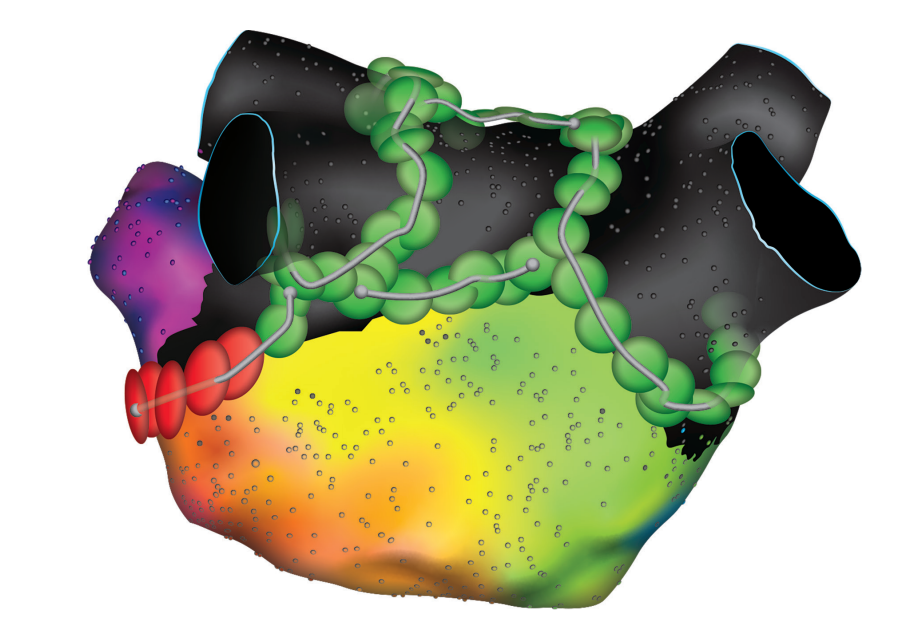
How does the Sphere-9™ catheter (Medtronic) compare to your previously used ablation tools, and what key advantages stand out—such as dual-energy options, non-thermal PFA, and integrated mapping?
Because it is a dual-energy catheter, the Sphere-9 catheter allows the use of both radiofrequency (RF) and PFA. Concerns have been raised regarding the use of PFA near the coronary arteries; in such cases, I can switch to RF, avoiding the potential risks of PFA in that region and eliminating the need for nitroglycerin administration. This flexibility is highly advantageous and provides additional procedural confidence. Also, because the catheter is focal, it enables a broad range of ablation strategies beyond pulmonary vein isolation, including treatment of other arrhythmias and creation of additional lesion sets such as mitral isthmus lines, crista terminalis lines, or cavotricuspid isthmus ablations. The focal nature of the catheter is therefore a significant advantage in managing diverse ablation requirements.
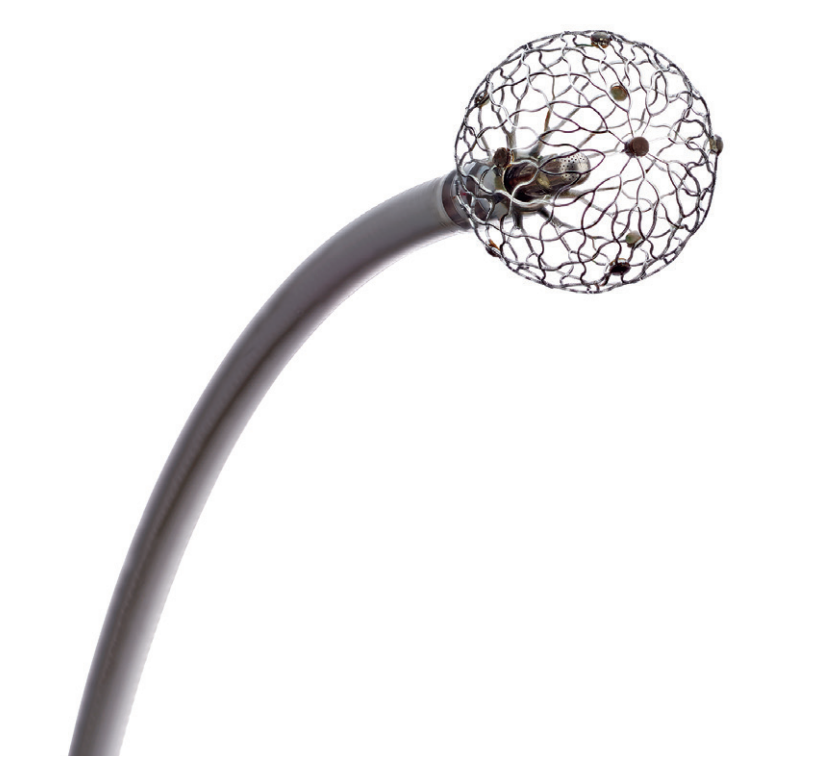
In addition, the large catheter tip size (9 mm) produces larger lesions, increasing procedural efficiency and allowing interventions to be completed more quickly, also due to the all-in-one mapping and ablation capabilities combined into a single catheter. Most importantly, the design is also very safe. The lattice tip is compressible, providing a cushioning effect once the catheter is inside the left atrium. This feature is particularly reassuring in patients with low body mass index, those at higher risk of perforation, or those with a very small atrium. The catheter’s profile makes it substantially less traumatic, which is a significant advantage. As a result, I feel much more comfortable and confident when performing ablations with this system.
What factors guide your technology selection for ablation cases—including patient selection and cost?
Patients with heart failure and AF are our highest priority, as they derive the greatest benefit from ablation. Those with early-onset AF, diagnosed within 1 year, also experience substantial advantages, including reduced risk of stroke and decreased cardiovascular mortality. These groups represent my typical patient population. Historically, we have also treated patients with symptomatic or paroxysmal AF; however, I am particularly passionate about managing patients with heart failure and AF.
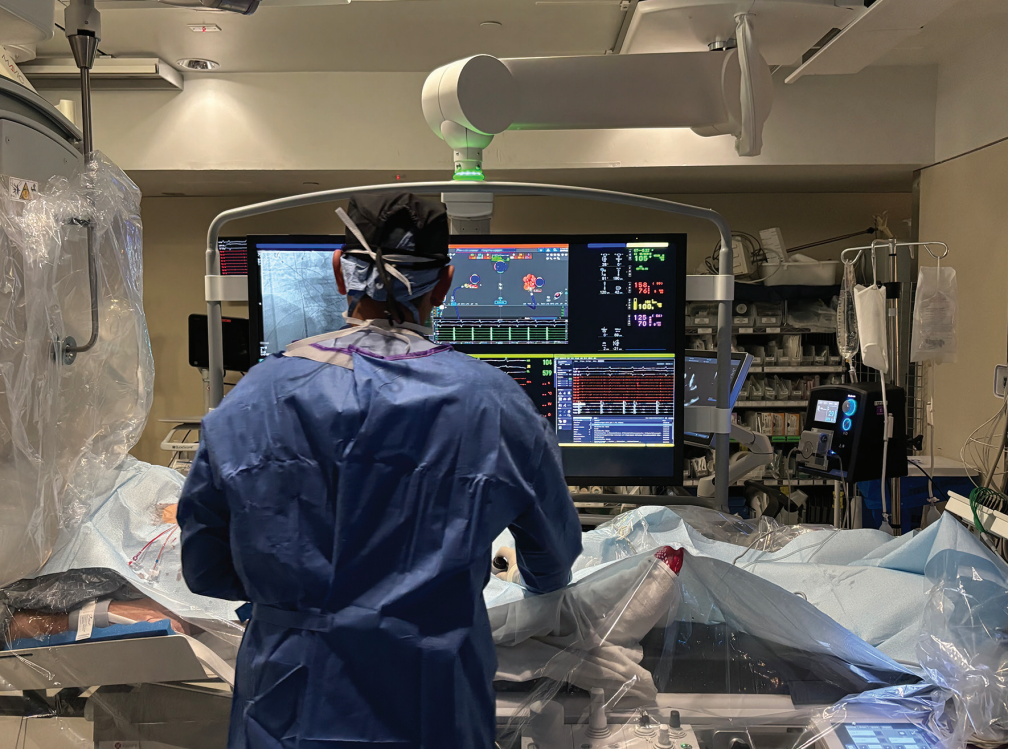
Can you walk us through your workflow with the Sphere-9 catheter, including visualization strategies and your experience with catheter and sheath handling?
With the Sphere-9 system, we use an 8 French (F) femoral venous access. We now employ a deflectable sheath measuring 8.5F, typically our standard low-profile deflectable sheath. Once the activated clotting time is above 350 seconds, the Sphere-9 catheter is introduced. The overall setup is very similar to the ablation procedures we have performed for many years—the sheath and catheter profiles are comparable, and the shaft size is consistent with our previous equipment—making the workflow familiar and straightforward.
How does having both PFA and RF capabilities influence your energy selection in ablation procedures?
The system has added considerable flexibility and convenience. When ablation is required near a coronary artery, the ability to use RF energy is particularly valuable, as it reduces the risk of coronary spasm—a potentially life-threatening complication. Although our current nitroglycerin protocols are applied during PFA because of the known risk of spasm, the option to switch to RF in such cases offers a clear safety advantage. Additionally, there is emerging interest in whether applying both energies in combination may improve efficacy. While this remains uncertain, it represents an important area for future investigation.
How does a unified workflow with the Affera system enhance efficiency, predictability, and supply chain management across a range of EP cases?
Because this focal catheter can address virtually all cardiac arrhythmias, there is no need to switch to a separate mapping catheter or dedicated RF catheter. From this standpoint, procedural efficiency is enhanced, as a single catheter can perform mapping, RF ablation, and PFA. Consequently, regardless of whether the arrhythmia is simple or complex, it can be managed within a predictable timeframe. This versatility has also made case durations more consistent in our scheduling, with highly reliable procedure times when using the Affera system.
What advantages do Close-Unipolar™ signals offer over traditional bipolar signals in mapping?
The system provides a number of novel capabilities including the acquisition of Close-Unipolar signals. We must learn more about this; however, the use of Close-Unipolar signals collected by each mini-electrode on the Sphere-9 catheter, referenced to the indifferent central electrode located at the center of the sphere, provides discrete signals that are free from far-field components and delivers precise information for accurate map interpretation. We may be able to unlock the full potential of this as we do more cases, but so far, we have been very satisfied with our map creation and arrhythmia interpretation.
Can you share a patient case that highlights the positive impact of using the Affera system?
Typical candidates for this approach are patients who have undergone multiple prior ablations and present for a redo procedure. In some cases, I have been able to address multiple complex arrhythmias in a single session and then proceed with left atrial appendage occlusion during the same procedure. This approach is highly efficient and gratifying for both the patient and the operator, as it allows for comprehensive management in one setting. For example, in one case, the patient had 4 distinct atypical flutters, all of which were successfully treated during the procedure, without subjecting the patient to prolonged anesthesia. Achieving such favorable outcomes for multiple complex arrhythmias in a single session is both clinically valuable and professionally rewarding.
What guidance would you offer to physicians evaluating PFA technologies?
PFA offers numerous benefits. It is more efficient and, importantly, safer with respect to serious complications such as esophageal injury or phrenic nerve damage. From a patient safety standpoint, PFA represents a compelling choice. As our collective experience with PFA grows and our understanding of the technology advances, procedural efficacy is also likely to improve. This aligns with findings from recent meta-analyses, which suggest that, when data from multiple studies are combined, PFA may be more efficacious than RF ablation. In my experience, PFA combines enhanced safety for major complications with greater procedural efficiency and the potential for superior efficacy, making it a technology that physicians should consider adopting.
The transcripts were edited for clarity and length.
Disclosure: Dr Sharma has completed and returned the ICMJE Form for Disclosure of Potential Conflicts of Interest, and reports consulting fees from Medtronic, Boston Scientific, and Johnson & Johnson MedTech.
References
1. Affera™ mapping and ablation system. Medtronic. Accessed August 21, 2025. https://www.medtronic.com/en-us/healthcare-professionals/products/surgical-energy/surgical-energy-systems/affera-mapping-system.html
2. Sphere-9™ catheter. Medtronic. Accessed August 21, 2025. https://www.medtronic.com/en-us/healthcare-professionals/products/surgical-energy/ablation/pulsed-field-ablation/catheters/sphere-9-catheter.html
This content was published with support from Medtronic.