Building a Next-Generation EP Lab: Lessons From HCA Florida Blake Hospital’s Expansion
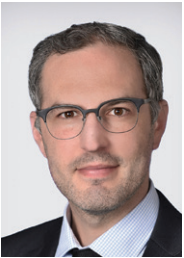
Interview With Kimberly Chase, RCIS, BSBA, MHA
Interview With Kimberly Chase, RCIS, BSBA, MHA
© 2026 HMP Global. All Rights Reserved.
Any views and opinions expressed are those of the author(s) and/or participants and do not necessarily reflect the views, policy, or position of EP Lab Digest or HMP Global, their employees, and affiliates.
EP LAB DIGEST. 2026;26(6):7.
Interview by Jodie Elrod
What were the key factors that made expanding with a new electrophysiology (EP) lab the right next step for HCA Florida Blake Hospital?
 Expanding with a new EP lab was a natural next step for HCA Florida Blake Hospital because of the continued growth of our EP program. We are seeing increasing demand for advanced procedures and evolving technologies that allow us to treat complex heart rhythm conditions with greater precision and efficiency. Another key factor in our growth was the vision of our physicians, whose leadership has helped shape a program capable of bringing advanced EP care to our community.
Blake Hospital has a thriving Graduate Medical Education program that was recently approved to launch an EP Fellowship Program, with its inaugural class beginning on July 1. As we continue to grow as a teaching and destination hospital for cardiovascular care, it is essential that we have the space, technology, and clinical environment needed to support both patient care and physician training. This expansion strengthens our ability to serve patients today while also helping prepare the next generation of EP specialists. The newly accredited EP Fellowship further reflects the strength of our partnership with physicians. Together, we recognized an opportunity to address a need in our community by helping build a pipeline of physicians trained in this specialty. This program would not be possible without their clinical expertise, commitment to teaching, and our shared vision for excellence in care.
When designing the new EP lab and patient care areas, what were your top priorities for improving both clinical efficiency and the patient experience?
When we designed the new EP lab and patient care areas, our priorities were centered on creating a space that supports advanced clinical care while also improving the overall patient experience. From a clinical standpoint, we wanted to offer top-of-the-line technologies, including the VOLT PFA System (Abbott), Affera Mapping and Ablation System (Medtronic), and FARAPULSE PFA System (Boston Scientific), so our physicians and care teams have access to the latest tools available for treating heart rhythm disorders. Ultimately, patients benefit most when advanced technology is paired with the expertise of highly skilled physicians and care teams. Getting the best possible outcome for a procedure is the most important part of the patient experience. Our physicians were central to the planning process, helping ensure the lab was designed around the technology, workflow, and clinical standards needed to support best-in-class EP care.
At the same time, we were very intentional about the patient environment. Providing privacy, comfort, and a quiet atmosphere were priorities because they help promote healing and reduce stress for patients and families. We also wanted the space to feel fresh, modern, and welcoming, with a coastal-inspired design that reflects our community—what we are calling a “boutique on the beach.”
Operationally, proximity to the cath lab was also a key consideration. Having these areas close together allows our teams to respond quickly if issues arise and supports more efficient collaboration between cardiovascular services.
Blake recently celebrated its 500th left atrial appendage occlusion (LAAO) implant. What does reaching that milestone say about the growth and importance of structural heart procedures in your program?
Reaching our 500th LAAO implant was an important milestone because it reflects the tremendous growth of our structural heart program and the confidence our community has placed in our team and partner physicians. Today, we have completed more than 600 LAAO procedures and more than 700 transcatheter aortic valve replacement cases, along with other advanced procedures such as mitral clip interventions.
These milestones demonstrate how important structural heart care has become for patients who may not be candidates for traditional surgery or who need less invasive treatment options. We are also continuing to advance care through concomitant procedures, such as treating atrial fibrillation with ablation and placing a LAAO device during the same procedure. That type of 2-in-1 approach can make care more efficient and comprehensive for appropriate patients.
Overall, this growth helps position HCA Florida Blake Hospital as a premier destination for cardiovascular care, a place where we can care for the whole heart, from rhythm disorders to valve disease and structural heart conditions. These achievements would not be possible without the leadership of our medical staff. They have helped grow these services, benefiting patients across our community.
What were some of the biggest considerations or challenges involved in building the new EP lab?
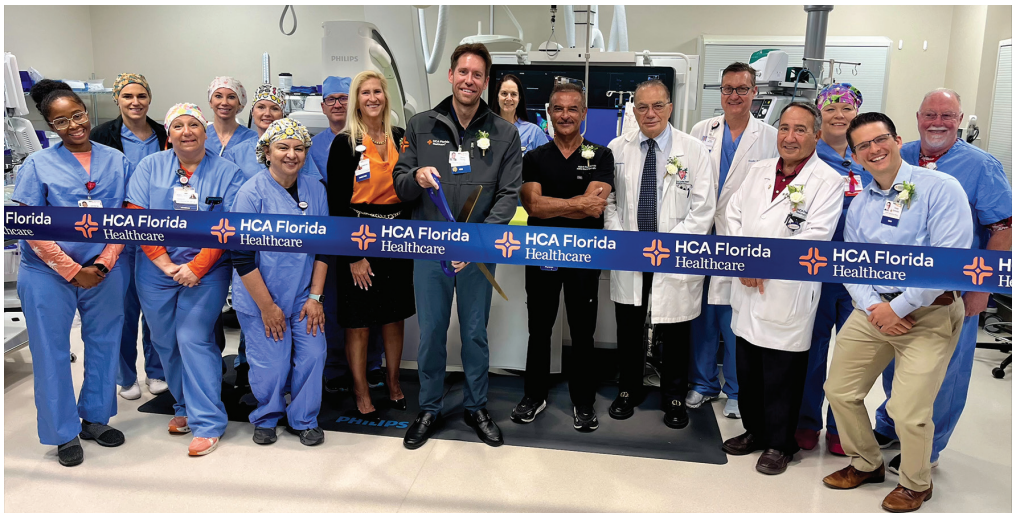
Building a new EP lab requires an incredible amount of planning because the space has to support today’s procedures while also being flexible enough to allow for future growth. Cost was certainly one major consideration, including construction, imaging equipment, and the advanced systems required in a modern EP environment. Thankfully, working for one of the nation’s leading healthcare providers, HCA Healthcare, we have the resources to create a state-of-the-art lab.
From a design standpoint, cable management was one of the biggest priorities. It is not just about keeping cables organized on the table; it involves planning through the booms, underground pathways, and connection points throughout the room. We had to make sure there were enough access points for vendors to plug in and display imaging and mapping data on the main screens.
Space was another important factor. We needed to account for mapping systems, vendors, anesthesia teams, echo machines, and other equipment, while also ensuring the control room had enough monitor capacity and still allowed a clear view into the procedure room. Adjustable lighting, radiation safety, electrical noise reduction, and proper grounding were also critical, especially to reduce interference between systems that emit large amounts of energy.
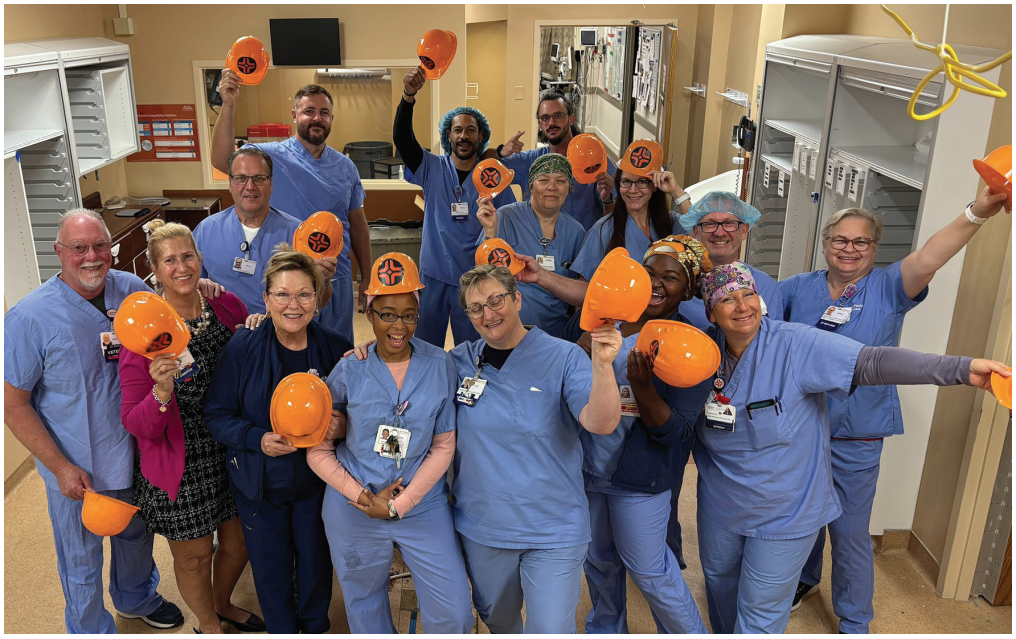
Workflow efficiency and room for future technologies were top of mind throughout the process. One of the best decisions we made was to involve all key stakeholders and vendors—including medical staff, fluoroscopy, GE HealthCare, engineering, mapping, and other partners—in weekly design and project update meetings. Bringing everyone together early and consistently helped us identify issues, solve problems, and design a space that truly works for our physicians, staff, and patients.
Beyond increasing capacity, how do you see this new EP lab shaping the future of cardiovascular care for your community?
Beyond increasing capacity, the new EP lab represents an investment in the future of cardiovascular care for our community. It allows us to continue growing our EP services, expand access to advanced heart rhythm treatments, and support the ongoing development of our EP Fellowship program. At the heart of that growth is our continued partnership with physicians who share our goal of building one of the best EP programs in the region.
By combining advanced technology, efficient workflows and a more modern, patient-centered environment, we are better positioned to care for patients with complex cardiovascular needs close to home. This lab helps us continue building a comprehensive heart program that serves our community now and supports innovation, education, and growth for years to come.
Related Content