Building a Model of Safety and Precision: Advancing Transvenous Lead Extraction at Cedars-Sinai Medical Center
Interview With Raymond Schaerf, MD
Interview With Raymond Schaerf, MD
© 2025 HMP Global. All Rights Reserved.
Any views and opinions expressed are those of the author(s) and/or participants and do not necessarily reflect the views, policy, or position of EP Lab Digest or HMP Global, their employees, and affiliates.
EP LAB DIGEST. 2025;25(12):11-12.
Interview by Jodie Elrod
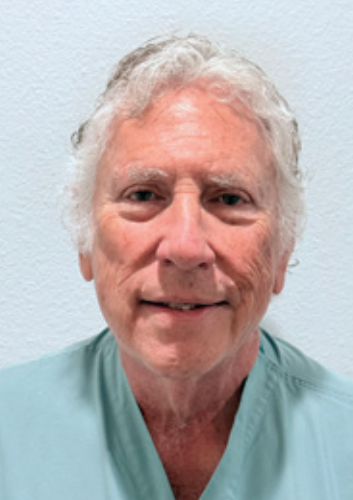
As the number of patients living with cardiac implantable electronic devices continues to rise, so does the critical need for safe and effective transvenous lead extraction. At Cedars-Sinai Medical Center, a structured lead management program has been established as a model of safety and precision, ensuring that patients receive the highest standard of care. Under the leadership of cardiothoracic surgeon Raymond Schaerf, MD, the program not only advances clinical excellence but also fosters a culture of collaboration and innovation. In the following discussion, Dr Schaerf shares his insights and experiences that have shaped his approach to lead management.
 Can you describe your journey into lead extraction and how your approach has evolved over time?
For me, lead extraction has been a lifelong professional journey. My first experience with lead extraction dates back to 1972, when the tools were more primitive. At the time, we would expose the lead, attach it to a weighted pulley system, and leave the weight at the bottom of the bed, hoping that it would come out. That worked for a while, but it was not the safest method. The first patient that I saw undergo that procedure died suddenly when the lead recoil caused ventricular fibrillation. Interestingly, about a decade ago, while speaking at a conference in Korea, I saw an abstract describing that same technique. So, it still exists, though it is not used much in this country, if at all.
In the early 1980s, after I had completed part of my training at Mount Sinai’s Miami Beach campus, I had the opportunity to learn from Dr Charles Byrd, a pioneer in lead extraction who became one of my mentors. When a major lead recall occurred, I was asked by my hospital to remove several recalled leads. I contacted Dr Byrd, who flew in, and together we completed 11 extractions in 2 days. Although the tools were rudimentary compared with today’s standards, the experience was invaluable and marked the start of my career in lead extraction.
Over the years, I have been fortunate to be among the first to adopt each major innovation in extraction technology—from laser systems to the Merit tools. I often tell colleagues that I have simply been in the right place at the right time with the right mentors and collaborators. To date, I have performed more than 5000 lead extractions since 1989. My first procedures took place in Guadalajara, Mexico, where I was teaching an implant course. With guidance from Dr Byrd and the support of an industry representative, those early cases went well, and I later began performing lead extractions in the United States. Since then, I have gained experience with laser systems and a full range of techniques, including femoral extractions.
What lead extraction tools have you found yourself relying on most frequently in your practice?
Lead extraction today requires the use of multiple tools that serve similar purposes. One important tool is the interlocking stylet, the Liberator (Merit), which is a wire inserted into the center of the lead that locks in place, allowing traction from within the lead without fracturing it and making removal far more controlled and feasible. The tools I rely on most frequently are rotational sheaths, primarily from Merit, although I also use laser when appropriate. In approximately 10% to 15% of cases, a femoral approach is used, either as an adjunct to the primary extraction or as the sole method, depending on the clinical situation.
What factors drive your preference for these technologies?
Comfort and safety are the primary factors. I have been satisfied with the results achieved using the Merit tools, although I am also experienced with other tools. I have had excellent outcomes with laser extraction in the past, but I am comfortable with Merit tools.
Teaching is another important consideration. When instructing fellows, I am more comfortable guiding them through use of the Merit tools than the laser, although both approaches are effective. Our fellows gain significant hands-on experience, as we perform approximately 150 cases each year, allowing them to develop proficiency in using these tools.
In the context of high-complexity lead extraction cases, which specific tools have proven most effective for you in safely managing dense adhesions or calcified tissue, and why?
We all recognize that the laser is less effective when encountering calcified tissue. In these situations, I primarily rely on rotary tools—specifically those from Merit—which are better suited for traversing dense adhesions and calcium.
Can you share an example of a particularly difficult case where your choice of extraction device made a critical difference in achieving a good outcome?
A recent case involved a patient with 5 leads that required extraction because of infection, including 2 defibrillator leads and 3 additional leads. I spent considerable time attempting to remove one of the defibrillator leads using the laser, and although it eventually came out, it required significant effort. I then used the Evolution tool (Merit) for the remaining lead, which came out easily. This case reinforced my experience that cutting tools tend to be more effective than laser systems when dealing with calcification or dense adhesions.
How do ongoing education and mentorship programs, like those offered through Merit, contribute to maintaining high standards in lead management and advancing the field for future generations?
It is interesting that many physicians in the United States, Europe, and Asia who perform lead extractions are not always familiar with the full range of available tools. During teaching and proctoring sessions, they often realize there are devices and techniques they had not previously considered or used. Through case demonstrations—both online and in live presentations—participants gain a clearer understanding of these options. I recall one instance in which a colleague from another hospital attended a session and later remarked that he had not known all those tools existed. After learning about them, he incorporated several into his own practice, improving both the safety and efficacy of his procedures.

What advice would you give to hospitals wanting to start or expand a lead extraction program—especially when it comes to support, choosing safe and efficient tools, and working with industry partners like Merit?
The key is understanding that it cannot rely on a single operator. I have helped several colleagues establish programs, and we always emphasize the importance of a team approach. Everyone involved—the anesthesiologist, scrub nurse, circulating nurse, radiology technologist, radiologist, cardiologist, and echocardiography team—must be well prepared. Although one person performs the extraction, it is truly a multidisciplinary effort. Each case also presents unique challenges, so the team must be ready to adapt and transition between techniques when necessary. Having the full range of tools available is critical.
From an administrative perspective, hospitals should also consider access. Many of my patients travel long distances for extraction, but for some, it is not possible. Developing regional programs allows patients and families to receive safe, effective care closer to home, reducing travel burdens while maintaining excellent outcomes.
With Merit Medical’s acquisition of the Cook Medical lead management portfolio, what has that transition meant for you and your team?
The transition has been excellent. We have a team that is genuinely enthusiastic about advancing a field that had been somewhat stagnant. Merit’s focus on developing new products, generating fresh ideas, and maintaining active collaboration with physicians for feedback and innovation has been valuable. The individuals I have worked with at Merit are passionate about their work, and I am optimistic about the next generation of devices expected in the near future.
As you look ahead, where do you see the field of lead extraction going—given the increased need as the growing device population ages? How do you view the role of innovation and supportive industry partners in shaping that future, with Cedars-Sinai Medical Center as a model program and Merit as a committed partner in advancing lead management?
There are several important points to consider. The first is the misconception that lead extraction will become obsolete because of the rise in leadless devices. That is simply not the case. Although we are implanting many leadless systems—and I perform a large number of those procedures myself—we are also implanting pacing leads for therapies such as left bundle branch pacing and cardiac resynchronization therapy. These leads will remain in place for years, and the older leads we implanted long ago will continue to require removal in the future. I do not foresee any decrease in the need for lead extraction.
Equally important is the collaboration between industry and physicians. Innovation cannot occur in isolation; it requires open communication and shared purpose. New tools must be designed with clear clinical rationale and must provide measurable benefit—not only for physicians, but most importantly for patients. Cost and resource considerations are also key factors. Sustained progress in this field depends on strong partnerships between industry and medicine.
The transcripts were edited for clarity and length.
Disclosures: Dr Schaerf has completed and returned the ICMJE Form for Disclosure of Potential Conflicts of Interest, and has no conflicts of interest to report.
This content was published with support from Merit Medical.