Advocate Lutheran General Hospital
© 2025 HMP Global. All Rights Reserved.
Any views and opinions expressed are those of the author(s) and/or participants and do not necessarily reflect the views, policy, or position of EP Lab Digest or HMP Global, their employees, and affiliates.
EP LAB DIGEST. 2025;25(10):20-23.
Nicholas Serafini, MD, and the EP team
Park Ridge, Illinois
When was the cardiac electrophysiology (EP) program started at your institution, and by whom?
The program was started in the early 2000s under the leadership of Scott Miller, MD, who has since retired. Since its inception, it has undergone several changes.
What is the size of your EP facility?
Our EP program is fully integrated within the cardiac catheterization department. We have 2 dedicated EP labs for ablation procedures, as well as 2 additional labs shared with interventional and structural cardiology for device implantation. We are in the early phases of developing a fifth “flex” lab, designed to be shared between EP and structural cardiology.
Who manages your EP lab, and what is the mix of credentials and experience?
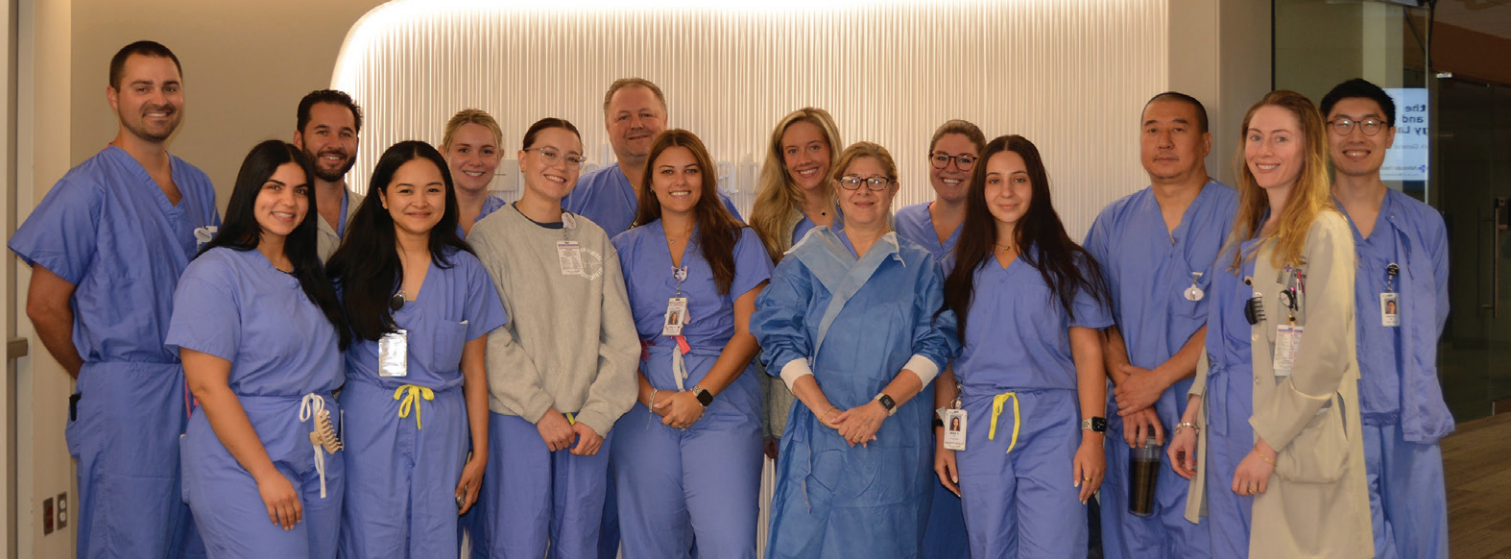
Our lab is managed by John Driscoll, BSN, RN-BC, who also manages the cardiac catheterization lab, intervention radiology suite, and radiology nursing. He has been in this role for about 2 years and has more than 13 years of cardiology nursing experience, including 5 years of management experience. Our EP lab director is Nicholas Serafini, MD, who has served in this role since 2020, and Phil Aagaard, MD, PhD, is our EP medical director.
What is the number of staff members?
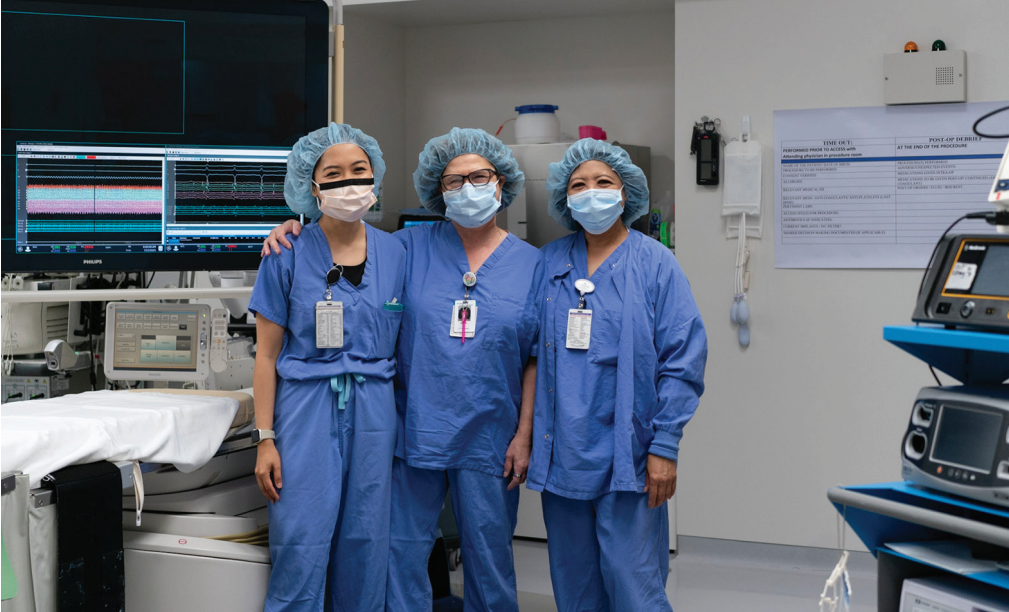
Each case is staffed with 1 nurse and 2 radiation technologists, or 2 nurses and 1 radiation technologist. The team generally stays in the same room for the day. Flex positions join each case at critical times to improve efficiency (starting and ending cases). Our lunch breaks are staggered for improved efficiency. Every staff member is cross-trained in structural, interventional, and EP procedures.
Approximately how many procedures are performed each week?
On a weekly basis, we perform ~20 ablations, ~4 pacemaker implants (leadless, conduction system pacing [CSP], and traditional), ~2-3 implantable cardioverter-defibrillator (ICD) implants (extravascular [EV], subcutaneous [S-ICD], and traditional ICDs), ~5 left atrial appendage occlusion (LAAO) procedures, and <1 lead extractions.
Which types of equipment are used?
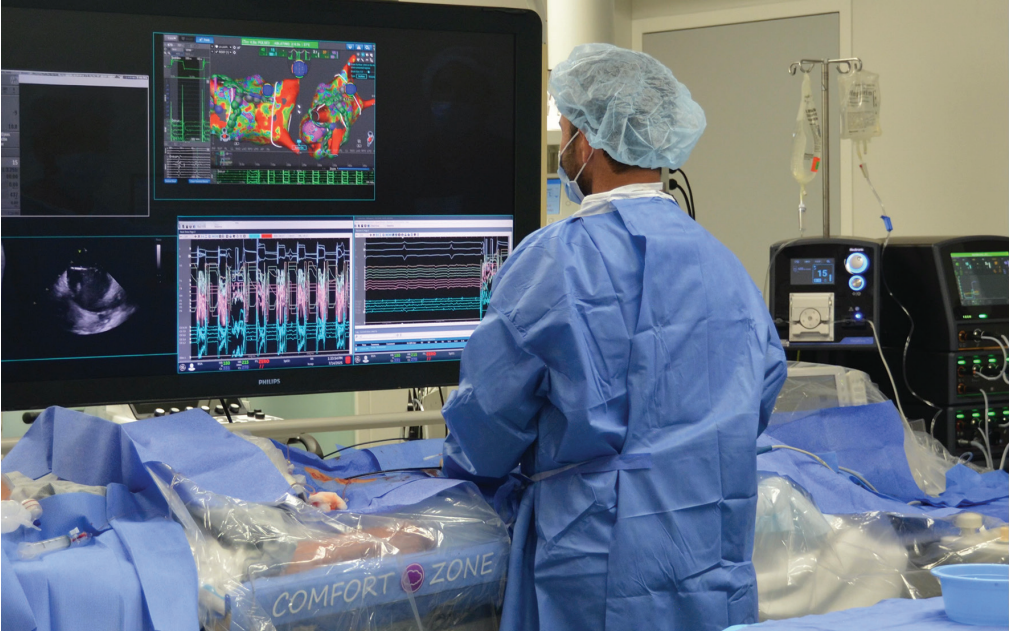
For ablation procedures, both of our EP rooms are equipped with the Carto 3 mapping system (Johnson & Johnson MedTech), the EP-4 stimulator (EP MedSystems), and the CardioLab recording system (GE HealthCare). We currently have the Farapulse pulsed field ablation (PFA) system (Boston Scientific) and the Affera PFA system (Medtronic), and we are in the process of implementing the Varipulse system (Johnson & Johnson MedTech). The majority of atrial fibrillation (AF) ablations are performed using PFA, while ventricular tachycardia and supraventricular tachycardia ablations are generally conducted with the Carto 3 system and radiofrequency (RF).
On the device side, in addition to conventional endovascular pacemakers and defibrillators, we implant the Micra (VR and AV) leadless pacemaker (Medtronic), Aveir (VR and DR) leadless pacemaker (Abbott), Aurora EV-ICD System (Medtronic), and Emblem MRI S-ICD system (Boston Scientific). Where appropriate, CSP is employed.
What are some new technologies and techniques performed in your lab? How have these changed the way procedures are performed?
As in most laboratories over the past year, PFA has become an integral component of our ablation program. We have extensive experience with the Farapulse system. We were early adopters and are high-volume users of the Affera system and are focused on advanced AF mapping to improve ablation efficacy in more advanced AF cases.
We use the Carto 3 system to map complex arrhythmias, with heavy reliance on the Ripple module (Johnson & Johnson MedTech) for rhythm interpretation.
The Aurora EV-ICD has become a great addition to our ICD suite, with the ability to provide antitachycardia pacing to patients while avoiding endovascular lead placement.
We are also a high-volume center for leadless pacemaker implantation, utilizing both the Micra and Aveir platforms.
Discuss your use of PFA, including patient selection, challenges, and initial experience.
We began using the Farapulse PFA system in early 2024. Two of our 3 electrophysiologists adopted it for all AF cases, while the third employed it for paroxysmal AF and relied on dispersion mapping with tailored ablation for persistent AF, using the Carto 3 system with RF. In May 2025, we began using the Affera system, which now accounts for the majority of AF and atrial flutter ablations at our institution and is used by all 3 electrophysiologists. Approaches to pre-mapping vary among operators, ranging from comprehensive pre-maps in all patients to selective pre-mapping when deemed necessary.
How is inventory managed in your EP lab?
We are in the process of revising our protocol for inventory management of EP supplies. Our goal is to establish a set PAR level with automatic replenishment. Currently, the EP team plans weekly to ensure adequate supplies, with staff submitting requisitions that are then fulfilled by the Supply Chain Coordinator.
Tell us about your device clinic, including its staffing model, day-to-day function, and tools/software used.
Our device clinic is located within the outpatient physician offices and is staffed by 2 dedicated full-time nurses. We utilize CareLink (Medtronic), which is fully integrated into the Epic electronic medical record. One nurse is present in clinic daily to perform in-person interrogations, while the second manages remote monitoring, alerts, patient registration, and scheduling. Both nurses are trained in optimizing all pacemaker and ICD systems.
Discuss your approach to remote monitoring of arrhythmias, including management of data deluge from cardiac implantable electronic devices.
We follow a standard remote monitoring protocol, with transmissions once every 90 days and an annual in-person device check. Programming of alert settings is left to physician discretion. Alerts are forwarded to the managing physician for clinical decision-making, and a standardized “shock protocol” is implemented for ICD patients.
Tell us what a typical day might look like in your EP laboratory.
We typically have 1 to 2 physicians working per day, each in their own procedure room. Approximately 4 to 5 ablations are performed per day with the Affera system, while the other lab may perform 2 to 3 ablations. Device cases, including inpatient add-ons, are scheduled after outpatient procedures and may or may not utilize the same EP team, depending on room and staff availability.
Can you describe the extent and use of vascular closure devices in your laboratory? Tell us about your approach for same-day discharge (SDD).
For AF ablations requiring 12 French or smaller sheaths, we use either the Vascade MVP (Haemonetics) or the Mynx vascular closure device (Cordis). For procedures involving larger sheaths—such as with PFA, LAAO, and leadless pacemaker implantations—we employ Perclose (Abbott) and/or a figure-of-8 stitch. More than 90% of our cases are performed as SDD.
How do you ensure timely case starts and turnover?
We have refined our staffing models (testing both linear and beehive approaches), increased staff numbers, participated in EP lab efficiency programs through Johnson & Johnson MedTech’s Training and Education Centers, and implemented systematic tracking of on-time starts, causes for delays, and turnover times. These data are reviewed in monthly staff meetings. While these measures have been valuable, the most critical factor has been fostering an environment in which physicians and staff are mutually committed to improving efficiency. Ultimately, our greatest strength lies in hiring and retaining an exceptional team of positive, motivated staff members whom everyone is proud to work alongside.
How does your laboratory schedule team members for call?
All staff who take call are cross-trained in interventional cardiology, and call responsibilities are part of the interventional call team schedule. We do not have a dedicated EP call team.
Do you have flexible or multiple shifts? How do you handle slow periods?
We stagger staff arrival times to ensure coverage for late cases. During the rare slower periods, team members are reassigned to support either interventional or structural cases as needed.
How are vendor visits managed?
Aside from the vendors who are essential to cases, vendor visits are limited to a discussion with the physician. Vendors that are not essential to a case are not permitted to stay past their discussion or meeting times.
What are the best features of your EP lab’s layout or design?
Built in 2017, our lab incorporates several design features that enhance workflow. The pre-op and post-op holding areas are located outside the procedure rooms, minimizing transport times. Each room is equipped with glass door cabinets along the back wall for efficient inventory access, and large control rooms provide ample workspace. Adjustable overhead lighting allows dimming and color changes based on patient preference, creating a more welcoming environment that helps ease anxiety.
What measures has your lab implemented to cut or constrain costs?
From a procedural standpoint, our guiding principle is that patient care comes first. As part of a large health system, we leverage our national scale to enhance efficiency and reduce costs while continuing to deliver safe, high-quality care at the local level.
What quality control measures have been implemented in your lab?
In addition to equipment quality control, we perform a standard timeout before every case, require a shared decision-making document for all ICD implants, and hold a quarterly EP quality improvement meeting to review cases, processes, and any lab-related issues.
What works well in your lab for onboarding new team members?
New team members without prior EP training undergo extensive onboarding by being paired with senior staff until they are confident in their role. For those with prior EP lab experience, the same buddy system is used, though for a shorter duration.
What continuing education opportunities are provided, and how do staff typically maintain credentials?
Continuing medical education opportunities are available at the system level and include regular lectures, grand rounds, and updates on the latest advances in technology and research in cardiology.
Discuss the role of mid-level practitioners in your lab.
We have 2 dedicated EP advanced practice nurses who manage the inpatient consultation service. They evaluate new and intensive care unit patients, provide follow-up alongside the attending physician on service, and ensure completion of orders, documentation, communication, and follow-up. In the lab, they frequently assist with orders and next-day discharges.
Share a memorable case from your EP lab and how it was addressed.
One patient presented for outpatient AF ablation but developed acute hypoxemia post intubation, leading to abortion of the procedure despite maximal FiO2. The patient was transferred to the medical intensive care unit for further management and later returned to the lab, where a ventricular assist device was placed for severe left ventricular (LV) dysfunction. A few days later, AF ablation was successfully performed, resulting in an improvement in ejection fraction by approximately 30%. This remarkable case highlighted the staff’s teamwork, calm demeanor, and critical thinking skills.
Discuss your program’s approach to CSP.
We employ peri-left bundle branch pacing as the predominant method for CSP, though final decisions are left to the discretion of the implanting physician. For resynchronization therapy, traditional coronary sinus leads are used as the primary approach, with CSP serving as a secondary backup strategy.
Tell us about your primary approach to LAAO.
We utilize the Watchman FLX Pro (Boston Scientific). Since October 2024, we have increasingly performed concomitant AF ablations and LAAO using PFA energy delivery to minimize changes in tissue architecture prior to LAAO. Our experience with this approach has been highly positive to date.
Discuss your approach to lead extraction.
Two of our EPs perform lead extractions in the hybrid operating room suite in collaboration with cardiac surgery. We staff these procedures with our EP lab team, given their familiarity with the equipment and procedural workflows.
Discuss your program’s approach to lifestyle modification for AF.
We take a multispecialty approach to AF management. Our program includes a dedicated hypertension clinic, weight loss program, access to a dietician and geneticist, and home sleep studies with referral to sleep medicine specialists for the treatment of obstructive sleep apnea.
Discuss your approach to treatment of AF with heart failure (HF).
We have a dedicated HF service staffed by 2 advanced HF-trained cardiologists and a team of nurse practitioners. Guided by the latest evidence, we take an aggressive approach to rhythm control in our HF population, with preferential early access to ablation therapy. We also support AF ablation in advanced HF patients and have successfully performed procedures with LV assist device support.
How does your lab handle radiation protection for physicians and staff?
One of our EPs performs all fluoroless cases, including both PFA and RF procedures, while the other 2 EPs use minimal fluoroscopy. We utilize Philips fluoroscopy systems designed to minimize radiation exposure and adhere to state regulations for radiation monitoring, with mandatory badges for all personnel involved in a case.
What is considered historic about your EP program? Has your program or hospital recently experienced any “firsts”?
Our ablation volume has increased by more than 700% over the past 6 years, making us the fastest-growing program in the region. We were early adopters of the Affera PFA system and became the first center in the region to surpass 100 cases.
Please tell our readers what you consider special about your EP lab and staff.
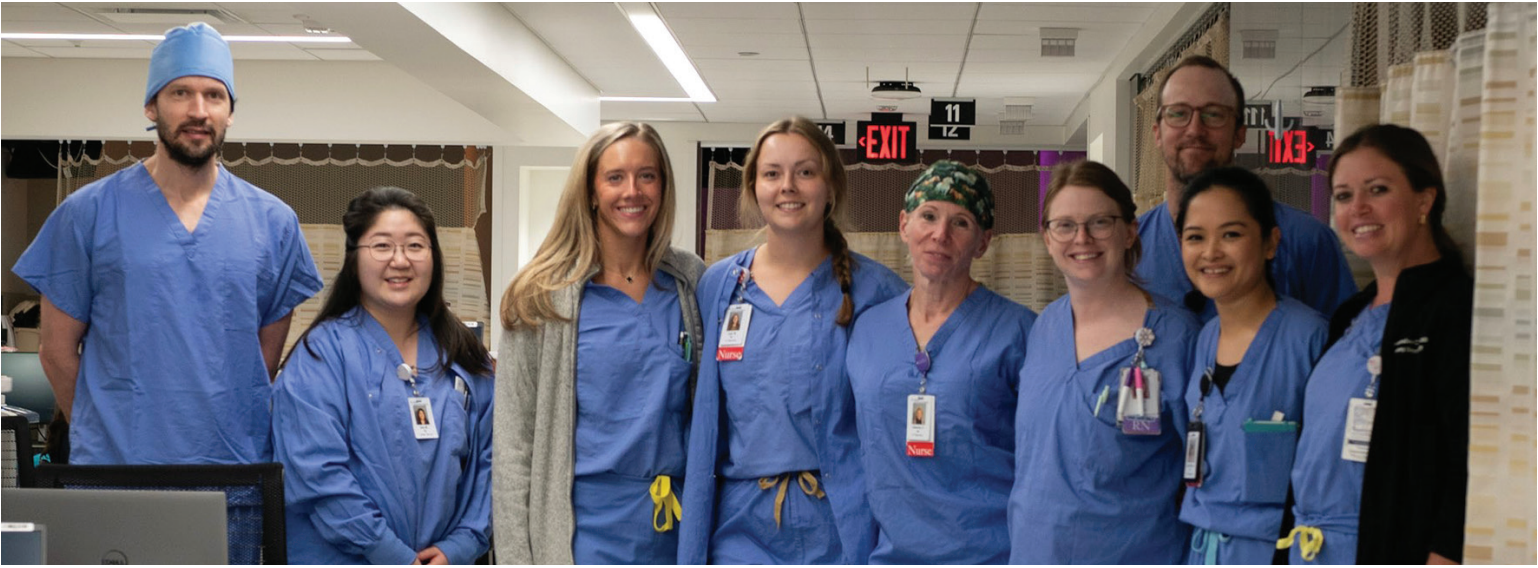
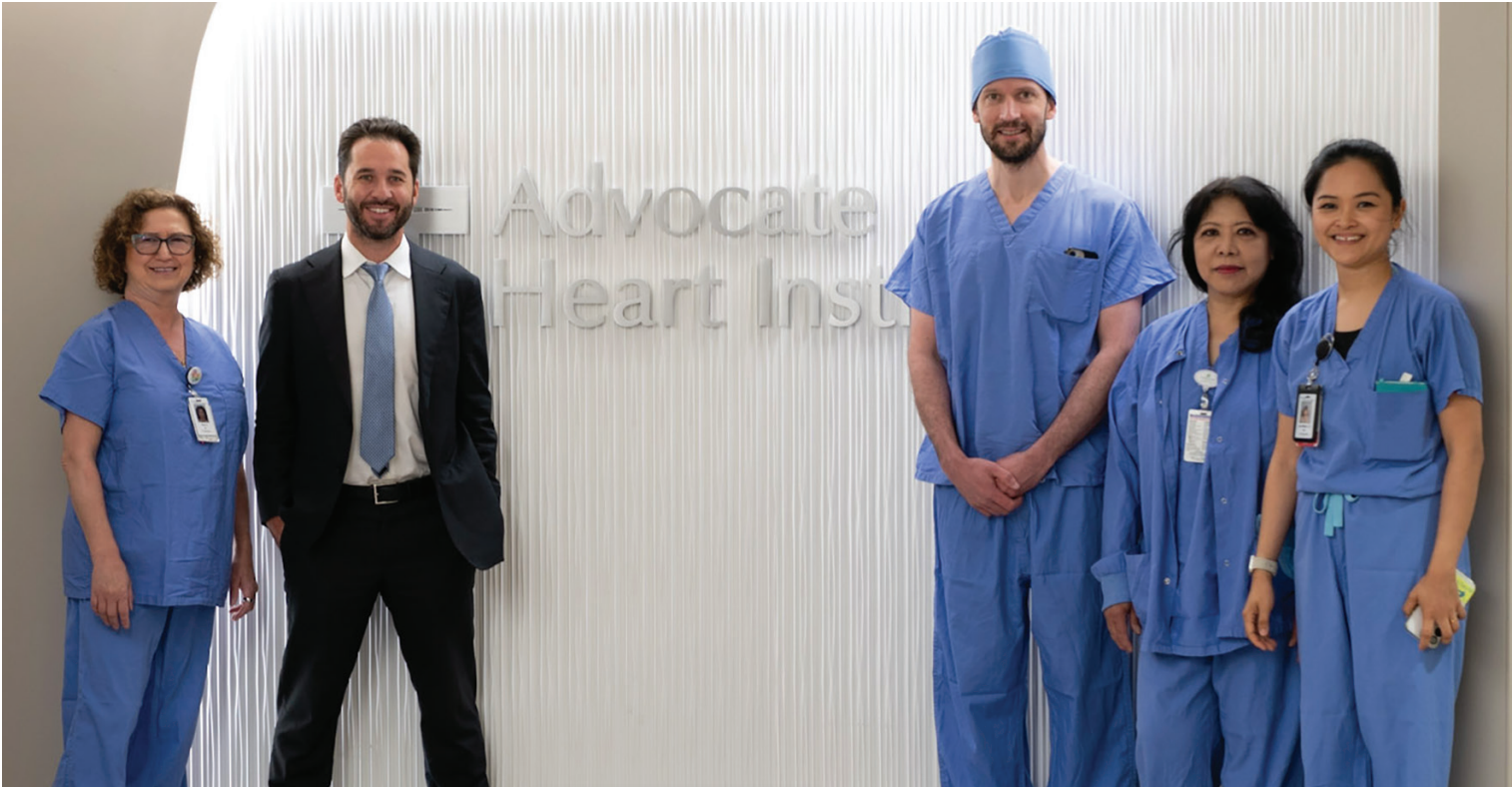
As a program that has undergone a rapid expansion in volume, we would not be where we are today without our exceptional team. The positivity, hard work, dedication, and passion of our technologists, nurses, schedulers, and nursing care technicians have created a cohesive, family-like environment that enables us to deliver outstanding care to our patients.