EMS Does Not Need to Live in the Firehouse to Belong in Public Safety
There is an old argument in emergency services that comes back around every few years wearing a new coat: “Should EMS continue to be delivered by the fire service?”
It is usually framed as a choice between fire-based EMS and something lesser. Fire-based EMS is presented as the stable, trusted, publicly accountable model. Other models are described as fragmented. They can be private, hospital-dependent, underfunded, or politically fragile. The implication is subtle but persistent—if EMS leaves the firehouse, it leaves public safety.
That is a false choice.
EMS can be public. EMS can be unionized. EMS can be tax-supported. EMS can be mission-ready, disaster-capable, clinically sophisticated, and fully integrated into emergency management without being administratively subordinate to the fire service.
The better question is not whether fire departments can deliver EMS. Of course they can. Many do, and many do it well. The better question is whether fire-based governance is the best structure for modern EMS.
Increasingly, the answer is no.
Fire-based EMS developed for understandable reasons. Fire departments had stations, radio systems, staffing, public trust, and an emergency response culture. As fires declined and medical calls rose, EMS became a logical expansion of the fire service mission. In many communities, it was the practical choice at the time.
But a practical legacy is not the same thing as an ideal future.
The U.S. Fire Administration reports that EMS and rescue calls accounted for 65.2% of fire department responses in 2023, while fires accounted for only 3.9% (U.S. Fire Administration, 2026). That statistic is often used to justify keeping EMS inside fire departments. I would argue it proves the opposite.
If EMS is the majority mission, then EMS should not be treated as an accessory function inside a fire-shaped organization. It should have its own governance, budget, leadership, quality systems, workforce strategy, and clinical identity.
When most of the work is medicine, the system should be designed around medicine.
This does not diminish the fire service. Firefighters are essential public safety partners. They bring immense value to rescue, extrication, hazardous environments, mass casualty response, lift assists, CPR, AED deployment, and all-hazards readiness. The public trusts them for good reasons.
But public trust is not a clinical quality metric.
EMS is healthcare delivered in an uncontrolled environment. That environment may be a kitchen floor, a ditch, a jail cell, a shelter, a highway, a fishing vessel, a snowmachine trail, or the back bedroom of a frequent caller whose real emergency began years before anyone dialed 9-1-1. EMS clinicians make medical decisions with limited information, limited time, and limited backup. They manage airway, pain, sepsis, stroke, trauma, behavioral health, refusal risk, medication safety, end-of-life care, social vulnerability, and transport decisions.
That is not simply “response.” That is clinical practice.
National EMS policy has been moving in this direction for decades. The EMS Agenda for the Future envisioned EMS as community-based health management, integrated into the broader healthcare system. EMS Agenda 2050 continues that trajectory, calling for evidence-based, data-driven EMS that is integrated with the nation’s healthcare system (National Highway Traffic Safety Administration, 1996, 2019). The National EMS Scope of Practice Model also frames EMS through education, certification, licensure, and credentialing, not apparatus assignment (National Highway Traffic Safety Administration, 2019).
Dr. Bryan Bledsoe recently argued that EMS must reclaim its identity as healthcare. He is right. That argument is overdue. But healthcare identity and public safety readiness are not mutually exclusive, especially in communities in which EMS remains the front door to both the emergency care system and the disaster response system. The question is not whether EMS should abandon public safety. The question is whether EMS can be clinically led, healthcare-integrated, publicly accountable, and still ready for the ditch, the jail cell, the wildfire, the mass-casualty incident, and the kitchen floor at 3 a.m.
A third-service EMS model is not anti-fire. It is pro-EMS.
It recognizes that EMS is both public safety and healthcare. It gives EMS its own seat at the table instead of asking it to sit quietly at the end of someone else’s. It allows EMS leaders to build systems around patient demand, clinical risk, transport geography, hospital interface, community health, fatigue management, and workforce development.
The fire-based argument often rests on infrastructure. Fire departments already have stations. They already have bays. They already have administrative structures. They already have community visibility.
All true.
But existing infrastructure is not automatically efficient infrastructure. A fire station is not automatically an EMS station.
Fire geography and EMS geography are not the same. Fire station placement may reflect historic fire risk, ISO considerations, political boundaries, volunteer service areas, water supply, or suppression strategy. EMS demand follows different physical contours such as age, chronic disease, behavioral health gaps, and social determinants of health. There is also poverty, road access, seasonal population shifts, hospital destination, and transport time.
The tyranny of distance compounded by economy and the public policy of the day.
A third-service EMS agency is versatile and can deploy around the actual patient problem. It can use fixed stations and dynamic deployment models. Peak-load units, ALS/BLS response, community paramedics, telehealth, alternate destinations, and fire first response all become options. It can still participate in unified command and have capacity for surge. It can still train with fire, law enforcement, hospitals, public health, emergency management, and dispatch.
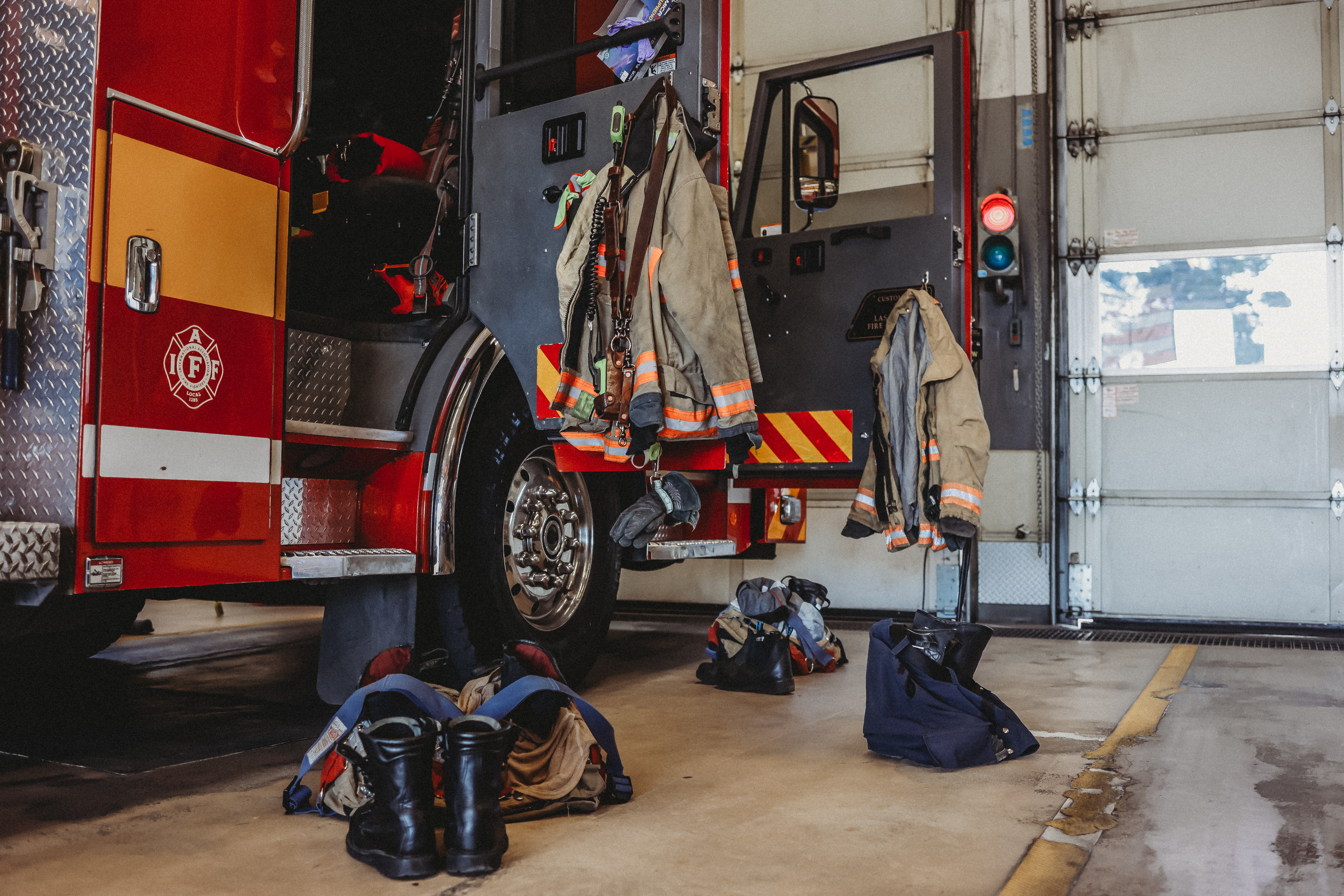
Interoperability does not require subordination. Early CPR and early defibrillation save lives. That is a first-response argument. It is not a governance argument.
Another common claim is that cross-trained fire/EMS personnel create flexibility. They can move between fire suppression, rescue, hazmat, and medical response. Again, true in some settings.
But cross-training is not the same as clinical depth.
EMS clinicians need continuing medical education, simulation, chart review, medical director access, competency validation, protocol evolution, outcome feedback, and career ladders that reward clinical expertise. If EMS is treated as something firefighters also do, the clinical mission can become secondary even while it generates most of the call volume.
The irony is that high-performing fire-based EMS systems often solve this problem by building an EMS agency inside the fire department: EMS chiefs, clinical managers, quality officers, educators, data analysts, community paramedics, and physician-led medical oversight.
At that point, one has to ask the obvious question: “If the solution is to build an EMS system inside the fire department, why does EMS need the disguise?”
Community paramedicine makes this even clearer. Community paramedicine is not fire prevention with a blood pressure cuff. It requires patient consent, medical direction, care plans, privacy compliance, payer strategy, referral pathways, data sharing, chronic disease support, and social service integration. The CDC describes community paramedicine as a resource for populations with chronic disease and limited access to critical healthcare resources, including work that addresses social determinants of health (Centers for Disease Control and Prevention, 2024).
That is mobile healthcare. It belongs in a structure built to bridge public safety and health systems.
Fatigue is another place in which governance matters. EMS fatigue is not merely a wellness issue. It is a system-design issue. It is shaped by shift length, but that is only one fact. There is also transport burden, hospital wall time, and call density. Leaders must be willing to consider staffing ratios, deployment models and overtime use in order to design the actual workload. NHTSA’s fatigue guidance recommends fatigue monitoring, nap opportunities, fatigue education, caffeine access, and shifts shorter than 24 hours (National Highway Traffic Safety Administration, 2019).
Those recommendations become difficult when EMS is forced to fit legacy fire scheduling traditions rather than evidence-informed EMS operations.
The strongest argument for third-service EMS may be transparency.
When EMS lives inside fire, EMS costs and EMS outcomes can be difficult to see clearly. Ambulance revenue, suppression staffing, apparatus costs, overtime, medical training, transport burden, and clinical quality can blur into one large public safety budget. That may be politically convenient, but it is not necessarily accountable.
A third-service model makes the EMS system visible.
How many ambulances are needed? Where should they be posted? What level of care is required? What is the true cost of readiness? What does transport time do to availability? What are the patient outcomes? What does the community need at 2 p.m. on a Tuesday versus 2 a.m. in a blizzard? What calls need ALS? What calls need BLS? What calls need a community paramedic next week instead of an ambulance tonight?
Those are EMS questions. They deserve EMS answers.
The future of EMS is not simply faster response. It is better care, better triage, better integration, better data, better workforce sustainability, and better alignment with the patients who actually call us. NEMSQA’s national EMS performance measures reflect that evolution by emphasizing measurable quality across prehospital care, including clinical care and safety (National EMS Quality Alliance, 2019).
Response times still matter. But they are not enough. A system can arrive quickly and still fail clinically, financially, operationally, or ethically.
The essential-service movement also supports this shift. States across the country are increasingly recognizing EMS as an essential public function, though the specific statutory approaches vary. The National Conference of State Legislatures reports that at least 21 states and the District of Columbia have enacted laws explicitly defining EMS as essential or advancing similar EMS access policies (National Conference of State Legislatures, 2026).
That should not be read as an argument for fire-based EMS. It should be read as an argument for EMS itself.
If EMS is essential, it deserves essential-service governance. It deserves direct funding. It deserves political visibility. It deserves leadership that wakes up every morning thinking about EMS as its primary mission. Not EMS after the fire agenda, not EMS as a revenue stream, not EMS as call volume justification, and not EMS as the thing keeping the lights on in a system built for a different risk profile.
There will never be one perfect model for every community. Rural, urban, suburban, frontier, tribal, island, and regional systems all have different needs. Some communities may continue to use fire-based EMS successfully. Some may use hospital-based models, public utility models, private contracts, hybrids, or regional authorities to varying degrees of success.
But we should stop pretending that fire-based EMS is the default gold standard simply because it is familiar.
The real standard should be this: Does the model produce clinically accountable, financially transparent, operationally reliable, publicly governed, and sustainable EMS?
If yes, defend it.
If no, redesign it.
Fire belongs in public safety. EMS belongs in public safety. But EMS also belongs in healthcare. That dual identity is not a weakness. It is the whole point.
The fire service does not need to lose for EMS to stand up.
And EMS does not need to live in the firehouse to belong.
References
Bledsoe BE. (2026, June 12). Does EMS' orientation to the public safety model doom it to mediocrity? JEMS.
Centers for Disease Control and Prevention. (2024). The value of community paramedicine. https://www.cdc.gov/ems-community-paramedicine/php/data-research/community-paramedicine/index.html
Murphy JK. (2026, May 28). Should emergency medical services continue to be delivered by the fire service? JEMS.
National Conference of State Legislatures. (2026). State policies defining EMS as essential. https://www.ncsl.org/health/state-policies-defining-ems-as-essential
National Emergency Medical Services Quality Alliance. (2019). NEMSQA measure set. https://www.nemsqa.org/nemsqa-measures
National Highway Traffic Safety Administration. (1996). Emergency medical services agenda for the future. U.S. Department of Transportation.
National Highway Traffic Safety Administration. (2019). EMS Agenda 2050: A people-centered vision for the future of emergency medical services. U.S. Department of Transportation.
National Highway Traffic Safety Administration. (2019). Fatigue in emergency medical services systems. U.S. Department of Transportation.
National Highway Traffic Safety Administration. (2019). National EMS Scope of Practice Model 2019. U.S. Department of Transportation.
U.S. Fire Administration. (2026). Statistics: U.S. fire department responses, 2023. Federal Emergency Management Agency.